


 Travel guide
Sundarbans tidal landscape changes character throughout the year. The colour of the forest, movement of the rivers, behaviour of wildlife, bird activity, fishing traditions, village life and even the atmosphere on a boat can feel remarkably different as the seasons move from one phase to another. That is why deciding the best season to visit the Sundarbans is less about finding a single perfect window and more about understanding what each season brings to the forest.
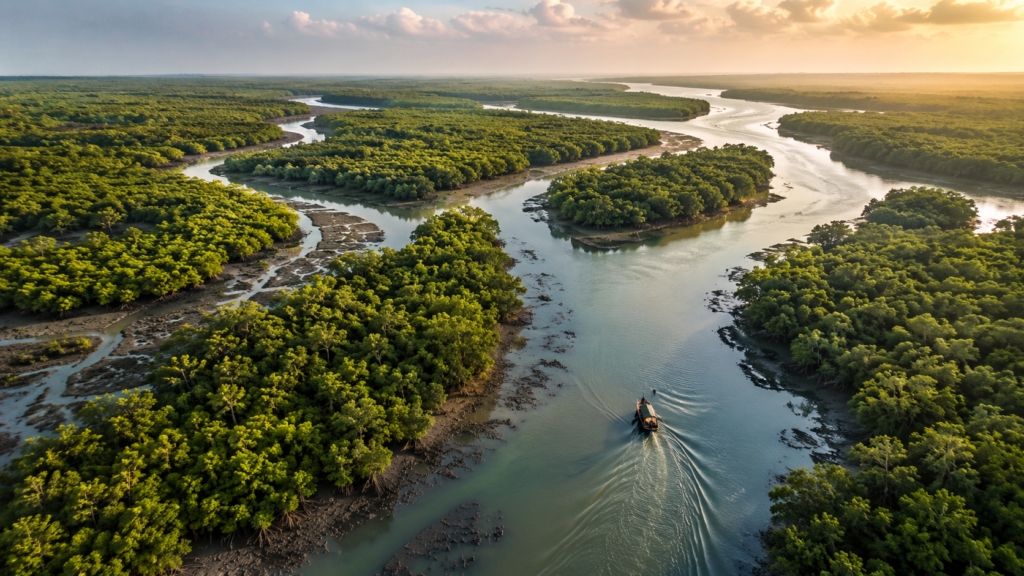
For some travellers, the cooler months offer comfortable exploration, active wildlife and excellent conditions for spending long hours on the waterways.
For others, the monsoon reveals a greener, more atmospheric Sundarbans, when rain, swollen creeks and changing tides transform the landscape.
Cultural experiences and seasonal traditions add another dimension, including the significance of the Ilish Utsav.
The right time, therefore, depends on what you want to experience.
Whether your priority is wildlife, birds, photography, quiet exploration, fishing culture, village life, family travel, a first Sundarbans experience or simply seeing the forest in a particular mood, every season has something distinctive to offer.
First, Understand the Seasons of the Sundarbans
The Sundarbans is a tidal ecosystem, so its seasons cannot be understood only through temperature.
Rainfall, humidity, tides, river conditions, daylight, salinity, vegetation and the availability of food all influence the rhythm of the forest. Wildlife responds to these changing conditions, while communities living around the landscape adapt their livelihoods and daily routines accordingly.
For travellers, this means the same creek or forest edge can offer a completely different experience at different times of the year.
Broadly, the year can be experienced through three seasonal personalities:
- Winter and the cooler months: generally associated with comfortable exploration, strong bird activity and rewarding wildlife observation.
- The warmer transition periods: marked by changing temperatures, shifting wildlife behaviour and a different quality of light across the waterways.
- Monsoon: a lush, rain-washed and highly atmospheric phase when the Sundarbans take on a dramatically different character.
Rather than treating these as good and bad seasons, it is more useful to think of them as different ways of experiencing the Sundarbans.
Sundarbans Seasons at a Glance
Every season changes the way the Sundarbans feel and function. This overview helps match your travel period with the kind of experience you are looking for.
| Season | Forest & Landscape | Wildlife & Birdlife | Best Suited For |
| October | Fresh, green and transitioning from the rains | Wildlife activity continues alongside changing seasonal conditions | Nature lovers, first-time visitors, photographers |
| November | Increasingly comfortable conditions with lush post-monsoon landscapes | Good opportunities for wildlife observation and birdwatching | Wildlife enthusiasts, birders, photographers |
| December | Cooler atmosphere and calm winter character | Active birdlife and rewarding wildlife exploration | Families, first-time visitors, wildlife travellers |
| January | Distinctive winter landscape with cooler mornings | Strong birdwatching and comfortable wildlife exploration | Birders, photographers, wildlife enthusiasts |
| February | Pleasant winter conditions gradually moving toward warmer days | Diverse birdlife and continued wildlife activity | Nature lovers, photographers, repeat visitors |
| March | Seasonal transition with warmer conditions and changing light | Wildlife remains active as the ecosystem responds to seasonal change | Experienced travellers, photographers, nature explorers |
| Monsoon | Lush, rain-washed forest, swollen creeks and dramatic skies | Wildlife continues within a wetter and more atmospheric ecosystem | Landscape photographers, nature lovers, monsoon explorers |
This is not a ranking of good and bad months. It is a way of understanding the different personalities of the Sundarbans.
A traveller seeking comfortable extended exploration may naturally gravitate toward the cooler months, while someone fascinated by rain, greenery, changing waterways and atmospheric landscapes may find the monsoon especially rewarding. Those with cultural interests may also wish to consider seasonal experiences such as Ilish Utsav alongside their wildlife plans.
There is no universally perfect month to visit the Sundarbans – only a season that may be better aligned with your particular interests.
Sundarbans in Winter: October to March
For many travellers, October to March provides one of the most comfortable periods for exploring the Sundarbans.
The weather generally becomes more pleasant compared with the hotter and more humid parts of the year, making it easier to spend extended periods aboard a country boat or exploring the forest landscape. The cooler conditions also create a particularly enjoyable rhythm for wildlife watching, photography and birding.
But winter’s appeal goes beyond comfortable temperatures.
Wildlife Activity
The forest remains dynamic throughout the cooler months.
Royal Bengal Tigers continue to move through their territories, while spotted deer, wild boar, rhesus macaques and other inhabitants of the mangrove ecosystem remain part of the wider wildlife landscape.
The cooler season can also be rewarding for birdwatchers. Migratory and resident birds add variety to the forest edges, mudflats, creeks and waterways, creating opportunities to observe species that may not be equally visible throughout the year.
For photographers, the lower-angle seasonal light can also create beautiful conditions along the creeks, especially during early morning and late afternoon.
A Different Rhythm on the Water
Winter boat journeys can feel particularly immersive.
Morning haze may occasionally sit above the waterways; the forest can appear remarkably still before the day becomes active, and the changing light gradually reveals the intricate structure of mangrove vegetation.
A Sundarbans safari during this period is therefore not simply about spotting a tiger.
It is about understanding the entire ecosystem.
October: The Sundarbans Begins a Seasonal Transformation
October occupies an interesting position in the annual cycle.
The landscape begins transitioning from the intensity of the monsoon toward the cooler months. The forest remains lush, while the atmosphere gradually becomes more suitable for extended exploration.
For travellers who enjoy seeing landscapes during periods of transition, October offers its own appeal.
It can be a fascinating time for observing how the forest, waterways and surrounding communities move from one seasonal rhythm into another.
For a closer look at this transition, explore our Sundarbans in October guide, including its seasonal atmosphere, wildlife possibilities and planning considerations.
November: Cooler Air and Active Waterways
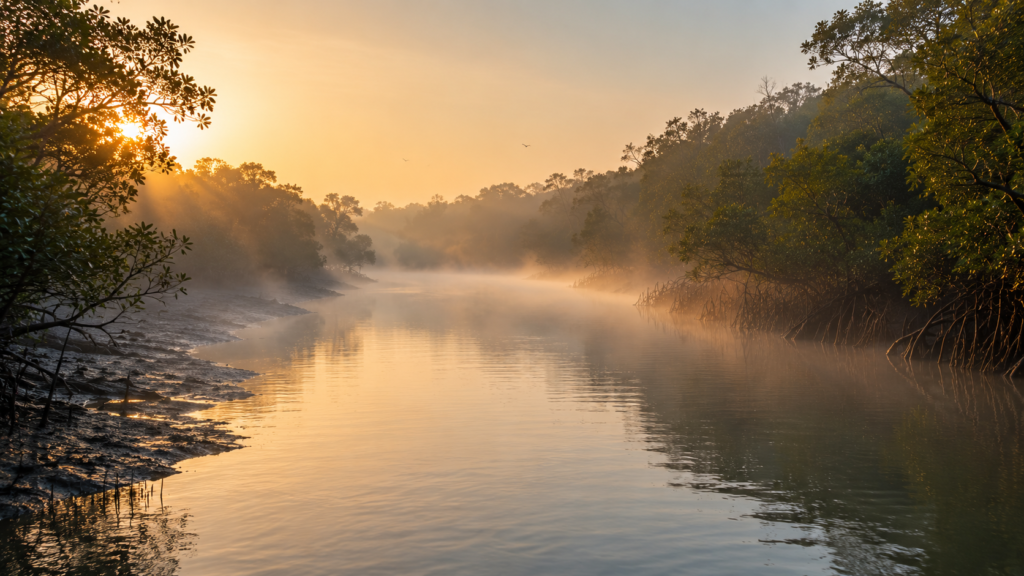
By November, the seasonal transition becomes more established.
The cooler atmosphere makes long boat journeys increasingly comfortable, while the forest retains much of its post-monsoon vitality.
Birdwatchers may find the period particularly interesting as seasonal bird activity becomes increasingly noticeable across the wider ecosystem.
Wildlife exploration also benefits from the ability to spend more time quietly moving through creeks and forest channels.
For travellers considering this period specifically, our Sundarbans in November guide provides a closer look at the month’s character and exploration possibilities.
December: A Popular Winter Experience
December brings a distinctly winter-like character to the Sundarbans.
Comfortable conditions encourage longer periods of outdoor exploration, and the waterways can be especially inviting during morning and afternoon excursions.
This is also a period when many travellers plan their Sundarbans journeys, particularly those combining wildlife exploration with photography, birdwatching or a broader West Bengal itinerary.
Yet December should not be viewed only through the lens of wildlife sightings.
The quiet waterways, changing tides, mangrove landscapes and village surroundings are equally important parts of the experience.
For a month-specific perspective, explore our Sundarbans in December guide.
January: Winter at Its Most Distinctive
January often brings some of the most recognisably winter-like conditions to the Sundarbans.
Cooler mornings, comfortable daytime exploration and strong opportunities for birdwatching make it an attractive period for travellers who want to spend substantial time outdoors.
Wildlife observation is best approached patiently. The Sundarbans does not operate like a conventional wildlife park where animals appear on demand. Every journey follows the natural rhythms of the forest.
That unpredictability is part of the experience.
If January fits your travel window, check out our Sundarbans in January guide that offers a more detailed look at the month.
February: Wildlife, Birds and Comfortable Exploration
February continues the cooler-season experience while gradually moving toward warmer conditions.
The combination of pleasant exploration conditions, active birdlife and the ever-changing tidal environment can make this a rewarding month for nature-focused travellers.
It is particularly suited to travellers who want to combine several interests rather than pursue a single objective: wildlife + birding + photography + boat exploration + landscape observation.
For a closer look at this seasonal window, explore The Wild Orbit’s Sundarbans in February guide.
March: The Forest Begins to Change Again
March marks another seasonal transition.
Temperatures begin to rise, daylight takes on a different quality and the atmosphere of the forest gradually moves away from the cooler winter character.
This does not make the Sundarbans less interesting.
Instead, it offers travellers a different perspective of the ecosystem and its seasonal rhythms.
For those who enjoy observing environmental change rather than simply seeking the most comfortable weather, March can be particularly interesting.
Explore our Sundarbans in March guide for a more detailed look at this transitional period.
Sundarbans During the Monsoon: A Completely Different Forest
The monsoon deserves to be understood on its own terms.
Rain changes the visual and atmospheric character of the Sundarbans dramatically. Mangrove foliage appears intensely green, waterways swell and the sky, clouds and rain can create a constantly shifting backdrop across the forest.
The soundscape changes too.
Rain falling through mangrove vegetation, water moving against the boat, distant bird calls and the movement of tidal channels create an immersive experience that is very different from a dry-season journey.
For photographers and nature enthusiasts, this can be an especially atmospheric period.
For a deeper exploration of this seasonal character, read Sundarbans in Monsoon guide with us.
Did You Know About the Wildlife During the Monsoon?
Animals continue to feed, move, shelter and interact with their habitat according to natural conditions.
The visibility of particular species can vary considerably, however, and the experience becomes more dependent on weather, water conditions and the constantly changing environment.
This is precisely why the monsoon should not be judged solely by conventional wildlife-sighting expectations.
It is an opportunity to experience the Sundarbans ecosystem itself.
The Greenest Expression of the Forest
See it for yourself
A private journey shaped around you — your group, your pace, your interests. Book a free consultation.
The monsoon brings out a side of the mangrove landscape that can be difficult to appreciate during other seasons.
Fresh foliage, wet mud, rain-filled creeks and dramatic skies create an almost cinematic environment.
For travellers who enjoy landscapes, environmental photography, quiet observation and the feeling of being surrounded by nature, the monsoon has a very special charm.
How Wildlife Activity Changes With the Seasons?
One of the most important things to understand before planning a Sundarbans trip is that wildlife activity is seasonal, tidal and opportunistic.
There is no fixed wildlife timetable.
- A tiger may move through a particular area according to its territory and natural behaviour.
- Deer may gather around feeding areas.
- Crocodiles may become visible along exposed banks.
- Monkeys can be active around forest edges, while birds respond to food availability, weather and water conditions.
The tides add another layer.
As water rises and falls, feeding areas change, mudflats appear and disappear, fish movement changes and animals adjust their behaviour.
This makes every boat safari slightly different.
Tigers
The Royal Bengal Tiger remains the most iconic inhabitant of the Sundarbans, but tiger watching should always be approached as a wildlife observation experience rather than a guaranteed sighting.
Different seasons may influence movement, prey availability, temperature and habitat use, but the tiger ultimately follows its own natural rhythm.
Spotted Deer
Chital deer are among the more frequently encountered large mammals in the landscape and form an important part of the Sundarbans food web.
Their presence also contributes to understanding the habitat preferences and ecological relationships that ultimately support the tiger population.
Birds
Birdlife is one of the strongest reasons to experience the Sundarbans beyond tiger watching.
Resident birds occupy the mangrove ecosystem throughout the year, while seasonal visitors add further diversity during the cooler period.
Kingfishers, herons, egrets, raptors and numerous other species can turn an otherwise quiet stretch of creek into an unexpectedly rewarding birding experience.
Crocodiles and Aquatic Life
Estuarine crocodiles, fish, mudskippers and other aquatic and intertidal species are closely connected with the tidal environment.
Their visibility can change with water level, weather, season and location.
This is why paying attention to the water can be just as rewarding as scanning the forest.
The Role of Tides in Every Season

A seasonal guide to the Sundarbans would be incomplete without understanding tides.
The Sundarbans is fundamentally a tidal landscape.
Two journeys during the same season can feel completely different depending on whether the boat is travelling with rising or falling water.
At low tide, muddy banks and intertidal areas become exposed. These spaces can reveal feeding activity, tracks, crabs, mudskippers and other small forms of life.
As the tide rises, channels fill and the landscape begins to transform again.
For this reason, the tide calendar is an important planning tool, but it should be considered alongside weather, route, wildlife priorities and local navigation conditions.
For travellers who want to understand this relationship in detail, explore the Sundarbans Tide Calendar.
Ilish Utsav: When the River Becomes Part of the Celebration
The Sundarbans is not only a wildlife destination.
It is also a living cultural landscape where rivers, fishing communities, food traditions and seasonal cycles remain deeply connected.
The Ilish Utsav is significant in this context.
Hilsa, locally known as ilish, holds a special place in Bengali food culture and is closely associated with the rivers and estuarine environments of the region. An Ilish-focused celebration brings together food, local traditions and the cultural relationship between communities and the waterways.
For travellers, this provides an opportunity to understand the Sundarbans beyond its forests and wildlife.
The region is shaped by people as much as it is by tides.
The Ilish Utsav therefore represents more than a food experience. It offers a glimpse into the cultural identity that has developed around Bengal’s rivers and the communities whose lives remain connected to them.
A dedicated guide from The Wild Orbit to Ilish Utsav in the Sundarbans can explore the celebration, its cultural significance and seasonal context in greater detail.
Which Season Is Best for Different Types of Travellers?

For First-Time Visitors
The cooler months can provide a comfortable introduction to the landscape, particularly for travellers who want to combine boat exploration, wildlife observation and birdwatching.
For Wildlife Enthusiasts
Wildlife is present throughout the year, but the nature of observation changes with environmental conditions.
The cooler period can be particularly comfortable for extended wildlife-focused exploration, while other seasons provide their own ecological perspectives.
For Birdwatchers
The Sundarbans is rewarding for birders throughout the year, with seasonal variation adding another layer of interest.
The cooler months can be especially appealing for travellers interested in observing both resident and seasonal birdlife.
For Photographers
Every season offers a different visual language.
Winter can provide softer light and comfortable shooting conditions, while the monsoon delivers saturated greens, dramatic skies, reflective waterways and atmospheric rain.
For Nature and Landscape Lovers
If your primary interest is the mangrove ecosystem itself rather than ticking off a wildlife checklist, seasonal variation becomes an advantage.
The forest changes continuously.
For Families
Comfort, journey duration, boat conditions and individual preferences should all be considered when selecting a travel period.
A thoughtfully designed itinerary can make the experience enjoyable without reducing the Sundarbans to a single wildlife objective.
For Culture and Local-Life Explorers
Seasonal festivals, fishing traditions, food, village life and river-based livelihoods can add another dimension to a Sundarbans journey.
The timing of cultural experiences can therefore be an important part of itinerary planning.
For Repeat Visitors
Returning in a different season can reveal an almost entirely different Sundarbans. A winter journey and a monsoon journey are not simply two versions of the same trip. They are two different experiences of the same living ecosystem.
What About Fishing and Honey Collection?
Traditional livelihoods are deeply connected with the seasonal rhythm of the Sundarbans.
Fishing activity changes through the year according to fish movement, tides, weather, regulations and local conditions.
Honey collection also has its own seasonal cycle and cultural significance, particularly in relation to forest-dependent communities and traditional knowledge.
These subjects are important for understanding the wider Sundarbans story, but they deserve dedicated treatment rather than being reduced to a few paragraphs in a general seasonal guide.
Explore our dedicated Sundarbans Fishing Seasons guide to understand how fishing connects communities with the waterways.
For the forest’s traditional honey-gathering culture, the Sundarbans Honey Collection Season guide explores the subject in greater depth.
Weather Is Only One Part of the Decision
When choosing the best season to visit the Sundarbans, travellers often focus primarily on temperature.
But a more useful approach considers several factors together:
- Weather and humidity
- Rainfall
- Tide patterns
- Daylight hours
- Wildlife behaviour
- Bird activity
- Water conditions
- Photography opportunities
- Local cultural experiences
- Personal travel preferences
- Route and duration
- Comfort level with changing weather
This is particularly important because the Sundarbans is not a conventional land-based destination.
It is an ecosystem experienced largely through its waterways.
A good itinerary therefore responds to the forest rather than forcing the forest into a predetermined itinerary.
A Note on the Cyclone Season
The Bay of Bengal and the wider coastal region are naturally influenced by tropical weather systems.
For travellers, the important principle is not to label an entire period as unsuitable, but to understand that weather conditions can change and itineraries may need to remain flexible.
A responsible expedition operator continuously considers weather forecasts, local advisories, navigation conditions and operational decisions when planning journeys.
For a deeper understanding of weather systems, planning and responsible travel considerations, explore our guide to cyclone season in the Sundarbans.
The Wild Orbit Expert Advice
Don’t Choose a Date. Choose an Experience.
The best season to visit the Sundarbans ultimately depends on what you want the forest to give you.
- If your priority is comfortable wildlife exploration, birdwatching and spending long hours on the waterways, the cooler months from October to March can be particularly appealing.
- If you are drawn to lush landscapes, rain, dramatic skies, changing waterways and a more atmospheric relationship with the forest, the monsoon offers an entirely different experience.
- If cultural immersion matters to you, seasonal food traditions, fishing communities and events such as Ilish Utsav can become part of the journey.
- If you simply want to understand the Sundarbans as a living ecosystem, there is something to discover in every season.
Our advice is therefore simple: Don’t ask which season is best in isolation. Ask which season is best for you.
Your available travel period, interests, preferred pace, tolerance for weather, wildlife priorities, photography goals, family requirements and cultural interests can all influence how an itinerary should be designed.
At The Wild Orbit, we approach the Sundarbans as an ecosystem to be explored rather than a destination to be packaged.
If you already have a flexible travel period or even a fixed window, do get in touch with us. Based on your flexibility of travel dates, we can craft a customised Sundarbans experience while considering the season, tides, wildlife interests, photography opportunities, local experiences and the character of the forest at that particular time.
Because the Sundarbans does not tell the same story twice.
And every season has a story worth experiencing.
FAQs
What is the best season to visit the Sundarbans?
October to March is popular for comfortable exploration, wildlife observation and birdwatching, while the monsoon offers lush landscapes, rain-filled waterways and a dramatically different atmosphere. The best period depends on your interests and travel preferences.
Is the Sundarbans worth visiting in the monsoon?
Yes. The monsoon reveals a particularly lush and atmospheric side of the Sundarbans. Rain, swollen waterways, fresh vegetation and dramatic skies create a different kind of wildlife and nature experience.
Is winter a good time for a Sundarbans trip?
October to March can be an excellent period for travellers who prefer cooler and generally more comfortable outdoor conditions. It is particularly appealing for wildlife observation, birdwatching, photography and extended boat exploration.
Can I see a Royal Bengal Tiger in every season?
Tigers inhabit the Sundarbans throughout the year, but a sighting can never be guaranteed. Wildlife follows natural behaviour, and visibility depends on many factors including habitat, tides, weather and chance.
Which season is best for birdwatching in the Sundarbans?
Birdwatching can be rewarding throughout the year. The cooler months can be particularly interesting because resident birds are joined by seasonal visitors, adding variety to the birding experience.
Does the tide matter when visiting the Sundarbans?
Very much. Tides influence waterways, exposed mudflats, feeding areas and wildlife behaviour. The tide cycle should therefore be considered when designing a boat-based Sundarbans itinerary.
What is the significance of Ilish Utsav?
Ilish Utsav celebrates the cultural importance of hilsa in Bengali food traditions and the deep relationship between communities and the region’s rivers and estuarine waterways. It adds an important cultural dimension to the Sundarbans experience.
Should I visit the Sundarbans only between October and March?
Not necessarily. October to March is an attractive period for many travellers, but the Sundarbans is a year-round ecosystem. Monsoon, seasonal cultural experiences and changing ecological conditions offer their own distinctive reasons to visit.
What should I consider when choosing my Sundarbans travel dates?
Consider your preferred experience, wildlife interests, birdwatching goals, photography, weather preferences, available travel dates, tide conditions, journey duration and interest in local culture. A customised itinerary can bring these factors together.
Experience the Sundarbans in Its Own Season with The Wild Orbit
The Sundarbans is constantly changing.
- The tide redraws the edges of the forest.
- Rain transforms the waterways.
- Winter changes the rhythm of exploration.
- Birds arrive and depart.
- Fishing communities follow seasonal cycles.
- The mangroves respond to water, weather and light.
There is no single version of the Sundarbans.
There are many.
And perhaps that is the best reason to choose your travel season not by a generic calendar, but by the kind of story you want to experience.
Plan your private Sundarban expedition
A private journey shaped around you — your group, your pace, your interests. Book a free consultation.