

 Travel guide
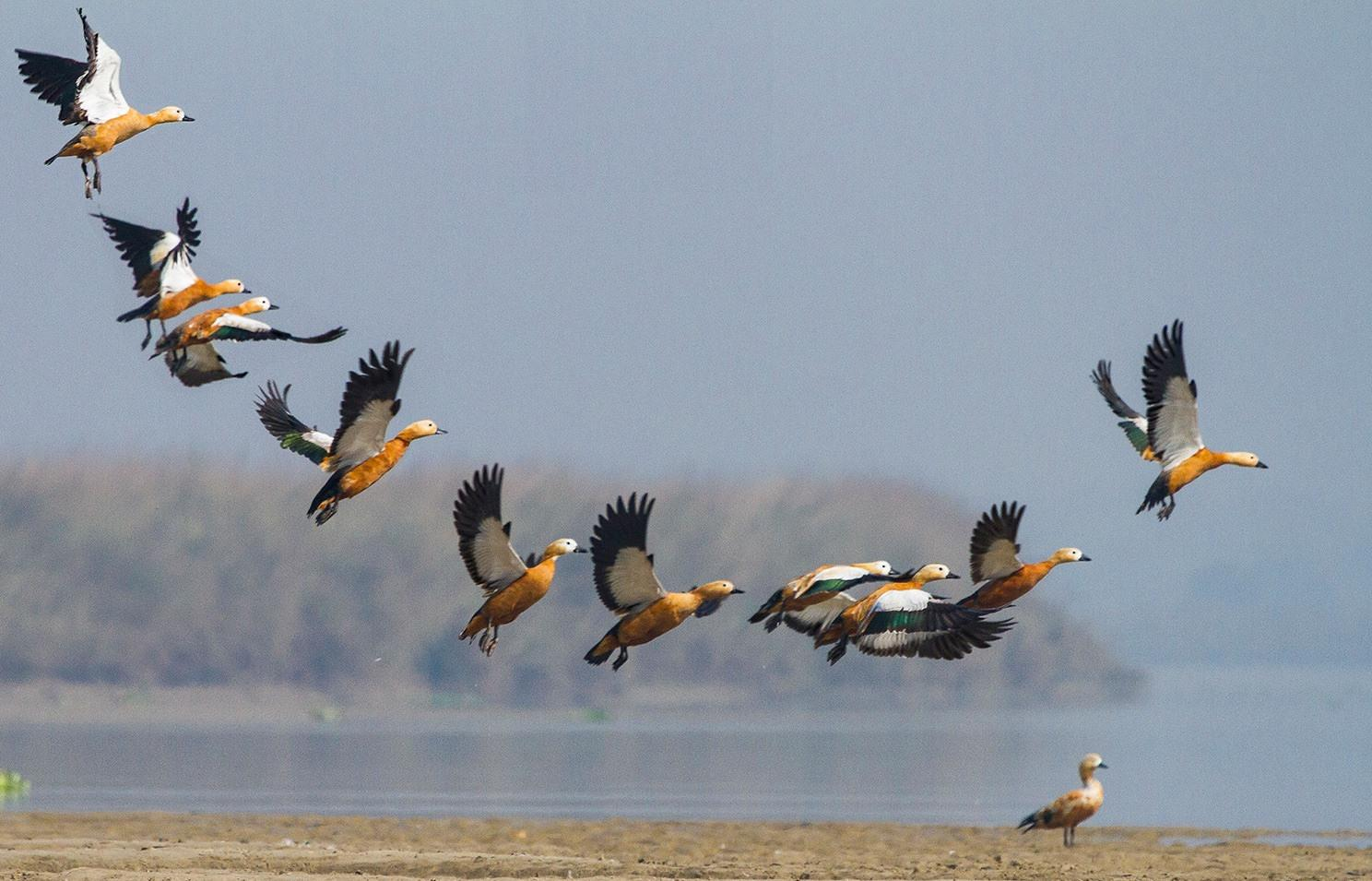
The Sundarbans is known around the world for its mangrove forests, tidal rivers and Bengal tigers. But for birdwatchers, the landscape offers another extraordinary spectacle: a constantly changing avian world shaped by migration, tides and seasons.
- Some birds arrive after travelling thousands of kilometres from northern breeding grounds.
- Some stop here briefly before continuing their journey.
- Others settle through the winter. And many species are residents, making the mangroves their home throughout the year.
- This makes the bird migration calendar of the Sundarbans much more than a winter checklist.
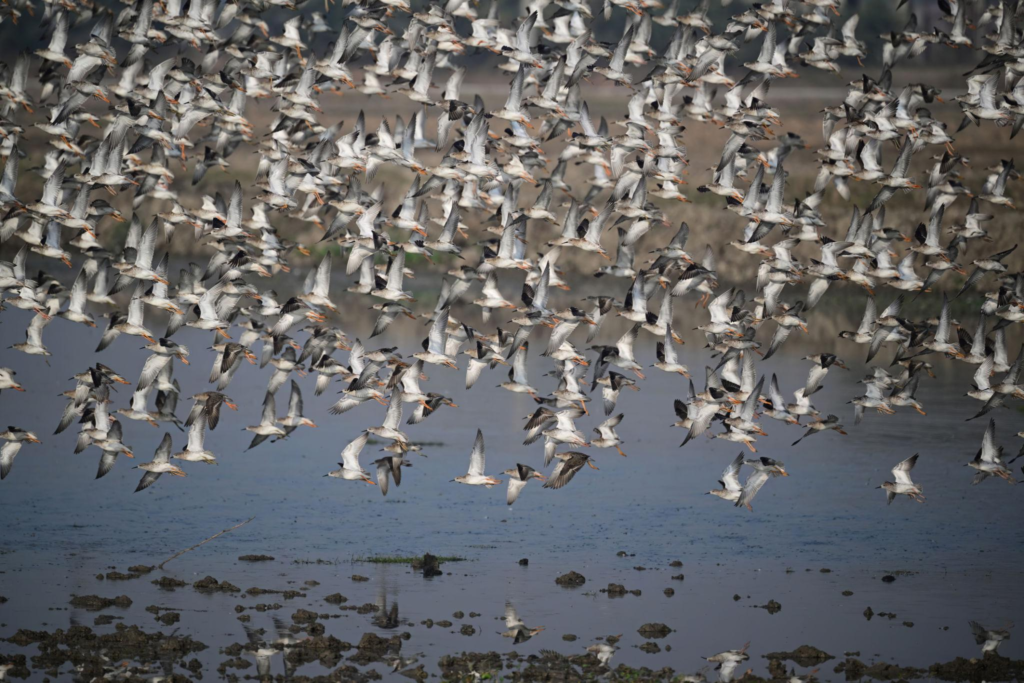
The cooler months can bring remarkable concentrations of migratory waders and waterbirds to the mudflats, tidal shores and wetlands. Yet the Sundarbans does not become a birding destination only when winter migrants arrive. Its resident kingfishers, raptors, herons, egrets, forest birds and other mangrove specialists remain part of the ecosystem year-round, while summer and monsoon periods bring their own seasonal possibilities.
The Sundarban Tiger Reserve records more than 400 species of resident and migratory birds from the Sundarban Biosphere Reserve. More recently, the 2026 Sundarban Bird Festival recorded 168 species, including 57 migratory and 111 resident species, across approximately 4,000 square kilometres.
So, instead of asking only “What is the best month for birdwatching in the Sundarbans?”, it is worth asking: What kind of birding experience do you want?
The Wild Orbit Expert Advice
Winter may be the Sundarbans’ bird airport and bird paradise, but it is not the whole story.
Winter brings one of the region’s most spectacular avian events: long-distance migrants arrive and gather around the mudflats, waterways and wetlands. For anyone whose priority is migratory birds, the period from October to March deserves special attention.
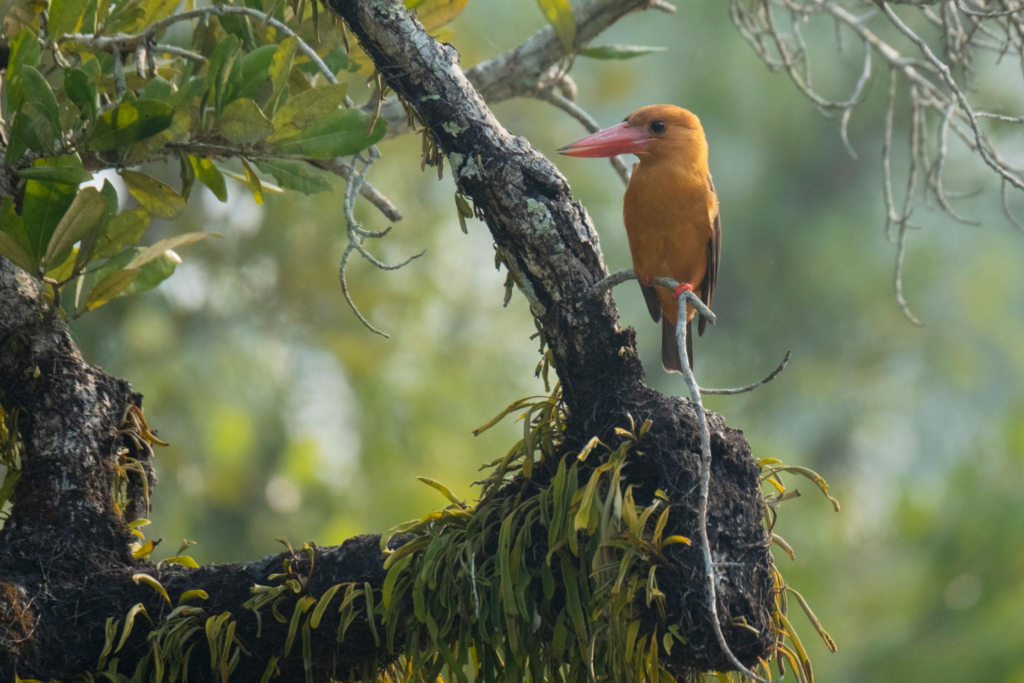
But the Sundarbans is also home to a remarkable resident bird community. Brown-winged Kingfishers work the mangrove waterways, raptors patrol the sky, herons and egrets use the wetlands, and forest birds continue moving through the vegetation regardless of the season.
Summer, monsoon and post-monsoon periods can also reveal seasonal species and different ecological behaviour.
There is no single month that tells the whole story of Sundarbans birdlife. Every month opens a different window into the forest.
Sundarbans Bird Migration Calendar: January to December
Bird migration does not follow rigid calendar dates. Arrival and departure can shift with weather, food availability, habitat conditions and the biology of individual species.
The following calendar combines documented records and seasonal research. A species listed for a month should therefore be understood as a seasonal possibility or documented occurrence, not a guarantee of a sighting.
| Month | Migratory & Seasonal Birds | Resident Birds | Birding Character |
| January | Little Stint, Curlew Sandpiper, Red-necked Stint, Sanderling, Grey-headed Lapwing, Eurasian Curlew, Common Sandpiper and other wintering waders | Brown-winged Kingfisher, Collared Kingfisher, Black-capped Kingfisher, Stork-billed Kingfisher, Brahminy Kite, White-bellied Sea Eagle, herons and egrets | Peak winter birding |
| February | Little Stint, Curlew Sandpiper, Red-necked Stint, Sanderling, Common Sandpiper and other wintering waders and waterbirds | Kingfishers, raptors, herons, egrets and other resident birds | Winter visitors remain prominent |
| March | Remaining winter waders and waterbirds, including Common Sandpiper and Eurasian Curlew | Resident kingfishers, raptors and wetland birds | Seasonal transition |
| April | Occasional seasonal or passage visitors | Brown-winged Kingfisher, Collared Kingfisher, Stork-billed Kingfisher, Brahminy Kite, White-bellied Sea Eagle, herons and egrets | Resident birdlife takes the lead |
| May | Asian Paradise Flycatcher, Golden Oriole, Blue-tailed Bee-eater, Rosy Starling, Red-headed Bunting, Crested Bunting | Resident kingfishers, raptors and wetland birds | Summer birding |
| June | Seasonal and wetland-associated birds | Kingfishers, herons, egrets, cormorants and raptors | Monsoon approaches |
| July | Ruddy Kingfisher, Mangrove Pitta, Mangrove Whistler and other seasonal possibilities | Resident mangrove and wetland birds | Monsoon birding |
| August | Monsoon-associated and seasonal birds | Kingfishers, raptors, herons, egrets and cormorants | Rain-shaped mangrove landscape |
| September | Early seasonal movement and possible early returning migrants | Resident mangrove and wetland birds | The migration cycle turns |
| October | Early wintering waders, sandpipers, plovers and waterbirds | Kingfishers, raptors, herons and other residents | Migration begins building |
| November | Little Stint, Common Sandpiper, Curlew Sandpiper, Eurasian Curlew, Grey-headed Lapwing, wintering ducks and other waterbirds | Resident kingfishers, raptors and wetland birds | Migratory diversity increases |
| December | Little Stint, Curlew Sandpiper, Red-necked Stint, Sanderling, Eurasian Curlew, Northern Pintail, Eurasian Wigeon, Northern Shoveler and other winter visitors | Resident kingfishers, raptors, herons and egrets | Winter migration intensifies |
The winter species listed above are supported particularly strongly by winter wader surveys and Sundarban bird-festival records. Seasonal summer and monsoon species are drawn from broader avian research covering the greater Sundarbans and should be interpreted accordingly.
January: The Winter Bird Spectacle
January is one of the most rewarding periods for experiencing the Sundarbans’ migratory birdlife.
A systematic survey of the Indian Sundarbans during January and February recorded 7,758 waders representing 32 species. Long-distance Arctic-breeding migrants made up more than half of the species and around 70% of the individual waders counted.
Among the recorded species were Little Stint, Curlew Sandpiper, Red-necked Stint, Sanderling, Grey-headed Lapwing, Eurasian Curlew and Common Sandpiper.
Wintering ducks and other waterbirds add another dimension to the scene. Meanwhile, resident kingfishers and raptors continue using the same waterways and mangrove edges.
For a traveller specifically interested in migratory waders, January is one of the calendar’s strongest chapters.
February: Winter Visitors Remain
February continues the winter birding period, with many seasonal visitors still using the Sundarbans’ mudflats, tidal margins and wetland habitats.
The documented winter assemblage includes Little Stint, Curlew Sandpiper, Red-necked Stint, Sanderling and other migratory shorebirds, alongside medium-distance migrants and locally breeding waders.
Look beyond the mudflats as well.
Resident kingfishers, Brahminy Kites, White-bellied Sea Eagles, herons and egrets continue to occupy the landscape, giving February a useful combination of winter visitors and year-round species.
March: The Migration Calendar Turns
March is a month of transition.
Some winter visitors may still be present, while others begin their northward journey. The composition of a birding trip can therefore change noticeably as the month progresses.
Remaining waders such as Common Sandpiper and Eurasian Curlew, along with other winter visitors, may still be encountered. The resident bird community becomes increasingly important as the season advances.
For birdwatchers who enjoy observing change rather than simply chasing peak numbers, March offers a different kind of interest.
April: The Residents Take Centre Stage
As winter migrants begin departing, attention naturally shifts toward the birds that remain.
The mangrove waterways can still produce encounters with Brown-winged Kingfisher, Collared Kingfisher, Stork-billed Kingfisher and Black-capped Kingfisher, while raptors such as Brahminy Kite and White-bellied Sea Eagle continue to patrol the landscape.
Herons, egrets and other wetland birds add movement around the water.
April is therefore less about winter concentrations and more about getting to know the resident avian community of the Sundarbans.
May: Summer Brings a New Mix
Summer adds species and behaviours that are easily overlooked when birding is viewed only through the lens of winter migration.
Research covering the greater Sundarbans records summer observations of Asian Paradise Flycatcher, Golden Oriole, Blue-tailed Bee-eater, Rosy Starling, Red-headed Bunting and Crested Bunting, among other seasonal birds.
The resident kingfishers, raptors and wetland birds remain part of the landscape.
May therefore offers a useful lesson for birdwatchers: a change in migratory activity does not mean a disappearance of birdlife.
June: Into the Monsoon
June begins to change the physical character of the Sundarbans.
Rain alters the appearance of waterways, wetlands and vegetation, while birds respond to changing feeding conditions.
Resident kingfishers, herons, egrets, cormorants and raptors remain important subjects, while seasonal wetland activity can bring additional variety.
For anyone interested in how birds interact with their habitat, June offers a field experience quite different from the winter months.
July: Monsoon Birding
By July, the Sundarbans is firmly in its monsoon rhythm.
The wider Sundarbans has recorded monsoon-period observations of species such as Ruddy Kingfisher, Mangrove Pitta and Mangrove Whistler. Waterbirds may also become active around temporary wet areas and adjoining grasslands.
These species should be regarded as seasonal or specialist possibilities rather than guaranteed sightings.
The resident bird community provides the more consistent thread, while the rain itself becomes an important part of the landscape.
August: A Rain-Shaped Sundarbans
See it for yourself
A private journey shaped around you — your group, your pace, your interests. Book a free consultation.
August continues the monsoon story.
The winter mudflat scene has given way to a wetter landscape, with water levels, vegetation and feeding conditions changing across the delta.
Kingfishers, herons, egrets, cormorants and raptors remain part of the resident birding experience, while seasonal species may appear according to habitat and local conditions.
For travellers interested in seeing the Sundarbans under very different environmental conditions, August offers a distinct perspective.
September: Waiting for the Next Migration
September is the bridge between the monsoon and the coming winter migration.
Research on the greater Sundarbans describes the post-monsoon period as particularly productive and notes the arrival of long-distance migrants from September onward, with more noticeable migratory waterbird arrivals developing from mid-October.
Resident birds remain present, but the seasonal calendar is beginning to turn.
For birdwatchers, September carries a sense of anticipation: the next migration is on its way.
October: The Migrants Return
October marks the beginning of the stronger autumn migration period.
Research identifies mid-October to mid-November as an important period for the arrival of migratory waterbirds in the greater Sundarbans.
Early arrivals may include waders, sandpipers, plovers and other waterbirds, while winter-associated ducks begin becoming increasingly relevant.
Official Sundarban bird records include species such as Eurasian Wigeon, Northern Pintail and Northern Shoveler among the region’s avifauna.
October is a month of overlap: resident birds remain while winter visitors begin returning.
November: Migration Builds Momentum
By November, the winter birding landscape becomes increasingly noticeable.
Tidal mudflats and wetland margins may support growing numbers of waders and waterbirds.
Possible winter visitors include Little Stint, Curlew Sandpiper, Common Sandpiper, Eurasian Curlew and Grey-headed Lapwing, along with other seasonal species documented from the region.
Recent bird surveys reinforce the diversity of this period. The 2026 Sundarban Bird Festival recorded 45 mudflat bird species among its 168 total species, alongside a substantial resident community.
November is when the bird airport starts getting busy.
December: The Bird Airport Gets Busy
December brings the Sundarbans deeper into its winter phase.
Research on the greater Sundarbans indicates that migratory waterbird arrival becomes increasingly pronounced through autumn and can reach particularly high levels around late December and early January.
Winter visitors can include Little Stint, Curlew Sandpiper, Red-necked Stint, Sanderling, Eurasian Curlew, Northern Pintail, Eurasian Wigeon and Northern Shoveler.
At the same time, the resident community continues its daily life.
This combination of new arrivals and permanent residents is one of the defining sights of the winter Sundarbans.
Permanent Resident Birds of the Sundarbans
Migratory birds may receive most of the attention during winter, but the Sundarbans has a substantial resident avifauna.
The latest 2026 Sundarban Bird Festival recorded 111 resident species, compared with 57 migratory species.
These birds give the Sundarbans its year-round avian identity.
Kingfishers
The Sundarbans is particularly notable for its kingfisher diversity.
Documented species include:
- Brown-winged Kingfisher
- Collared Kingfisher
- Black-capped Kingfisher
- Stork-billed Kingfisher
- Common Kingfisher
- White-throated Kingfisher
- Pied Kingfisher
Official Sundarban material highlights the region’s exceptional kingfisher diversity.
For birdwatchers, the mangrove-water interface is particularly interesting because several kingfisher species occupy different ecological niches.
Raptors
The Sundarbans also support a notable community of birds of prey, including:
- Brahminy Kite
- White-bellied Sea Eagle
- Crested Serpent Eagle
- Changeable Hawk-Eagle
- Shikra
- Osprey
Published field research records several of these species across the year.
Herons, Egrets and Other Wetland Birds
Wetlands and tidal waterways support species such as:
- Grey Heron
- Great Egret
- Little Egret
- Little Cormorant
- Black-crowned Night Heron
- Pond Heron
The diversity of wetland birds becomes especially apparent when birding is combined with careful observation of changing tidal habitats.
Forest and Mangrove Birds
The birdlife extends beyond open water.
Sundarban bird records include Fulvous-breasted Woodpecker, Lesser Yellownape, Streak-throated Woodpecker, Grey-headed Woodpecker, Black-rumped Flameback, Greater Flameback, Coppersmith Barbet, Greater Coucal and Green-billed Malkoha, among others.
This diversity is one reason the Sundarbans should be explored as an entire avian ecosystem, rather than solely as a wintering ground for migratory waders.
Why Do Migratory Birds Come to the Sundarbans?
The answer begins with habitat.
The Sundarbans contain an intricate combination of:
- tidal rivers
- creeks
- mudflats
- sandbanks
- shallow waters
- mangrove forests
- shoreline habitats
- wetlands
For waders and shorebirds, exposed mudflats can provide important feeding grounds.
The systematic winter survey of the Indian Sundarbans recorded 32 wader species and identified the region as an important wintering site for waders in South Asia.
The broader Sundarbans also sits within important migratory pathways connecting northern breeding areas with southern wintering grounds.
For many migrants, the attraction is straightforward: food + water + resting habitat + suitable seasonal conditions.
Where Can You Find Different Birds in the Sundarbans?
Knowing the habitat can be just as important as knowing the species.
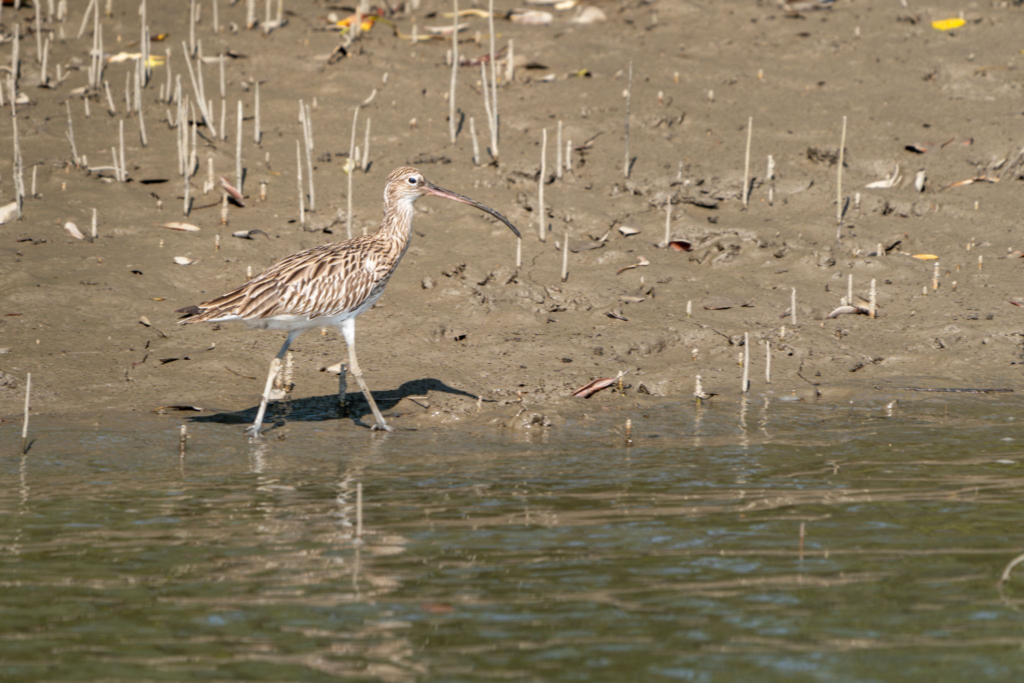
Mudflats
These are particularly valuable for waders and shorebirds when exposed by the tide.
Tidal Creeks and River Edges
Kingfishers, herons, egrets and other water-associated birds may use these areas.
Wetlands
Ducks, waders, herons and other waterbirds use wetlands according to season and local conditions.
Mangrove Edges
The transition between water and forest can be productive for kingfishers, raptors and other birds.
Forest Habitat
Woodpeckers, barbets, coucals, malkohas and other forest birds use the vegetation away from the open mudflats.
This habitat diversity means that birding in the Sundarbans is not confined to looking across the water.
What Is the Best Time for Birdwatching in the Sundarbans?
If your primary goal is migratory birds, the most important period is generally October to March.
Autumn marks the return of seasonal visitors, winter builds through December, and January and February can offer particularly strong opportunities for waders and other wintering waterbirds.
But there is a crucial distinction:
The best time for migratory birds is not the only time for birdwatching.
Outside winter, the resident bird community remains. Summer brings seasonal visitors, monsoon conditions change wetland birding, and September begins the transition toward another migration cycle.
So the better question is not simply: “Which month is best?”
It is: “Which birds and which experience do I want?”
Can You See Birds in the Sundarbans Throughout the Year?
Yes.
The species mix changes, but the birdlife does not disappear.
Winter brings long-distance migrants. Spring marks a period of transition. Summer introduces seasonal visitors. The monsoon changes the character of wetlands and mangroves. Post-monsoon conditions prepare the landscape for another migration cycle.
Throughout these changes, resident birds remain.
The 2026 Sundarban Bird Festival’s 111 resident species alongside 57 migratory species provide a useful recent illustration of that balance.
The Sundarbans is therefore better understood as a year-round birding ecosystem with a particularly important winter migration season.
What Can Affect Your Bird Sightings?
A bird migration calendar tells you when a species may occur. It cannot guarantee that you will see it.
Several factors matter.
Tide
A mudflat may be a productive feeding ground at low tide and completely submerged a few hours later.
Weather
Wind, rain, heat and visibility can change bird activity.
Habitat
A mudflat wader, forest woodpecker and mangrove kingfisher each respond to very different environments.
Time of Day
Bird activity can vary considerably through the day, making timing an important part of field observation.
Food Availability
Migratory birds respond to feeding conditions rather than dates printed on a calendar.
Annual Variation
Migration is biological. Arrival and departure dates can shift between years.
That is why responsible birdwatching focuses on understanding probability rather than promising sightings.
A Year of Birding in the Sundarbans
The calendar is best understood as a cycle rather than a ranking.
January–February: winter migrants and resident birds share the landscape.
March–April: many winter visitors begin departing and resident species become more prominent.
May: summer visitors add another seasonal layer.
June–August: monsoon conditions reshape wetlands and birding habitats.
September: post-monsoon transition begins.
October–November: returning migrants become increasingly visible.
December: winter migration gathers strength again.
Every period reveals something different.
A winter mudflat may show you the scale of long-distance migration. A summer forest may introduce a seasonal visitor. A monsoon wetland may reveal different feeding behaviour. An October creek may show the first signs of the next migration cycle.
The calendar does not tell you when the Sundarbans is worth visiting. It tells you what you may discover when you arrive.
Birding the Sundarbans with The Wild Orbit
At The Wild Orbit, we see the Sundarbans as a living ecosystem rather than a checklist of famous wildlife sightings.
Birding here is shaped by the relationship between birds, tides, mudflats, waterways, mangroves, weather and season. That relationship is what makes every expedition different.
Winter may bring the greatest concentration of migratory visitors. Another month may offer a closer look at resident kingfishers and raptors. A summer or monsoon expedition may reveal seasonal species and a completely different expression of the mangrove landscape.
Our approach is to help travellers experience that changing wilderness with curiosity, patience and respect for the habitat.
Every Month Has a Bird Story
The Sundarbans does not have just one birding season.
It has a birding calendar.
Winter can bring spectacular concentrations of migratory birds, particularly across mudflats, wetlands and tidal shores. But the resident birds remain throughout the year, while summer, monsoon and post-monsoon periods reveal different species, habitats and behaviours.
A January mudflat, a May mangrove canopy, a July wetland and an October tidal creek do not offer the same experience.
And that is exactly what makes the calendar worth exploring.
Don’t ask only when the Sundarbans has the most migratory birds. Ask what you want to discover.
The calendar changes. The wild remains.
Plan your private Sundarban expedition
A private journey shaped around you — your group, your pace, your interests. Book a free consultation.