

 Travel guide
Australia teaches you to respect wild places.
From tropical wetlands and mangrove coastlines to rainforests, reefs and vast outback landscapes, Australian travellers are familiar with the idea that wildlife is shaped by its environment. You learn to read a landscape, understand habitats and appreciate that some of the most remarkable wildlife experiences are not found behind fences or on predictable routes.
The Sundarbans offers something different.
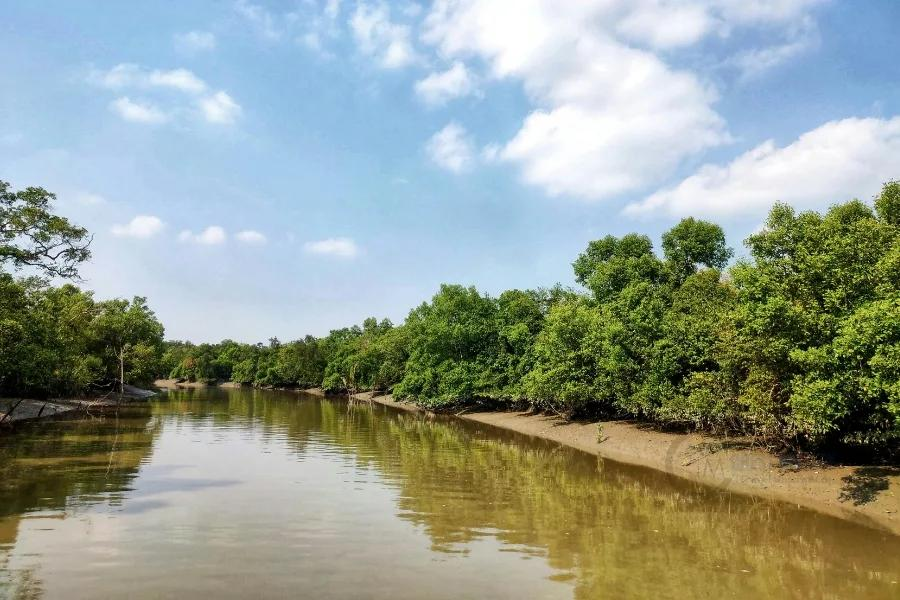
Here, the wilderness moves with the tide.
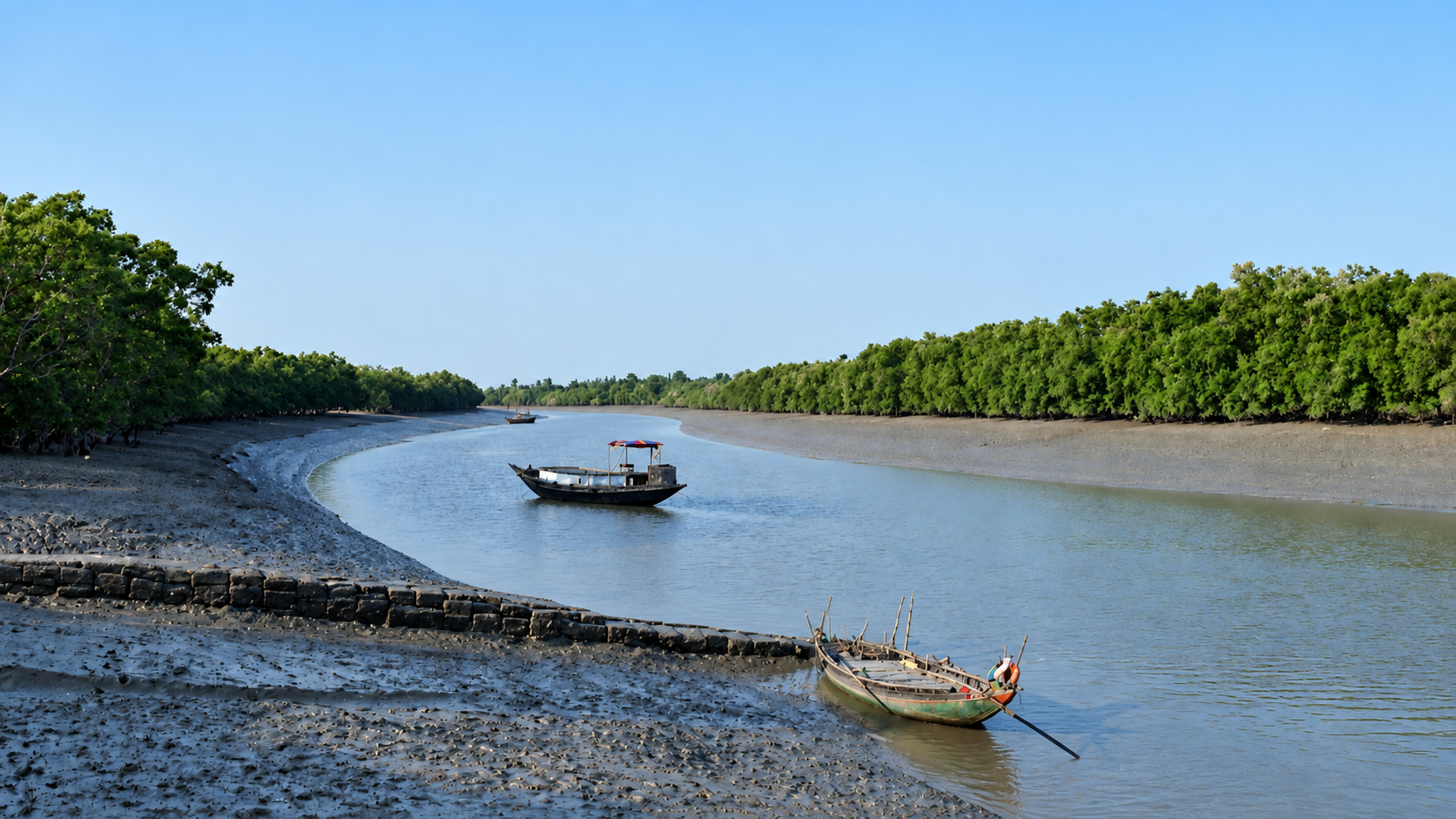
Rivers and creeks wind between mangrove-covered islands. Mudflats appear and disappear with the water. Wildlife moves through a landscape where land and water are constantly changing—and somewhere within this vast tidal maze lives the Royal Bengal Tiger.
For Australian travellers looking for a wildlife experience beyond conventional safaris, the Sundarbans presents a rare opportunity to explore one of the world’s most distinctive ecosystems from the water.
This is not simply a tiger trip.
It is a journey into a living mangrove wilderness.
Why the Sundarbans Is a Different Kind of Wilderness
The Sundarbans is part of the vast Ganges-Brahmaputra-Meghna delta and extends across India and Bangladesh.
The Indian Sundarbans in West Bengal are characterised by tidal waterways, mangrove forests, islands, mudflats and channels that constantly respond to the movement of the Bay of Bengal.
That makes the experience fundamentally different from a conventional land-based wildlife safari.
There is no long road network taking you from one animal sighting to another.
Your boat becomes your route.
The landscape becomes your guide.
A channel may open into a wide stretch of water. A narrow creek may disappear into dense mangroves. A mudbank may attract birds, crocodiles or deer. Then the tide changes and the same landscape looks completely different.
For Australian travellers accustomed to exploring wild environments across large distances, this offers a fascinating contrast: a wilderness where water determines movement.
The Sundarbans Among the World’s Great Wildlife Destinations
The world’s great wildlife destinations each offer something distinctive.
An African safari is often defined by expansive landscapes and iconic large mammals.
The Amazon represents immense tropical rainforest, extraordinary biological complexity and a seemingly endless world of life.
The Galápagos is celebrated for isolated island ecosystems and evolutionary history.
The Sundarbans belongs in this conversation for a different reason.
Its defining experience is a tidal mangrove wilderness inhabited by Bengal tigers and a remarkable range of wildlife adapted to water, mud, salt and shifting islands.
The Sundarbans is not an inferior alternative to an African safari, the Amazon or the Galápagos.
It is a fundamentally different wilderness experience and one that deserves its own place among the world’s great wildlife destinations.
For an Australian traveller who has already experienced reefs, rainforests, wetlands or outback landscapes, that difference can be the attraction.
You are not travelling to India to find another version of Australia.
You are travelling to experience a wilderness that could exist nowhere else.
The Sundarbans Is Not Australia’s Wetlands and That’s the Point
Australia has extraordinary wetland and mangrove environments.
Places such as Kakadu, the northern Australian coast, the Daintree region and tropical wetlands demonstrate how closely wildlife can be connected to water, vegetation and seasonal change.
The Sundarbans shares some of that ecological logic.
But its scale, tidal dynamics and wildlife story are distinctly its own.
Instead of crocodile-filled billabongs or expansive northern wetlands, imagine navigating through a maze of tidal creeks surrounded by dense mangroves.
Instead of watching wildlife from a land-based vehicle, much of the experience unfolds from a boat.
And instead of Australia’s familiar wildlife, the landscape is home to species such as the Royal Bengal Tiger, spotted deer, wild boar, estuarine crocodiles, king cobras, waterbirds, raptors and kingfishers.
The comparison is useful precisely because the environments are different.
Australia gives you a reference point. The Sundarbans gives you a new wilderness vocabulary.
Mangrove Wilderness on a Different Scale
Mangroves are often misunderstood as simply coastal vegetation.
In the Sundarbans, they form an entire world.
Their roots stabilise muddy shores, provide habitat for wildlife and help shape the interface between land and water. Channels, creeks, mudflats and islands create a constantly changing network of habitats.
The tide is central to everything.
It influences where boats can travel, where mudflats emerge, where animals feed and how the landscape appears throughout the day.
The Indian Sundarbans contains a remarkable diversity of mangrove species, and the ecosystem supports terrestrial, aquatic and avian wildlife within an environment that can be challenging even for highly adapted species.
This is one reason the Sundarbans is so valuable to travellers interested in ecology.
You are not simply looking at wildlife.
You are observing the relationship between water, vegetation, tides, habitat and survival.
The Royal Bengal Tiger: A Predator Shaped by Water
The Royal Bengal Tiger is the animal that captures the imagination of most visitors.
But the Sundarbans tiger is interesting for more than its rarity or iconic status.
It has adapted to a mangrove environment unlike the grasslands, forests and open landscapes associated with many other tiger habitats.
Water is part of its world.
Tidal creeks divide islands. Mudflats replace conventional trails. Dense vegetation can make visibility difficult.
The result is a wildlife experience built around possibility rather than certainty.
You may spend hours watching the banks without seeing a tiger.
That does not mean nothing is happening.
Tracks, movement in vegetation, alarm calls, deer behaviour, bird activity and changes along the shoreline can all become clues.
A sighting, when it happens, becomes a moment inside a much larger ecological story.
For Australian travellers accustomed to wildlife encounters where patience matters, this is an important part of the experience.
The Sundarbans rewards observation rather than expectation.
Wildlife Beyond the Tiger

The tiger may be the headline, but it should never be the entire reason for visiting.
The Sundarbans supports a diverse collection of wildlife, including:
- Spotted deer
- Wild boar
- Estuarine crocodiles
- Rhesus macaques
- King cobras and other reptiles
- River and coastal birdlife
- Kingfishers
- Egrets and herons
- Raptors and other water-associated birds
- Aquatic wildlife
Birdwatching can become an important part of a slower expedition.
A kingfisher crossing the water, a raptor circling above the mangroves or a group of wading birds feeding along an exposed mudflat can be as rewarding as a large-animal sighting.
This is particularly important for photographers.
The Sundarbans offers an opportunity to photograph not only animals, but relationships between animals and habitat.
Your Boat Is Your Route Through the Wilderness
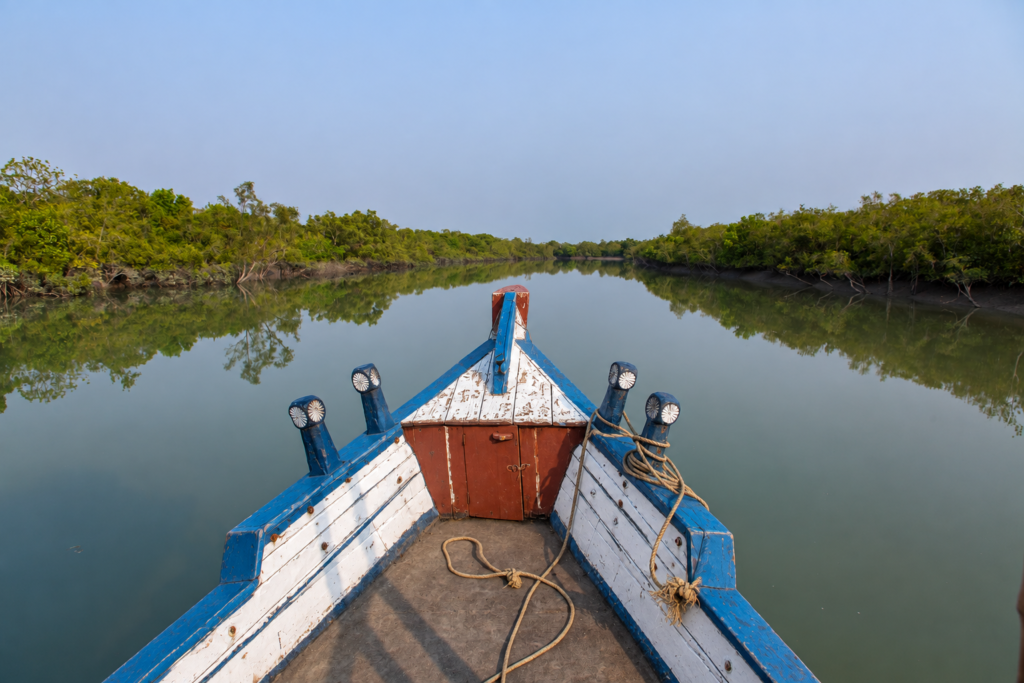
One of the defining characteristics of a Sundarbans expedition is that the boat is not merely transport.
It is part of the experience.
You travel through waterways rather than driving through a network of safari roads.
The changing tide determines the rhythm.
Wide rivers create expansive views. Narrow channels bring you closer to the mangrove environment. Stops near watchtowers and designated areas provide opportunities to observe the surrounding landscape and wildlife.
The boat also changes how you photograph.
Instead of constantly searching for an animal ahead of a vehicle, you begin paying attention to the entire environment.
- A distant movement.
- A bird on a branch.
- A crocodile resting near the water.
- Fresh tracks on a muddy bank.
- A sudden alarm call from the forest.
The experience becomes less about collecting sightings and more about reading the wilderness.
When Should Australian Travelers Visit the Sundarbans?
The main tourism season in the Sundarbans generally runs from October through mid-March.
For Australian travellers, this period can be especially attractive because it offers a break from the familiar rhythm of Australian summer travel and provides generally more comfortable conditions for exploring the region.
October and November bring a changing seasonal atmosphere after the monsoon period.
December through February is often popular for wildlife-oriented travel, with cooler and more comfortable conditions.
March begins the transition toward warmer weather.
Summer does not mean the Sundarbans suddenly becomes inactive. Travel and boat operations continue, although conditions can be hotter and more humid.
If your priority is a comfortable first expedition, October to mid-March is the strongest overall window to consider.
How to Travel to the Sundarbans from Australia
See it for yourself
A private journey shaped around you — your group, your pace, your interests. Book a free consultation.
For most Australian travellers, the journey begins with reaching Kolkata, the major gateway to the Indian Sundarbans.
The broad travel sequence is: Australia → Kolkata → southern West Bengal → Sundarbans gateway → boat → mangrove wilderness
Kolkata is worth treating as more than a transit point.
It provides a cultural and historical introduction to Bengal before you move into the delta.
From Kolkata, the journey continues toward the Sundarbans through the southern districts of West Bengal.
Depending on your expedition route and operator, access may involve road travel followed by a boat journey into the forest and waterways.
The transition is part of the story.
The urban environment gradually gives way to rural Bengal, waterways, villages and finally the mangrove landscape.
Why Combine Kolkata With the Sundarbans?
A Sundarbans expedition can become much more meaningful when combined with time in Kolkata.
The contrast is extraordinary.
Kolkata is one of India’s great cultural cities, with colonial-era architecture, historic neighbourhoods, markets, art, literature, food and an unmistakable urban energy.
Then the landscape changes.
Roads give way to waterways.
Dense urban life gives way to villages and tidal rivers.
Eventually, the mangrove forest becomes the dominant presence.
This creates a natural journey: City → Culture → Bengal → Delta → Wilderness
For Australian travellers making the long journey to India, this combination can provide considerably more depth than treating the Sundarbans as an isolated stop.
How Many Days Should You Spend in the Sundarbans?
A short visit is possible.
But the Sundarbans is not a destination that needs to be rushed.
Minimum: 2 Nights / 3 Days
This gives you enough time to enter the region, explore key waterways and experience the basic rhythm of a Sundarbans expedition.
It works well for travellers with limited time.
Ideal: 4 Nights / 5 Days
For most Australian travellers making a long international journey, this is the balance worth considering.
Four nights allow more time on the water, more opportunities for wildlife observation and greater flexibility around tides and weather.
You are less dependent on one short window for a memorable experience.
Deeper Exploration: 6–7 Days
A longer expedition allows you to slow down.
You can spend more time observing birds, exploring different waterways, photographing the landscape, understanding the mangrove ecosystem and experiencing the region beyond a checklist of attractions.
The philosophy is simple:
You can visit the Sundarbans in three days. But five days gives you time to experience it. Seven days gives you time to understand it.
What Makes a Sundarbans Expedition Different?
A conventional wildlife holiday can sometimes be structured around a sequence of sightings.
The Sundarbans works differently.
The journey itself becomes part of the experience.
- You wake to waterways and mangroves.
- You spend time watching the banks.
- You listen for movement.
- You observe the tide.
- You notice how birds respond to the landscape.
- You learn how local boat crews read the waterways.
And gradually, the environment becomes easier to understand.
This is why we see the Sundarbans as an expedition rather than simply a tour.
An expedition leaves room for uncertainty.
And wilderness is supposed to contain uncertainty.
Wildlife Photography in the Sundarbans
The Sundarbans can be particularly rewarding for photographers who enjoy environmental storytelling.
A tiger sighting may be the dream image.
But the landscape offers many other possibilities.
Consider photographing:
- Mangrove roots reflected in tidal water
- Boats moving through narrow channels
- Birds against open waterways
- Spotted deer along the forest edge
- Crocodiles resting beside tidal creeks
- Fishermen and local boats
- Misty morning waterways
- Changing light across the mangrove canopy
- Mudflats revealed by a receding tide
- Human life alongside the delta
Long lenses can be useful for wildlife, but a wider lens is equally valuable.
The Sundarbans is not only about photographing an animal.
It is about showing where that animal lives.
What Should Australian Travelers Pack?
The Sundarbans is a tropical, humid and water-oriented environment, so practical packing matters.
Consider bringing:
- Lightweight, breathable clothing
- Comfortable walking shoes or sandals suitable for your itinerary
- Sun protection
- Hat and sunglasses
- Insect protection
- Reusable water bottle
- Personal medication and essentials
- Binoculars
- Camera and spare batteries
- Power bank
- Waterproof protection for electronics
- Light rain protection
- A small day bag
Neutral, comfortable clothing is generally more practical than highly conspicuous colours when observing wildlife.
Pack for conditions rather than fashion.
The Sundarbans is an environment where comfort can directly improve how long you are willing to sit, watch and wait.
Visiting India for the First Time?
For Australian travellers visiting India for the first time, Kolkata can initially feel intense.
The traffic, population density, sounds, food, climate and pace may be very different from what you are used to.
That contrast is part of travelling through India.
The key is not to approach the country as something that needs to be conquered quickly.
- Give yourself time to adjust.
- Allow additional travel time.
- Stay flexible.
- Respect local customs.
- Drink water responsibly and follow your accommodation or expedition team’s guidance.
And most importantly, understand that the Sundarbans itself operates at a very different pace from a major Indian city.
Once you leave Kolkata behind, the experience becomes quieter and increasingly shaped by the river.
Safety in the Sundarbans
The Sundarbans is a genuine wilderness environment.
That should be respected.
Wild animals are not attractions that can be approached on demand, and visitors should always follow the instructions of trained local crews and guides.
Stay within designated areas.
- Do not attempt to approach wildlife.
- Do not feed animals.
- Do not make unnecessary noise.
- Follow boat-safety instructions.
- Respect restricted zones and forest regulations.
The purpose of responsible wildlife travel is not to remove the wildness from an environment.
It is to experience that wildness without putting people, animals or ecosystems at unnecessary risk.
Responsible Travel Matters Here
The Sundarbans is not simply a place where travellers come to see wildlife.
Millions of people live across the wider delta, and communities are closely connected to the landscape and its resources.
Tourism therefore carries a responsibility.
- Choose operators that respect local regulations.
- Support local employment where possible.
- Avoid single-use plastic.
- Do not disturb wildlife for photographs.
- Respect villages and local communities.
- Treat the mangrove ecosystem as more than a backdrop for your holiday photographs.
The strongest travel experience is one where the visitor leaves with greater understanding rather than simply a collection of images.
Visa and Entry Planning for Australian Travelers
Australian passport holders should check the latest Indian visa and entry requirements before travelling.
Depending on eligibility and circumstances, travellers may use India’s applicable tourist visa or eVisa arrangements.
Your passport should meet the required validity conditions, and immigration requirements can change.
Plan this part of your journey well in advance rather than leaving it until the final stages of your trip.
A smooth entry process gives you one less thing to worry about once your expedition begins.
Why Explore the Sundarbans With The Wild Orbit?
We do not see the Sundarbans as a destination to be rushed through.
We see it as a landscape to understand.
The Wild Orbit is built around three ideas:
Think Wild. Live Wild. Go Wild.
Our approach combines wildlife exploration, storytelling, ecological understanding and responsible travel.
That means looking beyond the famous tiger.
It means understanding the mangroves.
- Watching the tides.
- Learning the rhythms of the waterways.
- Observing birds and other wildlife.
- Listening to local stories.
- Allowing the landscape to shape the experience.
For Australian travellers, the appeal is not simply that the Sundarbans is far away.
It is that it offers something genuinely different from the wildlife environments you already know.
A Global Wildlife Destination Worth the Journey
Australia has no shortage of extraordinary wildlife experiences.
You can explore the Great Barrier Reef, tropical rainforests, northern wetlands, coastal ecosystems and vast outback landscapes without leaving the country.
So why travel all the way to India?
Because the Sundarbans offers a wilderness that Australia cannot replicate.
It combines:
- A vast tidal mangrove ecosystem
- Bengal tigers adapted to a water-dominated environment
- Intricate river and creek systems
- Constantly shifting islands and mudflats
- Rich birdlife
- Traditional boat-based exploration
- Deep connections between people and the delta
- A landscape shaped continuously by the Bay of Bengal
The experience is not about ticking off another wildlife destination.
It is about encountering a completely different relationship between forest, water, wildlife and people.
That is what makes the journey worthwhile.
Why the Sundarbans Deserves a Place on an Australian Itinerary
For an Australian traveller, the Sundarbans can complement—not compete with—the wildlife experiences you already know.
If you have explored Australia’s reefs, wetlands, rainforests or outback, you already understand that every ecosystem has its own language.
The Sundarbans speaks in tides.
It speaks through mangrove roots, bird calls, changing water levels, muddy banks and distant movements in the forest.
And somewhere within that landscape is one of the world’s most iconic predators.
You may see the tiger.
You may not.
But either way, you will have entered a wilderness where the environment itself is the story.
That is why the Sundarbans deserves to be considered alongside the world’s great wildlife destinations.
Not because it imitates them.
Because it offers something they cannot.
FAQs
Is the Sundarbans worth visiting for Australian travelers?
Yes. The Sundarbans offers a wildlife experience very different from Australia’s reefs, wetlands, rainforests and outback. Its combination of mangrove forests, tidal waterways and Bengal tigers makes it a distinctive international wilderness destination.
How many days are enough for the Sundarbans?
Two nights and three days is a practical minimum. Four nights and five days is a stronger option for travellers making a long international journey, while six to seven days allows a deeper and slower exploration.
What is the best time to visit the Sundarbans?
The main tourism season generally runs from October through mid-March. This period is usually the most comfortable choice for travellers planning their first Sundarbans expedition.
Can I see a Royal Bengal Tiger?
Tiger sightings are possible but never guaranteed. The Sundarbans is a genuine wild environment, and sightings depend on animal behaviour, habitat conditions, tides, weather and chance.
Is the Sundarbans only about tigers?
No. The ecosystem supports spotted deer, wild boar, estuarine crocodiles, monkeys, reptiles and a wide variety of birds. The mangrove landscape and tidal ecosystem are equally important parts of the experience.
Is the Sundarbans suitable for wildlife photography?
Yes. It can be particularly rewarding for photographers interested in environmental and wildlife storytelling. Binoculars and suitable camera equipment can significantly improve the experience.
How do Australian travelers reach the Sundarbans?
Most international travellers first reach Kolkata and then continue by road toward a Sundarbans gateway before transferring to boats for exploration of the waterways and mangrove areas.
Can the Sundarbans be combined with Kolkata?
Yes. Combining Kolkata with the Sundarbans creates a richer journey, moving from India’s urban and cultural landscape into Bengal’s rural delta and finally into the mangrove wilderness.
Is the Sundarbans safe for international visitors?
It can be experienced responsibly with established routes, trained crews and appropriate safety practices. Visitors should follow all local regulations and never attempt to approach wildlife independently.
Does the Sundarbans require a long trip?
Not necessarily. A three-day visit is possible. However, travellers coming from Australia may find a longer four-night or five-day expedition more rewarding because it provides greater time for observation and reduces the pressure to fit the experience into a short window.
Give the Sundarbans Enough Time
The Sundarbans is not a destination you simply arrive at, photograph and leave.
It reveals itself gradually.
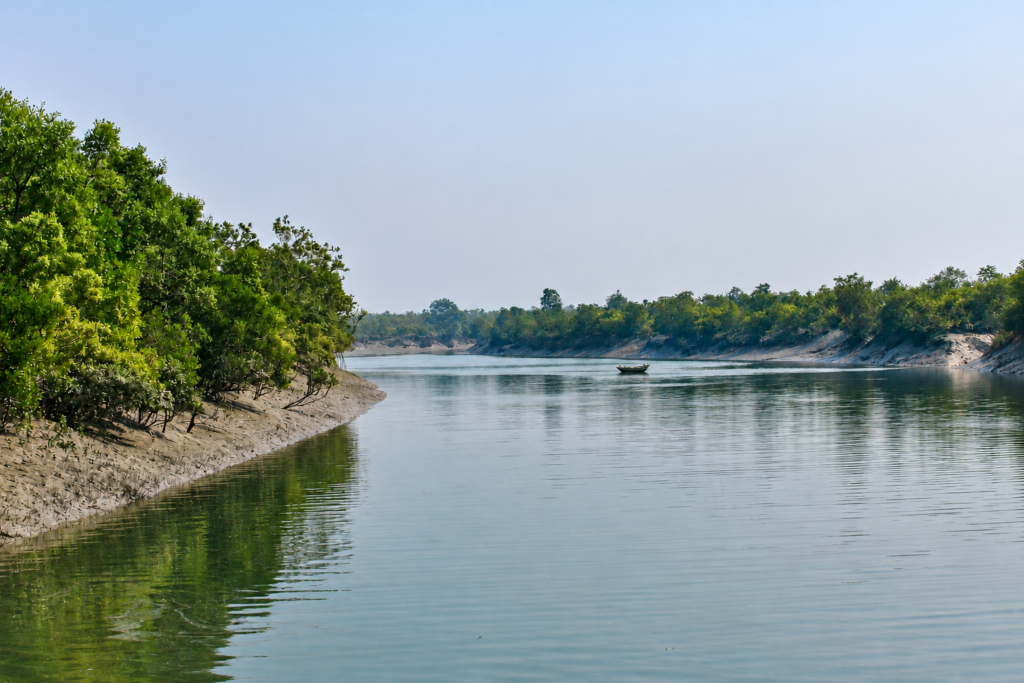
- First comes the river.
- Then the islands.
- Then the mangroves.
- Then the sounds.
- Then the wildlife.
And eventually, you begin to understand how deeply everything is connected to the tide.
For Australian travellers, this is the opportunity to experience a completely different kind of wilderness—one shaped not by open plains or familiar wetlands, but by water, mangrove forests and one of the world’s most extraordinary predators.
You can visit the Sundarbans in three days. But five days gives you time to experience it. Seven days gives you time to understand it.
Plan your private Sundarban expedition
A private journey shaped around you — your group, your pace, your interests. Book a free consultation.