

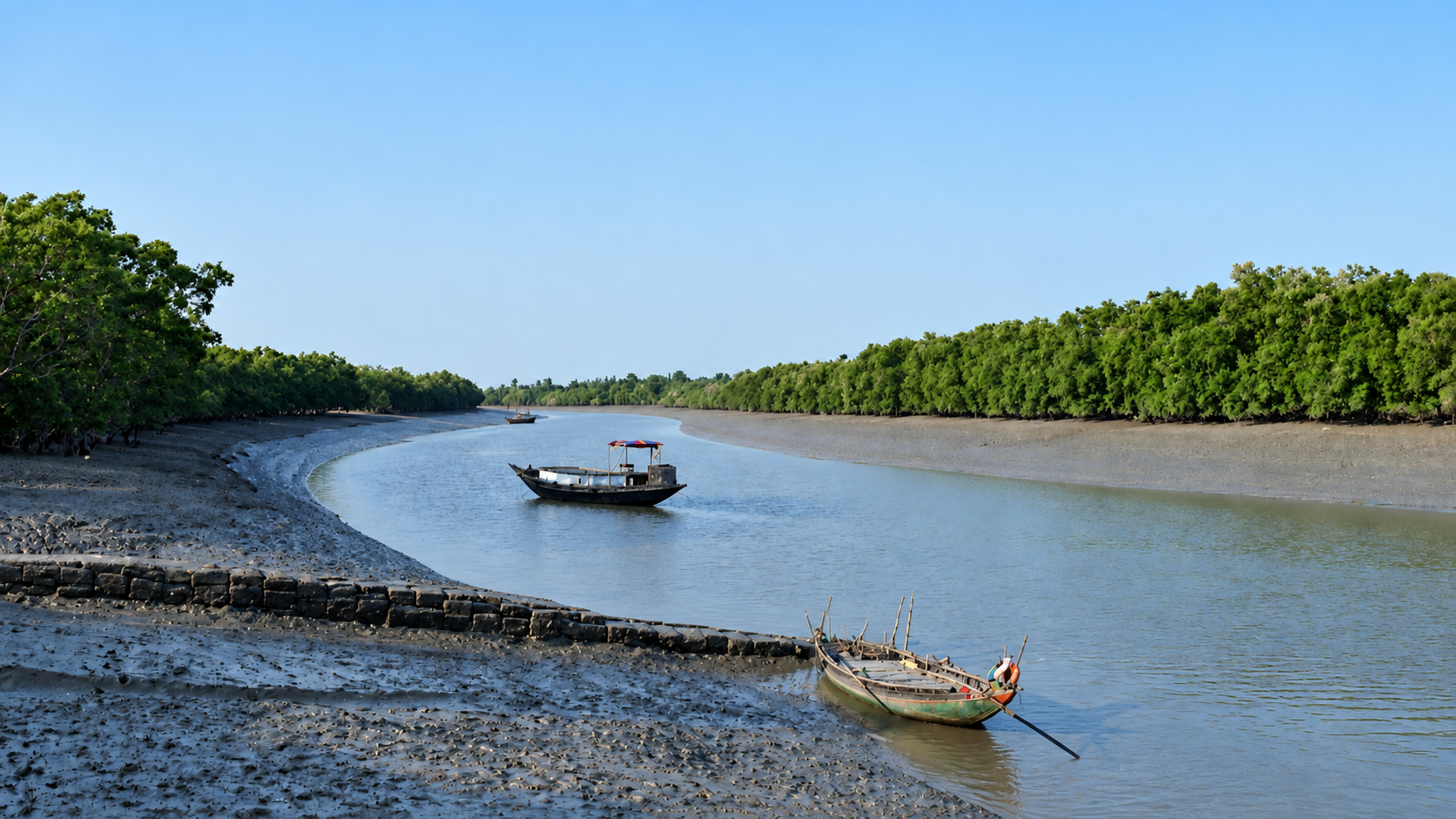
 Travel guide
There are wildlife destinations where you drive across open grassland looking for elephants, lions or cheetahs.
There are rainforests where the sheer scale of the ecosystem becomes the story.
And there are islands where evolution itself seems to have written the itinerary.
Then there is the Sundarbans.
Here, water is the road.
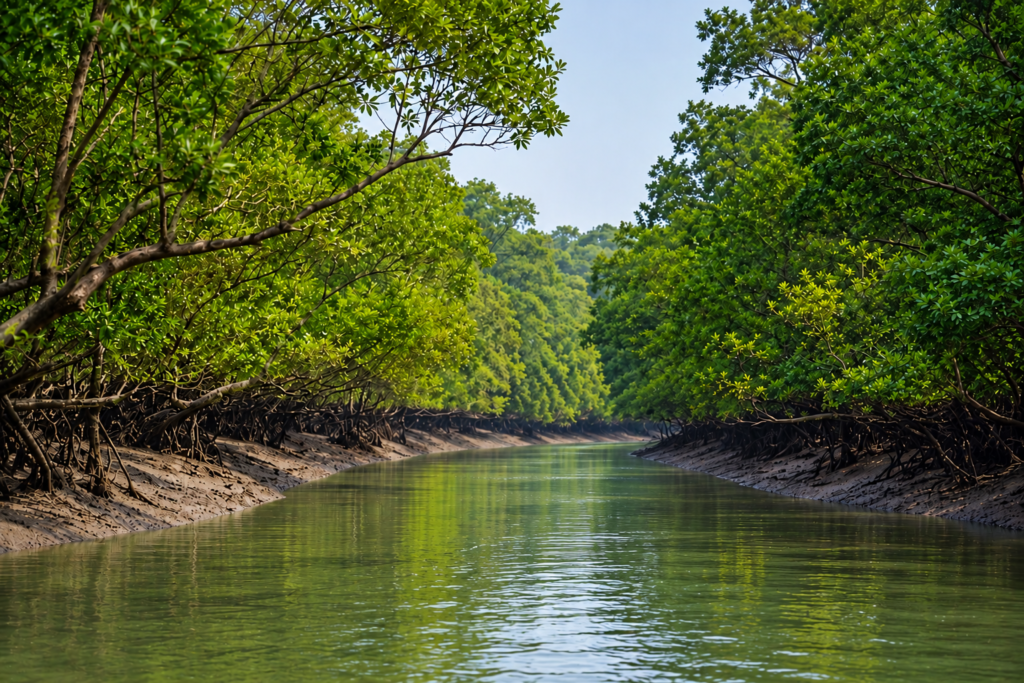
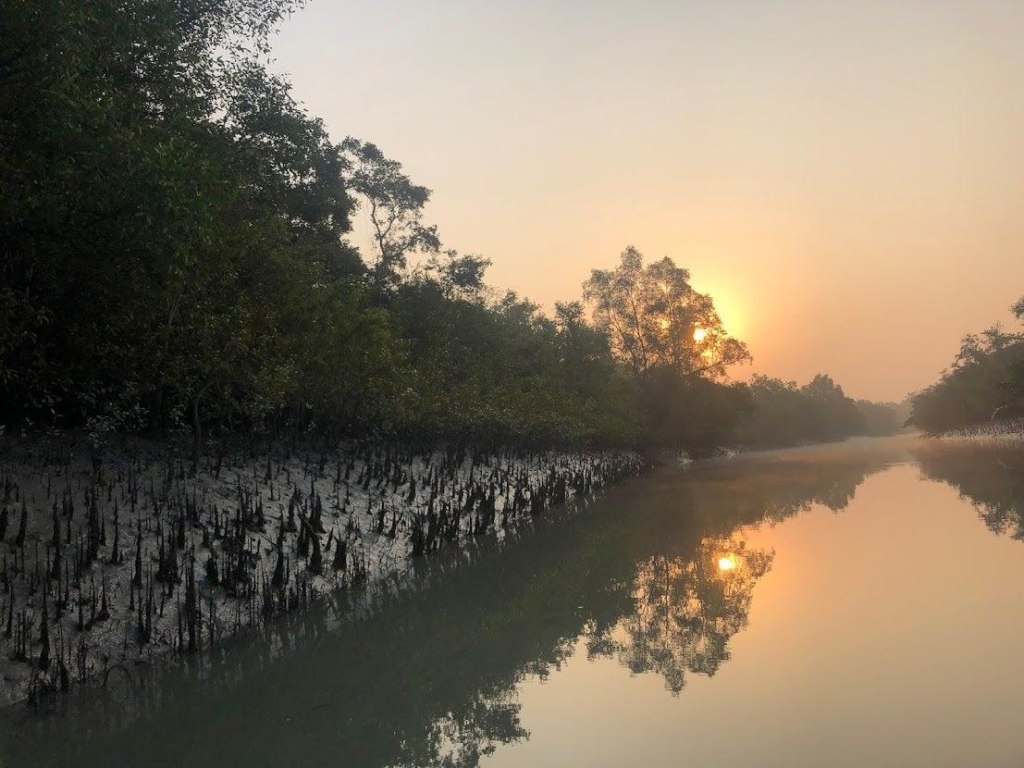
The forest rises from a maze of tidal rivers, creeks and islands at the edge of the Bay of Bengal. Mangrove roots meet mudflats. The landscape changes with the tide. Boats become the way into the wilderness, and the possibility of encountering a Bengal tiger exists somewhere beyond the next bend—but never on schedule.
For an American traveler looking for something genuinely different from a conventional wildlife vacation, the Sundarbans in India offer exactly that.
The Indian Sundarbans National Park forms part of the wider Sundarbans ecosystem shared by India and Bangladesh. UNESCO recognizes the Indian national park as a World Heritage property for its exceptional mangrove ecosystem, biodiversity and ongoing deltaic and tidal processes.
This is not simply another place to add to an India itinerary.
It is an expedition into a landscape shaped by water.
Why the Sundarbans Is Unlike a Conventional Wildlife Safari
The word safari often creates a particular image.
- A vehicle.
- An open road.
- Grasslands.
- A guide scanning the horizon.
The Sundarbans changes almost every part of that equation.
There are no broad savannahs here.
Instead, the wilderness is fragmented into islands and waterways. Tides constantly reshape the relationship between land and water, while dense mangrove vegetation limits visibility.
That makes the experience less about covering distance and more about reading the landscape.
- A boat moves through narrow channels.
- A kingfisher flashes across the water.
- A crocodile may lie almost motionless along a muddy bank.
- Spotted deer can appear at the forest edge.
- Bird calls emerge from somewhere inside the mangroves.
And occasionally, the forest gives you a glimpse of its most famous inhabitant—the Bengal tiger.
The Sundarbans is an exceptional example of ongoing ecological processes involving monsoon rainfall, flooding, delta formation, tidal influence and mangrove colonization.
That is what makes a Sundarbans wildlife experience fundamentally different.
The ecosystem itself is part of the wildlife experience.
Beyond the Galápagos, Amazon and African Safari
For an American traveler, it is natural to compare the Sundarbans with some of the world’s most famous wildlife destinations.
- The Galápagos represents extraordinary island biodiversity and evolutionary history.
- The Amazon represents immense tropical rainforest and biological complexity.
- An African safari offers iconic large mammals against expansive landscapes.
The Sundarbans offer something else.
A tidal wilderness where mangrove forest, river, island and tiger exist within one constantly changing environment.
The comparison is not about declaring one destination universally better.
It is about understanding what makes each extraordinary.
Galápagos: Islands, evolution and endemic wildlife.
Amazon: Vast rainforest and river ecosystems.
African safari: Open landscapes and iconic large mammals.
Indian Sundarbans: Tides, mangroves, waterways, islands and Bengal tigers.
The Sundarbans isn’t trying to be another Amazon or another African safari.
It offers a different definition of wilderness.
And for travelers who have already experienced conventional safaris or simply want an experience they cannot easily replicate elsewhere, that difference is precisely the attraction.
Why Is the Sundarbans Worth the Journey from the United States?

The obvious question for an American traveler is simple: Is the Sundarbans worth traveling all the way to India for?
For travelers interested in wildlife, wilderness, photography, landscapes, conservation or unusual ecosystems, it can be.
But the strongest reason is not simply the Bengal tiger.
It is the combination.
You are not traveling to one isolated attraction.
You are entering one of the world’s great delta landscapes, where the interaction between freshwater, saltwater, sediment, tides, mangroves, wildlife and human communities has produced an ecosystem unlike the environments most international travelers encounter.
The Indian Sundarbans is part of the Ganges-Brahmaputra delta, and its mangrove forests, tidal waterways, wetlands and exceptional biodiversity make it one of the world’s distinctive coastal ecosystems.
For an American traveler, that creates several layers of experience:
- Wildlife: Bengal tiger, spotted deer, wild boar, crocodiles, birds and aquatic species
- Landscape: mangrove islands, creeks, mudflats and tidal rivers
- Photography: wildlife, birds, boats, reflections, roots, waterways and changing light
- Adventure: exploring a wilderness primarily by boat
- Ecology: seeing a living tidal ecosystem rather than simply visiting a forest
- Culture: understanding the communities living around one of the world’s most demanding environments
- Conservation: experiencing a landscape where wildlife protection and human livelihoods are deeply connected
That combination is difficult to reproduce anywhere else.
What Can American Travelers Experience in the Sundarbans?
A Sundarbans expedition can be surprisingly varied.
Mangrove Exploration
Mangroves are not simply a backdrop.
They define the landscape.
Their roots stabilize sediment, tolerate saline conditions and create habitat for a remarkable range of organisms.
From a boat, the forest appears almost labyrinthine—channels opening into wider waterways before narrowing again.
Wildlife Watching
The Sundarbans support Bengal tigers alongside a wider community of terrestrial, aquatic and bird species.
West Bengal Tourism identifies the Royal Bengal tiger, spotted deer, wild boar, estuarine crocodile, water monitor and numerous bird species among the region’s wildlife attractions.
A Sundarbans wildlife experience therefore isn’t only about searching for one species.
It is about understanding the entire ecosystem.
Birdwatching
For birders, the waterways and mangrove habitats create opportunities to observe egrets, herons, kingfishers, raptors and other wetland-associated birds.
The slower pace of boat travel can make bird observation particularly rewarding.
Watchtowers and Forest Viewpoints
Depending on the route and access arrangements, watchtowers and designated visitor areas can provide another perspective on the forest.
The experience changes from observing the mangroves at water level to looking across forest and waterways from above.
Life on the Waterways
Perhaps the most distinctive element is simply being on the water.
The boat isn’t merely transportation.
It is your moving observation platform.
The Royal Bengal Tiger: A Wildlife Encounter Without Guarantees
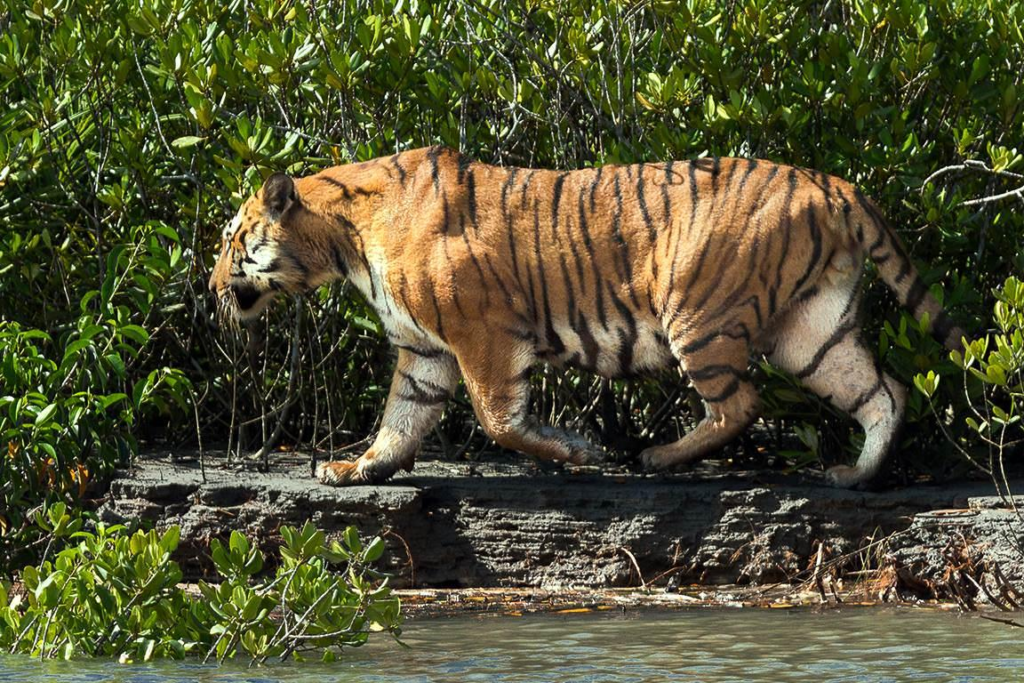
For many international travelers, the Bengal tiger is the reason the Sundarbans first enters their imagination.
And yes, the Indian Sundarbans is famous for its tiger population.
But responsible wildlife travel requires one important distinction: Seeing a tiger is never guaranteed.
That should not be treated as a weakness.
In fact, it is part of what makes the experience authentic.
The Sundarbans tiger has adapted to a challenging mangrove environment, including an ability to swim long distances.
The landscape itself makes observation different from an open-country safari.
Dense vegetation, winding waterways, tides and limited visibility mean that patience matters.
You may spend hours watching the forest and see nothing dramatic.
And then something moves.
- A shape between trees.
- A pair of eyes.
- A distant animal at the edge of the mangroves.
The anticipation is part of the expedition.
When Should American Travelers Visit the Sundarbans?
The main tourism season for the Sundarbans is generally October through mid-March, when conditions are more favorable for conventional tourism and wildlife-oriented travel.
For travelers coming from the United States, this period can also work particularly well as part of a broader India journey.
However, seasonality should not be reduced to a single “best month.”
The Sundarbans is a tidal environment.
Weather, tides, river conditions and local operating conditions can influence the character of an expedition.
If your priority is:
Comfort + wildlife exploration: October to mid-March is the conventional choice.
Photography: Cooler-season light and wildlife-focused travel can be particularly attractive.
Birdwatching: Seasonal bird movements and local conditions should be considered when planning.
The important point is to plan around the experience you want, rather than simply selecting a month from a generic tourism calendar.
How Do You Travel to the Sundarbans from the United States?
There is no direct American-to-Sundarbans journey.
For most international travelers, Kolkata is the practical gateway.
The journey generally has several stages: United States → Kolkata → road transfer → river/boat transfer → Sundarbans
The final transition matters.
You don’t simply arrive at a park entrance and start driving.
The landscape gradually changes.
- Urban Kolkata gives way to rural Bengal.
- Road becomes river.
- River becomes mangrove.
And eventually, the city feels very far away.
The journey is part of the expedition.
Can You Combine Kolkata and the Sundarbans?
Absolutely and for an American traveler visiting India for the first time, combining the two can create a much richer journey.
Kolkata gives you the cultural and historical context of Bengal.
The Sundarbans provide the wilderness.
Together, they create a natural contrast: city → culture → river → mangrove → wilderness
Rather than treating Kolkata as merely an airport stop, consider giving yourself time to experience the city before heading toward the delta.
That transition helps you understand the geography and culture behind the landscape you are about to enter.
How Many Days Should You Spend in the Sundarbans?
For a first visit to the Sundarbans, we recommend a minimum of 2 nights and 3 days. This gives you enough time to move beyond a rushed introduction and experience the waterways, mangrove landscapes and wildlife at a more natural pace.
But if you want to experience the Sundarbans with time to breathe, 4 nights and 5 days is ideal for getting an overall flavour of the region.
This longer stay gives you more opportunities to explore the waterways, observe wildlife, experience different landscapes and understand the character of the mangrove ecosystem without trying to fit everything into a short visit.
For travelers who want to go deeper, 6–7 days is ideal for a slower, more comprehensive Sundarbans experience. It allows greater time for wildlife observation, birdwatching, photography, changing tidal conditions, different waterways and a deeper appreciation of the landscape, communities and conservation story.
Think of the durations this way:
2 Nights / 3 Days — The Minimum
A good starting point for first-time visitors who are combining the Sundarbans with a wider India itinerary.
You get enough time to experience the core rhythm of a Sundarbans expedition without turning the journey into a rushed day trip.
4 Nights / 5 Days — The Ideal Overall Experience
Our recommended duration for experiencing the overall flavour of the Sundarbans.
Five days gives the expedition more breathing room. You can spend meaningful time on the waterways, look for wildlife without constantly watching the clock, explore different landscapes and allow the changing tides to become part of the experience.
For many travelers, this is the sweet spot between depth and practicality.
6–7 Days — The Deeper, Slower Experience
For serious wildlife enthusiasts, photographers, birdwatchers, nature travelers and anyone who wants to understand the Sundarbans beyond its headline attractions, 6–7 days allows for a deeper and more comprehensive experience.
Instead of rushing from one sighting to the next, you have more time to observe.
- More time on the water.
- More opportunities to experience different tidal conditions.
- More patience for wildlife.
- More space for photography and birdwatching.
And more time to appreciate the relationship between the mangrove forest, waterways, wildlife and communities.
The Sundarbans rewards patience.
So rather than asking how quickly you can see it, ask how much time you can give it.
You can visit the Sundarbans in three days. But five days gives you time to experience it. Seven days gives you time to understand it.
What Is a Sundarbans Expedition Actually Like?
See it for yourself
A private journey shaped around you — your group, your pace, your interests. Book a free consultation.
This is where expectations matter.
A Sundarbans expedition is not luxury wildlife tourism transplanted into a mangrove forest.
It is a wilderness journey.
Your days may involve:
- early starts
- long periods on boats
- changing tides
- quiet wildlife observation
- warm and humid conditions
- unpredictable wildlife encounters
- photography from moving platforms
- time spent simply watching the forest
There can be moments when nothing appears to happen.
That is not wasted time.
In a landscape like this, observation is the activity.
The best experiences often come to travelers who are willing to slow down.
What Should American Travelers Pack for the Sundarbans?
Pack for practicality rather than fashion.
Useful items include:
- lightweight, breathable clothing
- comfortable walking shoes or sandals suitable for the itinerary
- sun protection
- sunglasses
- insect protection
- reusable water bottle
- personal medication
- compact binoculars
- camera equipment
- spare batteries or charging equipment
- waterproof protection for electronics
- a lightweight rain layer depending on season
For wildlife photography, a telephoto lens can be useful.
But don’t make equipment the focus.
The Sundarbans rewards attention more than expensive gear.
Is the Sundarbans Suitable for First-Time Visitors to India?
Yes, with sensible planning.
The key is choosing an expedition structure that handles the logistical transitions clearly.
International visitors should understand that the Sundarbans is not an urban destination. Facilities can be more limited than in major Indian cities, and travel involves road and water transport.
That is precisely why preparation matters.
A well-planned journey should explain:
- how you reach the gateway
- how the boat transfer works
- where you stay
- what the daily rhythm looks like
- what wildlife expectations are realistic
- what weather and tide conditions can affect
- what you should bring
The more clearly these things are communicated before departure, the easier it is to enjoy the wilderness once you arrive.
Is the Sundarbans Safe for Foreign Travelers?
The Sundarbans is a protected wilderness environment, so it should be approached with the same respect and caution you would apply to any serious wildlife destination.
Visitors should follow official forest rules and remain with authorized guides, crews or designated visitor arrangements.
Wild animals should never be approached, fed or deliberately disturbed.
The boat should remain the primary boundary between visitors and wildlife where required.
The broader lesson is important: You are entering the animal’s environment—not the other way around.
The Sundarbans also present genuine environmental challenges, including cyclones, tidal surges and other natural forces. Climate change can increase risks to the wider ecosystem and the communities around it.
That is another reason why responsible operators and experienced local crews matter.
Responsible Travel in the Sundarbans
For many international travelers, the Bengal tiger is the reason the Sundarbans first enters their imagination.
And yes, the Indian Sundarbans is famous for its tiger population.
But responsible wildlife travel requires one important distinction: Seeing a tiger is never guaranteed.
That should not be treated as a weakness.
In fact, it is part of what makes the experience authentic.
The Sundarbans tiger has adapted to a challenging mangrove environment, including an ability to swim long distances.
The landscape itself makes observation different from an open-country safari.
Dense vegetation, winding waterways, tides and limited visibility mean that patience matters.
You may spend hours watching the forest and see nothing dramatic.
And then something moves.
- A shape between trees.
- A pair of eyes.
- A distant animal at the edge of the mangroves.
The anticipation is part of the expedition.
When Should American Travelers Visit the Sundarbans?
The main tourism season for the Sundarbans is generally October through mid-March, when conditions are more favorable for conventional tourism and wildlife-oriented travel.
For travelers coming from the United States, this period can also work particularly well as part of a broader India journey.
However, seasonality should not be reduced to a single “best month.”
The Sundarbans is a tidal environment.
Weather, tides, river conditions and local operating conditions can influence the character of an expedition.
If your priority is:
Comfort + wildlife exploration: October to mid-March is the conventional choice.
Photography: Cooler-season light and wildlife-focused travel can be particularly attractive.
Birdwatching: Seasonal bird movements and local conditions should be considered when planning.
The important point is to plan around the experience you want, rather than simply selecting a month from a generic tourism calendar.
How Do You Travel to the Sundarbans from the United States?
There is no direct American-to-Sundarbans journey.
For most international travelers, Kolkata is the practical gateway.
The journey generally has several stages: United States → Kolkata → road transfer → river/boat transfer → Sundarbans
The final transition matters.
You don’t simply arrive at a park entrance and start driving.
The landscape gradually changes.
- Urban Kolkata gives way to rural Bengal.
- Road becomes river.
- River becomes mangrove.
And eventually, the city feels very far away.
The journey is part of the expedition.
Can You Combine Kolkata and the Sundarbans?
Absolutely and for an American traveler visiting India for the first time, combining the two can create a much richer journey.
Kolkata gives you the cultural and historical context of Bengal.
The Sundarbans provide the wilderness.
Together, they create a natural contrast: city → culture → river → mangrove → wilderness
Rather than treating Kolkata as merely an airport stop, consider giving yourself time to experience the city before heading toward the delta.
That transition helps you understand the geography and culture behind the landscape you are about to enter.
How Many Days Should You Spend in the Sundarbans?
For a first visit to the Sundarbans, we recommend a minimum of 2 nights and 3 days. This gives you enough time to move beyond a rushed introduction and experience the waterways, mangrove landscapes and wildlife at a more natural pace.
But if you want to experience the Sundarbans with time to breathe, 4 nights and 5 days is ideal for getting an overall flavour of the region.
This longer stay gives you more opportunities to explore the waterways, observe wildlife, experience different landscapes and understand the character of the mangrove ecosystem without trying to fit everything into a short visit.
For travelers who want to go deeper, 6–7 days is ideal for a slower, more comprehensive Sundarbans experience. It allows greater time for wildlife observation, birdwatching, photography, changing tidal conditions, different waterways and a deeper appreciation of the landscape, communities and conservation story.
Think of the durations this way:
2 Nights / 3 Days — The Minimum
A good starting point for first-time visitors who are combining the Sundarbans with a wider India itinerary.
You get enough time to experience the core rhythm of a Sundarbans expedition without turning the journey into a rushed day trip.
4 Nights / 5 Days — The Ideal Overall Experience
Our recommended duration for experiencing the overall flavour of the Sundarbans.
Five days gives the expedition more breathing room. You can spend meaningful time on the waterways, look for wildlife without constantly watching the clock, explore different landscapes and allow the changing tides to become part of the experience.
For many travelers, this is the sweet spot between depth and practicality.
6–7 Days — The Deeper, Slower Experience
For serious wildlife enthusiasts, photographers, birdwatchers, nature travelers and anyone who wants to understand the Sundarbans beyond its headline attractions, 6–7 days allows for a deeper and more comprehensive experience.
Instead of rushing from one sighting to the next, you have more time to observe.
- More time on the water.
- More opportunities to experience different tidal conditions.
- More patience for wildlife.
- More space for photography and birdwatching.
And more time to appreciate the relationship between the mangrove forest, waterways, wildlife and communities.
The Sundarbans rewards patience.
So rather than asking how quickly you can see it, ask how much time you can give it.
You can visit the Sundarbans in three days. But five days gives you time to experience it. Seven days gives you time to understand it.
What Is a Sundarbans Expedition Actually Like?
This is where expectations matter.
A Sundarbans expedition is not luxury wildlife tourism transplanted into a mangrove forest.
It is a wilderness journey.
Your days may involve:
- early starts
- long periods on boats
- changing tides
- quiet wildlife observation
- warm and humid conditions
- unpredictable wildlife encounters
- photography from moving platforms
- time spent simply watching the forest
There can be moments when nothing appears to happen.
That is not wasted time.
In a landscape like this, observation is the activity.
The best experiences often come to travelers who are willing to slow down.
What Should American Travelers Pack for the Sundarbans?
Pack for practicality rather than fashion.
Useful items include:
- lightweight, breathable clothing
- comfortable walking shoes or sandals suitable for the itinerary
- sun protection
- sunglasses
- insect protection
- reusable water bottle
- personal medication
- compact binoculars
- camera equipment
- spare batteries or charging equipment
- waterproof protection for electronics
- a lightweight rain layer depending on season
For wildlife photography, a telephoto lens can be useful.
But don’t make equipment the focus.
The Sundarbans rewards attention more than expensive gear.
Is the Sundarbans Suitable for First-Time Visitors to India?
Yes, with sensible planning.
The key is choosing an expedition structure that handles the logistical transitions clearly.
International visitors should understand that the Sundarbans is not an urban destination. Facilities can be more limited than in major Indian cities, and travel involves road and water transport.
That is precisely why preparation matters.
A well-planned journey should explain:
- how you reach the gateway
- how the boat transfer works
- where you stay
- what the daily rhythm looks like
- what wildlife expectations are realistic
- what weather and tide conditions can affect
- what you should bring
The more clearly these things are communicated before departure, the easier it is to enjoy the wilderness once you arrive.
Is the Sundarbans Safe for Foreign Travelers?
The Sundarbans is a protected wilderness environment, so it should be approached with the same respect and caution you would apply to any serious wildlife destination.
Visitors should follow official forest rules and remain with authorized guides, crews or designated visitor arrangements.
Wild animals should never be approached, fed or deliberately disturbed.
The boat should remain the primary boundary between visitors and wildlife where required.
The broader lesson is important: You are entering the animal’s environment—not the other way around.
The Sundarbans also present genuine environmental challenges, including cyclones, tidal surges and other natural forces. Climate change can increase risks to the wider ecosystem and the communities around it.
That is another reason why responsible operators and experienced local crews matter.
Responsible Travel in the Sundarbans
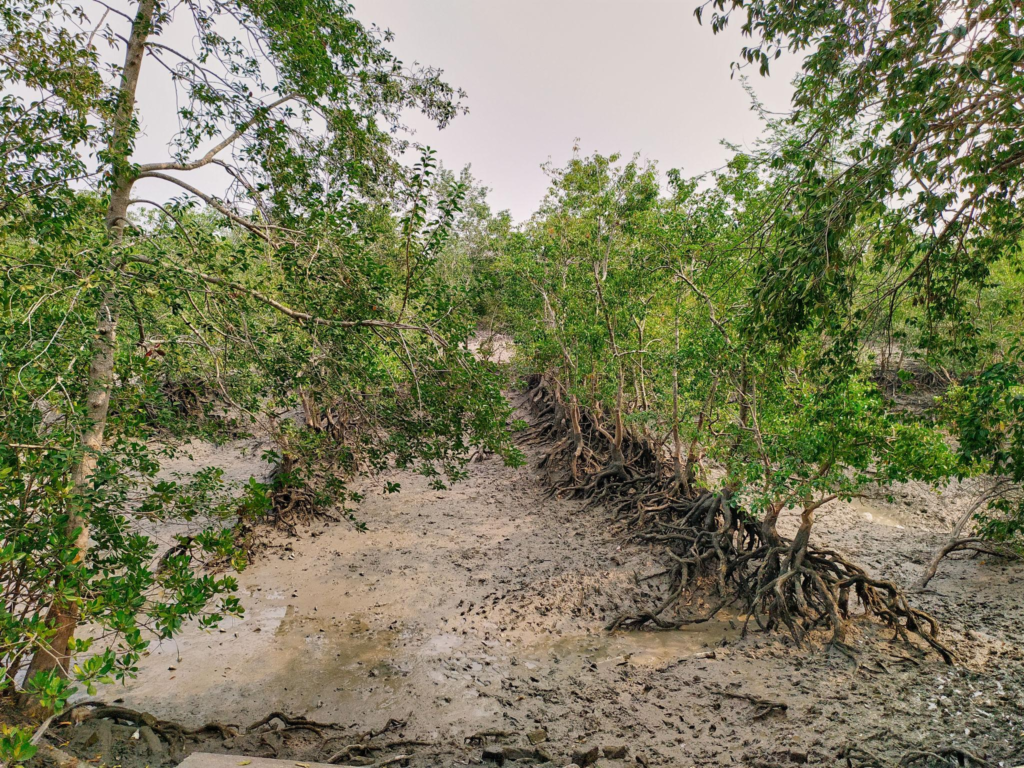
The Sundarbans is not simply a destination that happens to contain wildlife.
Millions of people in and around the broader ecosystem depend on its resources and landscapes, while the mangrove system itself provides important ecological and protective functions.
That makes responsible tourism more than a slogan.
A responsible Sundarbans expedition should respect:
Wildlife
Observe without chasing, feeding or disturbing animals.
Forest Regulations
Follow designated routes, permits and visitor restrictions.
Local Communities
Treat local knowledge and livelihoods with respect.
Waste
Minimize plastic and take responsibility for what you bring into the ecosystem.
Photography
The photograph should never become more important than the animal or environment.
Conservation
Understand that tourism takes place within a living ecosystem that requires long-term protection.
For The Wild Orbit, the goal is not simply to show travelers the Sundarbans.
It is to help them understand why the landscape deserves to remain wild.
Visa Planning for American Travelers
American citizens traveling to India for tourism generally need an appropriate Indian visa or eVisa unless an exemption applies.
India’s official visa system provides tourism eVisa information and eligibility requirements for international travelers. Always check the current official requirements before booking flights because visa rules, fees, document requirements and entry procedures can change.
For an American traveler, visa planning should therefore happen before finalizing the Sundarbans itinerary.
Do not leave it until the last stage of your India trip preparation.
Why Explore the Sundarbans with The Wild Orbit?

The Sundarbans is easy to reduce to a checklist:
- Tiger.
- Boat.
- Mangroves.
- Watchtower.
- Photograph.
Done.
But that misses the point.
The Wild Orbit approaches the Sundarbans as an expedition rather than a sightseeing stop.
The focus is on the relationship between: wildlife + water + mangrove + landscape + people + conservation
That means looking beyond the headline species.
A tiger matters.
- But so does the tidal creek through which you reached it.
A crocodile matters.
- But so does the mudflat where it rests.
A kingfisher matters.
- But so does the mangrove habitat supporting the food chain around it.
The deeper you understand the ecosystem, the more extraordinary the wildlife becomes.
That is the experience The Wild Orbit aims to create.
The Sundarbans Is Not Another Safari. It Is Something Else.
Perhaps the easiest mistake is to ask: “Is the Sundarbans better than an African safari?”
That is the wrong question.
A better question is: “What kind of wilderness experience do I want?”
- If you want vast grasslands and herds of large mammals, Africa offers something extraordinary.
- If you want immense rainforest systems, the Amazon is incomparable.
- If evolutionary history and island biodiversity fascinate you, the Galápagos is exceptional.
But if you want to travel through a landscape where tides shape the forest, waterways become roads, islands constantly interact with water, and Bengal tigers inhabit a mangrove wilderness, the Sundarbans offers something few other destinations can.
It isn’t an alternative because the other destinations are overrated.
It is an alternative because it is different.
And sometimes, different is exactly what makes a journey worth taking.
FAQs
Is the Sundarbans worth visiting for American travelers?
Yes. For travelers interested in wildlife, mangrove ecosystems, photography, wilderness and unusual landscapes, the Sundarbans offers an experience that differs substantially from a conventional safari.
Can American citizens visit the Sundarbans?
Yes. American travelers can visit the Indian Sundarbans as part of a properly planned trip to India, subject to India’s current visa and entry requirements.
How do I get to the Sundarbans from the USA?
Most international travelers fly to Kolkata, West Bengal, and then continue by road and boat toward the Sundarbans.
How do I get to the Sundarbans from Kolkata?
Travel generally involves a road journey toward a Sundarbans gateway followed by a boat journey into the waterways. The exact route depends on the expedition and access point.
What is the best time to visit the Sundarbans?
October through mid-March is generally considered the main tourism season, although the best timing depends on weather, wildlife interests and the type of experience you want.
Can you see tigers in the Sundarbans?
Yes, Bengal tigers live in the Sundarbans, but no ethical wildlife operator should guarantee a sighting. The dense mangrove environment and tidal landscape make encounters unpredictable.
Is the Sundarbans a safari?
It is a wildlife expedition, but it differs from a conventional land-based safari. Boat travel is central to exploring the waterways and mangrove environment.
What is a Sundarbans boat safari like?
It involves traveling through tidal rivers, creeks and channels while observing mangrove landscapes and wildlife from the water. The pace is generally slower and more observational than a conventional vehicle safari.
How many days do you need in the Sundarbans?
A minimum of 2 nights and 3 days is recommended for a meaningful first experience. 4 nights and 5 days is ideal for experiencing the overall flavour of the Sundarbans, while 6–7 days allows for a deeper, slower and more comprehensive expedition.
Is the Sundarbans good for wildlife photography?
Yes. The combination of Bengal tigers, birds, crocodiles, deer, mangroves, boats, waterways and changing light provides diverse photographic subjects. Wildlife sightings, however, cannot be guaranteed.
What should I pack for the Sundarbans?
Lightweight clothing, sun and insect protection, comfortable footwear, binoculars, camera equipment, waterproof protection for electronics and personal essentials are useful.
Can I combine Kolkata and the Sundarbans?
Yes. Kolkata works naturally as the gateway to the Indian Sundarbans and can add a cultural dimension to a wildlife-focused India itinerary.
Is the Sundarbans safe for foreign travelers?
It can be visited responsibly with proper planning and adherence to forest regulations and local guidance. It is still a genuine wilderness environment, so visitors should respect wildlife, weather, tides and official restrictions.
Is the Sundarbans better than an African safari?
There is no universal “better.” African safaris and the Sundarbans offer fundamentally different ecosystems and wildlife experiences. The Sundarbans stands apart through its tidal waterways, mangrove forest, islands and Bengal tigers.
Explore the Sundarbans from a Different Perspective
You can visit the Sundarbans simply to say you’ve been there.
Or you can enter it slowly.
- Watch the tide change the landscape.
- Listen for birds inside the mangroves.
- Follow waterways deeper into the forest.
- Look for movement along the bank.
- Understand the ecosystem behind the wildlife.
And discover why this extraordinary corner of India deserves a place among the world’s great wilderness destinations.
Plan your private Sundarban expedition
A private journey shaped around you — your group, your pace, your interests. Book a free consultation.