


 Travel guide
February arrives quietly in the Sundarbans.
The winter air is still part of the experience, but the season is no longer at its deepest. Along the creeks, tides continue their daily work of covering and uncovering mudflats. Above them, wintering birds remain active across the wetland landscape. In the mangrove forest, nothing announces that one season is preparing to give way to another. The change is gradual.
That makes Sundarban in February particularly interesting for travellers who enjoy observing rather than simply collecting sightings.
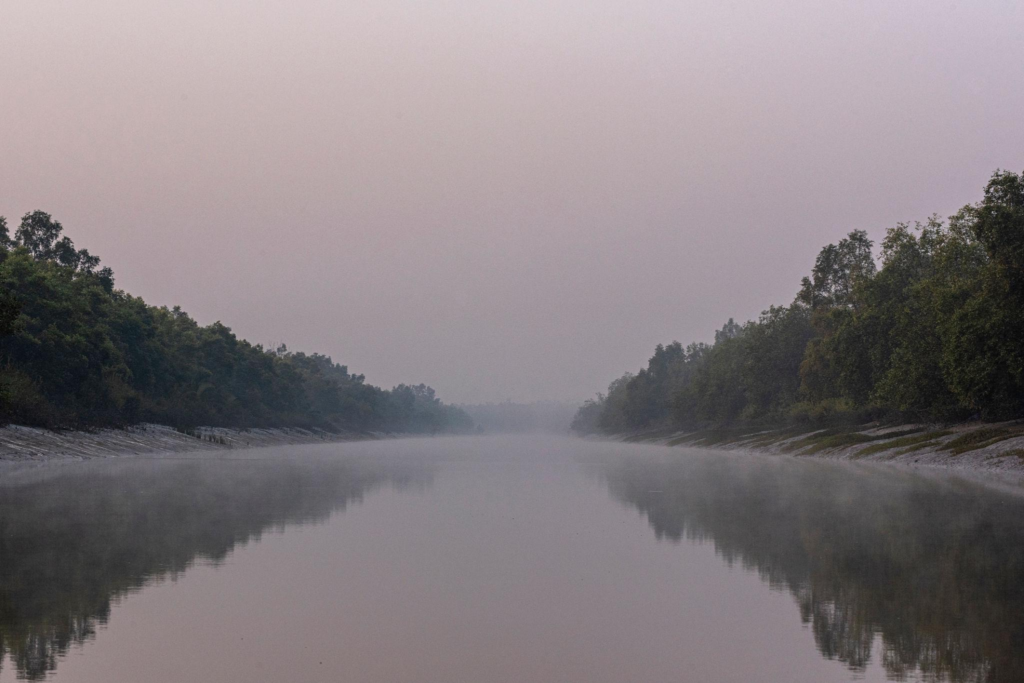
The main Sundarbans travel season runs from October through mid-March, and February sits comfortably within that period. Scientifically, December through February is recognised as the dry-winter season of the broader Sundarbans ecosystem. By February, however, the character of winter is beginning to soften.
So, what is the Sundarbans actually like at this point in the year?
Think less about a single headline attraction and more about the relationship between winter birdlife, tidal landscapes, mangrove forest and changing seasonal conditions.
That is where February becomes its own story.
Sundarban in February: Where Winter Begins to Loosen Its Grip
February is still part of the Sundarbans’ dry-winter period, but it occupies an interesting position within the annual cycle.
Research describing the wider Sundarbans identifies December, January and February as the dry winter season, with the broader ecosystem experiencing a seasonal average of around 20°C during this period. That figure is a regional ecological reference rather than a precise temperature reading for every part of the forest.
For practical planning, regional climate data from Kolkata/Dum Dum—used here only as a nearby proxy—places February’s average high at about 29°C and average low at about 17°C. Conditions inside the Sundarbans can differ, particularly around waterways and exposed islands, so these numbers should not be treated as a forest-wide forecast.
For visitors, the numbers matter less than the seasonal rhythm.
February can offer cooler mornings, comfortable periods for exploration and a gradual movement towards the conditions that become more characteristic of the following months.
It is winter, but not quite winter at its most pronounced.
Look at the Waterline
One of the easiest ways to understand February in the Sundarbans is to watch the edge between water and land.
The landscape is continually being redrawn by tides. Creeks fill and empty, mudflats disappear beneath water and return again, while sediment is deposited and redistributed across the delta. Tidal influence, erosion and sediment deposition are fundamental processes shaping the Sundarbans landscape.
For travellers, this has a simple consequence: the same stretch of forest can look noticeably different at different points of the day.
- A mudflat that was invisible earlier may become an exposed feeding ground later.
- A narrow bank may attract birds once the water retreats.
- A creek can suddenly feel much wider or narrower depending on the state of the tide.
This is one reason a boat journey through the Sundarbans should not be treated simply as transportation between attractions.
The water itself is part of the experience.
February Is a Particularly Interesting Month for Birdwatching
For birdwatchers, February has something important going for it: it remains firmly within the winter period when migratory birds are present across the Sundarbans’ wetland habitats.

A study of avian diversity in the greater Sundarbans reported systematic winter surveys of waders in the Indian Sundarbans during January and February. The surveys recorded 32 wader species, with long-distance migrants from Arctic breeding grounds making up more than half of the species recorded.
Another study identifies the Sundarbans as an important wintering area for shorebirds and records species including Little Stint and Curlew Sandpiper among the region’s Arctic-breeding migrants.
That changes the way you should look at the forest.
Instead of watching only the tree line, watch the open spaces between forest and water.
- Scan mudflats.
- Look across sandbanks.
- Check the edges of creeks.
- Keep an eye on the sky as well as the shoreline.
Raptors, kingfishers, waders and other wetland birds can turn an apparently quiet stretch of water into a surprisingly active scene.
For anyone carrying binoculars, February is therefore a month worth slowing down for.
Wildlife in Sundarban in February
See it for yourself
A private journey shaped around you — your group, your pace, your interests. Book a free consultation.
The Royal Bengal Tiger remains inseparable from the identity of the Sundarbans, but a responsible February trip should never be built around a promised sighting.
The forest supports a far wider community of animals: spotted deer, wild boar, fishing cats, reptiles, estuarine crocodiles, dolphins and a remarkable diversity of birds. The Sundarbans is an exceptionally rich mangrove ecosystem shaped by its network of rivers, creeks, islands, mudflats and forests.
This broader perspective is particularly useful in February.
- A deer moving through the vegetation may last only a few seconds.
- A crocodile can remain almost indistinguishable from the muddy bank.
- A kingfisher may appear for an instant before disappearing into the vegetation.
None of these encounters follows a timetable.
The best approach is therefore to remain attentive to the whole ecosystem rather than treating every quiet stretch as a failed search for a large animal.
That mindset also makes the journey more rewarding when the forest does not provide a dramatic sighting.
Let the Boat Become Your Observation Platform
The waterways determine how you experience the Sundarbans.
Boat safari is a central way to explore the mangrove forest, with the cooler November–March period traditionally forming an important tourism window. Current routes, permissions and operating arrangements can vary, so travellers should verify the latest information before travelling.
But the quality of a boat journey is not determined only by where the boat goes.
It is also determined by how you observe.
- When the engine becomes quieter, listen.
- When a creek opens into a broader waterway, scan both banks.
- When a mudflat appears, look for movement at its edges.
- When the forest seems completely still, keep watching.
The Sundarbans often reward the second look.
How to Experience the Sundarbans in February
Spend time with the winter birds
If birdwatching interests you, don’t treat it as something that happens between wildlife sightings. Give the mudflats, creek margins and open tidal areas their own attention. A pair of binoculars can dramatically change what you notice.
Watch a tide reshape the landscape
Rather than simply recording whether the tide is high or low, notice what becomes visible as the water moves. Exposed mud, feeding birds, changing reflections and newly visible banks can completely alter the appearance of a familiar route.
Photograph the landscape as a whole
February is well suited to environmental photography. Instead of concentrating exclusively on animal portraits, look for relationships: a bird against an enormous mudflat, mangroves reflected in brown tidal water, a winding creek disappearing into vegetation, or distant wildlife framed by the landscape.
Give quiet creeks your attention
The smaller and quieter waterways can reward patience. They offer opportunities to observe birds, reptiles and other smaller forms of life without the expectation that every moment needs to produce a major sighting.
Learn to read the forest
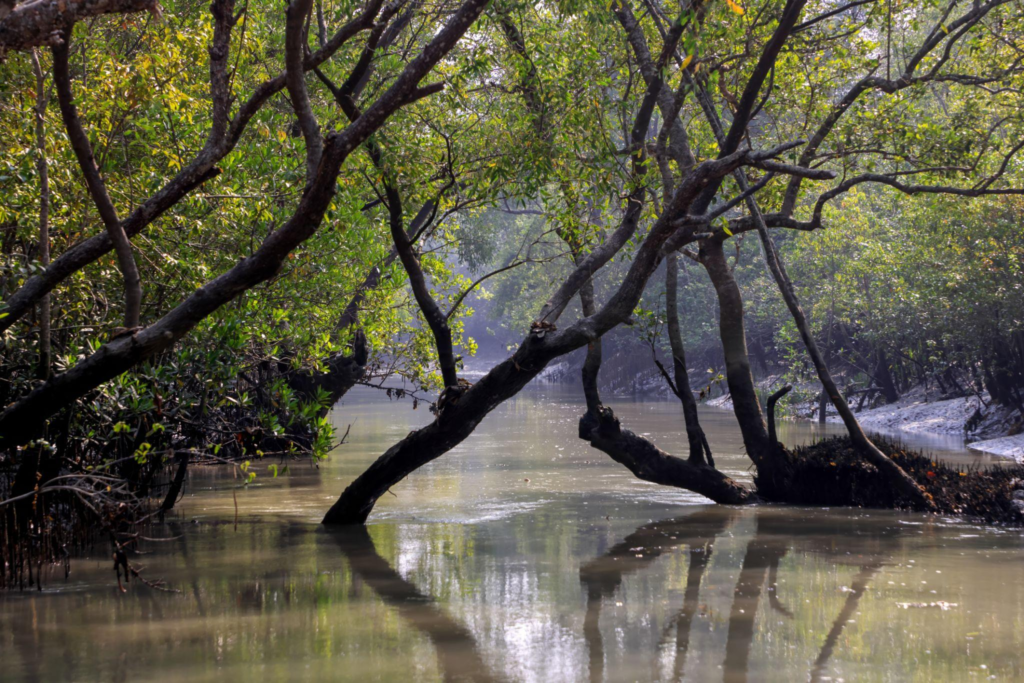
The most meaningful February experience may be understanding how several things connect: the tide moves water, the water shapes the intertidal zone, the intertidal zone supports feeding life, and that life becomes part of a much larger food web.
The Sundarbans becomes far more interesting once those connections start becoming visible.
Who Will Enjoy a February Trip to the Sundarbans?
February suits travellers who are interested in the experience of being in the ecosystem rather than simply ticking off attractions.
For first-time visitors, it offers the familiar boat-based introduction to the Sundarbans while retaining a distinct late-winter character.
For birdwatchers, the presence of wintering species gives the month a particularly strong appeal.
For photographers, there is considerably more to work with than wildlife alone: water, mudflats, mangroves, birds, reflections and changing light all become part of the visual landscape.
For families, the trip can become an opportunity to teach children how a tidal ecosystem works rather than making the entire experience depend on seeing a tiger.
And for slow travellers and couples, February can reward a less hurried approach—watching the waterways, spending longer with a landscape and allowing unexpected encounters to become part of the journey.
What to Carry for a February Sundarban Trip
Pack for a day spent moving between water, forest and open areas.
Light clothing is useful for daytime exploration, while a light additional layer can be useful during cooler mornings. Sunglasses, sunscreen, a hat and comfortable footwear are practical basics.
If wildlife observation is important to you, binoculars are one of the most valuable things to bring. Birdwatchers can add a compact field guide, while photographers should keep lens-cleaning material readily available during boat travel.
Keep frequently used equipment accessible.
The Sundarbans does not always give much warning before something interesting appears.
For permits, access rules, routes, boat arrangements and other operational details, check current official information before travelling because these can change.
The Wild Orbit Expert Advice
In February, spend some of your attention looking away from the forest.
The instinctive reaction during a Sundarbans safari is to search the tree line. But February’s winter birdlife makes the spaces between forest and water equally deserving of attention.
- Watch the mudflat.
- Watch the creek margin.
- Watch the birds moving across open water.
Then look back towards the forest. This simple change in observation can make the same boat journey feel completely different.
Exploring February with The Wild Orbit
The Wild Orbit sees the Sundarbans as a place to be understood as much as explored.
In February, that means recognising the season through its smaller details: wintering birds across tidal habitats, exposed mudflats, changing water levels and the gradual movement away from the heart of winter.
An expedition through this landscape becomes more meaningful when the traveller understands what they are looking at and why it changes with the tide, the season and the landscape around it.
That is the kind of exploration The Wild Orbit aims to encourage: attentive, informed and respectful of the ecosystem that makes the journey possible.
FAQs
Is February a good time to visit Sundarban?
Yes. February falls within the main October-to-mid-March travel season and remains part of the dry-winter period. It is particularly appealing for travellers interested in birdwatching, photography, wildlife and tidal landscapes.
What is Sundarban like in February?
It is a late-winter Sundarbans experience, with relatively dry conditions, wintering birdlife and a landscape continually reshaped by the tides. The month also sits close to the transition towards the warmer conditions of the following season.
What is the temperature in Sundarban in February?
Regional climate data using Kolkata/Dum Dum as a proxy indicates average February highs of about 29°C and lows of about 17°C. Conditions within the Sundarbans itself can vary, so these figures should be treated as regional guidance rather than a precise forest forecast.
Is February good for bird watching in Sundarban?
Yes. February falls within the winter period when migratory and resident birds use the Sundarbans’ wetlands. Winter surveys have recorded numerous wader species, including long-distance migrants.
What birds can I look for in Sundarban in February?
The winter landscape can support a variety of waders, kingfishers, raptors and other wetland birds. Species composition varies by location and conditions, so birdwatching is best approached as observation rather than a guaranteed checklist.
Is February good for Sundarban photography?
Yes. February offers varied subjects, from wintering birds and wildlife to mudflats, mangroves, tidal creeks and reflections. It is especially suitable for photographers interested in telling the story of the landscape rather than focusing only on animal close-ups.
Does the tide affect a February Sundarban trip?
Very significantly. Tides continuously alter the visibility and character of creeks, mudflats and banks. The same location can therefore present a noticeably different landscape as the water rises and retreats.
Is February suitable for families visiting the Sundarbans?
Yes. Families interested in nature can find plenty to observe, especially birds, mangroves, waterways and smaller wildlife. The experience is more rewarding when children are encouraged to notice the ecosystem rather than judge the trip only by large-animal sightings.
What should I carry for a February Sundarban trip?
Carry light clothing, a light additional layer for cooler mornings, sun protection, comfortable footwear and binoculars. Photographers should also keep basic lens-cleaning equipment accessible during boat travel.
Is February the best month to visit the Sundarbans?
There is no universally best month. February has a distinct late-winter character, while other months offer different combinations of weather, wildlife activity, birdlife and landscape conditions. The main travel season extends from October through mid-March.
February’s Sundarbans Is Best Experienced in the Details
February does not need to be declared the best month to make it worth visiting.
Its character comes from where it sits in the annual cycle: winter is still present, migratory birds remain part of the wetland landscape, tides continue to expose and conceal the mudflats, and the season is beginning its slow movement towards what comes next.

For the traveller willing to look beyond the obvious, that creates a particularly rewarding kind of Sundarbans experience.
- Not necessarily louder.
- Not necessarily more dramatic.
Just more attentive.
And sometimes, in a landscape as intricate as the Sundarbans, attention is what turns a boat journey into an exploration.
Plan your private Sundarban expedition
A private journey shaped around you — your group, your pace, your interests. Book a free consultation.