


 Travel guide
A trip to the Sundarbans is different from a conventional holiday. Much of your time may be spent on tidal waterways, around forest edges, at jetties or exploring places where heat, humidity, mud, rain and insects are simply part of the environment.
Knowing what to pack for a Sundarbans trip can make the experience considerably more comfortable.
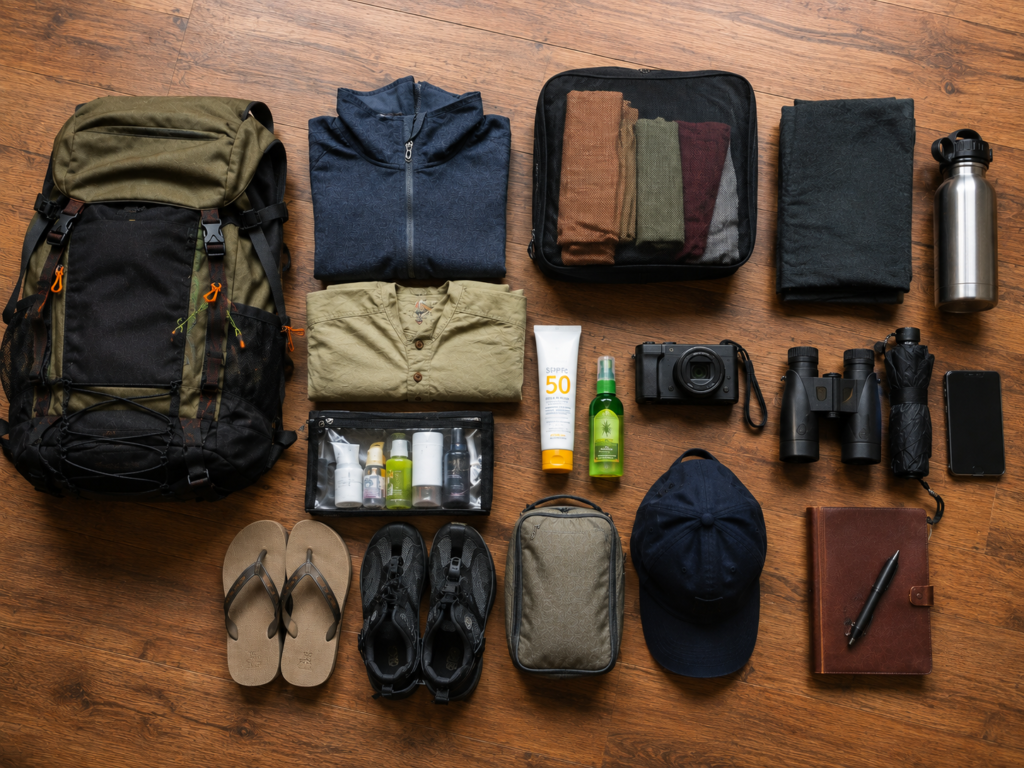
The good news is that you do not need to bring an enormous amount of luggage. The ideal Sundarbans packing list is practical: comfortable clothing, reliable footwear, protection from the sun and rain, insect protection, personal essentials and a few useful items for enjoying the landscape and wildlife.
Whether you are travelling with family, visiting for the first time, interested in wildlife, planning a photography trip or simply looking for a memorable escape into nature, this guide covers the essentials.
Quick Sundarbans Packing List For You
Before getting into the details, these are the main things worth considering:
- Lightweight, breathable clothing
- Full-sleeve shirts and comfortable trousers
- Comfortable footwear with good grip
- Sandals or a spare pair of footwear
- Sunglasses and a hat or cap
- Sunscreen
- Insect repellent
- Personal medicines and basic toiletries
- Reusable water bottle
- Small daypack
- Waterproof pouch or dry bag
- Phone and power bank
- Camera, spare batteries and memory cards, if required
- Binoculars for wildlife and birdwatching
- Light rain protection
- Identification and necessary travel documents
- Some cash for local expenses
- Motion-sickness medication, if you are prone to it
You will not necessarily need every item. Your packing should depend on the season, duration and type of trip.
What to Wear in the Sundarbans?
Clothing should be chosen to keep in the mind for environment.
The Sundarbans can be hot and humid, particularly when you are spending several hours outdoors or travelling by boat. Lightweight, breathable clothing is therefore more comfortable than heavy fabrics.
Full-sleeve shirts and long trousers are practical because they provide protection from sunlight and help reduce exposed skin around insects and vegetation. Quick-drying fabrics can also be useful, especially during humid or rainy conditions.
For wildlife viewing, subdued or earthy colours are preferable to extremely bright clothing. They also work well for photography and help you blend more naturally into the surroundings.
Carry at least one extra change of clothes. Humidity, rain, perspiration or water splashes can leave clothing damp.
If you are visiting during winter, take a light jacket or warm layer for early mornings and evenings. Open boats can feel cooler than expected.
Choose the Right Footwear
Your shoes for a Sundarbans trip should prioritise comfort, stability and grip.
A comfortable pair of walking shoes or sturdy footwear is useful around jetties, villages, accommodation areas and walking routes. Avoid smooth soles or footwear that becomes difficult to use when wet.
A lightweight pair of sandals can also be useful as a secondary option.
You do not need specialised footwear for every trip, but you should be prepared for damp surfaces, uneven ground, mud and wet jetties.
Sunglasses, Hat and Sun Protection
Do not underestimate the sun when travelling through open waterways.
A few hours on a boat can mean prolonged exposure to direct sunlight and glare from the water. Pack:
- Sunglasses
- Sunscreen
- Hat or cap
- Lightweight full-sleeve clothing
Apply sunscreen before heading outdoors and reapply as appropriate during extended periods outside.
Sunglasses are particularly useful on boat journeys, where reflected sunlight can become uncomfortable over time.
Rain, Humidity and Waterproof Protection
See it for yourself
A private journey shaped around you — your group, your pace, your interests. Book a free consultation.
Rain can arrive unexpectedly, and humidity is a constant consideration.
A compact rain jacket or poncho takes little space and can be extremely useful. Keep your phone, documents, wallet and other sensitive items inside a waterproof pouch or dry bag.
If you carry a camera, binoculars or other electronic equipment, give them additional protection from rain, splashes and moisture.
Quick-drying clothing is particularly helpful during the wetter months.
Insect Protection
Insects are naturally part of a mangrove ecosystem, so insect protection belongs on every practical Sundarbans packing list.
Carry a suitable mosquito or insect repellent and use it according to its instructions. Long sleeves and trousers provide an additional layer of protection.
If you are particularly sensitive to insect bites, bring the personal protection you normally use when travelling in warm, humid environments.
Camera, Binoculars and Other Useful Gear
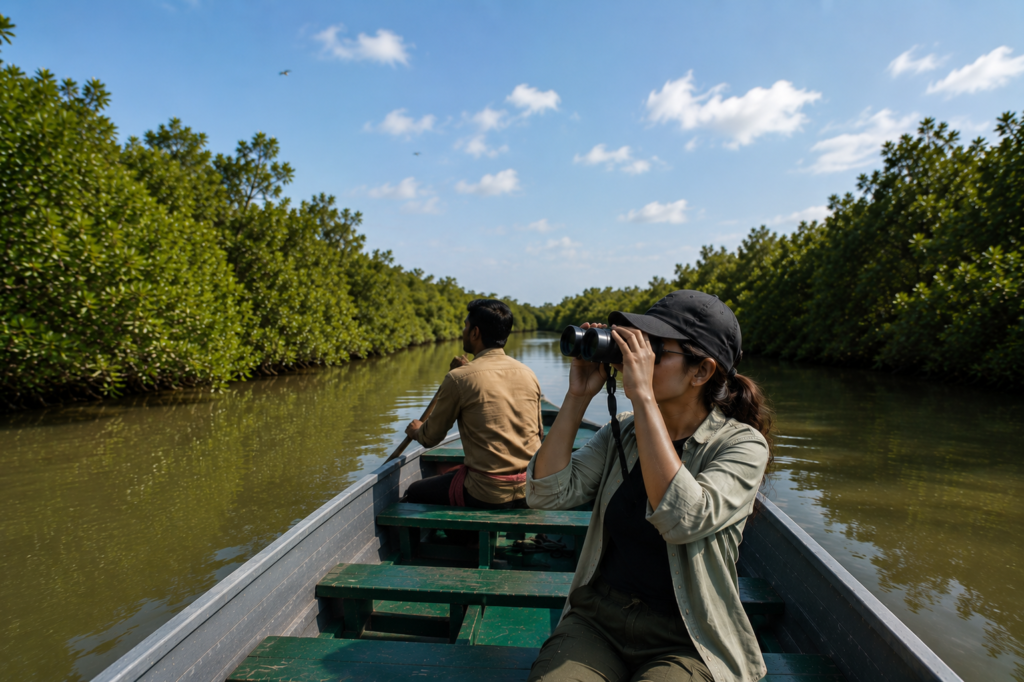
You do not need professional equipment to enjoy the Sundarbans, but a few items can significantly improve the experience.
Binoculars
A good pair of binoculars is one of the most useful optional items for wildlife enthusiasts and birdwatchers. Birds and other wildlife may be some distance away, particularly when viewed from a boat, and binoculars allow you to observe them without getting closer.
Camera
A camera is worthwhile if photography is an important part of your trip. Even a smartphone can capture remarkable landscapes, birds and everyday moments.
If you bring a dedicated camera, choose equipment that you can comfortably carry for several hours rather than taking every piece of gear you own.
Spare Batteries and Memory Cards
Photographers should consider carrying spare camera batteries and memory cards. Missing a good wildlife moment because your battery is empty or storage is full is an easily avoidable problem.
Power Bank
A power bank is useful for keeping your phone charged during long days away from a charging point. Keep it safely stored and protected from moisture.
Lens Cloth
Humidity, condensation and occasional splashes can affect lenses and screens. A small microfibre cloth takes almost no space and can be surprisingly useful.
What to Carry on the Boat?
For a boat journey, keep a small daypack with the things you may actually need during the day:
- Water bottle
- Sunglasses
- Hat
- Sunscreen
- Insect repellent
- Phone or camera
- Binoculars
- Personal medication
- Motion-sickness medication, if needed
- Light rain protection
- Waterproof pouch
- Power bank
- Tissues or wet wipes
Keep electronics and important belongings protected from water.
A lighter daypack is much more comfortable than carrying unnecessary items throughout a long boat journey.
Personal Essentials and Documents
Some of the most important things to pack are also the easiest to overlook.
Carry your identification and any documents required for your travel arrangements. Keep important documents, cash and cards in a secure, water-resistant pouch. Cash can be useful because card and digital payment availability may be less reliable in remote parts of the Sundarbans.
Your personal medicines should travel with you rather than being something you plan to purchase after arrival.
If you are prone to motion sickness, consider carrying an appropriate motion-sickness medicine for longer boat journeys.
Other useful items include:
- Basic toiletries
- Hand sanitiser
- Tissues or wet wipes
- Personal medication
- Reusable water bottle
- Small personal first-aid supplies
- Phone charger
Avoid carrying excessive quantities. Pack what you genuinely need and keep the rest of your luggage light.
What to Pack by Season?
Winter
Winter can bring pleasant daytime conditions, while early mornings and evenings may feel cooler.
Carry lightweight layers, a light jacket, full-length clothing, comfortable footwear, sunglasses and the usual sun and insect protection.
Summer
Hot weather and humidity make breathable clothing particularly important.
Prioritise lightweight fabrics, sun protection, sunglasses, a hat, adequate hydration and insect protection.
Monsoon
Rain protection becomes much more important during the monsoon.
Carry a rain jacket or poncho, waterproof bags, quick-drying clothing and footwear suitable for wet conditions. Protect cameras, phones and documents carefully.
Always consider the weather and your specific travel arrangements before setting out.
What Not to Pack for the Sundarbans?
Avoid unnecessary heavy luggage, excessive clothing, uncomfortable footwear and fragile items that have little practical value during your trip.
There is also no reason to carry equipment specifically intended to attract, approach or disturb wildlife.
Where possible, reduce single-use plastic and avoid carrying items that can unnecessarily contribute to waste in a sensitive natural environment.
The Sundarbans rewards thoughtful preparation, not overpacking.
Packing Tips for Different Travellers
First-time visitors: Keep things simple. Prioritise comfortable clothing, footwear, sun protection, insect protection, rain protection and personal essentials.
Families: Carry necessary medicines, extra clothing, water and practical items for children without overloading the daypack.
Couples and leisure travellers: Choose versatile clothing and comfortable footwear rather than packing for every possible occasion.
Wildlife enthusiasts and birdwatchers: Binoculars, neutral clothing, sun protection and patience can be more valuable than carrying excessive equipment.
Photographers: Protect your equipment from moisture and carry only the lenses, batteries and accessories you can comfortably manage.
The Wild Orbit Expert Advice
If this is your first visit, remember one simple rule: pack for the environment, not just the itinerary.
The Sundarbans is shaped by tides, mud, humidity, weather and wildlife. Conditions can change during the day, particularly when you are travelling by boat. A lightweight daypack, breathable clothing, reliable footwear, sun and insect protection, and waterproof protection for your essentials will usually serve you better than a suitcase full of things you may never use.
And do not forget the most important things: sunglasses for the open water, binoculars for distant wildlife, a camera if you want to preserve the moments, and enough patience to let the forest reveal itself.
Most importantly, leave room in your attention for the place itself.
- Watch the tide.
- Listen to the forest.
- Look closely at the mangrove roots and mudflats.
- Observe birds without disturbing them.
- Give wildlife the distance it deserves.
Good preparation does not make the Sundarbans predictable. It simply allows you to experience its wild character more comfortably.
Pack Smart and Discover the Sundarbans Comfortably
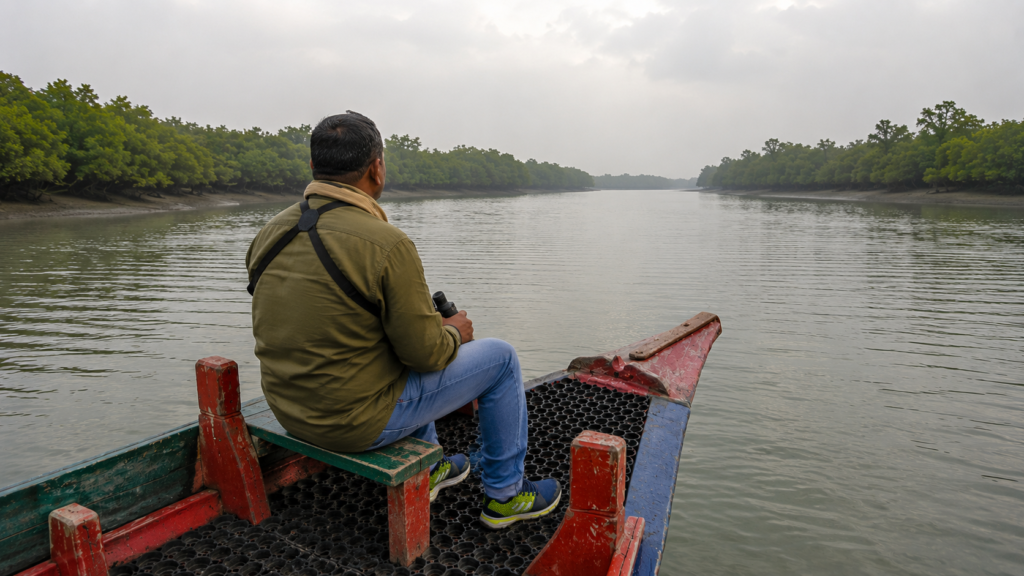
You’ve got what you need for the journey. Now it’s time to experience the mangrove wilderness for yourself. From wildlife and birdlife to tidal waterways, forest landscapes and local stories, discover the Sundarbans with The Wild Orbit.
Plan your private Sundarban expedition
A private journey shaped around you — your group, your pace, your interests. Book a free consultation.