

 Travel guide
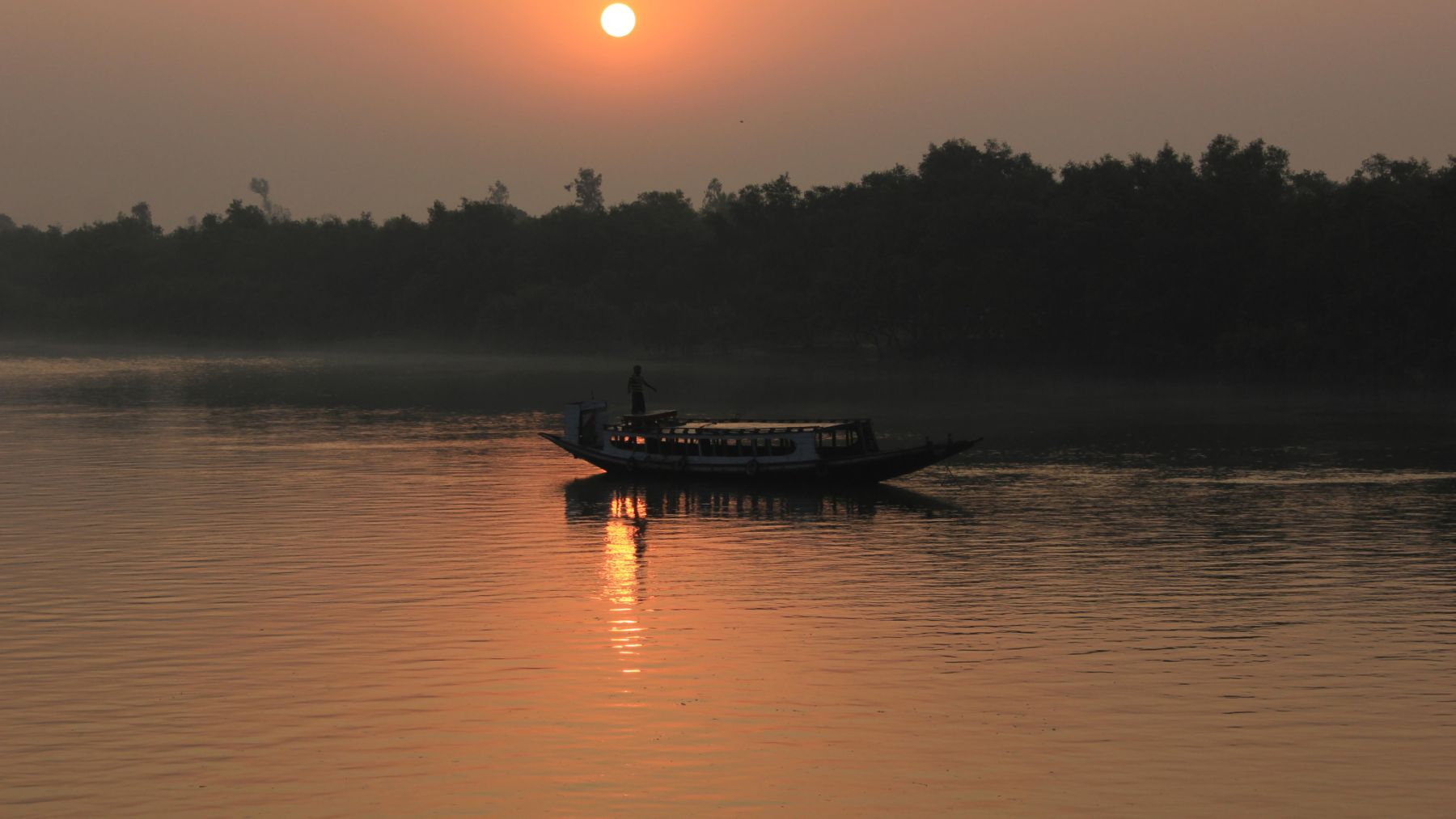
The Sundarbans is often introduced through its Royal Bengal Tigers, mangrove forests, tidal creeks and endless waterways. But beneath the famous wilderness lies another story—one written by people whose lives have always been closely connected to the rivers.
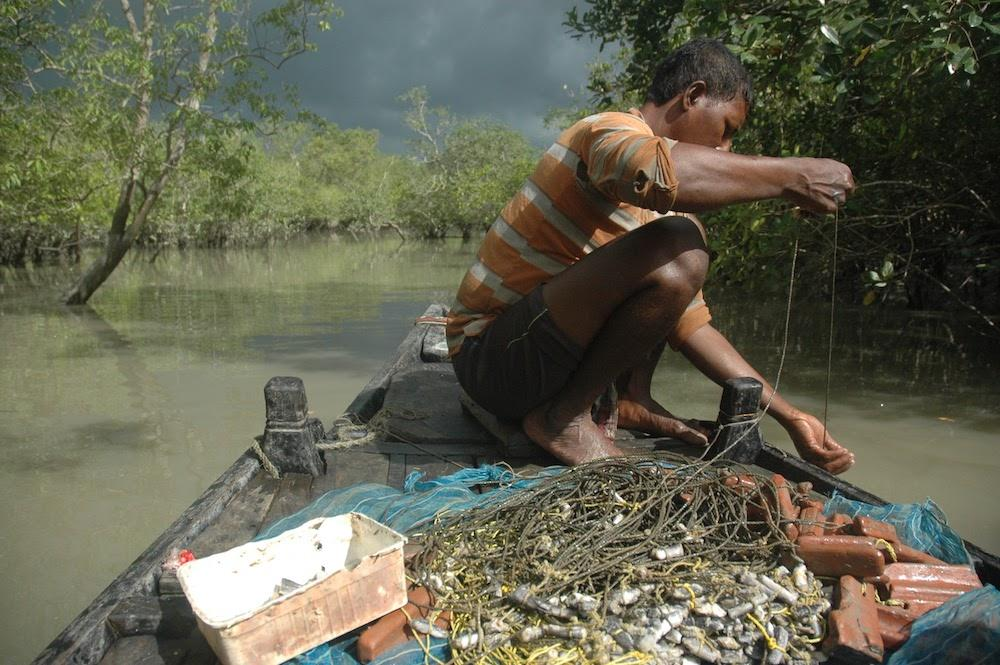
For fishing communities across the Sundarban region, the river is more than a route through the mangroves. It is a workplace, a source of food and income, and a landscape whose character changes with every season.
That is why Sundarban fishing seasons cannot be understood simply by looking at a calendar.
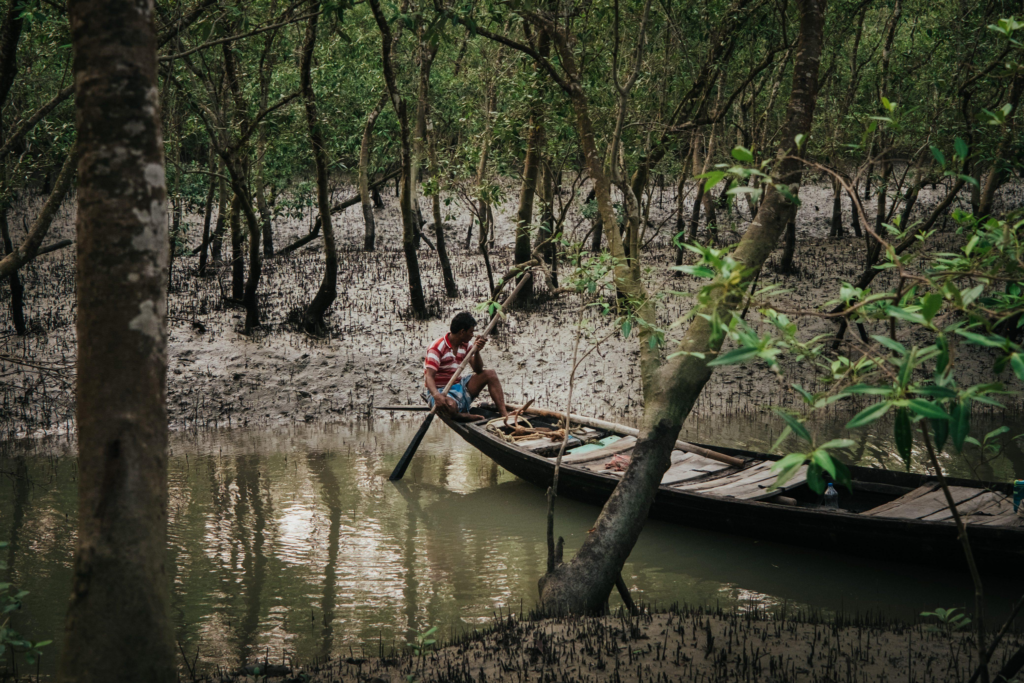
Fish movement changes with tides, rainfall, salinity, freshwater flow and spawning cycles. Fishing activity also changes according to regulations, weather, target species and market conditions.
In the broader Sagar–Sundarban coastal region, more than 300 species of marine and freshwater fishes, prawns and crabs have been documented, including hilsa, bhetki, tiger prawn, brown shrimp and mud crab. Government fisheries information also records strong seasonal variation in the fishery, with historical data showing around 80% of the annual fish catch occurring between November and January.
But there is an important distinction visitors must understand: Fishing season does not mean tourist fishing season.
Fishing is a regulated livelihood activity for local communities. Tourists are not permitted to fish from tourist boats inside the Sundarban Tiger Reserve.
To understand the fishing calendar of the Sundarbans, therefore, we need to look at both sides of the story—the ecology of the river and the people who depend upon it.
Why Fishing Matters to Sundarban Communities
Fishing remains one of the important livelihood activities associated with the Sundarban region.
Fish, prawns and crabs contribute to household food security, income and local trade. For communities living around the delta, fishing is not simply a seasonal recreational activity. It can determine whether a household has enough income during a particular period of the year.
Inside the Sundarban Tiger Reserve, fishing is regulated through the Boat Licence Certificate (BLC) system.
The Tiger Reserve’s management plan identifies a designated Multiple Use Area where regulated natural-resource use is permitted. Fishing is allowed against valid BLCs, which are renewed annually. The management plan also identifies April–June as a three-month fishing closure corresponding to the spawning period of fish.
This creates a delicate relationship between livelihood and conservation.
The river has to provide enough resources for communities to survive, while the fishery must remain healthy enough to support those communities in the future.
For many fishing families, conservation is therefore not an abstract environmental concept.
It is directly connected to livelihood.
Understanding the Sundarban Fishing Calendar
There is no single fishing season that applies identically to every species, fisherman or location across the Sundarbans.
A useful broad seasonal framework is:
| Period | General character |
| November–January | Historically the strongest period of overall fish catch |
| February–March | Transition towards warmer, pre-monsoon conditions |
| April–June | Three-month fishing closure within the regulated STR fishery |
| July–September | Monsoon fishing activity returns/increases across the wider region |
| October | Post-monsoon transition towards the winter fishing period |
This is a broad regional framework, not a rulebook for every fishery.
Different species respond differently to changing water conditions, while regulations may also vary according to location and fishing method.
The fishing calendar of the Sundarbans is therefore shaped by three forces at once: ecology, regulation and livelihood.
November–January: The Major Fishing Period
Historically, November to January has been the strongest period of overall fish catch in the broader Sundarban fishery.
Government fisheries information estimates annual fish yield in the Sundarban region at approximately 26,000–51,000 metric tonnes, with around 80% of the historical catch taking place between November and January. This is historical regional data, not a guarantee of present-day catches.
The ecological explanation lies partly in the seasonal transition.
After the monsoon, freshwater flow, salinity patterns, sediment movement and tidal conditions create a changing environment for aquatic life. Scientific research in Indian Sundarban intertidal habitats has recorded substantial seasonal changes in fish communities, with post-monsoon periods showing high species richness, fish density and standing stock in studied areas.
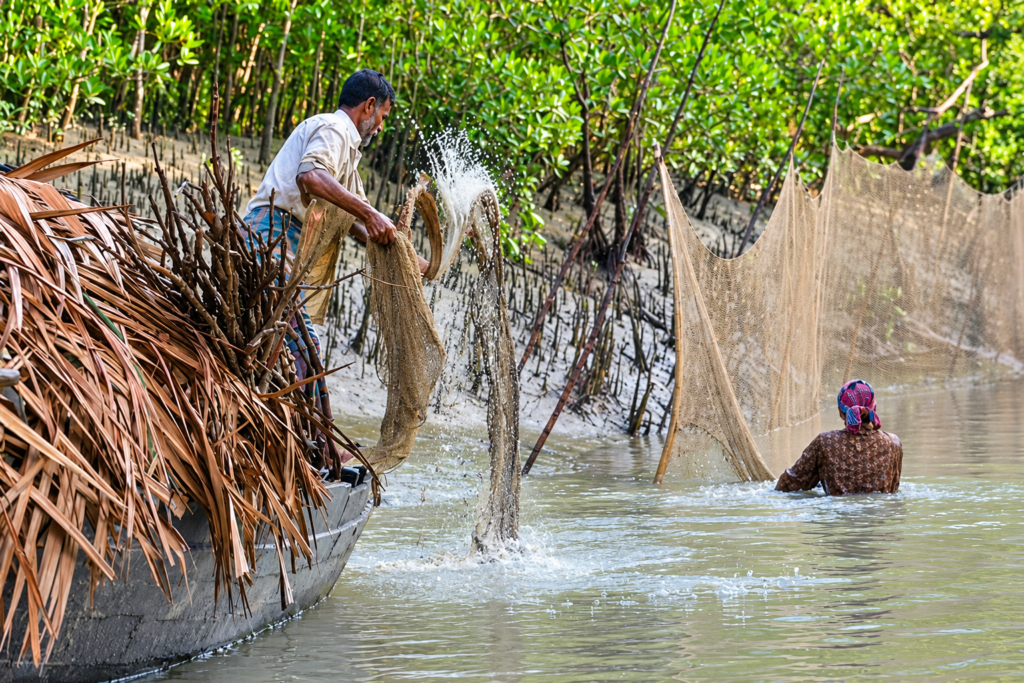
For fishers, these ecological changes can create stronger fishing opportunities.
But a productive ecological season does not automatically translate into predictable income.
Weather, tides, fishing effort, market prices, regulations and changing fish populations all influence what a fisherman actually brings home.
February–March: The Transition
By February and March, the post-monsoon period begins giving way to warmer and increasingly dry conditions.
Water chemistry and salinity continue to change, while fish distribution shifts with the evolving estuarine environment.
For fishing households, this transition can matter as much economically as it does ecologically.
Fishing income is rarely determined by one factor. A change in fish availability, weather or market price can alter the outcome of an entire trip.
This is why the fishing calendar should never be interpreted simply as: good months vs bad months.
It is better understood as a sequence of changing opportunities and constraints.
April–June: The Seasonal Fishing Closure
One of the clearest seasonal boundaries occurs between April and June.
Within the regulated fishery of the Sundarban Tiger Reserve, fishing is closed for three months during April, May and June because this period corresponds with the spawning time of fish.
The purpose is ecological.
Giving fish populations a period with reduced fishing pressure during spawning can help support recruitment and the longer-term productivity of the fishery.
But the geographical scope matters.
This should not be described as a blanket fishing ban across every part of the wider Sundarban region. The April–June closure discussed here specifically relates to the regulated fishery within the Sundarban Tiger Reserve.
That distinction is important when discussing Sundarban fishing accurately.
July–September: When the Monsoon Changes the River
The arrival of the monsoon transforms the Sundarbans.
Rainfall increases freshwater flow, rivers swell, salinity patterns shift and the waterways take on a different character.
Across the wider Sundarban region, fishing activity begins increasing around July, according to livelihood research.
The monsoon also brings one of Bengal’s most culturally important fish into the centre of attention: hilsa—or ilish.
And this is where fishing, food and culture come together through the tradition of Ilish Utsav.
Hilsa: The Fish With Its Own Seasonal Rhythm
Hilsa is not simply another species in the Sundarban fishery.
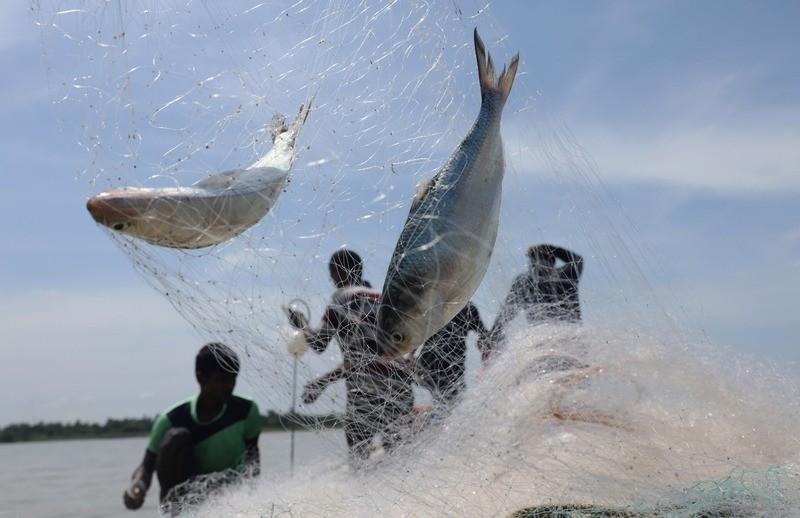
It has an extraordinary cultural importance across Bengal and a major economic value within the regional fishery.
Government fisheries information identifies hilsa among the commercially important species of the Sagar–Sundarban coastal region, while fisheries research documents seasonal hilsa catches in the Hooghly–Bhagirathi system. One ICAR study reports maximum hilsa catches from July to September, sometimes extending into mid-October, and identifies spawning periods associated with July–September and January–February.
This seasonal relationship between monsoon waters and hilsa helps explain why the fish has become so deeply embedded in Bengali food culture.
And it also explains the timing of the Sundarban Ilish Utsav.
Ilish Utsav: From the Fishing Season to the Dining Table
The Sundarban Ilish Utsav is generally associated with the monsoon hilsa season.
For 2026, current festival and tour listings place Ilish Utsav activities primarily across July, August and September, with July and August commonly promoted as the peak period. Specific dates are organiser-dependent rather than being one universal festival calendar.
That timing is not accidental.
It connects a cultural celebration with one of the most recognisable seasonal rhythms of Bengal’s rivers—the arrival and availability of hilsa during the monsoon period.
But there is a deeper story behind the plate of ilish served at an Ilish Utsav.
Before hilsa becomes a festive meal, it exists within a living river system.
It is connected to tidal waters, seasonal movement, fishing knowledge, boats, markets and the people whose livelihoods depend on the aquatic environment.
The fish that arrives through the river can eventually arrive on the dining table as part of a cultural celebration.
That is what makes Ilish Utsav more than a food experience.
For travellers, it can become another doorway into understanding the Sundarbans—not only through wildlife, but through food, livelihood, river culture and seasonal traditions.
Yet this cultural connection also comes with responsibility.
Before hilsa becomes a tradition on the plate, it begins as life in the river.
The future of that tradition depends on healthy fisheries, responsible consumption and respect for conservation regulations.
Prawns, Shrimp and Mud Crab
Hilsa may have the strongest cultural identity, but the Sundarban fishery is much more diverse. Government fisheries information records commercially important species including:
- Bhetki (Lates calcarifer)
- Hilsa (Tenualosa ilisha)
- Bhangon (Liza tade)
- Parse (Liza parsia)
- Tiger prawn (Penaeus monodon)
- Brown shrimp (Metapenaeus monoceros)
- Mud crab (Scylla serrata)
The region’s fisheries also support a much wider range of fish and shellfish species.
Mud crab and fish are particularly important to small-scale fishing communities.
Recent research on fishing communities in the transboundary Sundarbans shows continued dependence on fish and mud crab while also highlighting pressures such as declining fish availability, environmental change, restrictions and limited alternative livelihood opportunities.
This diversity reinforces an important point: There is no single Sundarban fishing season. There are multiple fisheries operating within a constantly changing estuarine environment.
The Three Clocks of Sundarban Fishing
To understand fishing in the Sundarbans properly, think about three different clocks.
1. The Seasonal Clock
This is the annual cycle of monsoon, post-monsoon, winter and pre-monsoon conditions. It influences rainfall, freshwater flow, salinity, fish movement and fishing opportunity.
2. The Tidal Clock
The Sundarbans is a tidal delta. Water levels rise and fall continuously, changing access to creeks, mudflats and river edges. Fish behaviour also responds to these movements.
3. The Daily Fishing Clock
A fisherman’s working day is influenced by tides, weather, target species, distance from fishing grounds and the condition of the waterways. That is why a printed calendar can never tell the complete story.
In the Sundarbans, the fishing calendar is written in tides.
How Salinity Shapes the Sundarban Fishery
The Sundarbans exist at the meeting point of freshwater and saline water.
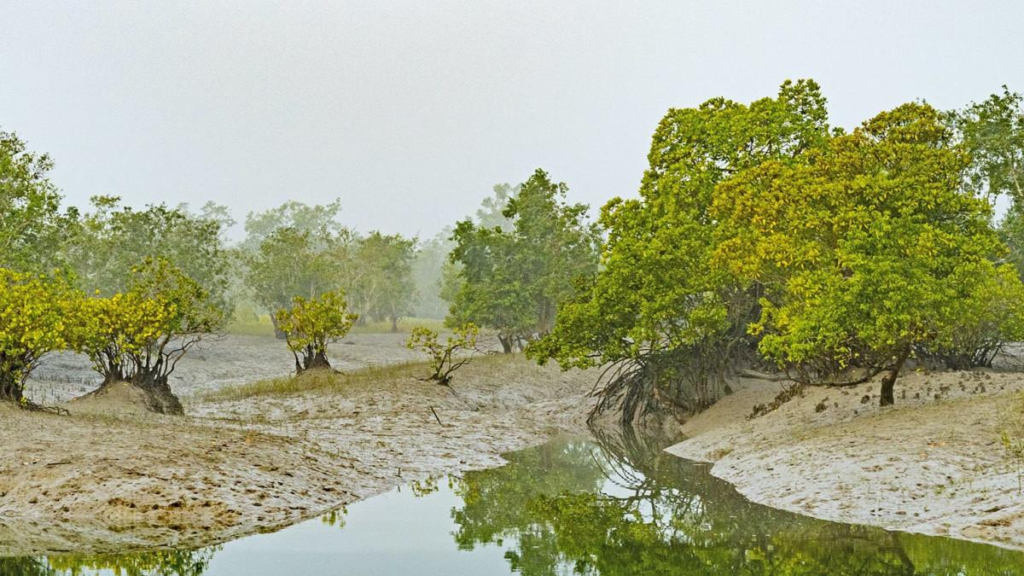
- During the monsoon, increased freshwater flow changes the salinity of rivers and creeks.
- During drier periods, saline influence becomes stronger.
These changes affect aquatic habitats and the distribution of different organisms.
The result is a constantly moving ecological landscape. A creek that appears unchanged to a visitor may be experiencing very different conditions beneath its surface.
For experienced fishers, these changes are part of practical knowledge. Water conditions, currents, tides, weather and seasonal signals become information that helps them decide when and where to work.
Traditional Fishing and Local Knowledge
Fishing in the Sundarbans is also a knowledge system.
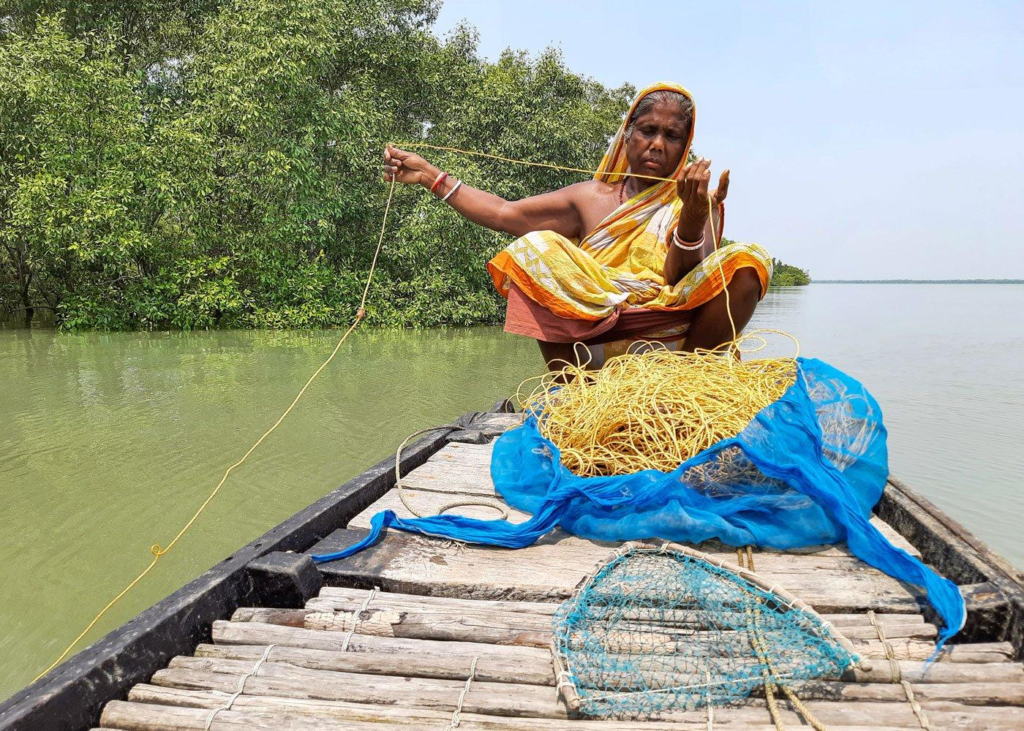
Local fishers understand waterways that can appear almost impossible to read to an outsider.
They know how tides affect access, how quickly weather can change and which parts of the delta demand caution.
This knowledge is built through experience.
But traditional knowledge now operates in an increasingly uncertain environment.
Cyclones, sea-level rise, changing rainfall, declining fish availability and changing species patterns are creating new pressures on fishing communities.
Recent research into winter migratory bag-net fisheries in the Indian Sundarbans has identified concerns including declining catch rates, changes in species richness, altered spawning patterns, rainfall changes and dependence on intermediaries.
The future of the fishery therefore depends on more than protecting fish. It also depends on protecting the resilience of the people who depend on them.
The Winter Migratory Bag-Net Fishery
See it for yourself
A private journey shaped around you — your group, your pace, your interests. Book a free consultation.
One distinctive fishing system documented in the Indian Sundarbans is the Winter Migratory Bag-Net Fishery.
The fishery is important for livelihoods and food security and illustrates how fishing communities adapt their activities to seasonal opportunities.
But recent research also shows the vulnerability of these communities to environmental and economic change.
Declining fish availability, cyclones, sea-level rise, changes in rainfall and dependence on middlemen can all affect the stability of fishing households.
This changes the way we should think about fishing seasons.
For a visitor, the question might be: “When are the fish most abundant?”
For a fishing household, the more important question may be: “When can fishing provide enough income to support the family?”
That is the human meaning of seasonality.
When the River Becomes a Risk
The Sundarbans give, but it can also take away.
Fishing takes place in an environment where weather can change rapidly.
Cyclones, storms, strong currents, heavy rainfall and rough waterways can transform conditions within a short period.
- For a visitor, a storm may appear dramatic and beautiful.
- For a fisherman, it can mean a cancelled trip, damaged equipment, lost income or a threat to life.
Climate change adds another layer of uncertainty.
Recent research has identified environmental and socioeconomic pressures affecting Sundarban fishing communities, including cyclones, declining fish availability, changing rainfall and shifts in spawning patterns.
This is why discussions about Sundarban fishing must include not only fish and seasons, but also risk and resilience.
Fishing and Conservation in the Sundarbans
Fishing and conservation do not have to be opposites.
The challenge is keeping fishing within ecological limits.
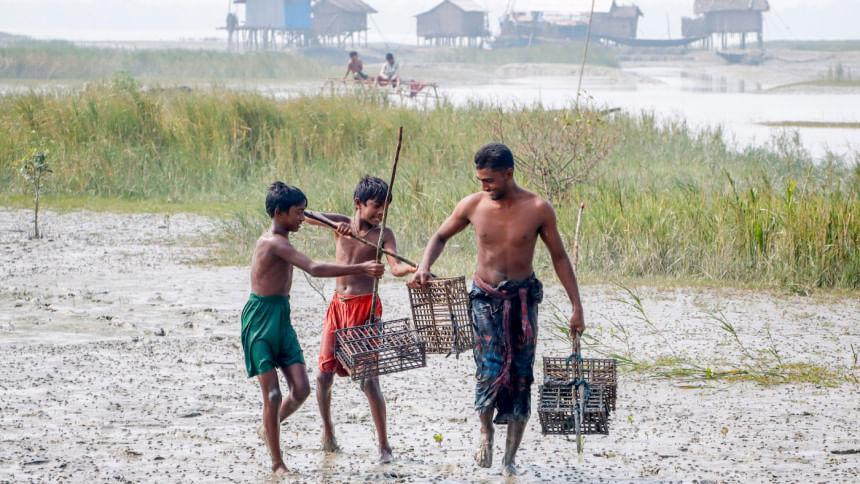
The Sundarban Tiger Reserve’s management framework allows regulated fishing in designated Multiple Use Areas against valid BLC permits. The protected core area remains unavailable for fishing, and mechanized fishing boats are not permitted within the Tiger Reserve.
Other fisheries regulations address destructive fishing practices.
Small-mesh nets and certain fishing methods can capture juvenile fish and non-target species, damaging the wider ecological productivity of estuarine waters.
Government fisheries information has specifically linked indiscriminate exploitation and unregulated small-mesh shooting nets used for tiger-prawn seed collection with losses of biodiversity and juvenile fish.
The lesson is straightforward: A healthy fishery requires more than catching fish. It requires protecting the ecosystem that produces them.
Local Fishing Is Not Tourist Fishing
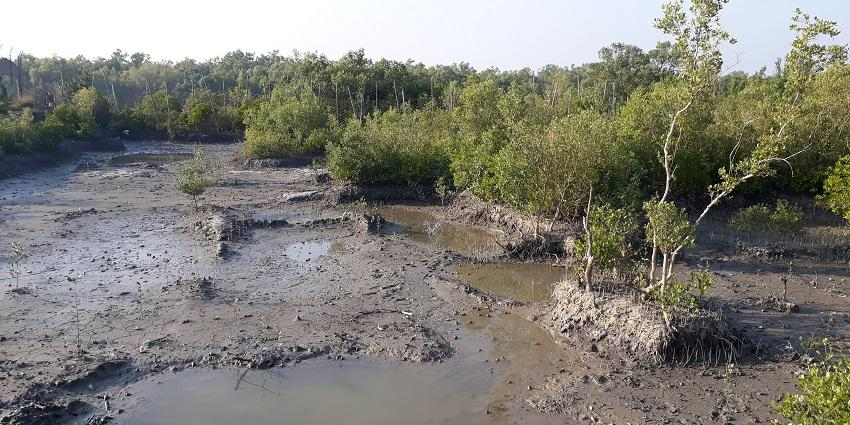
This distinction deserves special attention.
A local fisher operating under an authorised fishing system is not the same as a tourist fishing from a safari boat.
Inside the Sundarban Tiger Reserve, tourist fishing is strictly prohibited.
The official reserve rules state that tourists must follow prescribed routes and may disembark only at camps open for tourism. The rules also explicitly state that swimming, diving and fishing are strictly prohibited inside the reserve.
So visitors should not:
- Fish from tourist boats
- Throw fishing lines into reserve waters
- Use nets or traps
- Collect fish, crabs or other aquatic wildlife
- Treat the forest as a recreational fishing ground
Tourist activity within the reserve is regulated and monitored, including through protection patrols and e-patrolling systems.
Violations of reserve rules can lead to legal action and serious penalties.
The Wild Orbit Expert Advice
Fishing season does not mean tourist fishing season.
If you are visiting the Sundarbans, respect the distinction between observing a livelihood and participating in it.
- Watch the fishermen.
- Learn from their relationship with the river.
- Listen to the stories.
But do not interfere with the fishing activity or attempt to recreate it as a tourist experience.
Watch the wild. Respect the rules. Leave no trace.
Fishing Season vs Tourism Season
Fishing season and tourism season are two different things.
The Sundarban Tiger Reserve identifies October to March as the main tourism season. Fishing follows a different ecological and livelihood calendar.
That difference matters because a month that is less conventional for tourism can still be extremely important to the ecological and cultural life of the delta.
The monsoon is a good example.
It transforms the waterways, influences freshwater and salinity, supports seasonal ecological changes and coincides with the cultural importance of hilsa.
It is also the period in which Ilish Utsav activities are commonly organised.
This is why there is no single month that can be described as the “Sundarbans season” for every purpose.
- The forest has an ecological calendar.
- The fishery has a livelihood calendar.
- Tourism has its own calendar.
They overlap but they are not identical.
Is Summer Really an Off-Season?
The idea that the Sundarbans simply “shuts down” during summer is misleading.
It is more accurate to describe summer as a different season for the destination.
The official main tourism period is generally October to March, but summer does not mean that the ecosystem or surrounding communities become inactive.
Fishing regulations, weather, livelihoods and tourism operations all follow their own patterns.
For travellers, summer can offer a quieter perspective on the region.
For local communities, however, the seasonal cycle continues to shape work, income and everyday life.
The Sundarbans do not follow a tourism brochure.
The tide certainly does not.
Responsible Tourism Around Fishing Communities
Visitors can learn about Sundarban fishing without interfering with it.
Ask your guide about:
- How tides influence fishing
- Why particular fishing areas are regulated
- How fishers interpret changing weather
- Why different species have different seasonal patterns
- How climate change affects fishing communities
- Why certain fishing methods are restricted
- How conservation rules influence local livelihoods
Observe from a respectful distance. Listen to local stories. And remember that fishing communities are not a tourist performance.
They are people living and working within one of the world’s most dynamic and demanding landscapes.
Responsible tourism begins with understanding that difference.
FAQs
What is the main fishing season in the Sundarbans?
The broader Sundarban fishery is highly seasonal. Historical government data indicates that around 80% of annual fish catch occurred between November and January, although different fisheries and species follow different patterns.
Is fishing allowed throughout the year?
Not under the same conditions everywhere. Within the regulated fishery of the Sundarban Tiger Reserve, fishing is closed from April through June because this period corresponds with fish spawning.
Why is fishing closed from April to June?
The closure is intended to protect fish during their spawning period and support the long-term sustainability of the regulated fishery.
When does fishing activity increase again?
Across the wider Sundarban region, fishing activity begins increasing around July with the onset of the monsoon, although the exact pattern varies between fisheries.
When is Ilish Utsav held in the Sundarbans?
Ilish Utsav is generally associated with the monsoon hilsa season. In 2026, current listings place festival activities mainly across July, August and September, with July and August commonly promoted as the peak period. Exact dates depend on the organiser.
Does Ilish Utsav mean tourists can fish for hilsa?
No. Ilish Utsav is a cultural and culinary celebration associated with hilsa. It does not give tourists permission to fish inside the Sundarban Tiger Reserve.
Can tourists fish from a tourist boat?
No. Fishing is strictly prohibited inside the Sundarban Tiger Reserve for tourists.
What fish are found in the Sundarbans?
The broader Sagar–Sundarban coastal region supports numerous fish, prawn and crab species, including hilsa, bhetki, tiger prawn, brown shrimp and mud crab.
Why are tides important to fishing?
The Sundarbans is a tidal delta. Rising and falling water levels continuously alter waterways, access and aquatic conditions. Fish behaviour is also closely linked to these tidal movements.
Is hilsa the same as the overall Sundarban fishing season?
No. Hilsa has its own seasonal and geographical patterns. It is one important fishery within a much larger and more diverse Sundarban ecosystem.
What is the Winter Migratory Bag-Net Fishery?
It is a seasonal fishing system documented in the Indian Sundarbans and is important to the livelihoods and food security of participating fishing communities.
Is summer an off-season in the Sundarbans?
Not in the sense of the ecosystem becoming inactive. Summer is better understood as a different period with different tourism conditions, environmental conditions and livelihood patterns.
The River Has More Than One Season
The Sundarbans has no single fishing season.
It has overlapping seasons shaped by monsoon rainfall, freshwater flow, salinity, tides, fish movement, spawning cycles, regulations and human livelihoods.
Winter can bring stronger overall fishing activity. Spring brings transition. The regulated fishery within the Tiger Reserve closes during April–June.
The monsoon transforms the waterways and marks an important period for seasonal fishing activity across the wider region.
And within that monsoon landscape, hilsa becomes more than a fish.
Through traditions such as Ilish Utsav, it becomes a connection between river, fisher, food and culture.
But the deeper story is not simply about when fish are easiest to catch. It is about how closely human life remains tied to the rhythm of the river.
- For fishing communities, the river is a livelihood.
- For wildlife, it is habitat.
- For the mangrove ecosystem, it is part of a living ecological system.
- For visitors, it is something to witness without disturbing.
The Sundarbans do not simply have fishing seasons. It has a living rhythm and every season tells a different part of its story.
Planning Your Sundarban Journey
Understanding the fishing seasons gives you a different way to experience the Sundarbans.
A journey here is not only about spotting a tiger or cruising through mangrove waterways. It is about understanding the rhythm of the delta—the tides, changing seasons, fishing communities, wildlife and the fragile ecosystem that connects them all.
When planning your Sundarban travel, choosing the right time depends on what you want to experience. Winter offers the more established tourism season, while the monsoon brings a different perspective of the landscape, including the seasonal cultural connection with hilsa and Ilish Utsav.
The important thing is to travel with an understanding of the place rather than simply travelling through it.
At The Wild Orbit, we believe a Sundarban expedition should create that deeper connection. So our journeys are designed to take you beyond a conventional sightseeing trip and closer to the landscapes, stories, wildlife and people that make the Sundarbans extraordinary.
Plan your private Sundarban expedition
A private journey shaped around you — your group, your pace, your interests. Book a free consultation.