


 Travel guide
Some landscapes ask you to look.
The Sundarbans asks you to watch.
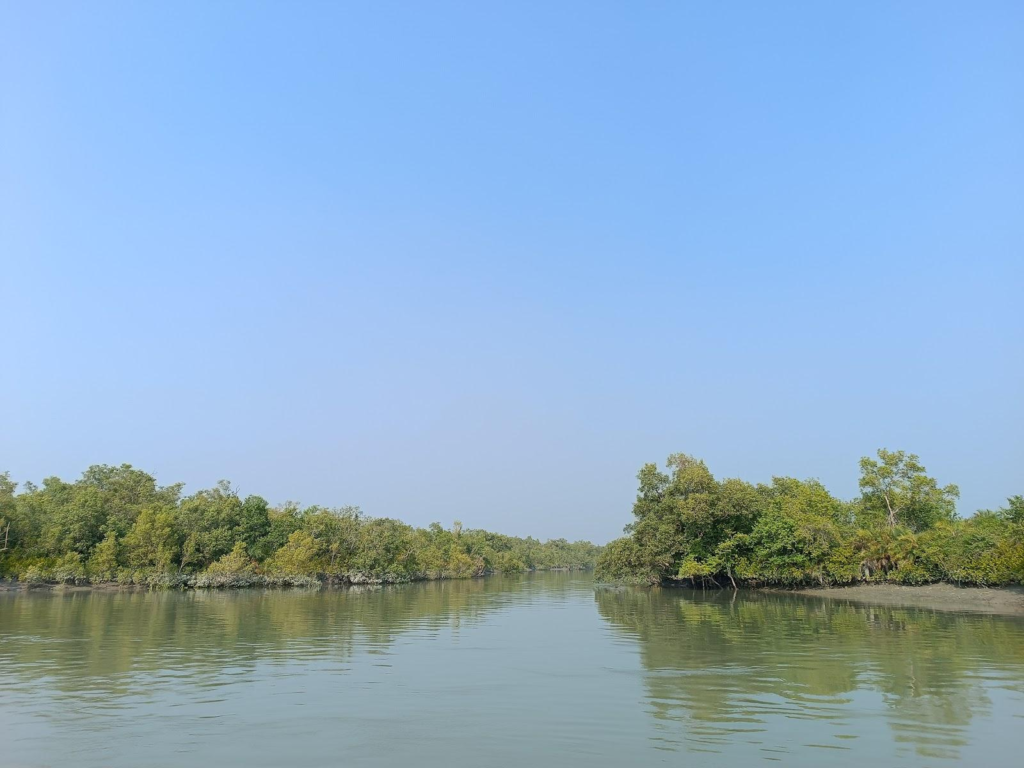
Watch the tide change the shape of a riverbank. Watch a kingfisher disappear between mangrove branches. Watch spotted deer emerge near the forest edge. Watch sunlight move across the water in the early morning.
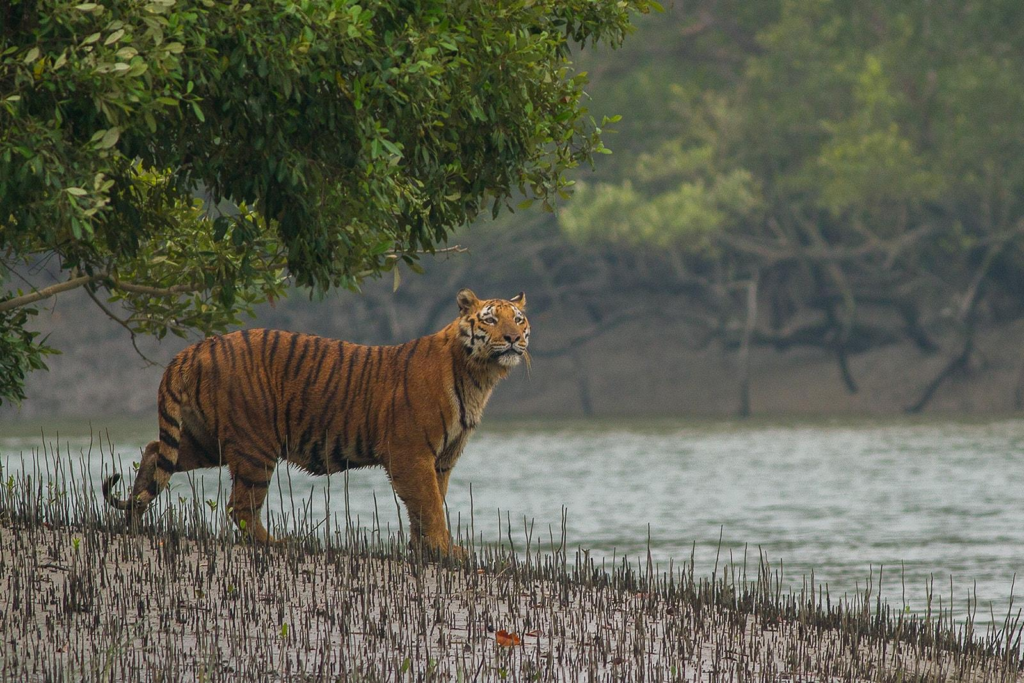
And, if fortune allows, watch the unmistakable movement of a Royal Bengal Tiger along a distant shore.
The Sundarbans is not a wilderness that reveals everything immediately.
It is a vast tidal landscape of mangrove forests, rivers, creeks, islands and mudflats in the delta of eastern India. Here, water determines movement, tides reshape the landscape and wildlife remains largely on its own terms.
For Japanese travelers looking for a wildlife journey beyond conventional sightseeing, the Sundarbans offers something rare: a destination where patience becomes part of the experience.
This is not simply about finding wildlife.
It is about learning how to observe a wilderness that is constantly changing.
A Wilderness That Rewards Attention
Many wildlife destinations are built around movement.
You drive across open landscapes. You follow established routes. You search for animals against a relatively predictable background.
The Sundarbans works differently.
Here, the landscape itself keeps moving.
- The tide rises and falls.
- Channels widen and narrow.
- Mudflats appear and disappear.
- Light changes across the water.
- Birds move between feeding grounds.
- Animals emerge briefly before returning to the forest.
Your boat moves quietly through this environment, and observation becomes more important than speed.
- A distant shape may be a branch.
- A ripple may be nothing.
- Or it may be a crocodile entering the water.
A movement in dense vegetation may disappear before you understand what you saw.
That uncertainty is not a weakness of the experience.
It is the experience.
The Art of Observation
The Sundarbans is especially rewarding when you stop expecting every moment to produce a sighting.
A wildlife expedition can be built around small details.
- The call of a bird from somewhere inside the mangroves.
- Fresh tracks on a muddy bank.
- A group of deer suddenly becoming alert.
- A crocodile resting almost motionless near the water.
- A kingfisher crossing the channel.
- The changing colour of the river at sunrise.
These moments teach you to read the environment.
The longer you stay, the more connections begin to appear.
You start noticing that wildlife behaviour is not separate from the landscape.
It is shaped by it.
- The tide influences feeding.
- The forest provides shelter.
- The mudflats create temporary feeding grounds.
- The waterways become both pathways and barriers.
The Sundarbans rewards travellers who are willing to look carefully rather than simply look quickly.
The Sundarbans Among the World’s Great Wildlife Destinations
The world’s great wildlife destinations are extraordinary for different reasons.
An African safari can place you within vast open landscapes where large mammals dominate the horizon.
The Amazon immerses travellers in immense tropical rainforest and extraordinary biological complexity.
The Galápagos offers isolated island ecosystems whose wildlife and evolutionary history have fascinated generations of visitors.
The Sundarbans tells a different story.
Its wilderness is defined by tides, mangroves, islands, waterways and Bengal tigers adapted to one of the world’s most challenging environments.
The Sundarbans is not an inferior alternative to an African safari, the Amazon or the Galápagos.
It is a fundamentally different wilderness experience—and one that deserves its own place among the world’s great wildlife destinations.
For travelers who appreciate landscapes where atmosphere, natural processes and observation matter as much as a single dramatic encounter, that difference is precisely what makes the Sundarbans compelling.
A Landscape of Water, Forest and Light
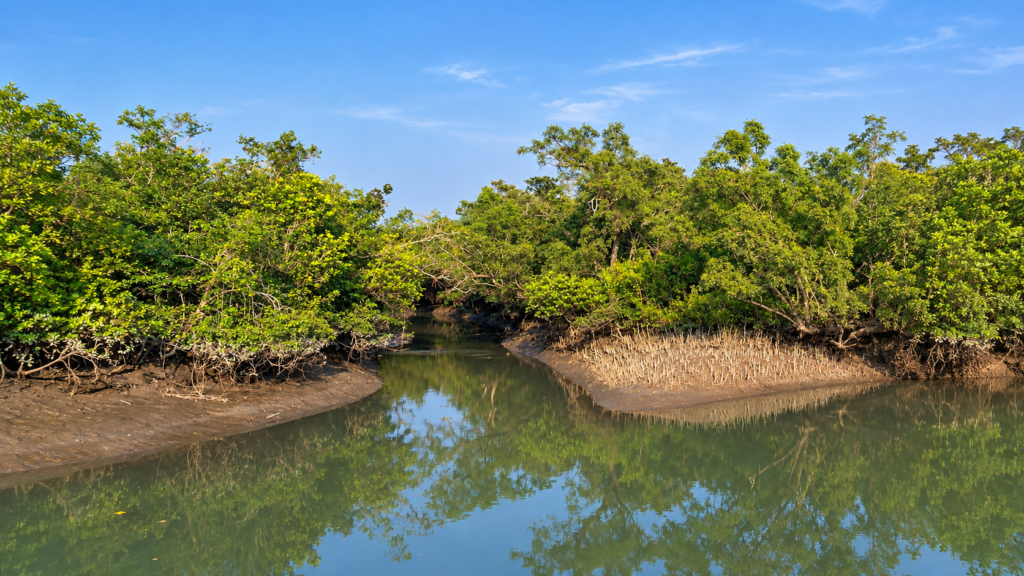
The Sundarbans is not simply a forest beside a river.
It is an ecosystem in which forest and water are inseparable.
Tidal rivers and creeks pass between mangrove-covered islands. Mudflats emerge as water recedes. Mangrove roots hold onto shifting shores and create shelter for countless forms of life.
The landscape changes throughout the day.
Morning can bring soft light across the waterways.
As the sun rises, the character of the mangroves changes.
Later, the same channels can look completely different as the tide moves through them.
For photographers, this creates an unusual opportunity.
You are not simply photographing a destination.
You are photographing a landscape in transition.
- A boat reflected in still water.
- Mangrove silhouettes against the morning sky.
- A bird standing alone on a branch.
- A deer framed by vegetation.
- A distant animal moving along the shoreline.
The beauty of the Sundarbans often lies in what happens between the obvious moments.
The Royal Bengal Tiger: A Presence, Not a Promise
The Royal Bengal Tiger is the great symbol of the Sundarbans.
But approaching the experience with the expectation of a guaranteed sighting can miss what makes this ecosystem special.
The Sundarbans tiger lives within a tidal mangrove environment where visibility can be difficult and terrain is constantly influenced by water.
This is not an open grassland where a predator can sometimes be seen from kilometres away.
A tiger may remain hidden inside dense vegetation.
It may move along a distant bank.
It may cross an area briefly and disappear.
That makes every sighting unpredictable.
And that unpredictability gives the experience its authenticity.
The goal is not to make the wild conform to a timetable.
The goal is to be present when the wild decides to reveal itself.
For that reason, a tiger sighting in the Sundarbans can feel less like an attraction and more like a rare moment of connection with an animal that remains completely independent of the visitor.
Wildlife Beyond the Tiger
A Sundarbans expedition should never be reduced to tiger watching.
The ecosystem supports a wide variety of wildlife, including:
- Spotted deer
- Wild boar
- Estuarine crocodiles
- Rhesus macaques
- King cobras and other reptiles
- Kingfishers
- Herons and egrets
- Raptors
- Water-associated birds
- Other terrestrial and aquatic species
Birdwatching can become an important part of the journey.
A quiet morning on the water may produce several small encounters rather than one spectacular one.
- A kingfisher may flash across the boat.
- A bird of prey may circle above the canopy.
- Wading birds may gather along a newly exposed mudflat.
The more carefully you observe, the more life becomes visible.
The Sundarbans therefore works particularly well for travellers who enjoy slow wildlife discovery rather than a checklist of animals.
Why the Boat Changes Everything
In the Sundarbans, the boat is more than a means of transportation.
It is your moving observation platform.
There are no conventional safari roads cutting through the mangrove wilderness.
Instead, waterways lead you into the landscape.
The boat follows the river and channels while the tide determines the rhythm of the journey.
Sometimes the water opens into a broad expanse.
Sometimes the route narrows between dense mangroves.
At other times, the boat may remain still while everyone watches a particular stretch of shoreline.
This changes the psychology of wildlife viewing.
You are not constantly moving from one location to another.
- You can pause.
- You can listen.
- You can watch.
And when nothing obvious happens, you remain surrounded by the environment itself.
That stillness can become one of the most memorable parts of the expedition.
Dawn in the Sundarbans
If there is one time of day worth experiencing slowly, it is dawn.
- The first light reaches the waterways.
- The forest begins to emerge from darkness.
- Bird calls become more noticeable.
- The water can appear almost motionless before the day’s activity begins.
There is a particular quality to being on the river at this hour.
The landscape feels larger.
The sounds become clearer.
And because the Sundarbans is so dependent on the movement of water, early morning observation can feel like watching the ecosystem begin another cycle.
For photographers, natural light can transform the same scene within minutes.
For wildlife enthusiasts, early starts create valuable observation opportunities.
And for anyone simply willing to sit quietly, dawn provides something increasingly rare in modern travel: time without interruption.
When Should Japanese Travelers Visit the Sundarbans?
See it for yourself
A private journey shaped around you — your group, your pace, your interests. Book a free consultation.
The main tourism season in the Sundarbans generally runs from October through mid-March.
For a first visit, this period is a practical choice because conditions are generally more comfortable for extended outdoor and boat-based exploration.
October and November bring a changing landscape after the monsoon period.
December through February are popular months for wildlife-oriented travel, with cooler conditions making time on the water more comfortable.
March marks the transition toward warmer weather.
Summer travel continues, but temperatures and humidity become more demanding.
If your priority is comfortable wildlife exploration and longer periods outdoors, October to mid-March is the strongest overall window to consider.
How to Reach the Sundarbans from Japan
For most Japanese travelers, the international journey begins with reaching Kolkata, the major gateway for exploring the Indian Sundarbans.
The broader journey is: Japan → Kolkata → southern West Bengal → Sundarbans gateway → boat → mangrove wilderness
The journey does not end when you leave the airport.
Kolkata introduces you to Bengal’s urban character before the landscape gradually changes.
The city gives way to roads, villages and waterways.
Eventually, the road journey ends and the boat becomes your way forward.
That transition is important.
You are not simply travelling from one tourist attraction to another.
You are moving progressively deeper into a different environment.
Make Kolkata Part of the Journey
A Sundarbans journey can become richer when paired with time in Kolkata.
The city offers a very different experience from the quiet waterways of the delta.
Historic architecture, markets, food, literature, art and everyday urban life provide an introduction to Bengal before you enter the wilderness.
- Then the journey changes.
- The city recedes.
- Rural landscapes appear.
- The roads become less important.
- Water becomes more important.
And eventually, the mangroves take over.
For Japanese travelers making the long journey to eastern India, this creates a natural progression: Kolkata → Bengal → Delta → Sundarbans
The contrast between city and wilderness is part of what makes the journey memorable.
How Many Days Should You Spend in the Sundarbans?
The Sundarbans can be visited in a short trip.
But it is a destination where additional time changes the quality of the experience.
Minimum: 2 Nights / 3 Days
Two nights and three days provide a practical introduction.
You can enter the region, travel through key waterways and experience the basic rhythm of a Sundarbans expedition.
It works for travelers with limited time.
Ideal: 4 Nights / 5 Days
For an international journey from Japan, four nights and five days offer a much better balance.
More time means more opportunities to observe different waterways, changing tides, birdlife, landscapes and wildlife behaviour.
It also gives you more freedom to slow down.
You are not depending on one short outing to define your entire experience.
Deeper Exploration: 6–7 Days
Six to seven days allow the Sundarbans to become less of a sightseeing stop and more of an immersive wilderness experience.
There is time for extended wildlife observation, photography, birdwatching, ecological exploration and a deeper understanding of the landscape.
The principle is simple: You can visit the Sundarbans in three days. But five days gives you time to experience it. Seven days gives you time to understand it.
A Sundarbans Expedition Is About Patience
A longer stay does not guarantee a tiger.
It does something more valuable.
It gives you time.
- Time to watch.
- Time to wait.
- Time to understand the tides.
- Time to explore different waterways.
- Time to notice wildlife that you might otherwise overlook.
- Time to become comfortable with uncertainty.
This is why we describe the experience as an expedition, not simply a sightseeing tour.
An expedition accepts that nature determines the outcome.
The traveller’s role is to be ready.
Photography: Capturing the Moment Between Moments
The Sundarbans can be deeply rewarding for photographers who appreciate atmosphere.
A dramatic tiger photograph may become the defining image of the trip.
But it does not have to be.
Consider the smaller stories:
- A boat moving through morning mist
- Mangrove roots reflected in the water
- A kingfisher crossing a quiet channel
- Spotted deer near the forest edge
- A crocodile resting beside a tidal creek
- Birds silhouetted against the morning sky
- Villages beside the waterways
- Changing light across the mangrove canopy
- Mudflats appearing as the tide retreats
- A distant animal partially concealed by vegetation
The best images often communicate more than the identity of the subject.
They communicate place.
A photograph of a tiger becomes more powerful when it also tells you something about the mangrove wilderness surrounding it.
What Should Japanese Travelers Pack?
The Sundarbans is tropical, humid and heavily influenced by water, so practical preparation matters.
Consider packing:
- Lightweight, breathable clothing
- Comfortable footwear
- Hat and sunglasses
- Sun protection
- Insect protection
- Reusable water bottle
- Personal medication and essentials
- Binoculars
- Camera equipment
- Spare batteries or charging equipment
- Power bank
- Waterproof protection for electronics
- Light rain protection
- Small day bag
For wildlife observation, neutral and comfortable clothing is practical.
Binoculars can be particularly useful because many wildlife encounters happen at a distance.
And remember that the most valuable piece of equipment may simply be patience.
Your First Journey to India
For Japanese travelers visiting India for the first time, Kolkata can feel energetic and unfamiliar.
The sounds, traffic, food, crowds and pace of daily life may be very different from what you are accustomed to.
- Give yourself time to adjust.
- Avoid packing every day with activities.
- Allow additional travel time.
- Stay flexible.
And approach the journey with curiosity rather than trying to make every part of India fit into expectations formed elsewhere.
The Sundarbans itself moves at a different rhythm.
Once you enter the delta, the river becomes more important than the road.
That change in pace can be one of the most rewarding parts of the journey.
Safety in the Sundarbans
The Sundarbans is a genuine wilderness.
Wild animals should never be treated as attractions that visitors can approach whenever they wish.
Always follow the instructions of trained guides, boat crews and local authorities.
Stay within designated areas.
- Do not approach wildlife.
- Do not feed animals.
- Do not make unnecessary noise.
Follow boat-safety instructions.
Respect restricted areas and forest regulations.
The purpose of a responsible expedition is not to remove the uncertainty of the wilderness.
It is to experience that wilderness while protecting people, wildlife and the ecosystem.
Responsible Travel in a Living Delta
The Sundarbans is both a wildlife ecosystem and a lived landscape.
Communities across the wider delta depend on the environment in different ways.
Tourism therefore needs to be approached thoughtfully.
- Choose responsible operators.
- Respect local communities.
- Follow conservation rules.
- Avoid unnecessary plastic.
- Never disturb wildlife for photographs.
- Do not treat villages or local people as photographic props.
And remember that the mangrove forest is not simply scenery.
It is a functioning ecosystem supporting wildlife and human communities within a dynamic delta.
A meaningful journey should leave the visitor with greater understanding of the place.
Visa and Entry Planning for Japanese Travelers
Japanese passport holders should check the latest Indian visa and entry requirements before travelling.
Depending on current eligibility and travel circumstances, applicable tourist visa or eVisa arrangements may be available.
Passport validity, entry conditions and immigration procedures should be confirmed before departure because requirements can change.
Completing these arrangements early allows you to focus on the journey itself once you arrive in India.
Why Explore the Sundarbans With The Wild Orbit?
We believe the Sundarbans deserves to be experienced slowly.
Not rushed.
Not reduced to a checklist.
And not defined entirely by whether a tiger appears.
The Wild Orbit approaches the Sundarbans as an expedition into a living ecosystem.
That means looking at the entire landscape.
- The mangroves.
- The waterways.
- The tides.
- The birds.
- The wildlife.
- The communities.
- The stories.
And the conservation challenges that shape the future of this extraordinary region.
Our philosophy is simple:
Think Wild. Live Wild. Go Wild.
For us, exploration begins with curiosity.
And curiosity begins with observation.
A Different Definition of Extraordinary
The world’s great wildlife destinations do not need to resemble one another.
- The African safari gives you vast horizons.
- The Amazon gives you overwhelming rainforest complexity.
- The Galápagos gives you island evolution.
The Sundarbans gives you something else entirely.

It gives you a wilderness where water determines the landscape and the landscape determines survival.
- The Royal Bengal Tiger moves through mangroves.
- Deer feed near tidal edges.
- Crocodiles wait beside waterways.
- Birds follow the changing availability of food.
- Mangrove roots hold the boundary between land and water.
And the tide continually reshapes the environment.
The extraordinary thing is not simply the tiger.
It is the entire system.
Why the Sundarbans Is Worth the Journey From Japan
Japan and the Sundarbans are separated by a considerable distance.
That distance is precisely why the journey should be approached with intention.
Do not come only to collect a photograph of a tiger.
- Come to experience a landscape that operates according to a different rhythm.
- Come to watch the river change.
- Come to photograph the morning light.
- Come to listen to the forest.
- Come to observe birds and wildlife.
- Come to understand how mangroves survive where freshwater and saltwater meet.
And if a tiger appears, let that moment become part of the larger story.
The Sundarbans rewards attention.
The more patiently you observe, the more the landscape reveals.
FAQs
Is the Sundarbans worth visiting for Japanese travelers?
Yes. The Sundarbans offers a distinctive wildlife experience built around mangrove forests, tidal waterways, Bengal tigers and slow observation. It is especially rewarding for travelers who enjoy landscape, wildlife and photography.
What is the best time to visit the Sundarbans?
The main tourism season generally runs from October through mid-March. This period is generally the most comfortable choice for a first wildlife-focused visit.
How many days should I spend in the Sundarbans?
Two nights and three days is a practical minimum. Four nights and five days provides a more rewarding experience, while six to seven days allows deeper exploration and observation.
Can I see a Royal Bengal Tiger?
Tiger sightings are possible but never guaranteed. The Sundarbans is a genuine wild environment, and sightings depend on animal behaviour, location, tides, weather and chance.
Is the Sundarbans suitable for photography?
Yes. The destination offers opportunities to photograph wildlife, mangroves, waterways, birds, boats, villages and changing natural light. It is particularly suitable for photographers interested in environmental storytelling.
Is the Sundarbans only about tiger sightings?
No. The ecosystem supports many other animals and birds, while the mangrove landscape and tidal system are themselves major parts of the experience.
How do I reach the Sundarbans from Japan?
Most international travelers first travel to Kolkata and then continue toward a Sundarbans gateway by road before transferring to boats for exploration of the waterways and mangrove areas.
Can I combine Kolkata with the Sundarbans?
Yes. Kolkata provides a cultural and urban introduction to Bengal before the journey moves through rural landscapes and into the tidal wilderness.
Is the Sundarbans suitable for first-time visitors to India?
Yes, provided the journey is planned carefully and travellers allow time to adjust to India’s climate, pace and urban environment. A well-organised expedition can make the transition from Kolkata to the Sundarbans straightforward.
Is a longer stay better for wildlife observation?
A longer stay does not guarantee sightings, but it provides more opportunities to observe changing tides, different waterways, birds, landscapes and wildlife behaviour. It also allows you to experience the destination without rushing.
Let the Wilderness Reveal Itself
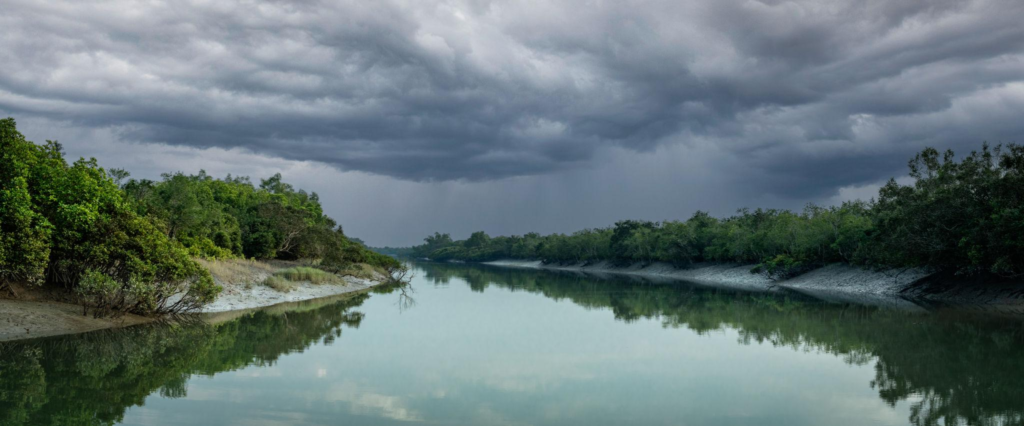
The Sundarbans does not promise you everything.
It asks you to pay attention.
- The river changes.
- The tide moves.
- The light shifts.
- A bird appears and disappears.
- A distant movement catches your eye.
- The forest remains quiet.
And somewhere beyond the visible shoreline, the Royal Bengal Tiger continues moving through its mangrove world.
Perhaps you see it.
Perhaps you do not.
Either way, the Sundarbans has already given you something rare: the opportunity to spend time inside a wilderness that cannot be rushed into revealing itself.
You can visit the Sundarbans in three days. But five days gives you time to experience it. Seven days gives you time to understand it.
Plan your private Sundarban expedition
A private journey shaped around you — your group, your pace, your interests. Book a free consultation.