

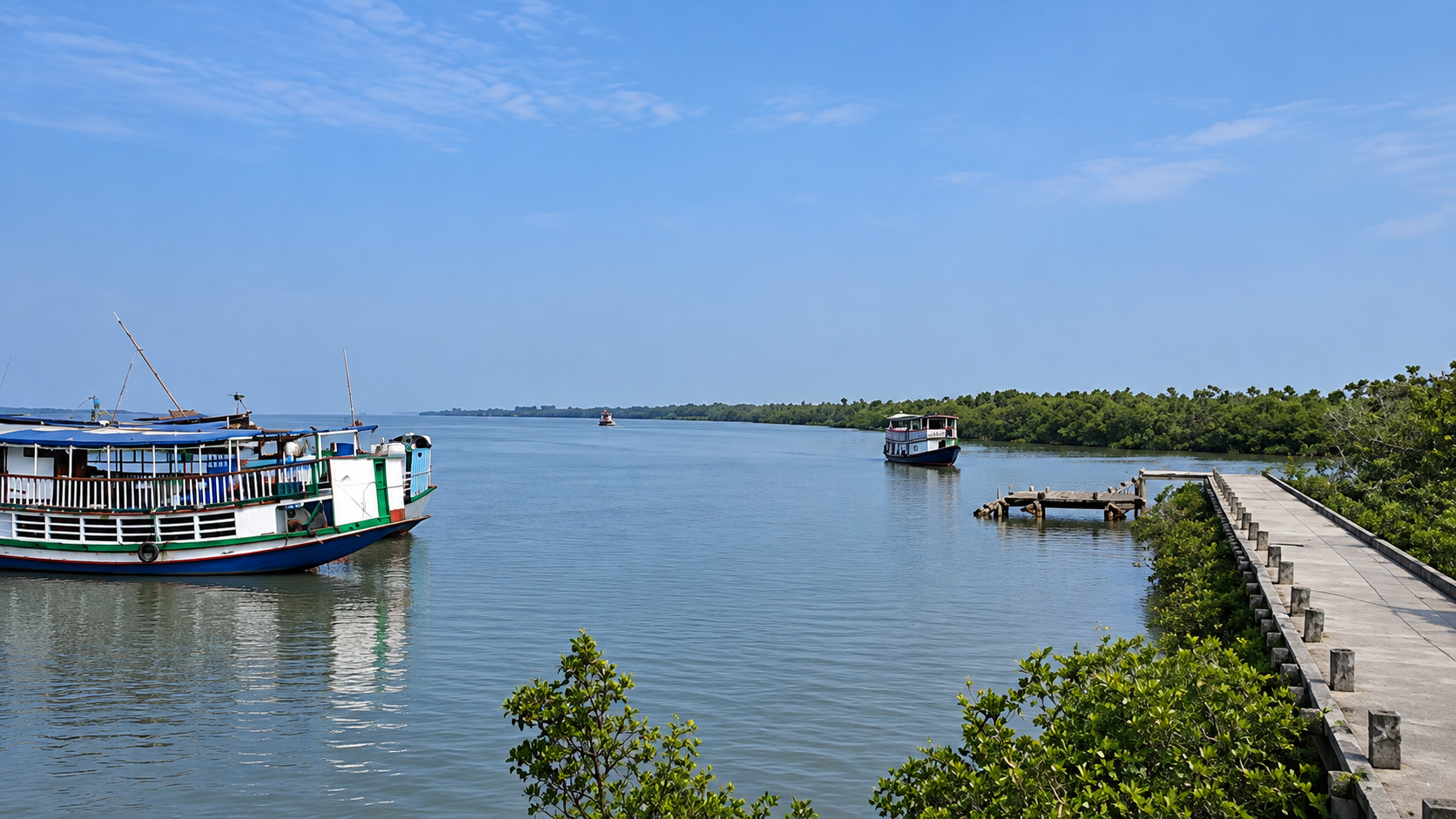
 Travel guide
Some of the most interesting things happening in the Sundarbans in December are easy to miss if you spend the whole journey looking for something large.
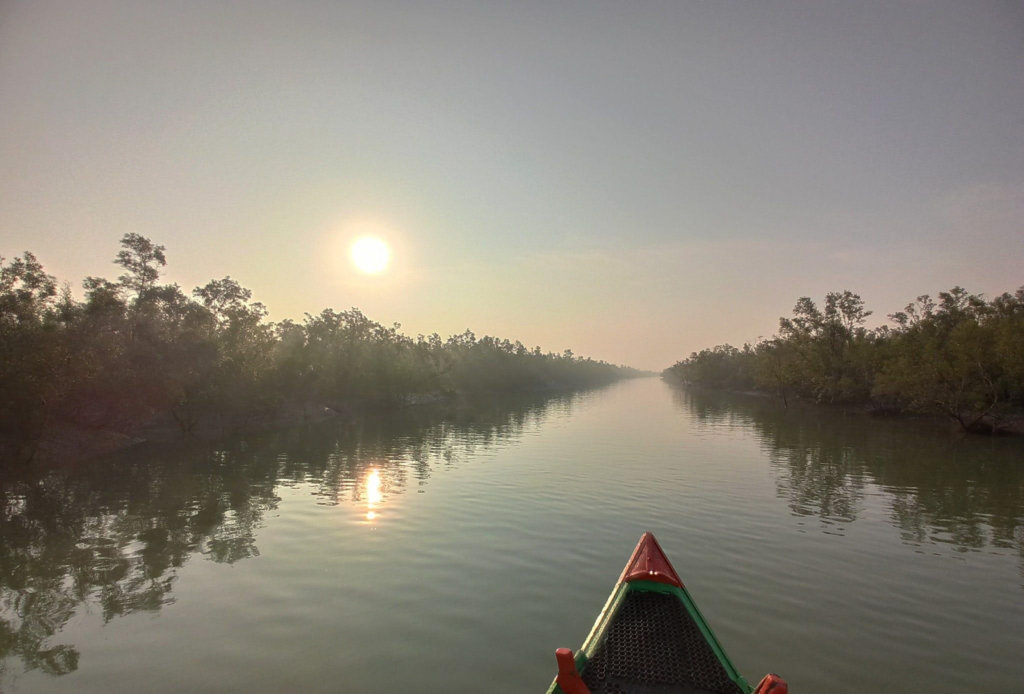
Along a mudflat, a group of waders may be working the exposed edge of the tide. A raptor can appear briefly above the mangrove canopy. Farther along, a creek may open into a broad sheet of winter light before narrowing again between the trees.
This is part of what makes Sundarban in December distinctive. The forest is settling into winter, migratory birds are becoming an increasingly important part of the wetland landscape, and the combination of cooler conditions, relatively settled weather and changing tidal scenery makes long periods of observation especially rewarding.
December is also firmly within the main travel period for the Indian Sundarbans. The Sundarban Tiger Reserve identifies October to March as its principal tourism season, while its conservation material describes December to February as the winter season.
So December does not need to be called the best month to visit. It has its own character: early winter, growing bird activity, quieter landscape observation and a particularly good opportunity to experience the Sundarbans from the water without rushing through it.
What changes in the Sundarbans in December?
By December, the seasonal shift is no longer something you have to imagine. Winter has arrived.
The Sundarban Tiger Reserve describes December and January as among the coolest months, with a mean minimum temperature of around 20°C in its general climate description. Its conservation planning material records a much lower absolute winter minimum, illustrating why a single “Sundarban temperature” figure can be misleading. Conditions vary across the delta and from day to day.
For travellers, the more useful observation is how that seasonal change affects the experience.
The heavy monsoon period is behind you. Rain is generally much less dominant, mornings can feel distinctly cooler, and the quality of daylight often becomes an important part of the landscape. Early boat journeys can have a crispness that is absent during the wetter months, while later in the day the forest can take on a softer, warmer appearance.
It is a season for spending time outside rather than constantly adapting to rain. And there is another reason December deserves attention.
Winter arrives on the mudflats
The Sundarbans is internationally important for birds, but the winter story is particularly interesting around its open edges.
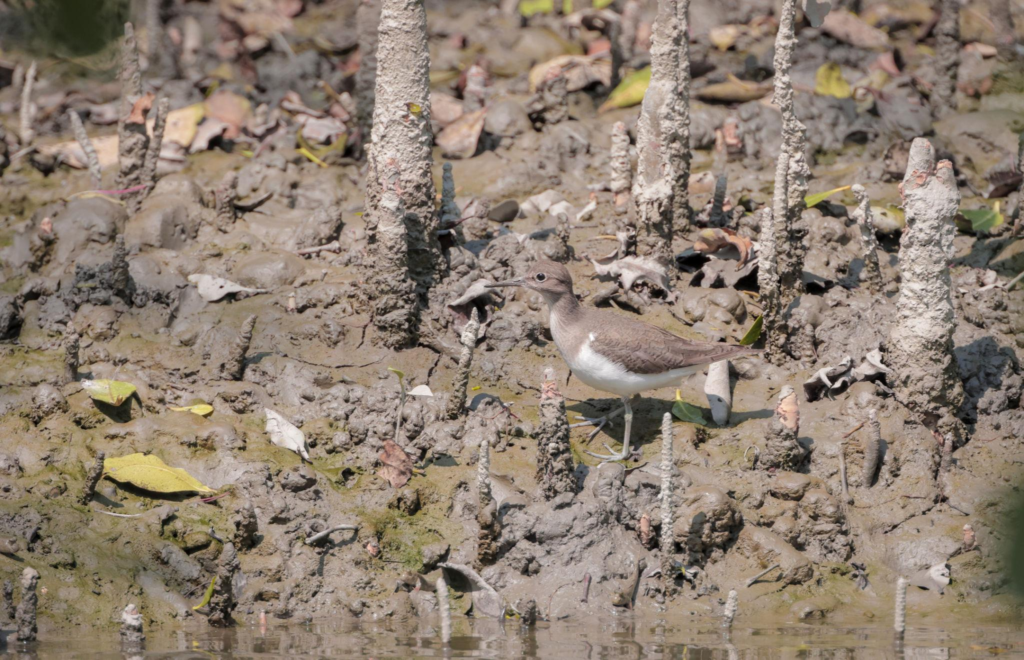
The reserve’s current avifauna information notes that more than 400 species of resident and migratory birds have been recorded across the Sundarban Biosphere Reserve, with many migrants from higher altitudes visiting particularly during the winter months. It also identifies mudflats and sandy shorelines as habitats used by waders such as sandpipers, spoonbills, whimbrels, stilts and curlews.
This makes December an excellent month to change the way you look at the forest.
Instead of watching only the tree line, watch the boundary between land and water.
That narrow, constantly changing zone is where much of the winter bird story becomes visible. The Sundarban Tiger Reserve’s bird-festival research specifically identifies mudflats and shorelines as important habitats for avian fauna and notes that many shorebirds arrive in the Sundarbans during the winter months.
UNESCO also identifies the Sajnekhali area as an Important Bird Area of high importance for migratory birds.
For a traveller, the lesson is simple: December rewards binoculars almost as much as cameras.
Look beyond the tiger
The Royal Bengal Tiger remains one of the great reasons people dream about the Sundarbans. But December is a particularly good time to appreciate how much larger the wildlife experience really is.
The reserve records species including spotted deer, wild boar, fishing cats, otters and dolphins, alongside its extraordinary bird diversity.
None of these animals comes with a sightseeing timetable.
- A tiger may remain hidden.
- A crocodile may disappear beneath the surface.
- Dolphins may surface only briefly.
- A deer may appear between mangrove trunks and vanish almost immediately.
That unpredictability is not a weakness of the experience. It is part of visiting a genuinely wild landscape.
The difference in December is that the cooler season can encourage travellers to spend longer periods observing rather than treating every quiet stretch of water as a missed opportunity.
The forest does not become more predictable. You simply become better placed to notice it.
The boat is part of the experience
See it for yourself
A private journey shaped around you — your group, your pace, your interests. Book a free consultation.
In the Sundarbans, the journey between places is not empty space.
Inside the Tiger Reserve, boats and launches are the means of getting around, and the waterways provide the principal perspective from which visitors experience the forest. Current reserve guidance states that entry is through booked, registered boats and that boats operating inside the reserve have ecotourism guides.
That makes the water itself one of December’s main subjects.
- Watch how a creek changes as the tide moves.
- Notice exposed mud appearing beside a bank that was covered earlier.
- Look for bird tracks and feeding activity on newly exposed surfaces.
- Follow the line where the forest meets open water.
UNESCO describes the Sundarbans as a landscape shaped by tidal processes, with erosion and sediment deposition continually influencing its islands and waterways.
This is why a December boat safari should not be measured only by the number of wildlife sightings.
Sometimes the most revealing part of the journey is watching the landscape change while you are still sitting in the same boat.
December is made for slow photography
Wildlife photography is an obvious attraction, but December also gives photographers a strong landscape story.
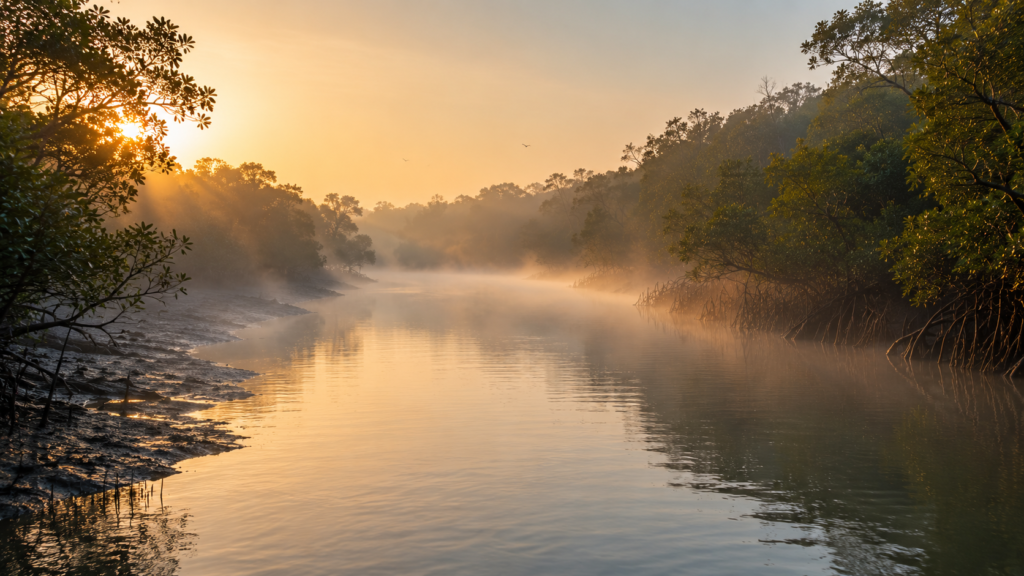
The lower-angle winter light can bring definition to mangrove roots, pneumatophores, muddy banks and distant vegetation. A bird standing alone on a mudflat can become a stronger photograph than a crowded frame of forest. Reflections on a broad creek can create another layer entirely.
And because the landscape is tidal, the same location can look considerably different at different stages of the day.
For photographers, this creates a useful challenge: don’t arrive with only one idea of what the Sundarbans should look like.
Look for relationships—bird and mudflat, boat and channel, roots and water, forest and sky. That is where the December landscape becomes visually distinctive.
How to experience the Sundarbans in December
Give birdwatching more time than you expected

Even if you are not a dedicated birder, carry binoculars. Sajnekhali is particularly relevant, with the reserve describing it as a major birding location and noting a wide range of resident and migratory species.
A knowledgeable guide can make this much more rewarding by helping distinguish birds rather than simply pointing them out.
Watch the tidal edges
Open mudflats, creek mouths and sandy shorelines deserve deliberate attention. These transition zones are ecologically important and can be particularly productive for waders and other birds.
Keep the camera pointed at the landscape
Don’t wait for a tiger to make the photograph worthwhile. December’s softer seasonal light can be used to photograph the forest itself—especially its waterways, mudflats, mangrove edges and birdlife.
Choose fewer stops, observe more deeply
There is a temptation to treat a Sundarbans itinerary as a collection of watchtowers and named locations.
A better December experience can come from leaving enough breathing room for the journey itself.
The reserve lists places such as Sajnekhali, Sudhanyakhali and Dobanki among its major tourist locations, each offering a different perspective on the landscape.
The point is not necessarily to visit everything.
It is to notice something properly.
Who is December particularly suited to?
December works well for travellers who enjoy being outdoors for extended periods and are interested in more than a single headline wildlife encounter.
For first-time visitors, it provides a clear introduction to the mangrove landscape during the established winter travel period.
For families, the cooler seasonal conditions can make extended outdoor observation easier, provided everyone is comfortable with long periods aboard a boat and follows forest regulations.
For photographers, the combination of birds, tidal scenery and winter light provides subjects throughout the journey rather than only at designated viewpoints.
For birdwatchers, December has an obvious seasonal advantage because winter migrants form an important part of the avian landscape.
And for slow travellers, perhaps the greatest attraction is that the Sundarbans give you plenty to observe without requiring constant activity.
What should you carry for a December Sundarban trip?
Think in layers rather than packing exclusively for either winter or summer.
A light warm layer is useful during early-morning boat journeys, while comfortable breathable clothing works well as the day becomes milder. Sunglasses, sunscreen, a hat and drinking water remain useful even during winter.
Birdwatchers should carry binoculars. Photographers should consider a telephoto lens alongside a wider lens for landscapes.
Most importantly, follow current Forest Department rules rather than relying on advice from an old travel article. The reserve’s current guidance covers entry, registered boats and other visitor requirements, and operational details can change.
The Wild Orbit Expert Advice
In December, look for birds before you look for tigers.
Not because the tiger is less important, but because this simple change in attention can reveal a much larger part of the Sundarbans.
- Spend a few minutes studying a mudflat.
- Watch how birds move as the tide changes.
- Notice which parts of the bank remain exposed and which disappear beneath the water.
Once you begin reading those small movements, the forest becomes easier to understand. And when something larger finally appears, you are already paying attention.
Seeing December through The Wild Orbit
The Wild Orbit approaches the Sundarbans as a living landscape rather than a collection of sightseeing points.
For December, that means making space for the details that winter brings forward: migratory birds along the tidal margins, changing light across the waterways, quiet stretches of mangrove and the ecological relationships that connect mud, water, forest and wildlife.
The objective is not simply to travel through the Sundarbans. It is to understand what you are looking at while you do.
FAQs
Is December a good time to visit Sundarban?
Yes. December falls within the established October-to-March tourism period and brings the beginning of the winter character to the landscape. It is particularly appealing for birdwatching, photography, boat-based exploration and slower wildlife observation.
What is Sundarban like in December?
The landscape is entering winter, with cooler mornings, comparatively little monsoon influence and increasing importance of winter birdlife. The waterways, mudflats and mangrove edges become particularly interesting for observation.
What is the temperature in Sundarban in December?
There is no single temperature that accurately represents the entire Sundarbans. The reserve’s general climate information gives a December–January mean minimum of around 20°C, while its conservation planning material records a considerably lower winter minimum. Local conditions vary across the delta.
Are migratory birds present in Sundarban in December?
Yes. Winter brings migratory birds to the Sundarbans, including waders using mudflats and shorelines. The reserve identifies many migrants as winter visitors.
Is December good for birdwatching?
Yes. December is within the winter period when migratory birds are present, while Sajnekhali and the tidal mudflats provide important bird habitats.
Is December good for photography in Sundarban?
Yes. Alongside wildlife, December offers opportunities to photograph winter birds, mudflats, mangrove edges, tidal creeks, reflections and changing seasonal light.
Can I see a tiger in December?
It is possible, but no tiger sighting can responsibly be guaranteed. Wildlife is free-ranging and sightings depend on animal movement, habitat conditions and chance.
Does the tide affect a December trip?
Yes. Tides continue to reshape waterways, mudflats and exposed shorelines throughout the year. Understanding the tidal environment adds considerably to the experience of exploring the Sundarbans.
Is December suitable for children and families?
It can be, particularly for families who enjoy wildlife and nature. However, children should be prepared for extended boat journeys, quiet observation and strict compliance with forest regulations.
What should I wear in Sundarban in December?
Carry light layers, including a warm layer for early mornings, along with comfortable daytime clothing, sun protection and suitable footwear for permitted landing areas.
Do I need to arrange a boat before reaching Sundarban?
Yes. The Sundarban Tiger Reserve currently states that tourists can enter the reserve only with booked, registered boats and advises visitors to make arrangements before reaching the Sundarbans.
The Sundarbans in Its Winter Light
The December Sundarbans is not defined by one dramatic event.
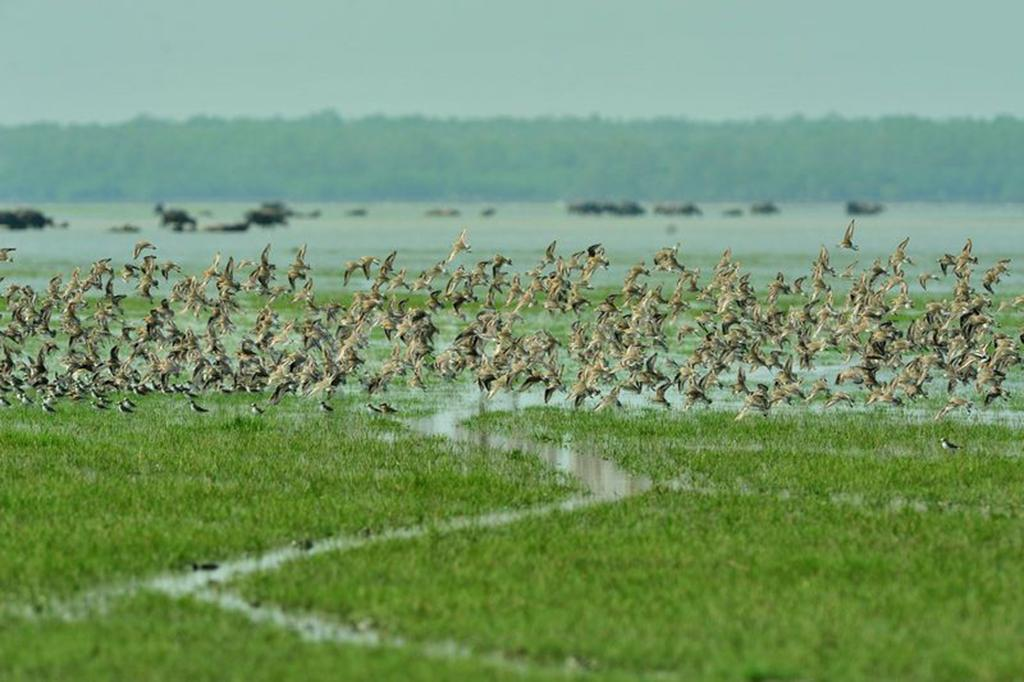
Its character emerges gradually: a cooler morning on the river, a flock working across exposed mud, a raptor over the canopy, sunlight catching the roots along a creek, and the tide quietly rearranging the edge of the forest.
That is what makes this month worth experiencing.
December is when the Sundarbans begin to speak in a distinctly winter voice—and you have to slow down to hear it.
Plan your private Sundarban expedition
A private journey shaped around you — your group, your pace, your interests. Book a free consultation.