

 Travel guide
The Sundarbans is not a destination you simply drive into.
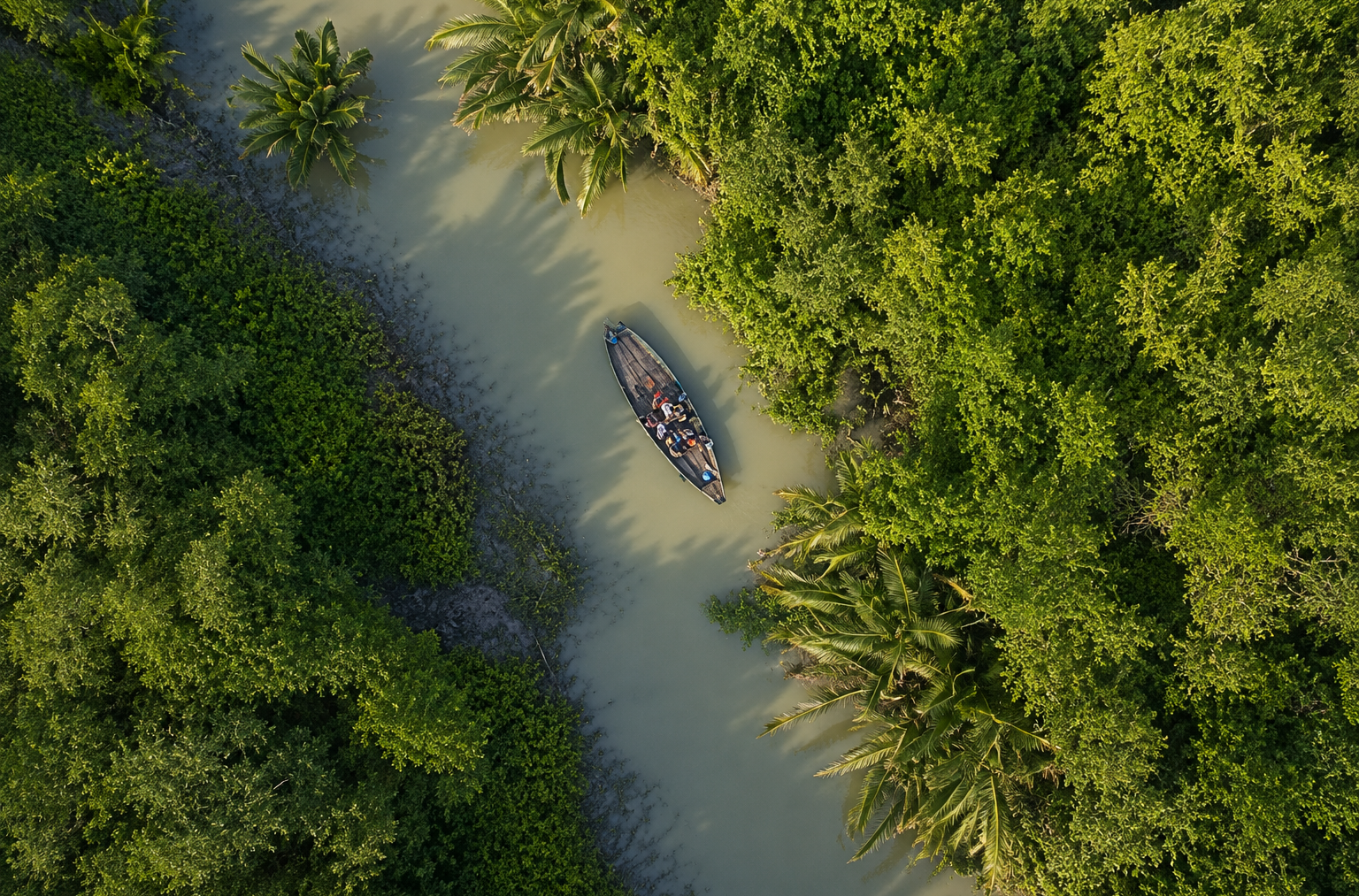
Located across a vast network of tidal rivers, creeks, islands and mangrove forests in southern West Bengal, the Indian Sundarbans are reached through a combination of road or rail travel followed by a journey on the water. For most visitors, the journey begins in Kolkata before continuing toward one of the region’s gateways and then onward by boat.
That is what makes planning your journey slightly different from visiting a conventional tourist destination.
The Sundarbans is not a destination you simply drive into.
Located across a vast network of tidal rivers, creeks, islands and mangrove forests in southern West Bengal, the Indian Sundarbans are reached through a combination of road or rail travel followed by a journey on the water. For most visitors, the journey begins in Kolkata before continuing toward one of the region’s gateways and then onward by boat.
That is what makes planning your journey slightly different from visiting a conventional tourist destination.
There are several ways to approach the Sundarbans, and the best route depends on where you are staying, which part of the region you plan to visit and how your boat and local transfers are arranged.
For first-time visitors, the most important thing to understand is simple: the Sundarbans is remote, and the final part of the journey is dependent on local transport and waterways. Planning those connections in advance can make the experience considerably smoother.
How Do You Reach the Sundarbans?
The Sundarbans is generally accessed in stages:
Kolkata → road or rail connection → Sundarbans gateway → jetty → boat → destination
Canning and Godhkhali are among the best-known access points for visitors approaching the Indian Sundarbans, while other gateways serve different parts of the wider region.
West Bengal Tourism identifies Canning, Godhkhali, Sonakhali, Namkhana, Raidighi and Najat among the important access points associated with the Sundarbans.
The key point is that there is no single road, station or terminal that takes every traveller directly to the Sundarbans.
Once you reach the appropriate gateway, the landscape changes. Roads gradually give way to waterways, and boats become the primary means of moving deeper into the mangrove environment.
Understanding How Sundarbans Access Works
One of the easiest mistakes for a first-time visitor is to think of the Sundarbans as one fixed destination.
It is not.
The Indian Sundarbans encompasses numerous islands, rivers, creeks, villages and forest areas. Different itineraries can therefore use different gateways and boat routes.
Your journey may involve:
- A flight into Kolkata
- A train or road journey toward the southern part of West Bengal
- A transfer to a gateway or jetty
- A boat or launch
- Further movement through tidal waterways
- Your accommodation, forest area or planned activities
This makes coordination more important than simply choosing the fastest way to cover the road distance.
A route that looks straightforward on a map may involve several separate transfers in reality.
Ways to Reach the Sundarbans
By Train
Train travel can be useful for reaching the southern transport network from Kolkata.
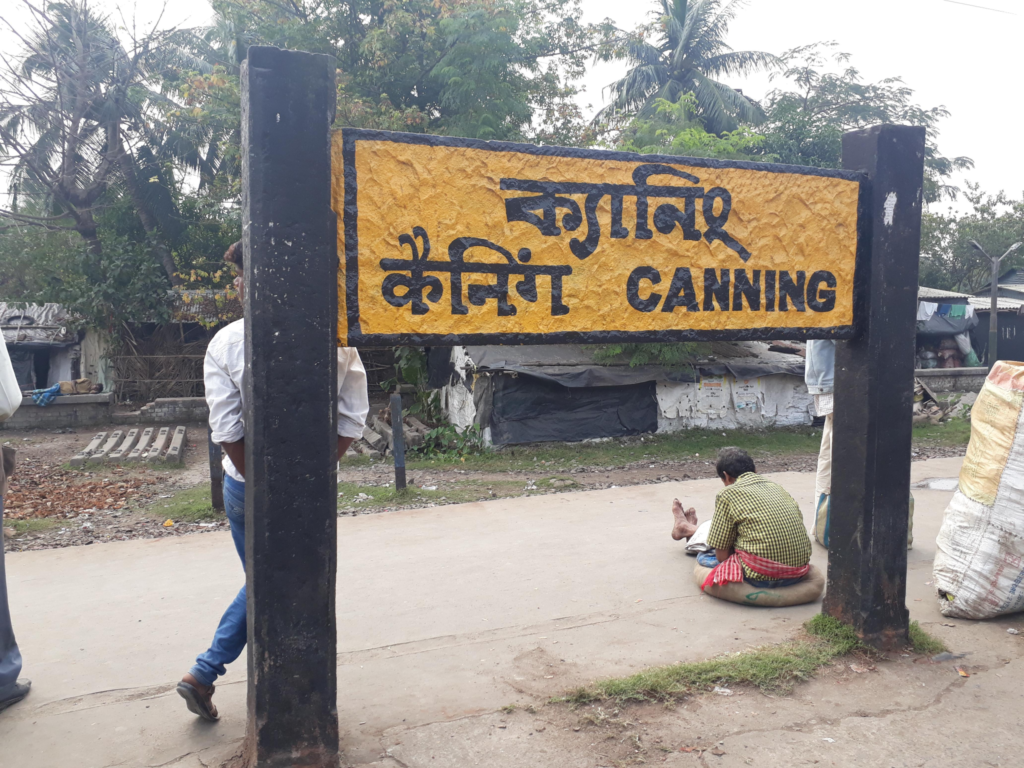
One of the best-known approaches is the Sealdah–Canning rail connection. From Canning, travellers can continue by road toward gateways such as Godhkhali.
Canning should be understood as a transport gateway rather than the Sundarbans itself. The journey still needs to continue by road and then by boat.
For travellers choosing the rail option, it is important to coordinate the onward road and boat arrangements rather than treating the train journey as the complete route.
By Road
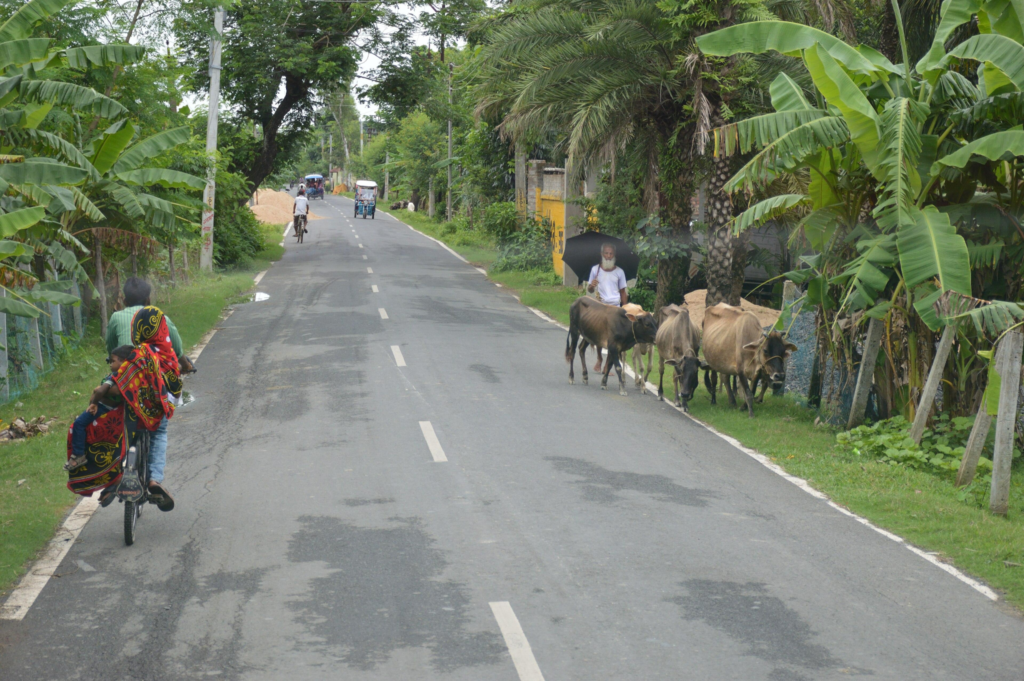
Travelling by road from Kolkata is often the more convenient option, particularly for families, groups, international visitors or travellers carrying photography equipment and luggage.
Private vehicles and pre-arranged transfers can take travellers toward the gateway appropriate for their itinerary.
The advantage is straightforward: fewer changes and better control over the timing of the journey.
However, the vehicle cannot take you all the way into the mangrove forest. At the appropriate jetty, the journey continues by water.
By Air
There is no airport inside the Sundarbans.
Travellers arriving by air generally fly into Netaji Subhas Chandra Bose International Airport in Kolkata, which serves as the principal air gateway for visitors travelling onward to the region. West Bengal Tourism identifies Kolkata as the nearest major airport for the Sundarbans.
From Kolkata, the onward journey continues by road and then by boat.
For international visitors in particular, arranging the onward journey before arrival can be much easier than trying to coordinate multiple local transfers after landing.
By Bus or Shared Road Transport
Local buses and shared vehicles connect different parts of South 24 Parganas and can be useful for reaching certain gateways.
However, this option requires more familiarity with local routes and onward connections.
The important question is not simply: “Which bus goes to the Sundarbans?”
Instead, you need to know: “Which gateway do I need for my specific Sundarbans itinerary, and how will I get from there to my boat?”
That distinction can save considerable confusion.
By Boat
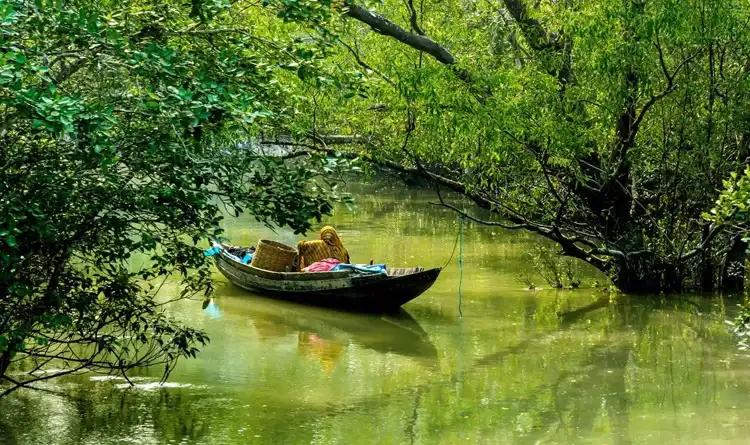
The boat journey is an essential part of reaching the deeper Sundarbans.
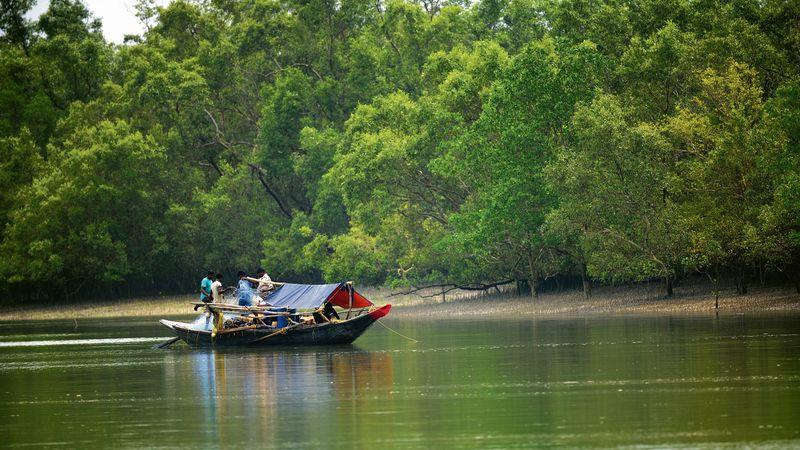
Once you leave the road network behind, rivers and creeks become the routes through the landscape. Depending on your itinerary, the boat may take you through broad tidal channels before entering narrower waterways surrounded by mangroves.
This is where the character of the journey changes completely.
- The road disappears.
- The waterways become your route.
- And the mangrove forest begins to surround you.
Important Sundarbans Gateways
See it for yourself
A private journey shaped around you — your group, your pace, your interests. Book a free consultation.
Different parts of the Sundarbans are approached through different access points. Your accommodation, boat route and planned activities should determine which gateway you use.
Canning
Canning is one of the most important transport gateways for travellers coming from Kolkata.
Its rail connection makes it particularly useful for visitors using the Sealdah South network. From Canning, the journey continues by road toward the relevant jetty or gateway.
Godhkhali
Godhkhali is one of the most recognised access points for boat journeys into the Sundarbans.
It is commonly associated with the Canning approach and is particularly relevant to many first-time visitors.
West Bengal Tourism describes Godhkhali as a starting point for the boat journey into the Sundarbans.
Sonakhali
Sonakhali is another access point in the broader Sundarbans region.
Whether it is the appropriate gateway depends on the particular itinerary and destination. It should therefore not automatically be substituted for Godhkhali or another access point.
Namkhana and Other Southern Gateways
Namkhana, Raidighi and Najat also provide access toward different parts of the wider Sundarbans region.
These gateways become more relevant depending on where you are heading and how your journey is organised.
The right gateway is the one that connects efficiently with your actual itinerary—not necessarily the one that appears most frequently in a generic travel search.
Why Should You Arrange Your Sundarbans Journey in Advance?
The remote character of the Sundarbans is part of its appeal, but it also means that travellers should not expect the same level of instant transport and tourist services available in a major city.
You cannot always assume that you will arrive at a location and immediately find:
- A suitable vehicle
- An available boat
- Someone who can explain the next connection
- Reliable last-minute accommodation
- Immediate local assistance
- Convenient transport at any hour
The waterways also operate within a tidal environment, so the timing and availability of boat movement can matter.
For international travellers, there can be an additional consideration: language and unfamiliar local logistics.
English may not always be sufficient for communicating with every local transport provider or arranging last-minute connections, particularly away from the better-known tourist gateways.
That does not mean the Sundarbans is difficult to visit. It simply means that pre-arrangement makes sense.
Having your key transfers, boat arrangements, accommodation and other essential logistics organised before you arrive removes much of the uncertainty.
The Wild Orbit Expert Advice
Don’t treat the Sundarbans like a destination where you can arrive first and figure everything out later.
The region is remote, its transport network is largely local, and the final stage of your journey depends on waterways and tide-sensitive logistics. For international travellers, unfamiliar local arrangements and language differences can make last-minute coordination even more challenging.
Our advice is to arrange the important parts of your journey in advance. When your transfers, boat and accommodation are coordinated beforehand, you can arrive with confidence and spend your time experiencing the Sundarbans rather than solving transport problems.
For travellers visiting for the first time, a coordinated journey can also make it easier to choose the appropriate gateway and avoid unnecessary transfers.
How Should You Plan Your Journey?
The simplest way is to work backwards from your Sundarbans destination. Before travelling, establish:
1. Where are you staying?
Your accommodation may determine the most suitable gateway.
2. Which jetty will you use?
The road journey needs to connect with the correct boat departure point.
3. How are you travelling from Kolkata?
Choose between train, private vehicle, shared transport or a pre-arranged transfer.
4. Who is coordinating the boat?
Confirm the boat arrangement before you leave the city.
5. What happens after your boat journey?
Make sure your accommodation or local transfer is expecting you.
This simple sequence is much more useful than planning each leg separately.
For International Travellers
For an international visitor, the Sundarbans can feel very different from the major Indian cities you may have travelled through.
After arriving in Kolkata, you are moving toward a remote, riverine region where transport becomes increasingly local and the availability of instant services becomes more limited.
That is precisely why advance coordination is valuable.
A pre-arranged journey can help with:
- Airport pickup
- Road transfers
- Gateway selection
- Boat coordination
- Accommodation
- Local assistance
- Return transportation
It also reduces the need to negotiate unfamiliar arrangements after arriving in the region.
If you are travelling internationally, it is worth treating the Sundarbans as a planned journey rather than a spontaneous destination.
A Smooth Journey from Kolkata and Back
For most travellers, The Wild Orbit journeys begin in Kolkata and return to Kolkata, creating a smooth, coordinated experience from start to finish.
This approach is particularly useful because the Sundarbans journey involves several different environments and transport stages. Instead of asking travellers to arrange each connection independently, the journey can be coordinated around the appropriate road transfer, gateway, boat and return journey.
For visitors unfamiliar with the region, this also means that the journey does not simply end when the boat returns to a jetty. The return road transfer to Kolkata is considered as part of the overall travel experience.
For international travellers, this can be especially reassuring. Having the journey organised from Kolkata and back to Kolkata means fewer unfamiliar logistics to manage, particularly where local language, transport availability and last-minute arrangements may otherwise become challenging.
The idea is simple: the logistics should work quietly in the background, while you focus on the forest, waterways, wildlife and people that make the Sundarbans special.
FAQs
What is the main way to reach the Sundarbans?
Most visitors travel toward a southern gateway by road or rail and then continue into the Sundarbans by boat. The exact route depends on the area being visited and the itinerary.
Can I reach the Sundarbans directly by road?
You can travel by road toward the appropriate gateway or jetty, but roads do not extend into the deeper mangrove waterways. The final journey is by boat.
Is Canning the Sundarbans?
No. Canning is an important transport gateway used by travellers heading toward the Sundarbans. The journey continues from Canning toward the relevant road and water access points.
Is Godhkhali an entry point to the Sundarbans?
Godhkhali is one of the principal access points used for boat journeys into the Sundarbans. However, different areas can be approached through different gateways.
Can international travellers visit the Sundarbans easily?
Yes. The Sundarbans welcomes international visitors, but because the region is remote and local transport and language can present challenges, advance planning is strongly recommended.
Should I arrange transport before reaching the Sundarbans?
Yes. Pre-arranging important road transfers, boat connections and accommodation can make the journey significantly smoother, particularly for first-time and international travellers.
Can I find transport instantly after reaching a Sundarbans gateway?
Availability can vary, and travellers should not assume that suitable vehicles or boats will always be immediately available. The remote nature of the region makes advance coordination preferable.
Is a boat necessary to explore the Sundarbans?
For journeys into the mangrove waterways and forest areas, boats are an essential part of accessing and experiencing the region.
Which Sundarbans gateway is best?
There is no single gateway that is best for every traveller. The appropriate gateway depends on your accommodation, destination, boat route and planned activities.
Is it better to start and end the journey in Kolkata?
For many travellers, yes. A coordinated Kolkata-to-Kolkata journey simplifies the road transfers before and after the boat journey and can be particularly helpful for visitors unfamiliar with the region.
Planning Your Journey from Kolkata?
If you are starting your journey in Kolkata and want to understand the route in greater detail—including the different ways to travel from Kolkata to the Sundarbans, the major gateways, transfers and practical considerations—read our detailed guide:
Kolkata to Sundarbans: A Complete Travel Guide
This dedicated guide takes you deeper into the Kolkata-to-Sundarbans journey and helps you understand the route step by step before you set out.
The Journey Begins Before You Reach the Forest

Reaching the Sundarbans requires a little more planning than reaching an ordinary tourist destination but that is also part of what makes the experience different.
The journey moves gradually from Kolkata’s roads to the quieter landscapes of South 24 Parganas, from road to jetty, and finally from land to water.
There is no need to make that transition complicated.
Choose the appropriate gateway, arrange the important connections in advance, allow enough time for the journey and make sure your return to Kolkata is planned as carefully as your arrival.
Once those details are taken care of, you can let the Sundarbans do what it does best: slow you down, take you deeper into the wild, and reveal itself one tidal waterway at a time.
Plan your private Sundarban expedition
A private journey shaped around you — your group, your pace, your interests. Book a free consultation.