

 Travel guide
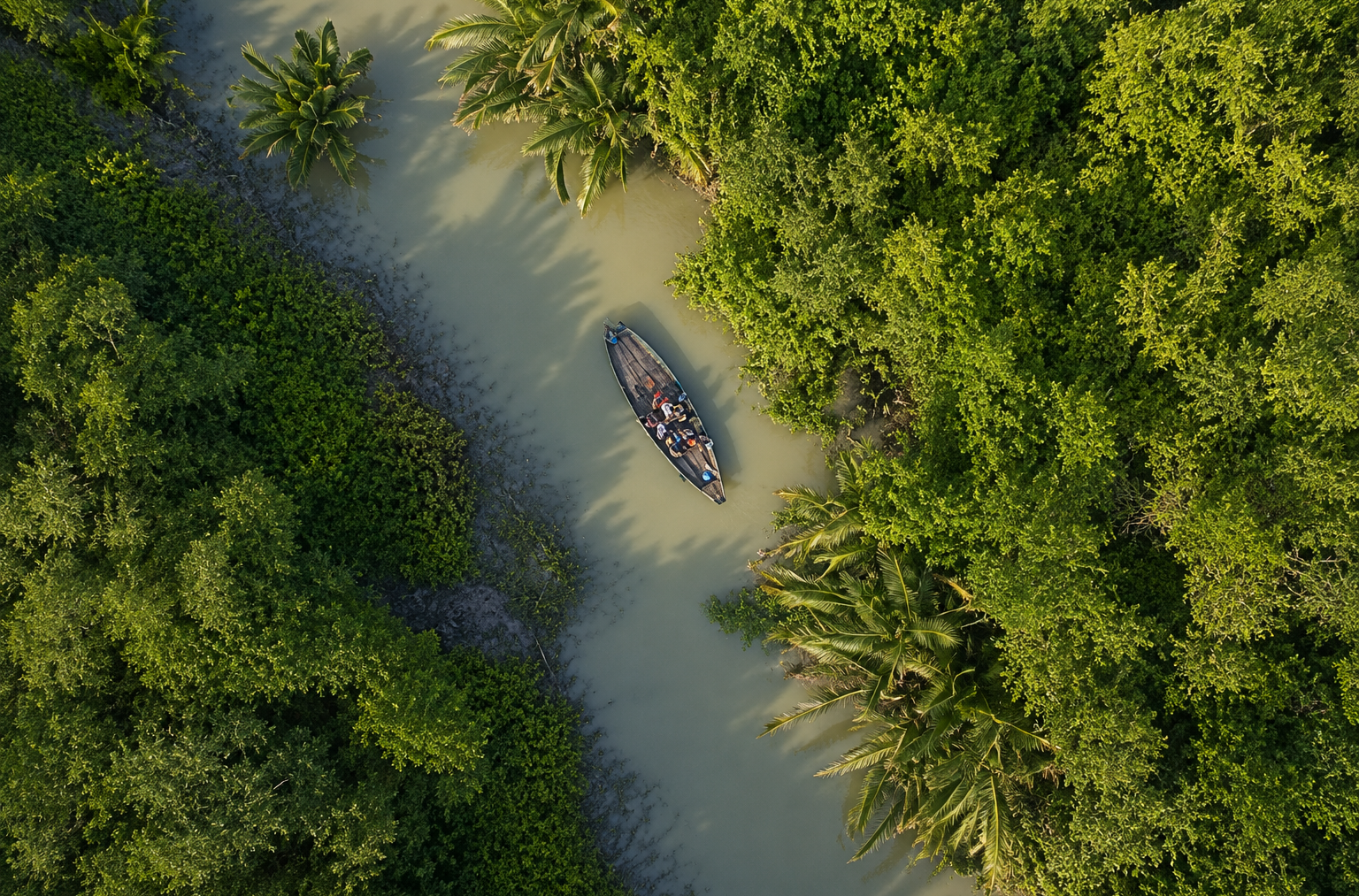
The Sundarbans is a wilderness shaped by tides, rivers, mudflats, mangroves, weather and wildlife. Conditions can change throughout the day, making Sundarbans travel safety very different from safety considerations at a conventional tourist destination.
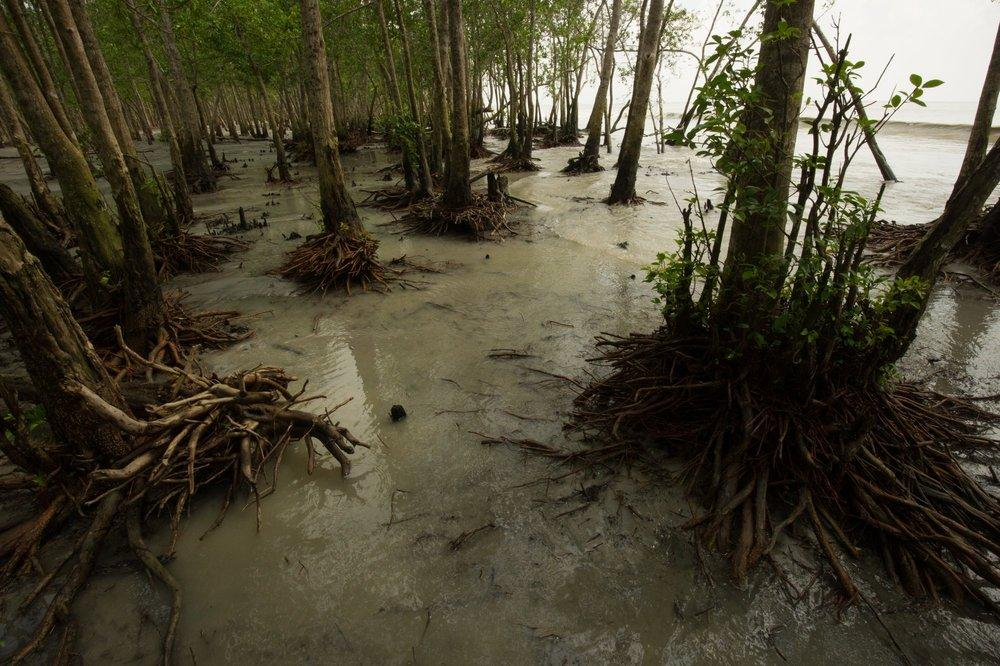
Exploring the Indian Sundarbans responsibly requires preparation, local understanding and respect for the environment. At The Wild Orbit, safety is an integral part of responsible exploration. Our Sundarban journeys and expeditions are planned around the realities of this tidal ecosystem while retaining the flexibility required when natural or regulatory conditions change.
Understanding Safety in the Sundarbans
The Indian Sundarbans is a remote tidal landscape where water levels, currents, weather, visibility and forest access can influence how a journey unfolds.
Before and during an expedition, we consider:
- Tide conditions and water movement
- Weather and visibility
- Boat routes and navigability
- Applicable government and forest regulations
- Wildlife behaviour and appropriate viewing distances
- Conditions around jetties, creeks and muddy banks
- The physical demands of activities and terrain
The objective is not to remove the wild character of the experience, but to explore it with appropriate preparation and awareness.
Wildlife Safety
The Sundarbans is home to Bengal tigers, estuarine crocodiles, wild boar, monitor lizards, snakes, macaques and an exceptional diversity of birds and aquatic life.
Wildlife should always be observed without interference. Guests should maintain appropriate distances, avoid sudden movements and unnecessary noise, and follow the instructions of the expedition team.
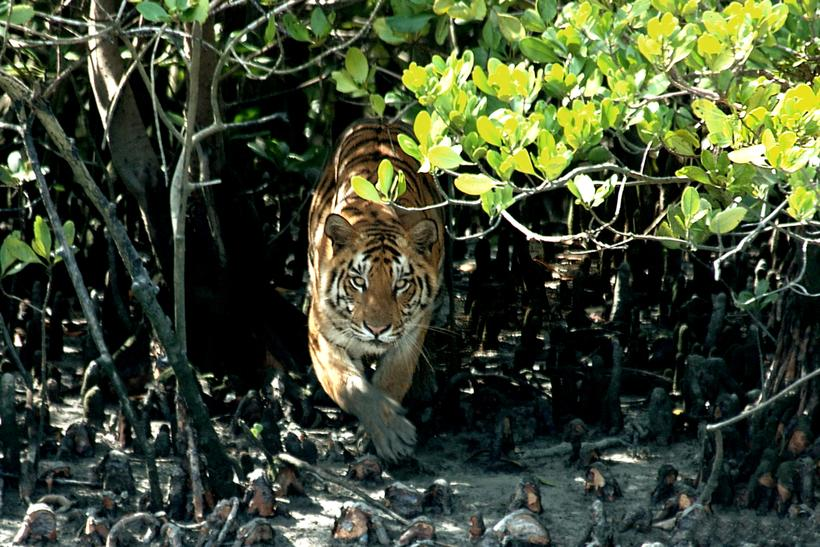
Never attempt to feed, approach, chase or deliberately attract an animal for a closer encounter or photograph.
A responsible wildlife experience allows animals to behave naturally and gives them the space they need.
Boat & Water Safety
Boats are an essential part of exploring the Sundarbans, making boat and water safety particularly important.
Guests should remain seated or within designated areas while the boat is moving and follow the crew’s instructions when boarding, disembarking or moving around the vessel.
Extra care is required near jetties, narrow creeks, muddy banks and during changing tidal conditions. Guests should never enter the water or step onto an exposed mudbank without clear guidance from the expedition team.
The appearance of calm water should never be taken as an indication that conditions are risk-free. Tidal currents and changing water levels are part of the environment and must be treated accordingly.
Weather, Tides & Changing Conditions
Weather and tides are fundamental to the Sundarbans experience.
Heat, humidity, rainfall, strong sunlight, reduced visibility and changing water levels can influence both comfort and navigation. Tide conditions can also determine whether particular creeks, channels or locations can be safely accessed.
This is why a responsible Sundarban tour must retain some flexibility. The forest, waterways and tides ultimately determine what can be safely experienced on a particular day.
Itinerary Changes for Safety
See it for yourself
A private journey shaped around you — your group, your pace, your interests. Book a free consultation.
We plan every journey carefully, but the Sundarbans cannot always be experienced according to a fixed sequence.
Even after an itinerary has been committed, The Wild Orbit may revise the route, timing, sequence or destination when required by tide conditions, weather, navigational circumstances, government or forest regulations, or any unforeseen situation affecting guest safety.
Safety takes precedence over completing a predetermined route.
If a planned experience cannot reasonably be conducted, we will, wherever operationally and environmentally feasible, provide a suitable alternative route, destination or experience of comparable character and value.
This approach allows us to respond responsibly to real conditions without compromising the overall character of the journey.
The Wild Orbit Safety Standards
For The Wild Orbit, safety begins before a journey enters the forest. Our private journeys are planned with the conditions of the Sundarbans in mind, including tides, weather, navigation, permitted routes, wildlife activity and applicable forest regulations.
As part of our safety standards, we pay particular attention to the readiness and suitability of the expedition boat before and during the journey.
Depending on the vessel and journey, our safety considerations include:
- Life jackets: Appropriate life jackets should be available for guests and crew, with their use guided by prevailing conditions and operational requirements.
- First-aid equipment: A suitable first-aid box should be available onboard for basic emergency response.
- Fire safety: Required fire-extinguishing equipment should be available and accessible onboard.
- Waste management: Appropriate waste bins should be available to prevent waste from entering the forest or waterways.
- Safe seating: Guests should remain within designated seating areas and follow the crew’s instructions while the boat is underway.
- Permitted capacity: The boat should operate within its applicable authorised passenger capacity.
- Route compliance: The journey should remain within permitted and authorised routes unless the relevant authority provides permission for a change.
- Permit and regulatory compliance: Applicable permits, forest regulations and access restrictions form part of our operational planning.
- Wildlife distance: Routes and viewing practices should respect appropriate distances from wildlife and avoid unnecessary disturbance.
- Changing conditions: Tide, weather, visibility and navigational conditions are considered throughout the journey, not only before departure.
Safety equipment alone does not make an expedition safe. Good judgement, experienced crew, responsible guest behaviour and respect for the regulations governing the Sundarbans are equally important.
Important Rules Visitors Should Know
The Sundarbans is a regulated protected landscape. Visitors are expected to respect the rules governing forest access, navigation, wildlife and visitor behaviour.
No Alcohol or Intoxication
Do not consume alcohol or become intoxicated while onboard or during the forest journey. Do not board the expedition boat after drinking or while intoxicated.
Alcohol consumption is prohibited inside the Sundarban Tiger Reserve. Apart from regulatory requirements, remaining alert is essential when travelling through a remote tidal environment.
No Fishing, Swimming or Bathing
Fishing, swimming, diving and bathing in the protected waterways are not permitted where prohibited by applicable reserve regulations.
Do not attempt recreational fishing from the expedition boat, even if the water appears calm or the activity seems harmless. Violations may result in action under applicable laws and regulations.
No Unauthorised Route Deviation
Do not ask the tour manager, expedition leader or boat captain to take you “a little farther” into an area where the applicable permit or authorisation is not valid.
A permitted route is not a suggestion. It is part of responsible navigation within a protected ecosystem.
Step Ashore Only Where Permitted
Do not step onto land, mudbanks or forest edges until the location has been confirmed as permissible for tourists and the expedition team has advised you that it is safe to disembark.
Once ashore, remain within the designated safe premises or permitted area.
No Drones or Unauthorised Equipment
Drone use inside the forest area is prohibited under applicable reserve regulations. Do not operate a drone or other restricted equipment without the required authorisation.
Respect Quiet Zones
Avoid loud music, shouting, loud singing or other behaviour that can disturb wildlife. The Sundarbans is a wildlife habitat first, and maintaining a quiet environment improves both safety and the quality of observation.
Flash photography of wild animals should also be avoided where prohibited by applicable regulations.
No Camping or Unauthorised Night Stay
Do not arrange or insist on an unauthorised overnight stay onboard within the protected forest area. Access and stay within protected areas are governed by applicable timings and regulations.
No Plastic, Litter or Fire
Do not carry or use prohibited single-use plastic items inside regulated forest areas, and never throw plastic, food or other waste into the forest or waterways.
Lighting fires, campfires or engaging in unauthorised camping within protected areas is not permitted.
Safety Do’s & Don’ts
Do’s
- Follow instructions from the expedition leader, boat crew, local guide and relevant authorities.
- Remain within designated and permitted areas.
- Follow prescribed and authorised boat routes.
- Maintain a safe and respectful distance from wildlife.
- Stay seated or within designated areas while the boat is moving.
- Take care around jetties, muddy banks, narrow creeks and uneven terrain.
- Stay hydrated and use suitable protection from sun and rain.
- Wear secure and comfortable footwear appropriate for the conditions.
- Keep personal belongings and waste properly secured.
- Cooperate with authorised officials during permit checks or inspections.
- Inform the expedition team if you need assistance or feel uncomfortable at any point.
Don’ts
- Do not drink alcohol or board the boat while intoxicated.
- Do not fish, swim, dive or bathe where prohibited by reserve regulations.
- Do not approach, feed, chase or deliberately attract wildlife.
- Do not ask the boat crew to deviate from permitted routes.
- Do not step ashore at an unauthorised location.
- Do not leave the group or designated premises without permission.
- Do not operate a drone without the required authorisation.
- Do not make unnecessary noise around wildlife habitats.
- Do not touch unfamiliar animals, reptiles, plants or marine life.
- Do not leave plastic, food or other waste in the forest or waterways.
- Do not light fires or arrange unauthorised camping or overnight stays.
- Do not insist on continuing an activity when safety conditions, tides, weather or regulations require otherwise.
- Do not underestimate tides, currents, weather or the remoteness of the landscape.
The Wild Orbit Expert Advice
Treat the Sundarbans as a wilderness first and a destination second.
The most meaningful way to explore it is to remain observant and adaptable.
- A wildlife sighting may require patience rather than movement.
- A tide may change the way a creek can be explored.
- Weather may alter the rhythm of a day.
- Government or forest regulations may determine where a boat can travel.
These are not inconveniences to work around. They are realities of exploring a living tidal ecosystem.
Our approach is to work with these conditions rather than against them. We organize private journeys keeping in mind all applicable safety standards, while creating opportunities to explore a deeper side of the Sundarbans—its waterways, tides, mangrove habitats, wildlife and the relationship between the forest and the communities that live alongside it.
For us, responsible exploration means knowing when to proceed, when to adapt and when the environment itself should determine the next step.
Responsible Exploration
Safety and conservation go hand in hand.
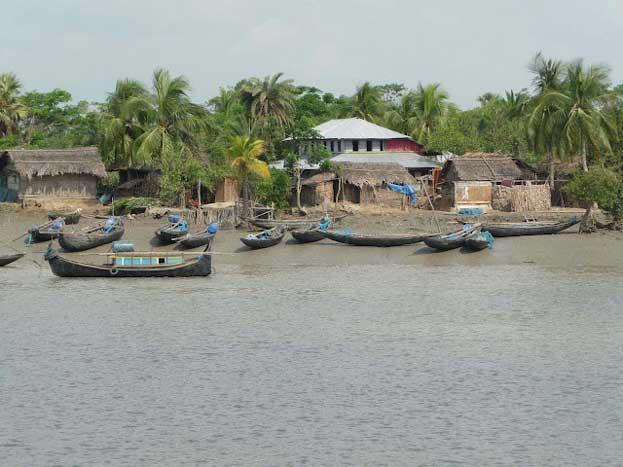
Following forest regulations, respecting wildlife, avoiding unnecessary disturbance, reducing waste and staying within permitted areas help protect the Sundarbans while allowing others to experience it responsibly.
The Sundarbans is a living ecosystem, not simply a backdrop for tourism. Every journey should aim to minimise its impact while increasing our understanding of this extraordinary landscape.
FAQs
Is it safe to visit the Sundarbans?
The Sundarbans can be explored responsibly when visitors follow safety instructions, applicable forest regulations and guidance from experienced expedition teams. The environment is remote and influenced by tides, weather, waterways and wildlife, so conditions should always be respected.
Is it safe to explore the Sundarbans by boat?
Boat travel is a fundamental part of exploring the Sundarbans. Guests should follow the boat crew’s instructions, remain within designated areas while the vessel is moving and take particular care during boarding, disembarking and navigation through narrow waterways and changing tidal conditions.
Can tides or weather change a Sundarbans itinerary?
Yes. Tide levels, currents, weather, visibility and navigational conditions can affect access to particular creeks and destinations. Government or forest regulations may also restrict access to certain areas. For safety reasons, the planned itinerary may therefore need to be adjusted.
Can The Wild Orbit change an itinerary after it has been confirmed?
Yes. Even after an itinerary has been committed, The Wild Orbit may revise the route, timing or destination when required by tide conditions, weather, government or forest regulations, navigation or other circumstances affecting safety.
What happens if a planned destination cannot be visited?
Where reasonably possible and operationally feasible, The Wild Orbit will provide a suitable alternative route, destination or experience of comparable character and value. The objective is to maintain the quality and essence of the journey while responding responsibly to actual conditions.
Can I drink alcohol on a Sundarbans boat?
No. Guests should not drink alcohol or board the expedition boat after drinking or while intoxicated. Alcohol consumption is prohibited inside the Sundarban Tiger Reserve, and guests are expected to remain alert and comply with applicable regulations throughout the journey.
Can tourists fish in the Sundarbans?
No. Fishing is prohibited inside the Sundarban Tiger Reserve. Guests should not attempt recreational fishing from tourist or expedition boats within the protected area.
Can I get off the boat anywhere in the Sundarbans?
No. Guests should only disembark at locations where tourist landing is permitted and when the expedition team confirms that it is appropriate and safe to do so.
Can I ask the boat captain to take us beyond the permitted route?
No. Guests should never request or pressure the boat captain or expedition team to enter a restricted or unauthorised area. Route permissions and forest regulations must be respected throughout the journey.
What should I carry for a Sundarbans journey?
Comfortable secure footwear, drinking water, sun protection, suitable clothing and rain protection are useful essentials. Your expedition team can also advise you on what is appropriate for the specific journey, season and activities planned.
Explore the Sundarbans with The Wild Orbit
There is far more to the Sundarbans than a list of destinations or the possibility of a single wildlife sighting. Its character emerges through tides, creeks, mangroves, wildlife, villages and the changing rhythm of the forest.
At The Wild Orbit, our Sundarbans journeys & expeditions are designed to explore this wider story through thoughtfully planned, responsible and immersive experiences.
Explore our Sundarbans Journeys & Expeditions and discover a deeper side of the forest with thoughtful planning, responsible exploration and a greater understanding of what makes the Sundarbans unique.
Plan your private Sundarban expedition
A private journey shaped around you — your group, your pace, your interests. Book a free consultation.