 Encyclopedia
The road to Bakkhali has a peculiar way of preparing you for the sea.
It never reveals the coast too early.
Instead, it allows the landscape to change slowly, almost imperceptibly, as though southern Bengal is carefully introducing one chapter before the next.
The journey begins inland.
- Rice fields spread across the flat delta.
- Mango orchards give way to shrimp ponds.
- Small roadside markets appear and disappear behind groves of coconut and betel nut palms.
- Fishermen on motorcycles carry neatly folded nylon nets instead of office bags.
- Tea stalls become gathering places where conversations revolve around tides.
Nothing announces that the Bay of Bengal is close.
And yet, everything does.
- The air grows lighter.
- The breeze begins carrying traces of salt.
- Even before the sea is visible, it has already arrived.
Leaving the Mainland Behind
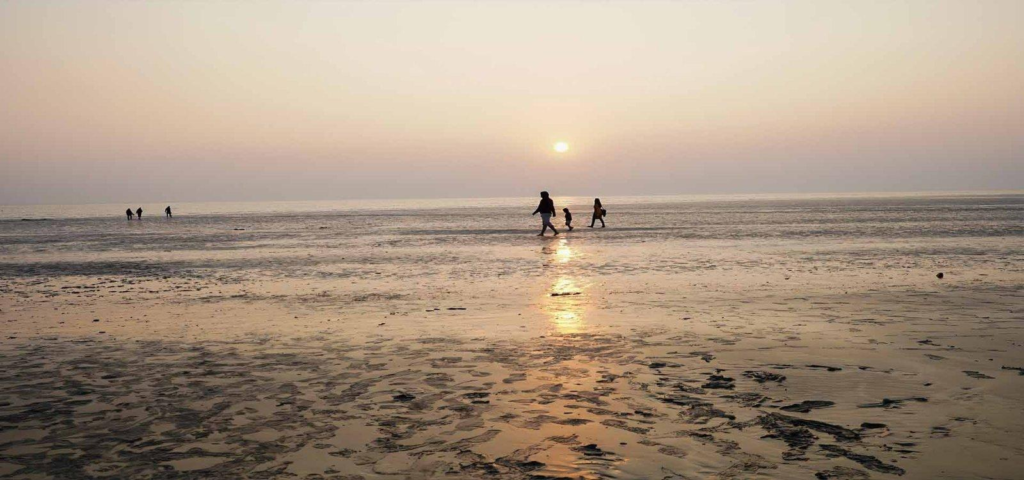
Every expedition to Bakkhali begins with water.
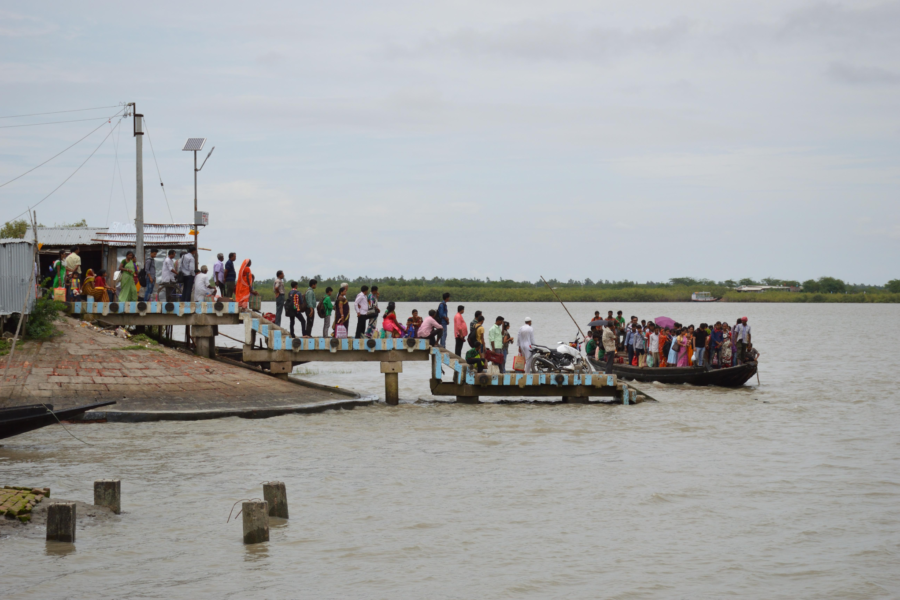
At the Hatania–Doania River, traffic slows to a pause. Trucks carrying vegetables, buses filled with local commuters, motorcycles, and small cars all wait patiently before crossing one of the delta’s most important tidal channels.
For decades, this crossing was made only by ferry.
Even after the construction of the bridge transformed connectivity, the river continues to define the journey.
Standing on the bridge for a moment, the importance of this waterway becomes immediately clear.
Fishing boats move with the tide rather than against it.
Their wooden hulls carry nets, fuel drums, and stacks of brightly coloured plastic crates waiting to be filled with fish from the estuary.
The river never appears hurried. Its movement is deliberate.
Confident.
As though it knows it has been guiding travellers long before roads arrived. Crossing the Hatania–Doania is more than a change in geography.
It is a psychological crossing.
Beyond this point, Bengal begins to feel different.
The Landscape Starts to Change
- South of Namkhana, the road narrows.
- Buildings become fewer.
- The horizon becomes wider.
The soil gradually loses its deep brown colour, replaced by lighter sandy deposits carried inland by centuries of tidal movement.
- Shrimp farms appear beside paddy fields.
- Brackish water ponds shimmer under the morning sun.
- Clusters of white egrets patrol their edges with remarkable patience.
The villages also begin to change.
Many homes stand on slightly raised ground. Some are protected by low embankments. Boats rest beside houses almost as naturally as bicycles.
Water is no longer something that exists beyond the village. It is woven into daily life.
- Every canal.
- Every creek.
- Every pond.
- Every embankment.
Together, they tell the same story. This is a landscape built around the movement of tides.
Casuarina Forests Before the Shore
One of Bakkhali’s defining characteristics is that the beach does not appear immediately.
Before reaching the shoreline, visitors pass through long stretches of planted casuarina groves.
The trees sway almost constantly under the influence of coastal winds. Their slender, needle-like foliage creates a sound unlike any broadleaf forest. It is not quite rustling. Not quite whistling.
More like a continuous whisper.
Walking beneath these trees, sunlight filters through countless thin branches, creating shifting patterns across the sandy ground.
- Bird calls echo between the trunks.
- The ocean remains hidden.
- Its presence is suggested only by the wind.
- The anticipation grows stronger with every step.
The First Glimpse of the Bay
Then, almost without warning, the trees end.
- The horizon opens.
- The Bay of Bengal stretches into infinity.
Unlike many coastlines where waves immediately dominate the landscape, Bakkhali introduces itself with remarkable restraint.
At low tide, the sea retreats far into the distance.
Between the shoreline and the water lies an immense expanse of firm, compact sand crossed by delicate tidal channels.
Tiny crabs hurry across the flats before disappearing into perfectly round burrows.
The beach feels impossibly wide. The sky feels even wider. There are few places along the eastern Indian coastline where land and sky seem to meet with such quiet simplicity.
Nothing competes with the horizon.
First Encounter
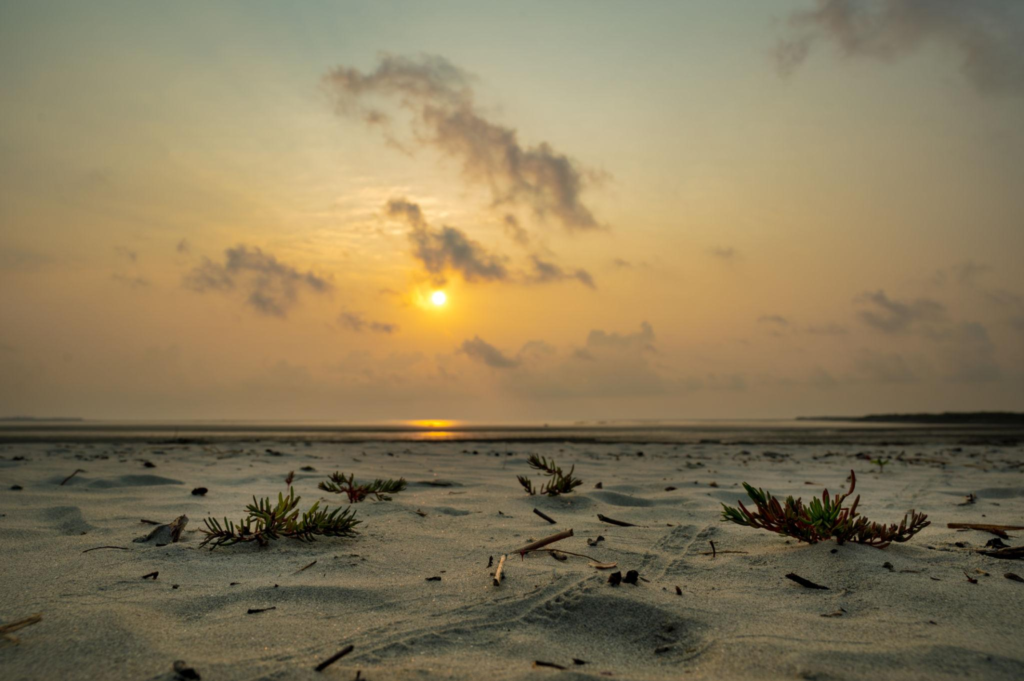
Every coastline leaves a different first impression.
- Some overwhelm visitors with towering cliffs.
- Others with roaring surf.
Bakkhali chooses silence.
Its beauty reveals itself slowly. The longer one remains, the more details begin to emerge.
A Shore That Breathes With the Tide
The shoreline here is never fixed.
Twice every day, it transforms completely. At high tide, gentle waves advance toward the casuarina belt, narrowing the visible beach.
Hours later, as the water retreats, vast stretches of sand emerge once again.
This constant expansion and contraction give Bakkhali an unusual rhythm.
Walking here at sunrise and returning during the afternoon almost feels like visiting two different landscapes. The sea redraws its own map every six hours.
Fishermen Before Tourists
Long before visitors arrive on the beach, fishermen are already at work.
- Small boats return with the morning tide.
- Nets are spread across the sand to dry beneath the rising sun.
- Groups of men examine their catch while discussing weather conditions and tidal timings.
- Plastic crates fill gradually with fish, prawns, and crabs destined for nearby markets.
There is little ceremony.
This is simply another working morning on the coast. Watching these routines reveals something essential about Bakkhali. The sea is not merely admired here.
It is dependent upon.
Where the Delta Meets the Ocean
Standing on the beach, it becomes clear that Bakkhali cannot be understood simply as a seaside destination.
The Bay of Bengal lies ahead.
But behind the beach stretches one of the world’s largest delta systems.
- Mangrove-lined creeks.
- Tidal rivers.
- Mudflats.
- Estuaries.
- Salt marshes.
All exist within a relatively short distance.
This meeting of marine and deltaic environments gives Bakkhali an ecological identity unlike most beaches in India. The ocean is only one part of the story.
The Sundarbans are the other.
Life Along the Shore
As the morning progresses, the beach gradually becomes more active.
- Children collect shells left behind by the tide.
- Fishermen repair torn nets beneath temporary bamboo shelters.
- Tea vendors prepare their first kettles.
- Cyclists move slowly along the coastal road.
The pace remains unhurried.
Even during the busiest seasons, there are moments when the beach feels remarkably spacious.
It is a coastline that encourages observation rather than urgency.
Bakkhali’s Identity
Every place has a defining character.
- Some are shaped by mountains.
- Others by rivers.
Bakkhali has been shaped by a meeting.
Here, the Bay of Bengal meets the outer edge of the Indian Sundarbans.
Neither landscape dominates completely. Instead, they exist side by side, influencing one another every day through tides, winds, sediments, and human livelihoods. This unique position has given Bakkhali an identity that extends far beyond its modest size.
More Than a Beach
Administratively, Bakkhali lies within the Namkhana Community Development Block in the South 24 Parganas district, West Bengal.
Yet maps tell only part of their story.
The settlement forms part of a broader coastal landscape that includes Fraserganj, Henry’s Island, Jambu Dwip (a protected island with restricted public access), and the tidal waterways leading toward the western fringe of the Indian Sundarbans.
These neighbouring landscapes are deeply interconnected.
- Fishing communities move between them.
- Birds migrate across them.
- Tides unite them.
- The sea ignores administrative boundaries.
So does nature.
A Settlement Built Around Water
Unlike many inland villages that expanded around roads, Bakkhali evolved around access to water.
- Fishing shaped its economy.
- Tides shaped its routines.
- Cyclones shaped its architecture.
Even today, the relationship between land and water remains visible everywhere.
- Raised homesteads.
- Protective embankments.
- Brackish ponds.
- Fishing boats.
- Coastal plantations.
Each reflects generations of adaptation to one of India’s most dynamic shorelines.
The Frontier Feeling
Perhaps what distinguishes Bakkhali most is its sense of being at the edge.
- To stand here is to realise that beyond the beach lies only the Bay of Bengal.
- To the east begins the intricate world of tidal rivers and mangrove forests.
- To the north are the villages and agricultural landscapes of southern Bengal.
Bakkhali is where these worlds converge.
It is not simply a destination.
It is a threshold.
The place where the mainland slowly releases its hold, and the great coastal wilderness of the Sundarbans begins to reveal itself.
The Waters That Shaped Bakkhali
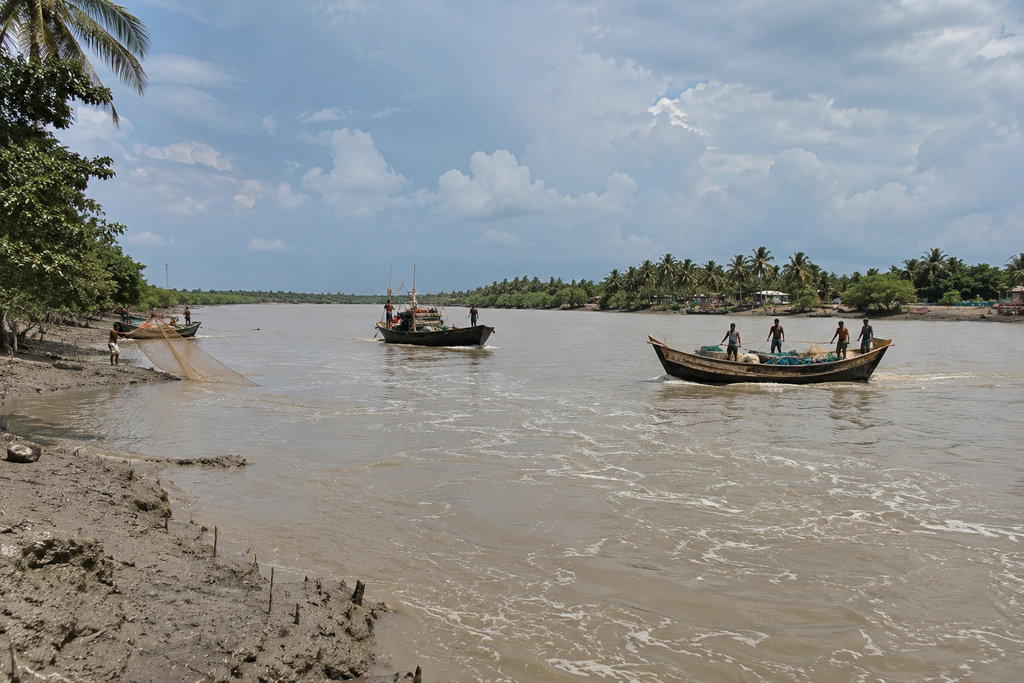
Standing on Bakkhali Beach at low tide, it becomes impossible to draw a clear boundary between land and water.
The sea has retreated hundreds of metres.
Thin ribbons of tidal water continue winding across the exposed sand. Beyond them, the Bay of Bengal waits quietly on the horizon. For a few hours each day, the coast appears almost unfinished.
Then the tide returns.
- Patiently.
- Relentlessly.
- Erasing every footprint left behind.
This daily transformation has shaped Bakkhali far more profoundly than roads, settlements, or even history itself.
Water is the oldest architect here.
The Bay That Never Sleeps
Unlike many coastlines where the ocean remains visually constant, the Bay of Bengal behaves differently along Bakkhali’s shore.
The gradient is remarkably gentle.
As the tide retreats, the sea withdraws far into the distance, exposing broad tidal flats that glisten beneath the morning sun.
Hours later, those same flats disappear beneath advancing waves. The landscape changes twice every day.
The people have learned to change with it.
- Fishing schedules.
- Boat departures.
- Net repairs.
- Seafood landings.
Even casual walks along the beach are quietly planned around the movement of the tide. No clock governs life here more accurately than the sea itself.
Hatania–Doania
Long before travellers reach Bakkhali, they must first cross the Hatania–Doania River.
For generations, this tidal river determined whether the coast remained accessible.
Before the bridge transformed connectivity, every bus, truck, bicycle, and traveller waited patiently for ferries to carry them across its restless waters. The crossing was never simply a practical necessity—it became part of the journey itself, marking the moment when mainland Bengal slowly gave way to the tidal world of the southern delta.
Even today, despite improved infrastructure, the river continues to shape local life.
- Fishing boats ride its currents.
- The tides pulse through it twice each day.
- Its waters connect inland settlements with the estuary beyond.
Crossing Hatania–Doania still feels like passing through a natural gateway.
- Behind lies the mainland.
- Ahead begins the coast.
Creeks That Feed the Coast
Beyond the main river, countless smaller tidal creeks thread through the landscape.
Some appear wide enough for fishing boats. Others narrow into winding channels hidden between mangrove shrubs and salt marshes.
These waterways rarely attract attention from casual visitors. Yet they sustain much of the region’s ecological productivity.
- Juvenile fish shelter within their calm waters.
- Crabs burrow into their muddy banks.
- Migratory birds forage along their exposed edges during low tide.
For local fishermen, these creeks function as both fishing grounds and navigation routes. To an explorer, they reveal another side of Bakkhali—one that exists beyond the open beach.
Water Creates the Landscape
Everything visible in Bakkhali owes its existence to moving water.
- The beaches.
- The mudflats.
- The sand ridges.
- The tidal channels.
Even the coastal vegetation reflects centuries of interaction between river sediment and marine currents.
Unlike rocky coastlines carved by waves, Bakkhali is continuously being rebuilt.
- Sand arrives.
- Sand disappears.
- Channels shift.
- The shoreline advances.
- Then retreats again.
This landscape is never truly finished. It remains under construction by nature itself.
Historical Footprints
The beach appears timeless.
History suggests otherwise. Only a little more than a century ago, Bakkhali occupied a very different place in Bengal’s imagination.
It was remote.
Poorly connected.
Known primarily to fishermen and a handful of administrators who ventured this far south. Its isolation protected it. But it also kept it largely absent from maps beyond the district.
Before Bakkhali Was Known
Long before roads connected the coast with Kolkata, this shoreline formed part of a sparsely populated frontier between the lower delta and the Bay of Bengal.
Fishing communities harvested the estuary.
Small settlements occupied slightly elevated ground above the reach of ordinary tides.
Mangroves extended farther across parts of the coastline than they do today before progressive land reclamation and changing land use altered the landscape over the twentieth century.
The coast belonged less to permanent settlements than to people who understood seasonal movement.
The sea dictated opportunity.
The weather dictated survival.
Sir Andrew Fraser and the Birth of Fraserganj
Bakkhali’s wider recognition began during the early twentieth century through the visits of Sir Andrew Fraser, who served as Lieutenant Governor of Bengal between 1903 and 1908.
During one of his coastal journeys, Fraser was captivated by the long, windswept shoreline then known as Narayanitala. He envisioned the area as a healthy seaside retreat and promoted its potential among Europeans living in colonial Bengal. Although his plans for a sanatorium were never fully realised, the neighbouring settlement eventually came to bear his name—Fraserganj.
Even today, local residents point toward the remains of the house traditionally associated with Fraser, though much of the original structure and the nearby historic fort suffered severe damage from coastal erosion and repeated cyclones over the decades.
History here is remarkably fragile.
Sometimes it disappears into the sea.
Roads Changed Everything
For much of the twentieth century, reaching Bakkhali demanded patience.
- Travellers crossed the Hatania–Doania by ferry.
- Narrow roads stretched south through villages and tidal creeks.
- Wooden bridges linked fragmented sections of the route.
During the monsoon, journeys could become uncertain.
It was not unusual for reaching the coast to consume an entire day. Gradually, infrastructure improved.
- Roads were widened.
- Bridges replaced ferry crossings.
Government accommodation appeared in the 1970s, marking the beginning of organised coastal tourism. Yet even as accessibility increased, Bakkhali retained a slower rhythm than many better-known beaches.
The Coast Continues to Change
History is still unfolding.
- Cyclones.
- Rising seas.
- Coastal erosion.
- Changing fisheries.
- Shifting shorelines.
Each generation witnesses a slightly different Bakkhali.
The remains of Fraser’s coastal fort, once a prominent landmark overlooking the Bay of Bengal, were gradually weakened by repeated storms before being largely claimed by the advancing sea after Cyclones Amphan and Yaas. Its disappearance became a powerful reminder that the Bay of Bengal preserves very little permanently.
Here, history is written not only by people.
It is edited continuously by tides.
Historical Personalities & Transformations
Unlike many settlements shaped by kings or large urban institutions, Bakkhali’s history is associated with administrators, fishermen, engineers, and coastal communities whose influence accumulated gradually.
Sir Andrew Fraser remains the best-known historical figure connected with the region because his visits helped bring wider attention to this previously isolated stretch of coast. Yet the identity of modern Bakkhali owes just as much to generations of anonymous fishing families, boat builders, and coastal residents who learned to adapt to one of India’s most dynamic shorelines.
Government investment during the latter half of the twentieth century improved roads, accommodation, fisheries infrastructure, and access, allowing Bakkhali and neighbouring Fraserganj to develop together as interconnected coastal settlements rather than isolated villages. The fishing harbour at Fraserganj, coastal afforestation with casuarina plantations, and transport improvements all contributed to this transformation.
Yet despite these changes, Bakkhali has resisted becoming just another seaside town.
Every morning, the tide still arrives before the visitors.
And every evening, the sea quietly reminds the coast that it was here long before history—and will almost certainly outlast it.
Life Between the Tides
For the people of Bakkhali, the day rarely begins with the clock.
It begins with the tide.
Long before sunrise, experienced fishermen already know whether the morning will favour deep-water fishing or work within the nearby estuarine creeks.
- They discuss moon phases almost as often as weather forecasts.
- They watch the wind.
- They study the current.
- The sea rewards observation.
It rarely forgives carelessness.
On the beach, timing is everything.
- A delayed departure may mean losing the outgoing tide.
- Returning too late may make landing difficult.
The ocean decides the schedule.
People simply adapt.
Fishing Beyond the Horizon
Standing on the shoreline, only a handful of boats remain visible.
Most disappear long before the sun reaches its highest point. Some venture into coastal waters. Others remain closer to the estuary, where changing salinity attracts different fish species throughout the year.
- The catch changes with the seasons.
- Marine fish dominate certain months.
- Estuarine species become more abundant than others.
Crabs and prawns also contribute significantly to household incomes, reflecting the remarkable productivity of the coastal ecosystem surrounding Bakkhali and neighbouring Fraserganj.
Fishing here is knowledge passed between generations.
It cannot be learned from books alone. Every fisherman carries an unwritten map. Not on paper.
In memory.
Women Behind the Fishing Economy
The boats may leave with men.
The work does not.
Throughout the villages surrounding Bakkhali and Fraserganj, women contribute extensively to the fishing economy in ways that often remain unnoticed by visitors.
- Fresh fish are sorted.
- Smaller catches are cleaned.
- Nets are repaired.
- Shellfish are processed.
- Household finances are managed.
Many women also participate in local markets where seafood changes hands before beginning its journey toward Kolkata and other towns.
The coastline functions because entire families participate. The sea supports communities.
Not individuals.
Agriculture Beside Salt Water
At first glance, agriculture appears unlikely in a landscape surrounded by saline influence.
Yet Bakkhali demonstrates remarkable adaptability. Slightly elevated areas support seasonal cultivation.
Vegetables. Paddy, where conditions permit. Betel vines. Fruit trees. Farmers constantly negotiate with salinity. Heavy rainfall becomes an ally, helping flush accumulated salt from the soil.
Years with excessive saline intrusion present greater challenges. Agriculture here is less predictable than farther inland.
But it endures.
Walking Through the Villages
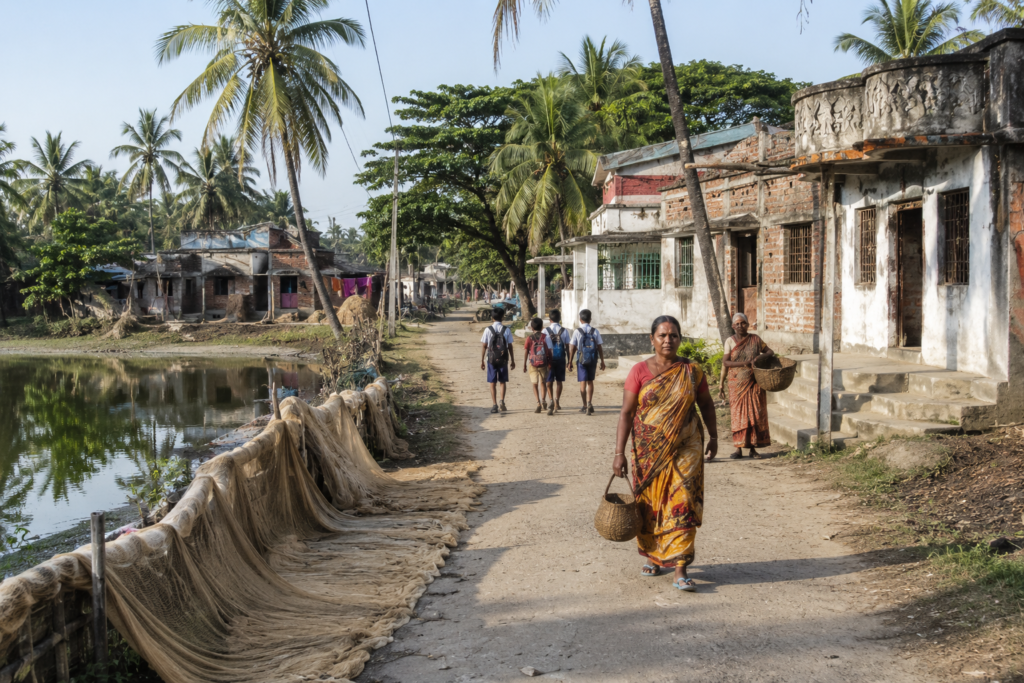
Leaving the beach behind reveals another Bakkhali.
One that many visitors never see.
Only a few hundred metres from the shoreline, village life continues almost independently of the coast’s changing popularity.
The atmosphere changes immediately. The sound of waves fades. Birdsong replaces it.
Homes Built for the Coast
Traditional homes reflect generations of experience living beside the sea.
Older houses were often constructed on raised plinths to reduce flood risk. Brick walls have gradually replaced many mud structures, yet the logic remains unchanged.
Protection from water remains the priority.
- Wide verandas provide shade.
- Open courtyards encourage ventilation.
- Rainwater drains quickly during the monsoon.
Architecture here has always responded to climate before appearance.
Courtyards of Everyday Life
The heart of many homes lies not inside the building but within the courtyard.
- Children complete homework beneath shaded verandas.
- Fishing nets dry beside coconut trees.
- Women prepare vegetables gathered from nearby markets.
- Neighbours pause for conversation while carrying water or returning from work.
Life unfolds outdoors. The courtyard serves simultaneously as a kitchen, workshop, meeting place, and playground.
For an explorer, these spaces reveal far more about Bakkhali than any monument could.
Tea Stalls That Never Rush
Every village seems to possess one.
A small tea stall built beside the road.
- Plastic chairs.
- Wooden benches.
- A kettle that never appears empty.
Here, conversations move effortlessly between fishing conditions, politics, cricket, approaching cyclones, and tomorrow’s weather.
Visitors who spend time listening rather than speaking often leave with the most valuable understanding of the coast.
The tea is excellent.
The stories are better.
Schools Beside the Sea
Children in Bakkhali grow up with an unusual classroom.
The sea itself.Many walk to school past fishing boats. Others cross narrow bridges over tidal creeks. Environmental awareness is not introduced through textbooks alone.
It is experienced daily.
- The tides.
- The wind.
- Cyclones.
- Mangroves.
- Fishing seasons.
Nature becomes part of ordinary childhood rather than a separate subject.
Markets Where the Coast Comes Ashore
Markets tell the truth about a place.
Bakkhali’s markets reveal that this is first a fishing settlement. Only later does it become a destination for visitors.
Early morning brings baskets of freshly landed fish.
- Pomfret.
- Parshe.
- Bombay duck.
- Prawns.
- Mud crabs.
Numerous estuarine species arrive according to season and tide. The market changes every day because the sea changes every day. Nothing feels standardised.
Availability depends upon nature.
Not demand.
Beyond Seafood
Walk farther through the market and another landscape emerges.
- Fresh vegetables from nearby villages.
- Tender coconuts.
- Seasonal fruits.
- Spices.
- Handmade fishing equipment.
- Household goods.
The market serves local communities long before it serves visitors. Its rhythm remains fundamentally rural.
The Harbour at Fraserganj
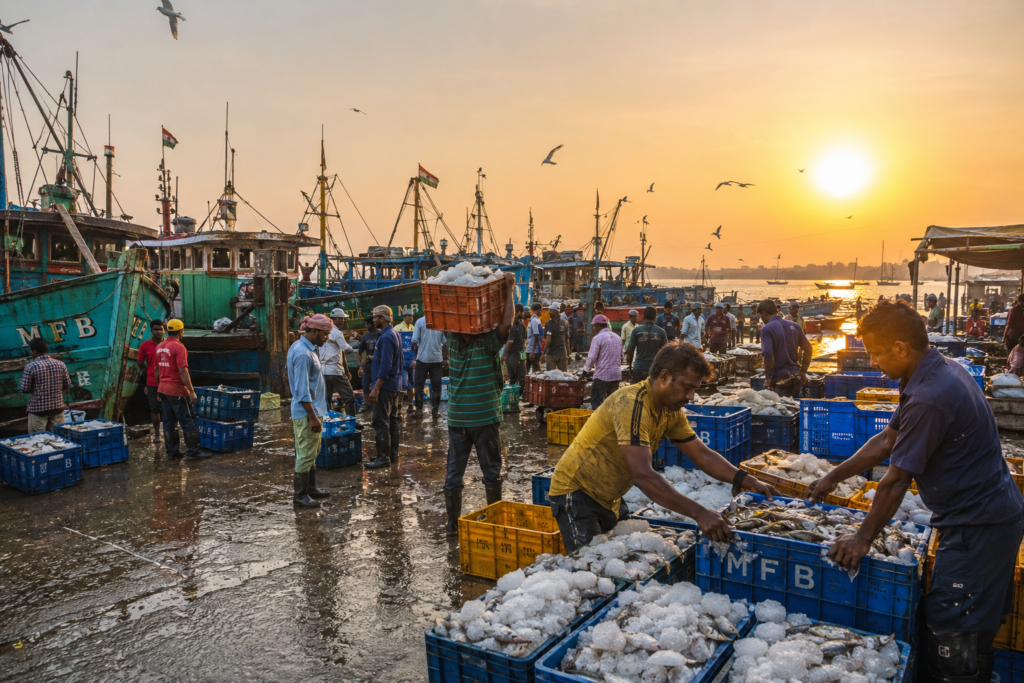
Only a short distance from Bakkhali lies Fraserganj Fishing Harbour, one of the most important marine fishing centres along this section of the West Bengal coast.
Here, the atmosphere becomes noticeably more industrial.
- Larger trawlers unload catches.
- Ice factories support fish preservation.
- Workers move quickly between boats and auction areas.
- The scale contrasts sharply with the quiet beach nearby.
Together, Bakkhali and Fraserganj reveal two connected faces of the same coastline.
Sounds of Bakkhali
Every landscape has its own soundtrack.
Bakkhali’s changes from hour to hour.
Before sunrise, only the sea and wind remain.
- Casuarina needles whisper continuously above the dunes.
- Distant waves rise and fall with surprising gentleness.
As daylight strengthens, gulls call overhead.
- Fishing boats start their engines.
- Voices travel easily across the open beach.
By afternoon, bicycles ring their bells along coastal roads.
- Children laugh outside village schools.
- Tea stalls fill with conversation.
- The fishing harbour hums with activity.
The evening arrives.
Gradually, the engines fall silent.
- The markets empty.
- The sea becomes louder once again.
Not because it has changed.
Because everything else has become quiet.
Wildlife Expedition
Most visitors come searching for the beach.
Naturalists discover something much larger. Bakkhali occupies one of the most fascinating ecological transition zones in eastern India.
- Marine waters.
- Estuarine channels.
- Mangrove creeks.
- Mudflats.
- Casuarina plantations.
- Salt marshes.
Each habitat supports different wildlife. Understanding Bakkhali requires looking beyond the shoreline.
Birds of the Open Coast
The first birds visible at sunrise are often gulls gliding effortlessly above the surf.
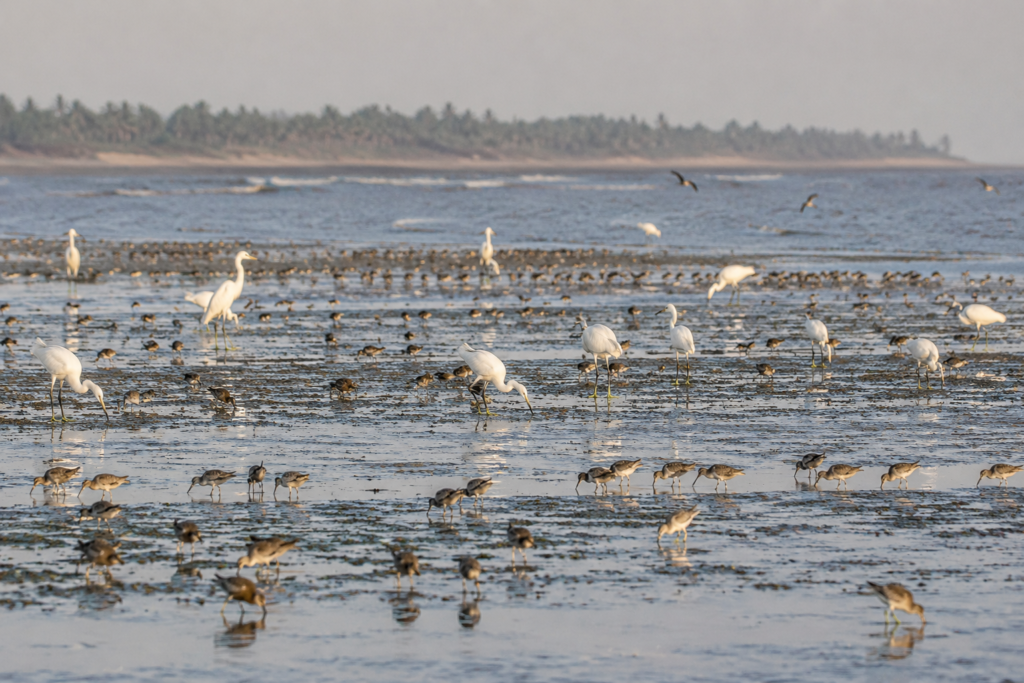
- Little Egrets patrol shallow tidal pools.
- Sandpipers dart across exposed mud.
During winter, migratory shorebirds increase considerably, using the intertidal flats as feeding grounds during their long journeys along the East Asian–Australasian Flyway.
Patience rewards birdwatchers here.
The beach is far richer than it first appears.
Life Hidden in the Sand
The apparently empty beach is anything but lifeless.
- Ghost crabs vanish into perfectly round burrows.
- Tiny molluscs leave delicate trails across wet sand.
- Hermit crabs carry borrowed shells between tidal pools.
- Every retreating wave reveals new signs of hidden activity.
Much of Bakkhali’s biodiversity exists below eye level. Explorers who slow down discover an entirely different world.
Mangrove Chronicles
See it for yourself
A private journey shaped around you — your group, your pace, your interests. Book a free consultation.
Visitors expecting towering forests immediately behind the beach are often surprised.
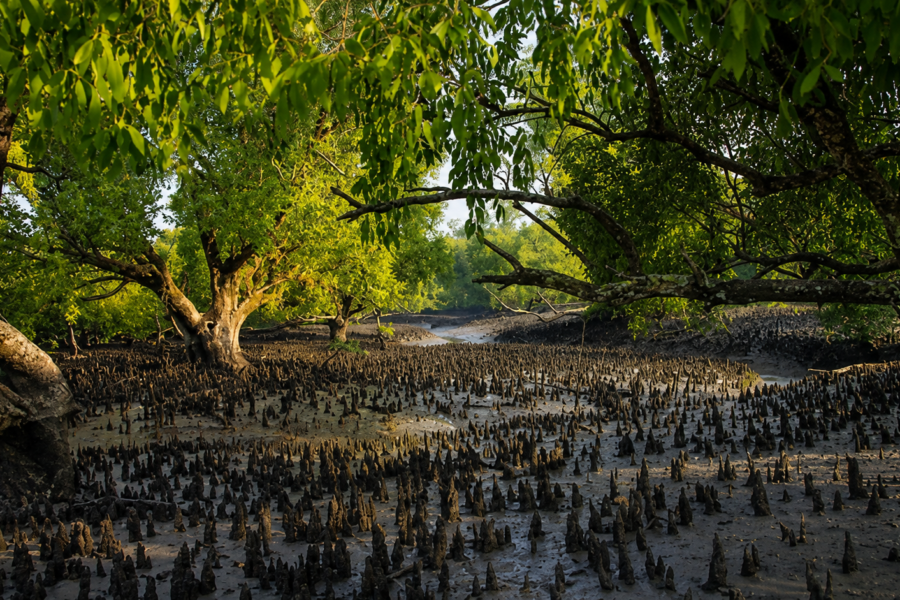
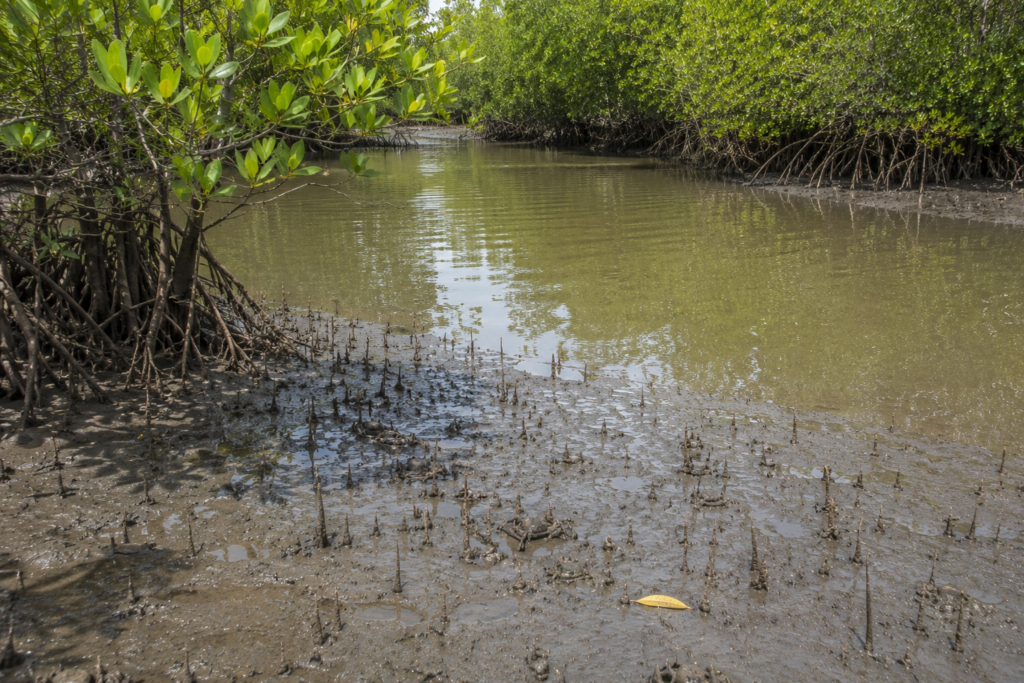
The mangroves do not announce themselves dramatically. Instead, they appear gradually along tidal creeks, muddy banks, and protected coastal margins.
- Small clusters.
- Scattered patches.
Then larger stretches farther east toward the protected forests.
Bakkhali occupies the transition.
It is where the coastal beach ecosystem slowly yields to the tidal mangrove landscape that defines the Indian Sundarbans. The transformation is subtle.
But ecologically, it is profound.
Life Built for Salt
Few plants can survive where the sea enters twice every day.
Mangroves can.
They have evolved remarkable adaptations that allow them to thrive where ordinary trees would quickly perish.
Depending on the location, species such as Avicennia (Baen), Excoecaria agallocha (Gewa) and Sonneratia (Keora) occur within the broader coastal and estuarine landscapes surrounding Bakkhali and the western Sundarbans, each adapted to different levels of salinity and tidal influence.
Some push breathing roots above the mud. Others filter salt before it reaches their leaves. Each represents millions of years of evolution in one of Earth’s most demanding environments.
Looking closely at these forests reveals engineering perfected by nature.
Where Land Becomes Water
There is no sharp boundary between land and sea here.
The tide refuses to recognise such certainty.
One moment, exposed mud supports wading birds and fiddler crabs. A few hours later, the same ground lies beneath tidal water.
The mangroves have adapted to this constant uncertainty.
- Their roots anchor shifting sediment.
- They experience slow erosion.
- They trap fresh deposits of silt.
Little by little, they help create land itself.
Without mangroves, much of this coastline would be far more vulnerable to the relentless energy of the Bay of Bengal.
Guardians of the Coast
Mangroves perform a role that becomes most visible during disasters.
- They reduce wave energy.
- They intercept storm surges.
- They stabilise fragile shorelines.
While no forest can completely stop a major cyclone, healthy mangrove belts can lessen its impact on coastal communities.
For Bakkhali and neighbouring settlements, these forests are not simply ecological treasures.
They are natural infrastructure.
Living barriers built by nature rather than concrete.
Explorer’s Field Notes
Field Note 01
The beach appears empty at low tide.
It is not. Look carefully and the sand begins to move. Tiny ghost crabs emerge cautiously before disappearing again with astonishing speed.
The beach is alive beneath your feet.
Field Note 02
The finest wildlife observations rarely occur while walking.
Stop.
Remain still.
- Allow the landscape to continue without you.
- Only then do kingfishers return to their perch.
- Only then do shorebirds resume feeding.
The coast rewards patience.
Field Note 03
Carry binoculars.
Many of Bakkhali’s most fascinating wildlife encounters happen hundreds of metres away across mudflats and tidal channels.
Distance often protects nature.
Respect that distance.
Field Note 04
Never judge the beach by high tide alone.
Visit again during low tide.
- The transformation is extraordinary.
- The shoreline becomes several times wider.
- Entire habitats emerge from beneath the sea.
Field Note 05
Walk slowly through the casuarina plantations before sunrise.
The forest wakes gradually.
- Drongos call first.
- Then bulbuls.
- Then mynas.
Only later does the beach begin filling with people.
Nightfall on Bakkhali
As afternoon fades, the coastline begins changing once more.
Visitors gradually drift back toward hotels and guesthouses.
- Fishing boats return.
- The breeze grows cooler.
- The light softens.
- The beach seems larger again.
- Long shadows stretch across the wet sand.
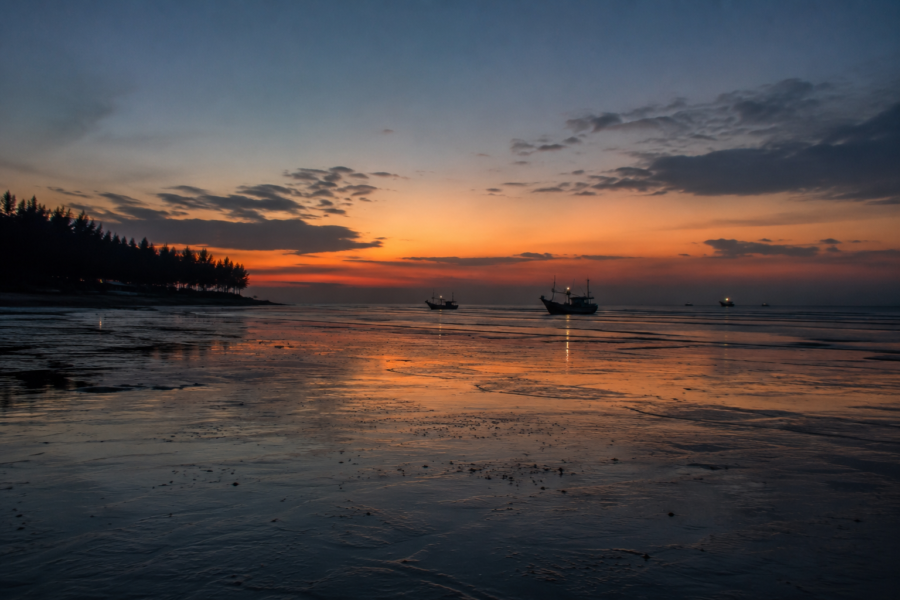
The sea reflects colours that change almost every minute.
- Gold.
- Amber.
- Copper.
- Then violet.
After Darkness Falls
Night arrives gently.
The roar of traffic never dominates here. Instead, another soundscape takes over.
- Crickets begin calling from the vegetation.
- The surf becomes more noticeable.
Occasionally, the distant engine of a late fishing boat drifts across the water.
The stars appear surprisingly bright when clouds permit. Away from larger towns, the coast still experiences genuine darkness.
For many explorers, this is Bakkhali’s most peaceful hour.
The Seasons of Bakkhali
Winter
Winter transforms Bakkhali into one of the most comfortable coastal environments in eastern India.
- Cool mornings.
- Pleasant afternoons.
- Clear skies.
- Lower humidity.
Migratory birds arrive along the shoreline and nearby mudflats. Visibility improves dramatically, making this the finest season for photography and long coastal walks.
Spring
Spring is brief.
- The sea remains calm.
- Casuarina forests become greener.
- The transition toward summer is gradual rather than sudden.
The beaches remain relatively quiet outside holiday periods.
Summer
By April and May, temperatures rise considerably.
- Humidity increases.
- Afternoons become demanding.
Yet early mornings remain beautiful. Many fishermen continue working before sunrise to avoid the strongest heat. Thunderstorms occasionally build over the Bay of Bengal, creating dramatic coastal skies.
Monsoon
With the arrival of the southwest monsoon, Bakkhali changes completely.
- The sea becomes restless.
- Clouds dominate the horizon.
- Heavy rain transforms roads and wetlands.
- The beach often appears almost deserted.
For photographers, however, the season offers extraordinary atmospheric conditions.
Storm clouds rolling across the Bay of Bengal create some of the most dramatic coastal landscapes in West Bengal.
Post-Monsoon
The air clears.
- Vegetation flourishes.
- The coastline begins recovering from months of intense weather.
- Fishing activity increases.
- Migratory birds gradually begin returning.
The landscape feels refreshed.
Cyclones and Survival
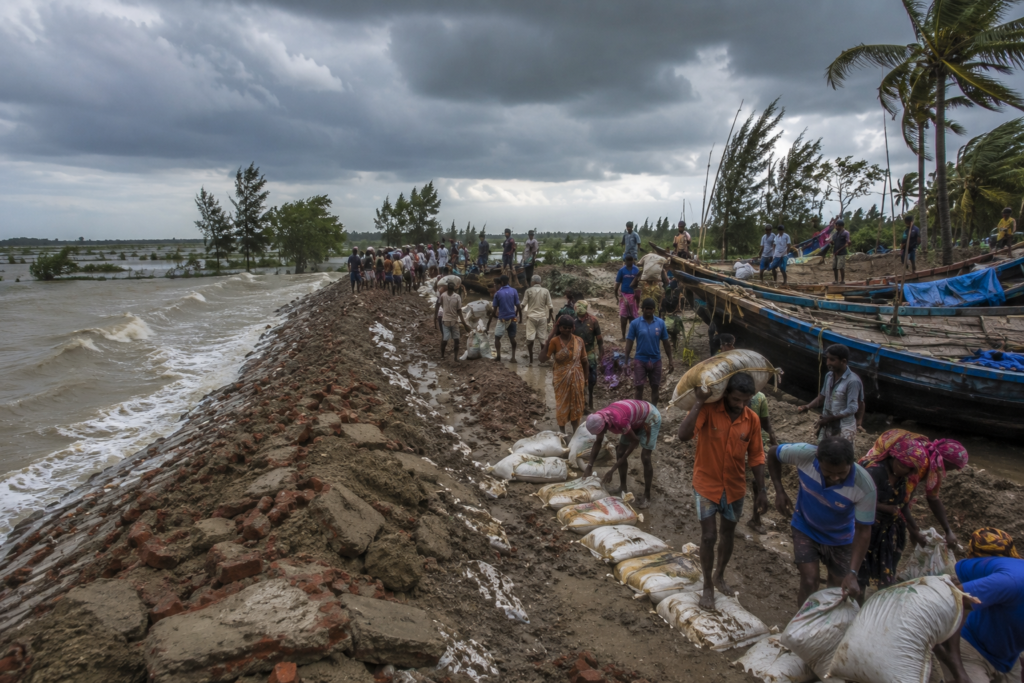
No coastal settlement along the Bay of Bengal escapes the memory of cyclones.
Bakkhali certainly does not. Every generation remembers particular storms. Not simply because of the wind. But because of what followed.
- Broken embankments.
- Flooded villages.
- Damaged boats.
- Lost fishing equipment.
- Interrupted livelihoods.
Cyclones such as Aila (2009), Bulbul (2019), Amphan (2020) and Yaas (2021) affected this coastline to varying degrees, bringing destructive winds, coastal flooding, saline intrusion, and widespread damage across South 24 Parganas.
Recovery rarely happens overnight.
- Fishing boats must be repaired.
- Homes rebuilt.
- Roads cleared.
- Power restored.
Yet perhaps the most remarkable feature of Bakkhali is how quickly ordinary life begins again. Within days.
- Boats return to the water.
- Markets reopen.
- Children walk back to school.
The sea that threatened livelihoods also remains the source of those livelihoods. There is no choice but to begin again.
Ferry Routes and Hidden Paths
Modern roads have made Bakkhali far easier to reach than in previous decades.
Yet the region still rewards explorers willing to leave the main route. Old embankments continue following ancient tidal channels. Small jetties serve local fishing boats.
Village paths wind toward forgotten creeks where only the sound of birds interrupts the silence. Some of the most rewarding walks require no destination at all.
Simply following the coastline reveals changing perspectives of beach, estuary, and mangrove. Each bend offers another chapter.
Photography Expedition Guide
Sunrise
The finest sunrise photographs are made before the beach becomes busy.
Arrive while the tide is still low. The reflections on wet sand create natural mirrors stretching toward the horizon.
Wildlife
Carry a telephoto lens.
- Shorebirds.
- Kingfishers.
- Egrets.
- Sandpipers.
- Ghost crabs.
The greatest wildlife subjects are often small. Patience matters more than equipment.
Fishing Communities
Always ask permission before making close portraits.
The strongest documentary photographs often emerge naturally while fishermen repair nets or unload their catch rather than when people pose.
Landscapes
Bakkhali rewards wide compositions.
- Use the immense sky.
- The tidal flats.
- The distant fishing boats.
- The open horizon.
Space itself becomes an important subject.
Monsoon Photography
Storm clouds over the Bay of Bengal produce spectacular coastal drama. Safety should always take priority.
Never photograph from exposed beaches during severe weather or lightning.
Food of Bakkhali
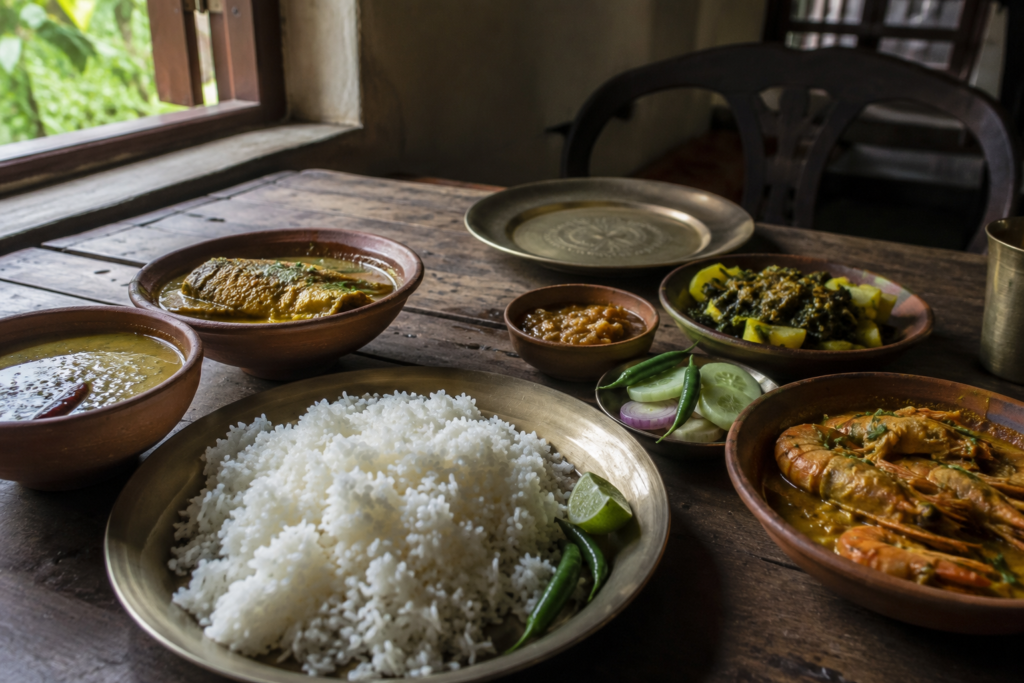
To understand Bakkhali, begin with its kitchens.
The flavours here are not elaborate for the sake of presentation. They are practical, seasonal, and deeply connected to whatever the Bay of Bengal and the surrounding estuaries provide.
Freshness matters more than complexity.
Many households prepare seafood caught only a few hours earlier.
The distance between the boat and the cooking pot is often remarkably short.
That freshness defines the local cuisine.
Fish on Every Table
Fish is more than food.
It is the centrepiece of daily meals.
Depending on the season, households prepare a variety of marine and estuarine species using traditional Bengali recipes.
- Light fish curries flavoured with turmeric and green chillies remain common.
- Mustard-based preparations continue to reflect one of Bengal’s oldest culinary traditions.
- Smaller fish are often fried until crisp before accompanying steamed rice and lentils.
The recipes vary.
The relationship with fish does not.
The Taste of the Estuary
The meeting of river and sea creates exceptional diversity.
- Prawns.
- Mud crabs.
- Pomfret.
- Parshe.
- Bombay duck.
Seasonal catches arrive according to changing tides rather than fixed calendars.
Visitors often associate Bakkhali only with marine fish. Local markets reveal a much broader story.
The estuary contributes just as much as the sea.
Simplicity Defines the Meal
A traditional lunch in Bakkhali rarely appears extravagant.
- Steamed rice.
- Dal.
- Fresh fish.
- Seasonal vegetables.
- Perhaps a chutney.
- Sometimes homemade pickles.
The emphasis remains on balance rather than abundance. Meals reflect the working lives of fishing families.
- Nutritious.
- Practical.
- Comforting.
Tea Beside the Coast
No exploration of Bakkhali is complete without pausing at a roadside tea stall.
- Small clay cups.
- Freshly brewed milk tea.
- Conversations carried by the coastal breeze.
These modest stops often become the best places to understand local life. The tea lasts only a few minutes.
The conversations linger much longer.
The Economy of Bakkhali
The Bay of Bengal remains Bakkhali’s greatest economic resource.
Fishing supports hundreds of families directly while sustaining many more through related occupations.
- Boat builders.
- Ice suppliers.
- Fish traders.
- Net repairers.
- Transport workers.
- Market vendors.
An entire network of livelihoods depends upon what the sea provides each day.
Fishing is therefore not simply an occupation. It is the economic heartbeat of the region.
Fraserganj Fishing Harbour
Just north of Bakkhali lies Fraserganj Fishing Harbour, one of the most significant marine fishing centres along the southern coast of West Bengal.
Every morning, trawlers return carrying catches destined for markets across the state and beyond.
The harbour presents a striking contrast to the peaceful atmosphere of Bakkhali Beach.
- Engines roar.
- Workers unload crates.
- Ice factories operate continuously.
- Auctions begin soon after the boats arrive.
The harbour demonstrates the commercial scale of an industry that begins with individual fishermen facing the open sea.
Tourism as a Seasonal Economy
Tourism has gradually become another important source of income.
- Guesthouses.
- Hotels.
- Restaurants.
- Small shops.
- Vehicle operators.
- Local guides.
Each benefits from seasonal visitors.
Yet unlike some coastal destinations where tourism dominates entirely, Bakkhali still retains a balanced economy.
- Fishing continues to employ many residents throughout the year.
- The sea remains the primary provider.
- Tourism complements it.
It does not replace it.
Agriculture Along the Coast
Despite saline conditions, agriculture continues wherever the land allows.
Farmers cultivate paddy in suitable areas while growing vegetables and fruits on slightly elevated ground less affected by saltwater intrusion.
Seasonal rainfall remains essential.
Successful farming often depends on carefully managing freshwater resources during and after the monsoon.
The landscape reflects constant adaptation rather than agricultural certainty.
Small Businesses and Local Enterprise
The local economy extends well beyond fishing and farming.
- Tea stalls welcome travellers throughout the day.
- Small grocery stores serve nearby villages.
- Repair workshops maintain motorcycles and fishing equipment.
- Women contribute through home-based enterprises, seafood processing, and local trade.
Much of Bakkhali’s economy operates at a human scale.
- Transactions remain personal.
- Relationships matter.
- Trust remains valuable.
Then and Now
Before Roads Connected the Coast
Only a few decades ago, reaching Bakkhali demanded commitment.
Travellers crossed the Hatania–Doania River by ferry.
- Roads remained narrow.
- Public transport was limited.
- Electricity was less reliable.
- Accommodation was scarce.
The journey itself formed part of the adventure. Many visitors remember spending almost an entire day simply reaching the coast.
Isolation shaped Bakkhali’s identity.
Connectivity Changed Everything
The construction of improved roads and the Hatania–Doania bridge transformed access.
What once required careful planning gradually became a comfortable road journey from Kolkata.
- Visitor numbers increased.
- Hotels expanded.
- Basic infrastructure improved.
The coastline became more widely known. Yet unlike several heavily commercialised beaches elsewhere in India, Bakkhali retained significant stretches of open landscape.
The horizon remained uncluttered. The sea continued to dominate the view.
Nature Continues to Shape the Future
Modern infrastructure has undoubtedly changed Bakkhali.
Nature continues changing it as well.
- Cyclones periodically reshape sections of the coast.
- Tidal erosion alters shorelines.
- Sea-level rise presents new challenges for coastal communities.
Mangrove conservation has become increasingly important.
The future of Bakkhali will depend not only on development but also on maintaining the ecological systems that protect the coast. Its greatest strength has always been its relationship with nature.
Preserving that relationship may become its greatest responsibility.
The Wild Orbit Quick Facts
| Category | Information |
| Location | Bakkhali, South 24 Parganas, West Bengal |
| Administrative Block | Namkhana Community Development Block |
| District | South 24 Parganas |
| Nearest Major Town | Namkhana |
| Nearest Railway Station | Namkhana Railway Station |
| Nearest Fishing Harbour | Fraserganj Fishing Harbour |
| Major Water Bodies | Bay of Bengal, Hatania–Doania River |
| Nearest Protected Area | Jambu Dwip (protected), Sundarban Biosphere Reserve region |
| Best Season | November to February |
| Ideal Duration | 2–3 Days |
| Primary Landscape | Beach, estuary, coastal wetlands, mangrove fringe |
| Wildlife Highlights | Shorebirds, egrets, kingfishers, ghost crabs, and migratory birds |
The Wild Orbit Expedition Snapshot
| Category | Rating | Why |
| Accessibility | ☆☆☆☆☆ | One of the easiest coastal gateways from Kolkata. |
| Wildlife Potential | ☆☆☆☆ | Strong birdlife and coastal biodiversity, especially during winter. |
| Photography Potential | ☆☆☆☆☆ | Exceptional sunrise, sunset, tidal flats, fishing communities, and dramatic skies. |
| Cultural Richness | ☆☆☆☆ | Authentic fishing villages and long-standing coastal traditions. |
| Historical Interest | ☆☆☆ | Colonial links, Fraserganj history, and evolving coastal settlements. |
| Solitude Level | ☆☆☆☆ | Peaceful on weekdays, busier during weekends and holidays. |
| Family Friendly | ☆☆☆☆☆ | Gentle beach and relatively easy accessibility. |
| Explorer Value | ☆☆☆☆ | Ideal for understanding the transition between the Bay of Bengal and the western Sundarbans. |
The Wild Orbit Explorer Connections
Bakkhali is best understood not as an isolated destination but as part of a much larger coastal landscape.
From here, the journey naturally continues toward Fraserganj, where the fishing harbour reveals the commercial heartbeat of the coast.
Beyond lies Henry’s Island, where coastal forests, mudflats, and quiet beaches present another face of the delta.
Across the surrounding waters lies Jambu Dwip, an ecologically important island known for its seasonal birdlife and protected status.
Travelling north returns explorers to Namkhana, the gateway where the Hatania–Doania River marks the transition between mainland Bengal and the tidal coast.
To the east, the wider landscapes of the Indian Sundarbans unfold through mangrove forests, estuaries, tidal rivers, and protected wildlife habitats, reminding visitors that Bakkhali is not the end of the journey.
It is one of the places where that journey truly begins.
FAQs
1. Where is Bakkhali located?
Bakkhali is a coastal village in Namkhana Block, South 24 Parganas, West Bengal, on the Bay of Bengal.
2. Is Bakkhali part of the Sundarbans?
No. Bakkhali lies outside the protected Sundarban Tiger Reserve but is part of the broader Sundarban delta region.
3. Why is Bakkhali famous?
Bakkhali is known for its wide beach, peaceful coastline, coastal wetlands, birdlife, and proximity to the Sundarbans.
4. Which district is Bakkhali in?
Bakkhali is located in South 24 Parganas district, West Bengal.
5. Which block does Bakkhali belong to?
Bakkhali falls under the Namkhana Community Development Block.
6. How far is Bakkhali from Kolkata?
Bakkhali is approximately 125 km from Kolkata by road.
7. How long does it take to reach Bakkhali from Kolkata?
The journey usually takes 3.5–4.5 hours, depending on traffic and road conditions.
8. What is the nearest railway station to Bakkhali?
Namkhana Railway Station is the nearest railway station.
9. What is the best time to visit Bakkhali?
The best time is November to February, when the weather is pleasant and ideal for exploring.
10. Is Bakkhali suitable for a weekend trip?
Yes. Bakkhali is one of the most popular weekend coastal destinations from Kolkata.
11. Can you swim at Bakkhali Beach?
Yes, but only in safe areas and during calm sea conditions. Always follow local advisories.
12. Why is Bakkhali Beach so wide?
The beach has a gentle coastal gradient, causing the sea to recede significantly during low tide.
13. Does Bakkhali experience high and low tides?
Yes. The coastline changes dramatically between high and low tide every day.
14. Is Bakkhali good for birdwatching?
Yes. Winter attracts many resident and migratory shorebirds.
15. What wildlife can be seen in Bakkhali?
Visitors may spot egrets, kingfishers, gulls, sandpipers, ghost crabs, and other coastal wildlife.
16. Are there mangroves in Bakkhali?
Small mangrove patches occur near tidal creeks, while larger mangrove forests lie farther east.
17. Can Royal Bengal Tigers be seen in Bakkhali?
No. Royal Bengal Tigers are found inside the Sundarban Tiger Reserve, not in Bakkhali.
18. What is Fraserganj?
Fraserganj is the neighbouring coastal settlement, known for its fishing harbour and colonial history.
19. What is Henry’s Island?
Henry’s Island is a nearby coastal destination famous for its beach, mangroves, watchtower, and birdlife.
20. Can visitors go to Jambu Dwip?
No. Public access to Jambu Dwip is restricted due to its ecological importance.
21. Is Bakkhali good for photography?
Yes. Bakkhali offers excellent opportunities for landscape, wildlife, sunrise, sunset, and documentary photography.
22. What food is Bakkhali known for?
Fresh seafood, especially fish, prawns, mud crabs, and traditional Bengali coastal cuisine.
23. Is vegetarian food available in Bakkhali?
Yes. Most hotels and local restaurants serve vegetarian Bengali meals.
24. Are there hotels in Bakkhali?
Yes. Bakkhali offers government lodges, hotels, resorts, and budget accommodations.
25. Is Bakkhali family-friendly?
Yes. Its calm beach and relaxed atmosphere make it suitable for families.
26. Which season is best for bird photography?
Winter is the best season, especially from November to February.
27. Has Bakkhali been affected by cyclones?
Yes. Cyclones such as Aila, Bulbul, Amphan, and Yaas have impacted the region.
28. Is Bakkhali safe during the monsoon?
Travel is possible, but heavy rain, strong tides, and rough sea conditions require extra caution.
29. What should I carry while visiting Bakkhali?
Carry light clothing, sunscreen, drinking water, a hat, binoculars, insect repellent, and a camera.
30. How many days are ideal for exploring Bakkhali?
A 2–3 day trip is ideal to explore Bakkhali, Fraserganj, Henry’s Island, and nearby coastal landscapes.
31. Is Bakkhali suitable for nature lovers?
Yes. Its beaches, wetlands, estuaries, and nearby mangroves make it ideal for nature enthusiasts.
32. Can I visit Henry’s Island from Bakkhali?
Yes. Henry’s Island is only a short drive from Bakkhali and is commonly visited together.
33. What are the top places to visit near Bakkhali?
Fraserganj, Henry’s Island, Bakkhali Beach, Fraserganj Fishing Harbour, Crocodile Breeding Centre, and the Bakkhali Watch Tower.
34. Is Bakkhali crowded throughout the year?
No. Weekdays are generally quieter, while weekends and public holidays attract more visitors.
35. What makes Bakkhali unique?
Bakkhali uniquely combines a tranquil beach, coastal wetlands, fishing communities, birdlife, and easy access to the western gateway of the Sundarbans.
How to Reach Bakkhali
Reaching Bakkhali is remarkably straightforward today, yet the journey still feels like an expedition into Bengal’s southern coastline. Every kilometre south reveals another stage in the transition from the mainland to the tidal landscapes of the Sundarban delta.
By Road from Kolkata
- Distance: Approximately 125–130 km
- Travel Time: Around 3.5–4.5 hours
- Route: Kolkata → Baruipur → Diamond Harbour Road (NH-12/SH corridors) → Kakdwip → Namkhana → Hatania–Doania Bridge → Fraserganj → Bakkhali
- Private cars, taxis, and self-drive vehicles are the most convenient options.
The final stretch beyond Namkhana offers one of the most scenic coastal drives in southern West Bengal, passing fishing villages, shrimp farms, tidal creeks, and casuarina plantations.
By Train
The nearest railway station is Namkhana Railway Station.
- Board a suburban train from Sealdah to Namkhana.
- Travel time is approximately 2.5–3 hours.
- From Namkhana, local buses, shared vehicles, and reserved cars connect directly to Bakkhali.
- The road journey from Namkhana takes around 30–40 minutes.
By Bus
Regular government and private buses operate from:
- Esplanade (Kolkata)
- Dharmatala
- Baruipur
- Kakdwip
Many services terminate directly at Bakkhali.
Local Transport
The best ways to explore Bakkhali include:
- Walking
- Toto (electric rickshaw)
- Auto-rickshaw
- Reserved car
- Bicycle (where available)
Walking remains the most rewarding way to appreciate the beach, coastal vegetation, and village life.
Best Time to Travel
- November–February: Pleasant weather and excellent visibility.
- March–May: Warm but suitable for early morning exploration.
- June–September: Dramatic monsoon scenery, though heavy rain and rough seas are common.
Explorer Tips
- Check tide timings before visiting the beach.
- Start early from Kolkata to avoid traffic.
- Carry binoculars if interested in birdwatching.
- Wear light clothing and sun protection.
- Respect restricted conservation areas.
Things to See Around Bakkhali
Bakkhali is best explored as part of a wider coastal landscape rather than as a single destination.
Fraserganj
A neighbouring fishing settlement known for its historic association with Sir Andrew Fraser and one of West Bengal’s most important fishing harbours.
Henry’s Island
A peaceful coastal island featuring mangrove forests, mudflats, a watchtower, and a quiet beach.
Fraserganj Fishing Harbour
Witness the arrival of fishing trawlers, seafood auctions, and the working heart of the region’s marine economy.
Bakkhali Beach
Explore the broad intertidal beach during both high and low tide to experience its constantly changing character.
Bakkhali Watch Tower
Offers elevated views across the coastal landscape, casuarina plantations, and nearby wetlands.
Crocodile Breeding Centre
A small conservation facility showcasing saltwater crocodiles and supporting awareness of the region’s wildlife.
Coastal Casuarina Plantation
Ideal for peaceful walks, documentary photography, and observing coastal birdlife.
Nearby Tidal Creeks
Explore the quieter side of Bakkhali where tidal channels connect the coast to the wider Sundarban delta.
Continue the Journey
Bakkhali is only one chapter of the lower Bengal delta.
From here, your exploration can continue toward:
- Henry’s Island
- Fraserganj
- Namkhana
- Kakdwip
- Sagar Island
- Mousuni Island
- The rivers of the western Sundarbans
- The mangrove landscapes of the Indian Sundarbans
Each destination reveals a different relationship between people, water, and the ever-changing delta.
The Coast Stays With You
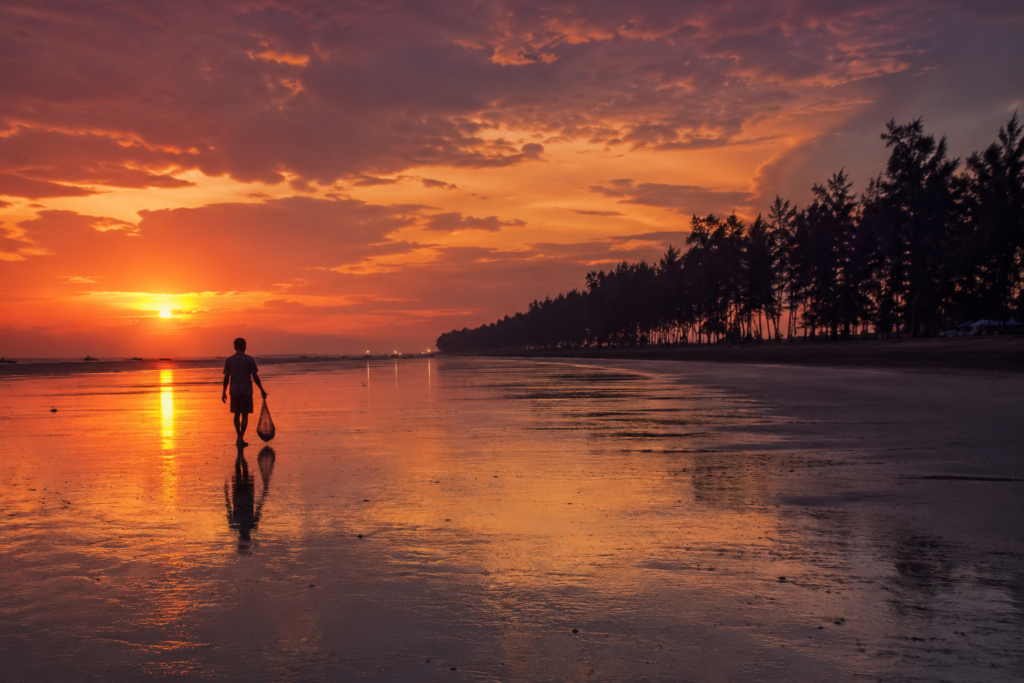
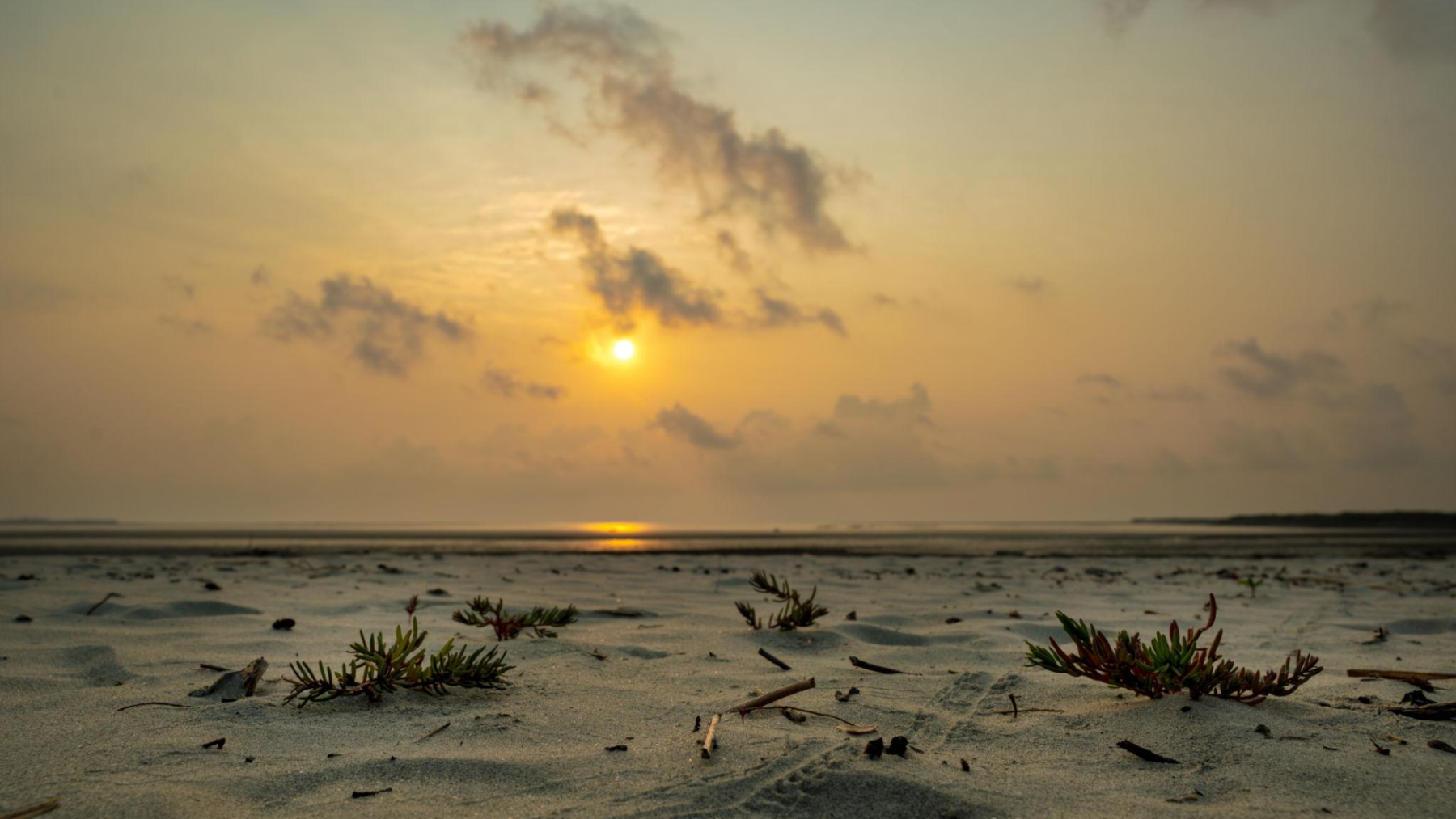
The sun has disappeared beyond the Bay of Bengal.
Only a ribbon of orange remains where sea and sky briefly touched before surrendering to evening.
The tide has begun its quiet return.
Footprints left across the afternoon beach slowly disappear beneath advancing water, just as they have for countless generations before.
Behind you, the casuarina trees continue whispering in the coastal wind.
Ahead, the sea stretches into darkness. Fishing boats become distant lights drifting across the horizon. The beach grows silent once more.
Leaving Bakkhali feels different from leaving most places.
You do not simply drive away from a beach. You leave a landscape suspended between river and ocean, between the mainland and the Sundarbans, between permanence and constant change.
Tomorrow, the tide will return.
- The fishermen will launch their boats before dawn.
- The birds will once again follow the retreating sea.
- The wind will carry salt through the trees exactly as it has for generations.
And Bakkhali will continue its quiet conversation with the Bay of Bengal—waiting patiently for the next explorer willing to slow down and listen.
Plan your private Sundarban expedition
A private journey shaped around you — your group, your pace, your interests. Book a free consultation.