 Encyclopedia
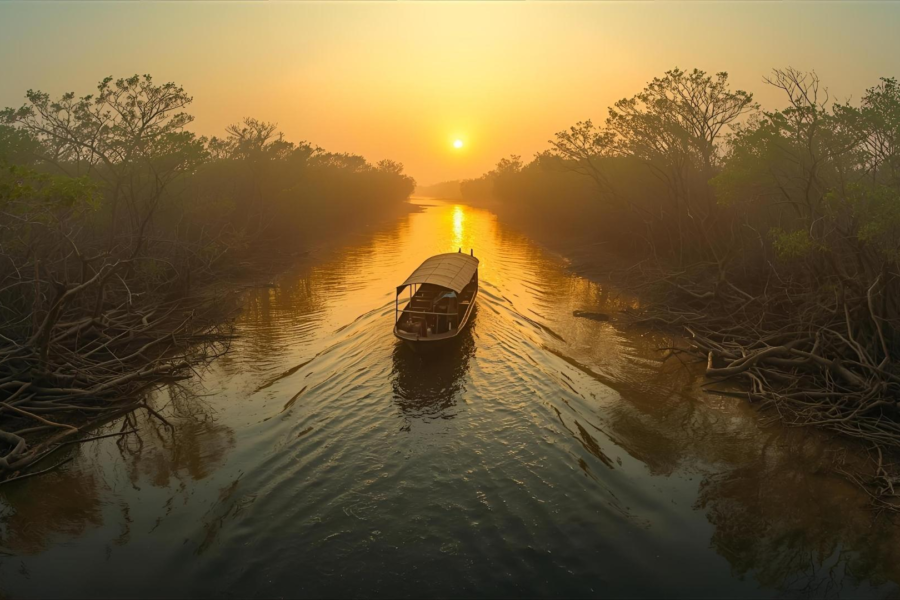
As the tide begins to rise, the narrow creeks surrounding Bonnie Camp slowly disappear beneath opaque brown estuarine water. Mangrove roots that stood exposed only minutes earlier become submerged again, while fiddler crabs retreat into their burrows and the calls of kingfishers echo across an otherwise quiet forest.
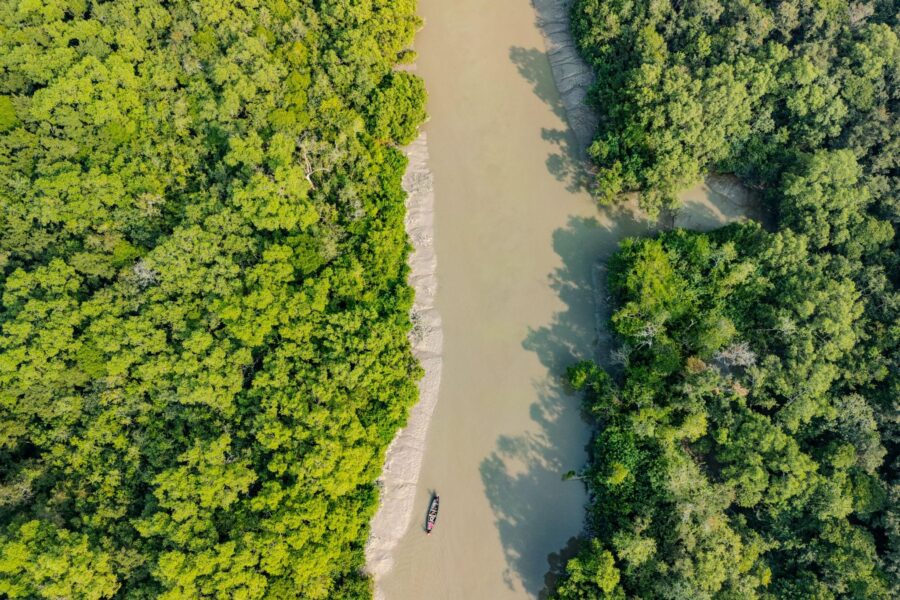
From the top of the tallest watchtower in the Indian Sundarbans, the landscape appears almost limitless—a mosaic of tidal rivers, emerald mangroves, winding creeks, and distant horizons stretching toward the Bay of Bengal.
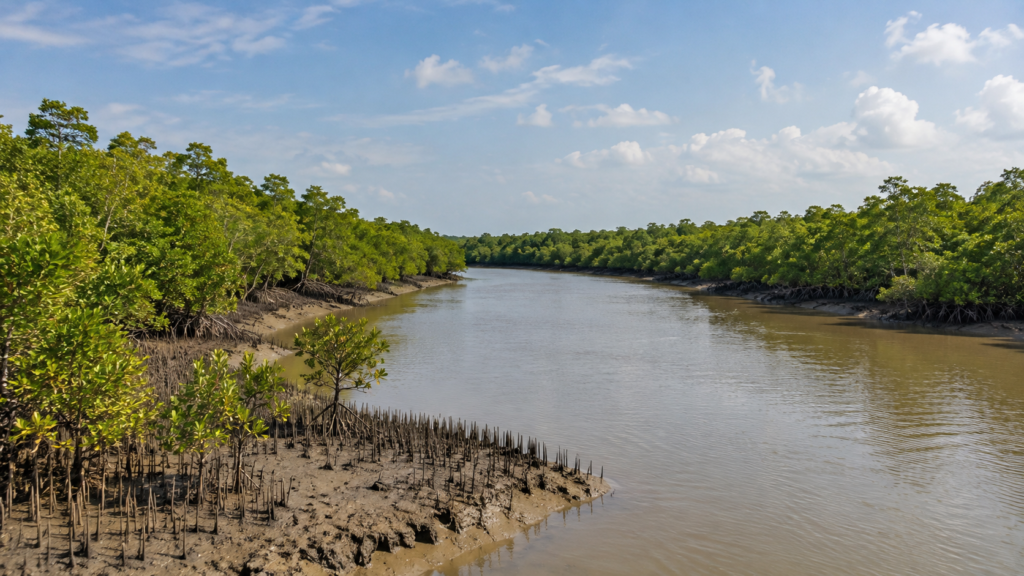
Bonnie Camp is one of the most remote forest camps in the Indian Sundarbans and occupies a distinctive place within the southern reaches of the protected mangrove ecosystem.
Unlike the better-known watchtowers of Sajnekhali or Sudhanyakhali, Bonnie Camp represents a deeper immersion into the wilderness, where the influence of tides, saltwater, and coastal processes becomes increasingly evident. Its isolation, ecological richness, and strategic location make it one of the most significant wildlife observation points within the Sundarbans landscape.
Originally established as Sundarikati Eco Conservation Camp, the site was officially renamed Bonnie Camp on 15 July 2003 by celebrated Bengali novelist Buddhadeb Guha, whose writings often reflected a profound appreciation for forests and wilderness.
Today, the name Bonnie Camp has become synonymous with one of the finest examples of ecotourism infrastructure operating within a highly protected mangrove ecosystem.
The camp is best known for its approximately 50-foot (15-metre) watchtower, widely regarded as the tallest watchtower in the Indian Sundarbans. From this elevated vantage point, visitors can observe an intricate network of mangrove forests, tidal channels, freshwater ponds, and wildlife habitats that collectively illustrate why the Sundarbans is recognized globally as one of Earth’s most remarkable coastal ecosystems.
Beyond tourism, Bonnie Camp also plays an important conservation role. Adjacent to the camp lies the Bonnie Camp Medicinal Plant Conservation Area (MPCA), established by the West Bengal Forest Department to conserve native medicinal flora and support long-term biodiversity conservation within the delta. This protected botanical landscape adds another dimension to Bonnie Camp’s significance, making it not merely a wildlife destination but also a centre for ecological preservation and environmental education.
Understanding Bonnie Camp therefore requires looking beyond its famous watchtower. It is a meeting point of geography, tides, mangrove ecology, wildlife conservation, botanical diversity, and the ongoing effort to protect one of the world’s most fragile coastal landscapes.
Bonnie Camp At a Glance
Official Name: Bonnie Camp
Former Name: Sundarikati Eco Conservation Camp
Protected Area: Indian Sundarbans
State: West Bengal, India
Administrative Division: South 24 Parganas Forest Division
Ecosystem: Tidal Mangrove Forest
Nearest Major Gateway: Jharkhali / Kaikhali (boat access)
Access: Accessibility: Accessible only by licensed boats through designated waterways, subject to Forest Department regulations and prior permission.
Famous For: Tallest watchtower in the Indian Sundarbans
Watchtower Height: Approximately 50 ft (15 m)
Nearby Coastal Influence: Close to the Bay of Bengal
Conservation Importance: Medicinal Plant Conservation Area (MPCA), wildlife monitoring, and mangrove conservation
Best Season: October–March for comfortable weather and generally calmer navigation conditions
Overnight Stay: Visitor accommodation policies are periodically revised; current permissions should always be confirmed with the Forest Department before planning a visit.
Geographic Setting
Bonnie Camp occupies one of the southernmost accessible forest sectors within the Indian Sundarbans. Unlike many destinations closer to the mainland, Bonnie Camp lies deep inside a landscape where human settlements disappear and tidal wilderness dominates the horizon.
Its location places it relatively close to the northern reaches of the Bay of Bengal, where coastal processes strongly influence the surrounding environment. Every high tide carries saline water inland through an extensive network of distributaries, creeks, and narrow channels, while low tide exposes vast mudflats that provide feeding grounds for countless fish, crustaceans, shorebirds, and other estuarine wildlife.
The camp forms part of the broader Ganges–Brahmaputra–Meghna Delta, the largest active delta on Earth. Over thousands of years, sediments transported from the Himalaya have been deposited across this region, gradually creating an ever-changing landscape of islands, mudbanks, tidal rivers, and mangrove forests. Unlike stable inland forests, the terrain surrounding Bonnie Camp is continuously reshaped by tidal currents, erosion, sediment deposition, cyclones, and seasonal flooding.
Because the surrounding forest remains largely undisturbed by permanent human habitation, Bonnie Camp offers an unusually intact example of mature mangrove habitat. The absence of roads, bridges, or conventional transport infrastructure means that every journey into the area depends entirely upon tidal navigation. Boat captains must plan departures according to river depth, tidal timing, and weather conditions, highlighting how natural rhythms continue to govern movement through this landscape.
How to Reach Bonnie Camp
Bonnie Camp lies deep within the forested Sundarbans and cannot be reached directly by road or train. The final journey must be made by an authorised boat or launch through the tidal waterways of the delta. Entry permission is required before visiting the camp.
From Kolkata
Visitors travelling from Kolkata first need to reach one of the riverine gateways to the Sundarbans. Jharkhali is particularly relevant for Bonnie Camp because the Jharkhali Range Office is one of the locations from which the required entry permission can be obtained. Kaikhali Forest Office is another permit point associated with access to Bonnie Camp.
Bonnie Camp-specific visitor information identifies Jharkhali, Kaikhali, Godhkhali, Sonakhali and Canning among the possible starting points for boat journeys. However, visitors should not assume that regular public boats operate from these jetties directly to Bonnie Camp. Boat or launch arrangements generally need to be made in advance.
By Train
For travellers using public transport from Kolkata, Canning is the principal rail gateway to the Sundarbans. Local trains operate between Sealdah South and Canning. West Bengal Tourism states that onward road transport is available from Canning towards Godhkhali, from where river journeys into the Sundarbans can begin.
For Bonnie Camp specifically, however, reaching Canning or Godhkhali is only the first stage of the journey. Visitors must still have the appropriate forest permission, guide arrangements where required, and a prearranged boat capable of following the authorised route to Bonnie Camp.
By Road
Travellers can also drive from Kolkata towards established Sundarbans gateways. West Bengal Tourism identifies road connections from Kolkata towards Canning, Sonakhali, Namkhana, Raidighi and Najat, all of which provide access to different parts of the riverine Sundarbans.
For a Bonnie Camp itinerary, Jharkhali or Kaikhali may be more practical operational points when the itinerary and permits are being arranged through the relevant forest offices, but the precise embarkation point should be confirmed when the trip is planned.
The Final Journey Is by Boat
Regardless of how a visitor reaches the edge of the Sundarbans, Bonnie Camp itself is accessible only by water. There is no road connection through the protected mangrove forest to the camp.
The boat journey passes through tidal rivers and channels before reaching the forest camp. Travel time should not be presented as a fixed figure because it can vary with the embarkation point, chosen route, tidal conditions, weather, vessel type, forest regulations, and the day’s itinerary.
This is an important distinction for planning a visit: Bonnie Camp is not normally a place where a traveller can simply arrive at a jetty and board a scheduled public ferry. Bonnie Camp-specific visitor information states that regular organised boat-rental services are not available from the entry-point jetties in the manner of conventional public transport; boats generally need to be chartered or arranged in advance, or the visit incorporated into an organised itinerary.
For Visitors Arriving by Air
The nearest major airport is Netaji Subhas Chandra Bose International Airport. From the airport, travellers must continue by road or combine road and rail to one of the Sundarbans’ river gateways before beginning the boat journey. West Bengal Tourism similarly describes access to the Sundarbans as an initial journey from Kolkata followed by travel by water.
Practical Route Summary
Kolkata → Sundarbans river gateway → authorised boat journey → Bonnie Camp
Documentary Observation
Standing on the watchtower shortly after sunrise, the first impression is not of dramatic wildlife but of immense stillness.
Brown tidal channels weave through dense mangrove canopies, interrupted only by the occasional splash of a surfacing fish or the distant flight of an egret. The forest seems almost motionless until closer observation reveals subtle ecological activity everywhere—mudskippers moving across exposed flats, fiddler crabs signalling with oversized claws, and tidal water quietly advancing through countless hidden creeks.
Geographic Characteristics
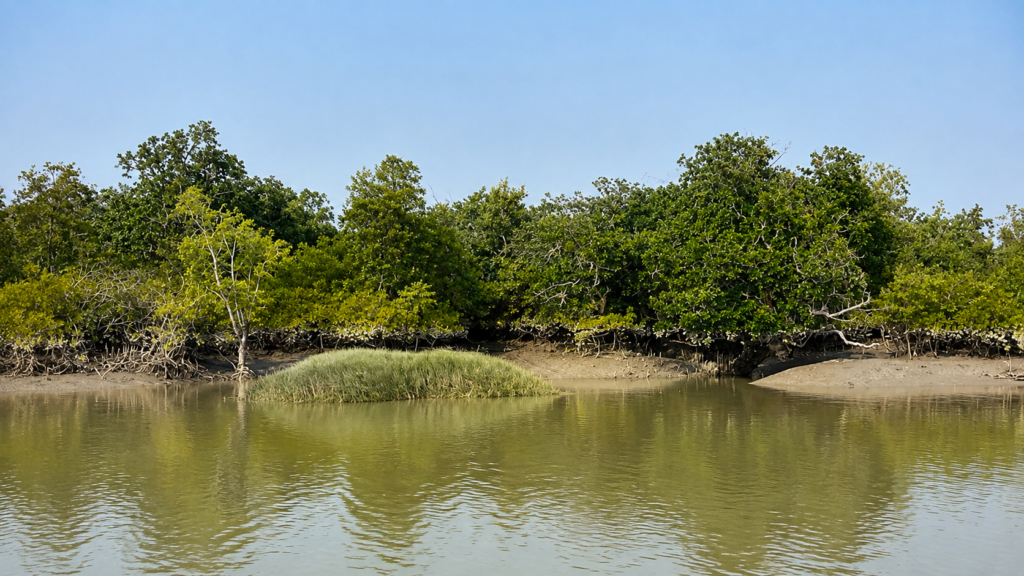
Several physical characteristics distinguish Bonnie Camp from many other destinations within the Indian Sundarbans:
- Strong influence of coastal tides from the Bay of Bengal
- Dense intertidal mangrove forest
- Extensive creek networks suitable only for boat navigation
- Saline estuarine environment
- Active sediment deposition and erosion
- Minimal permanent human infrastructure
- High ecological connectivity with surrounding protected forests
Why Geography Matters
Bonnie Camp’s geographical position is central to its ecological importance.
Being situated near the southern reaches of the Indian Sundarbans means the surrounding mangroves function as a protective coastal barrier against cyclones, storm surges, and coastal erosion. The forests also act as nurseries for numerous marine organisms whose life cycles depend upon sheltered estuarine habitats.
Its position along interconnected tidal waterways allows wildlife—including the Royal Bengal Tiger, Fishing Cat, estuarine crocodiles, spotted deer, wild boar, reptiles, and countless bird species—to move naturally across extensive areas of protected forest without the fragmentation commonly seen in terrestrial reserves.
This uninterrupted connectivity is one of the defining ecological strengths of the Sundarbans and helps explain why Bonnie Camp remains one of the most scientifically valuable landscapes within the reserve.
Why Bonnie Camp Is Different
Many visitors associate the Sundarbans primarily with tiger sightings. Bonnie Camp tells a broader ecological story.
Here, geography itself becomes the dominant character. Every river bend, every incoming tide, every newly deposited mudbank, and every mangrove root reflects an ecosystem that is constantly changing while remaining remarkably resilient.
Rather than offering a single attraction, Bonnie Camp provides an opportunity to observe how climate, tides, sediment, vegetation, wildlife, and conservation interact within one of the world’s last great mangrove wildernesses.
Landscape Character
As daylight spreads across Bonnie Camp, the forest gradually reveals a landscape that appears deceptively uniform from a distance. From the elevated watchtower, an uninterrupted green canopy stretches to the horizon, broken only by winding rivers and narrow tidal creeks. Yet beneath this seemingly continuous forest lies one of the most dynamic environments in the Indian Sundarbans—a landscape constantly reshaped by tides, salinity, sediment movement, and seasonal weather.
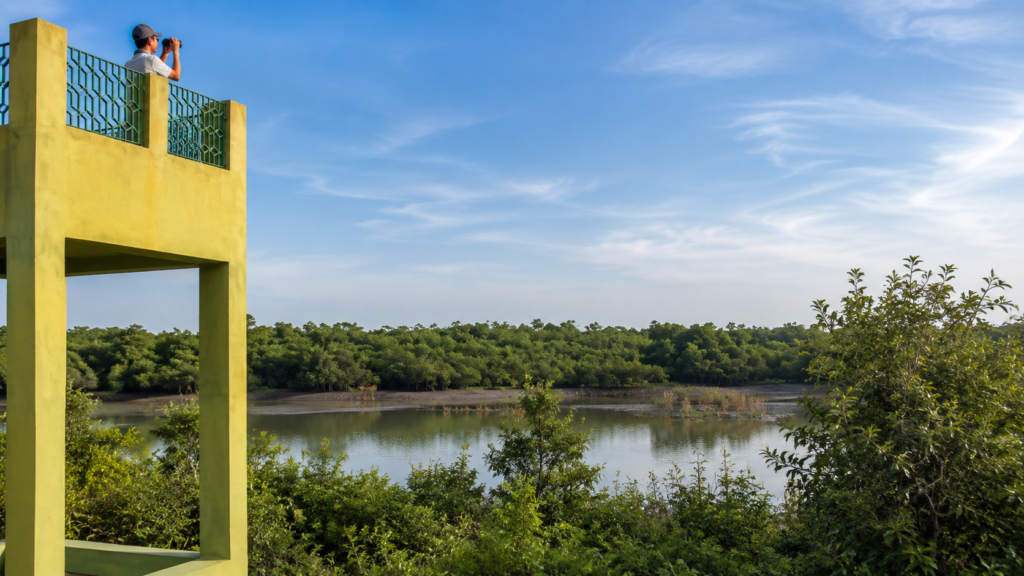
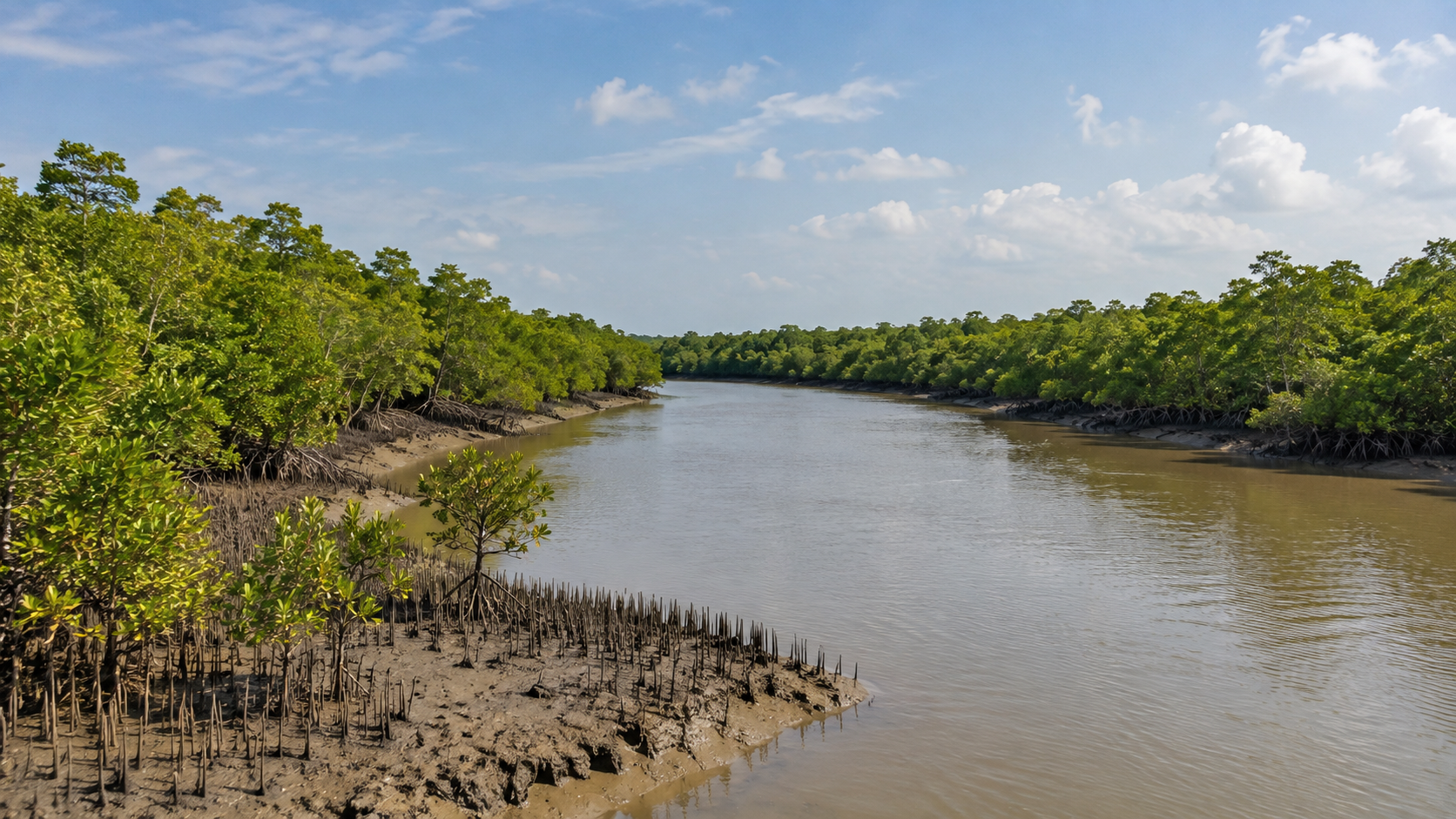
Unlike inland forests, Bonnie Camp exists within an intertidal ecosystem. The ground itself is never entirely stable. Twice each day, incoming tides inundate large portions of the forest floor before retreating several hours later, exposing mudflats, pneumatophores, and creek banks. This continual alternation between land and water defines every ecological process in the surrounding mangrove habitat. The landscape observed today is therefore only a temporary expression of an environment that is perpetually changing.
The terrain around Bonnie Camp is remarkably flat, with elevations generally only a few metres above mean sea level. Even minor variations in height influence vegetation patterns, because slightly elevated ground experiences shorter periods of tidal flooding than lower-lying areas. Over time, these subtle differences determine where particular mangrove species establish themselves, creating a complex ecological mosaic rather than a uniform forest.
The Dynamic Nature of the Delta
Bonnie Camp occupies part of the Ganges–Brahmaputra–Meghna Delta, where immense volumes of Himalayan sediment continue to shape the coastline.
Unlike mountainous landscapes that change over geological timescales, the Sundarbans evolves continuously through natural coastal processes. River channels gradually migrate, creek mouths expand or contract, mudbanks emerge and disappear, while islands experience both erosion and new sediment deposition. Cyclones, storm surges, and exceptionally high tides can accelerate these transformations dramatically.
The forest therefore represents a living delta rather than a fixed landscape. Maps produced decades apart frequently reveal noticeable shifts in river courses, shoreline configuration, and the distribution of intertidal mudflats. This dynamic character is one of the defining features of the Sundarbans and an essential consideration in conservation planning.
Rivers and Water Systems
No feature shapes Bonnie Camp more profoundly than water.
The camp is surrounded by an intricate network of major tidal rivers, distributaries, narrow creeks, and seasonal channels that connect the interior mangrove forest with the Bay of Bengal. These waterways function simultaneously as transport routes, wildlife corridors, nutrient delivery systems, and ecological boundaries.
Unlike freshwater rivers farther upstream, the channels around Bonnie Camp are predominantly estuarine. Salinity varies throughout the year depending upon rainfall, freshwater discharge from the Ganges system, tidal cycles, and proximity to the sea. During the monsoon, freshwater inflow temporarily lowers salinity in many areas, whereas the dry season often allows saline water to penetrate much farther inland.
This seasonal fluctuation strongly influences mangrove distribution, fish breeding, plankton productivity, and the composition of aquatic communities throughout the region.
The Role of Tidal Creeks
Although major rivers dominate navigation maps, the smaller tidal creeks surrounding Bonnie Camp are equally important ecologically.
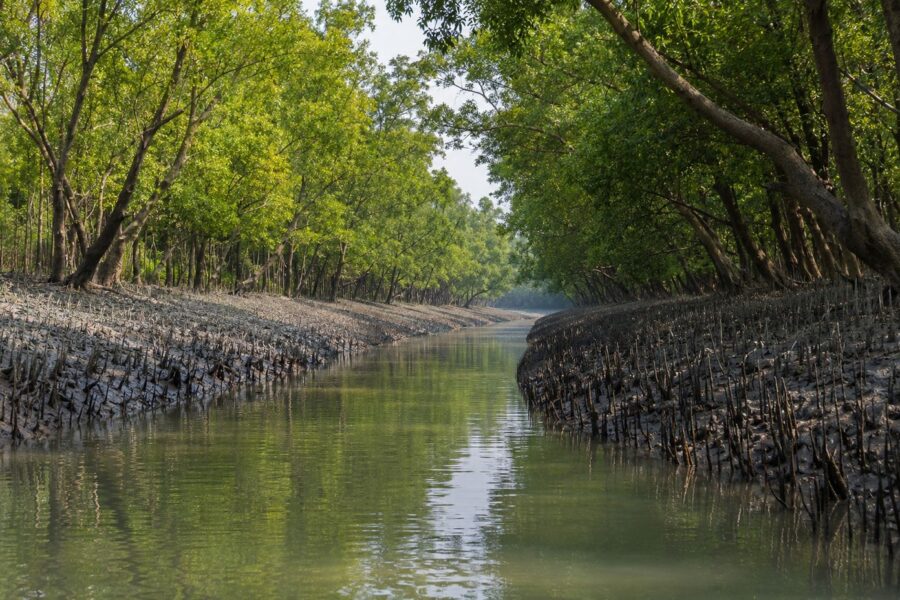
These narrow waterways penetrate deep into the mangrove forest, allowing tidal water to circulate through otherwise inaccessible habitats. During high tide, many creeks become navigable by small boats. At low tide, however, numerous channels shrink dramatically or disappear entirely beneath exposed mud.
For wildlife, these creeks serve multiple purposes:
- Safe movement corridors for estuarine fish
- Nursery habitats for juvenile marine species
- Hunting grounds for Fishing Cats and crocodiles
- Feeding areas for kingfishers, herons, and egrets
- Access routes for Royal Bengal Tigers moving between islands
Because tidal creeks connect virtually every part of the mangrove ecosystem, they function as the circulatory system of the Sundarbans.
Freshwater Ponds
One distinctive feature associated with Bonnie Camp is the presence of managed freshwater ponds near the watchtower.
Although surrounded by saline tidal water, these freshwater sources are maintained primarily for wildlife. Deer, wild boar, numerous bird species, and occasionally even Royal Bengal Tigers may visit these ponds, particularly during the dry season when naturally available freshwater becomes scarce.
Importantly, these ponds should not be interpreted as artificial wildlife attractions. Rather, they represent carefully managed conservation infrastructure designed to support animal populations in an environment where freshwater availability fluctuates seasonally.
Tidal Dynamics
Understanding Bonnie Camp requires understanding tides.
The Sundarbans experiences semi-diurnal tides, meaning that two high tides and two low tides typically occur each lunar day. These tidal oscillations are not merely background processes—they determine virtually every aspect of ecological life within the forest.
Incoming tides transport:
- Marine nutrients
- Fine sediment
- Organic matter
- Fish larvae
- Crustacean larvae
- Dissolved minerals
As tides recede, they expose feeding grounds used by birds, crabs, molluscs, reptiles, and mammals.
Many species have evolved behaviours synchronized precisely with these tidal cycles. Mudskippers become highly active on exposed mudflats during low tide, while numerous fish species enter flooded forests only when tidal water reaches sufficient depth. Mangrove roots themselves are physiologically adapted to tolerate alternating periods of inundation and exposure.
Rather than viewing tides simply as changing water levels, ecologists regard them as the primary ecological engine driving productivity throughout the Sundarbans.
The Mangrove Ecosystem
Bonnie Camp lies within one of the world’s largest contiguous mangrove forests and provides an outstanding example of a mature tidal mangrove ecosystem.
Mangroves are not a single species but a diverse community of salt-tolerant trees and shrubs specially adapted to survive where terrestrial forests cannot. Unlike ordinary woodland, mangroves thrive under conditions that combine:
- Saline water
- Oxygen-poor soils
- Regular tidal flooding
- Unstable sediment
- High temperatures
- Intense sunlight
The vegetation surrounding Bonnie Camp includes multiple mangrove species occupying distinct ecological niches according to salinity, elevation, tidal duration, and soil characteristics.
Prominent species found within the broader southern Sundarbans include:
- Sundari (Heritiera fomes)
- Gewa (Excoecaria agallocha)
- Goran (Ceriops decandra)
- Keora (Sonneratia apetala)
- Avicennia species
- Dhundul (Xylocarpus granatum)
- Passur (Xylocarpus mekongensis)
Each contributes differently to shoreline stabilization, sediment trapping, nutrient cycling, and habitat formation.
Mangrove Adaptations
The trees surrounding Bonnie Camp survive in conditions that would be lethal for most terrestrial plants.
Their remarkable adaptations include:
Pneumatophores
Many mangrove species produce vertical aerial roots known as pneumatophores. Because tidal mud contains very little oxygen, these specialized roots protrude above the surface, allowing trees to absorb atmospheric oxygen during low tide.
Salt Regulation
Different mangrove species employ different strategies for coping with salt. Some exclude salt at the root level, others excrete excess salt through specialized leaf glands, while certain species store salt in older leaves before shedding them.
Prop and Stilt Roots
Species such as Rhizophora develop extensive prop-root systems that stabilize trees growing in soft tidal sediments while helping trap additional sediment transported by tidal currents.
Vivipary
Unlike most trees, many mangroves produce seeds that begin germinating while still attached to the parent plant. These elongated propagules can float on tidal water until suitable sediment allows them to establish new seedlings.
Together, these adaptations explain how mangrove forests not only survive but flourish in one of the planet’s most challenging coastal environments.
Ecological Processes at Bonnie Camp
Bonnie Camp illustrates how numerous ecological processes operate simultaneously within a functioning mangrove ecosystem.
The forest:
- Stabilizes coastlines against erosion
- Reduces wave energy during storms
- Stores significant quantities of carbon
- Supports estuarine fisheries
- Recycles nutrients
- Filters sediments
- Provides habitat for thousands of species
- Maintains food-web connectivity between terrestrial and marine ecosystems
Every incoming tide renews these processes, carrying nutrients into the forest while exporting organic material that supports fisheries far beyond the Sundarbans itself.
Consequently, Bonnie Camp represents far more than a protected forest. It forms part of a globally significant coastal ecosystem whose ecological services extend well beyond its geographical boundaries.
Wildlife of Bonnie Camp
As dawn breaks over Bonnie Camp, the forest awakens gradually rather than dramatically. The first sounds are usually those of birds—drongos, kingfishers, herons, and distant raptors—long before mammals emerge from the mangroves. With the changing tide comes movement along creek edges, where mudskippers skip across exposed flats and fiddler crabs resume their territorial displays. Hidden within this seemingly tranquil landscape is one of India’s richest wildlife communities.
Bonnie Camp forms part of the Sundarban Tiger Reserve, Sundarban National Park, and the larger UNESCO World Heritage landscape, protecting an exceptional concentration of terrestrial, freshwater, estuarine, and marine biodiversity. Its relatively undisturbed forests support species adapted to an environment where tides, salinity, and seasonal flooding influence every aspect of life.
Mammals
Royal Bengal Tiger (Panthera tigris tigris)
The Royal Bengal Tiger remains the most iconic resident of Bonnie Camp. Unlike tiger populations in central India, Sundarbans tigers have evolved within an estuarine mangrove environment where swimming is a routine part of daily life.
Rather than relying solely on forest trails, these tigers frequently cross tidal rivers, navigate muddy creek banks, and move between islands in search of prey. Their territories are influenced not only by prey availability but also by tidal channels, salinity gradients, and seasonal flooding.
Although tiger sightings are uncommon—as expected in a healthy wild ecosystem—the possibility of their presence is constant. Tracks on muddy banks, claw marks on trees, alarm calls from spotted deer, or fresh pugmarks near freshwater ponds often provide stronger evidence than direct observation.
Spotted Deer (Axis axis)
Spotted Deer are among the most frequently observed mammals around Bonnie Camp.
Large herds typically forage along forest edges, freshwater ponds, and recently exposed mudflats where tender vegetation becomes accessible after the tide retreats. Their acute hearing and constant vigilance make them an essential component of the Sundarbans food web.
Besides serving as one of the tiger’s principal prey species, spotted deer also function as an early warning system. Loud, repetitive alarm calls often indicate the movement of predators through nearby vegetation.
Wild Boar (Sus scrofa)
See it for yourself
A private journey shaped around you — your group, your pace, your interests. Book a free consultation.
Wild Boar occupy diverse habitats throughout the mangrove forest.
Powerful snouts enable them to root through mud in search of crabs, molluscs, roots, fallen fruit, and other food sources. Their omnivorous diet allows them to exploit changing seasonal resources throughout the year.
They also represent another important prey species for the Royal Bengal Tiger.
Fishing Cat (Prionailurus viverrinus)
Although rarely observed, the Fishing Cat is among the Sundarbans’ most specialized predators.
Its partially webbed feet, dense waterproof fur, and exceptional swimming ability allow it to hunt fish, crustaceans, amphibians, and aquatic birds along tidal creeks and shallow pools.
Because Fishing Cats are primarily nocturnal and secretive, their presence is usually confirmed through camera traps or spoor rather than direct sightings.
Small Mammals
Other mammals recorded from the broader Sundarbans landscape include:
- Small Indian Civet
- Common Palm Civet
- Smooth-coated Otter
- Rhesus Macaque
- Jungle Cat
- Indian Grey Mongoose
Many of these species play important ecological roles as seed dispersers, predators of rodents and reptiles, or scavengers within the mangrove ecosystem.
Birdlife
Bonnie Camp ranks among the finest birdwatching locations in the southern Indian Sundarbans.
The diversity of habitats—including mangroves, mudflats, freshwater ponds, tidal rivers, and open estuarine waters—supports both resident and migratory bird species throughout the year.
The composition of birdlife changes seasonally, particularly during the northern winter when migratory species arrive from Central Asia and Siberia.
Kingfishers
Few places in India offer opportunities to observe so many kingfisher species within a single protected landscape.
Species regularly recorded across the Sundarbans include:
- Brown-winged Kingfisher (Pelargopsis amauroptera)
- Black-capped Kingfisher (Halcyon pileata)
- White-throated Kingfisher (Halcyon smyrnensis)
- Common Kingfisher (Alcedo atthis)
- Pied Kingfisher (Ceryle rudis)
- Collared Kingfisher (Todiramphus chloris)
- Stork-billed Kingfisher (Pelargopsis capensis)
The globally significant Brown-winged Kingfisher deserves particular attention because the Sundarbans supports one of its most important remaining populations.
Raptors
Open river channels surrounding Bonnie Camp provide ideal hunting habitat for birds of prey.
Frequently observed species include:
- White-bellied Sea Eagle
- Brahminy Kite
- Crested Serpent Eagle
- Osprey (winter visitor)
These raptors occupy the highest trophic levels among avian predators and indicate healthy aquatic ecosystems capable of sustaining abundant fish populations.
Wading Birds
During low tide, exposed mudflats become productive feeding grounds for numerous wading birds.
Commonly observed species include:
- Great Egret
- Intermediate Egret
- Little Egret
- Grey Heron
- Purple Heron
- Indian Pond Heron
- Black-headed Ibis
- Eurasian Spoonbill (seasonal)
- Various sandpipers and plovers
Many of these species synchronize feeding activity with tidal cycles rather than daylight alone.
Reptiles
The reptile fauna surrounding Bonnie Camp reflects the unique transition between freshwater and marine environments.
Saltwater Crocodile (Crocodylus porosus)
The Saltwater Crocodile is the largest living reptile and an apex predator of the Sundarbans.
Individuals are occasionally observed basking along muddy banks or floating almost motionless near creek mouths with only their eyes and nostrils visible above the water.
As ambush predators, crocodiles exploit tidal channels where fish, birds, mammals, and reptiles regularly approach the water.
Water Monitor (Varanus salvator)
Among the most conspicuous reptiles around Bonnie Camp is the Water Monitor.
Excellent swimmers and climbers, these large lizards feed opportunistically on fish, crabs, birds, eggs, carrion, and small mammals.
They frequently patrol exposed mudflats during low tide in search of stranded prey.
Snakes
The Sundarbans supports numerous snake species, including:
- King Cobra
- Monocled Cobra
- Banded Krait
- Checkered Keelback
- Dog-faced Water Snake
- Several species of pythons and non-venomous colubrids
Many remain difficult to observe because of dense vegetation and largely nocturnal habits.
Aquatic Life
Although much of Bonnie Camp’s biodiversity remains hidden beneath tidal water, aquatic communities are fundamental to ecosystem health.
The surrounding rivers support:
- Mullets
- Catfish
- Mudskippers
- Prawns
- Mud crabs
- Horseshoe crabs (localized records within the broader estuarine region)
- Molluscs
- Numerous plankton species
These organisms sustain higher trophic levels, including birds, Fishing Cats, crocodiles, otters, dolphins elsewhere in the estuary, and ultimately the entire mangrove food web.
Medicinal Plant Conservation Area (MPCA)
One of Bonnie Camp’s most distinctive conservation features is the Medicinal Plant Conservation Area (MPCA) established by the West Bengal Forest Department.
Unlike conventional botanical gardens, the MPCA functions as an in-situ conservation initiative where medicinal mangrove and associated plant species are protected within their natural ecological setting.
Its objectives include:
- Conserving native medicinal flora
- Protecting genetic diversity
- Supporting scientific research
- Promoting environmental education
- Demonstrating the ecological importance of mangrove vegetation
- Preserving traditional botanical knowledge where scientifically documented
The MPCA illustrates that conservation within the Sundarbans extends beyond charismatic wildlife to include plant communities that underpin the entire ecosystem.
Mangrove Flora
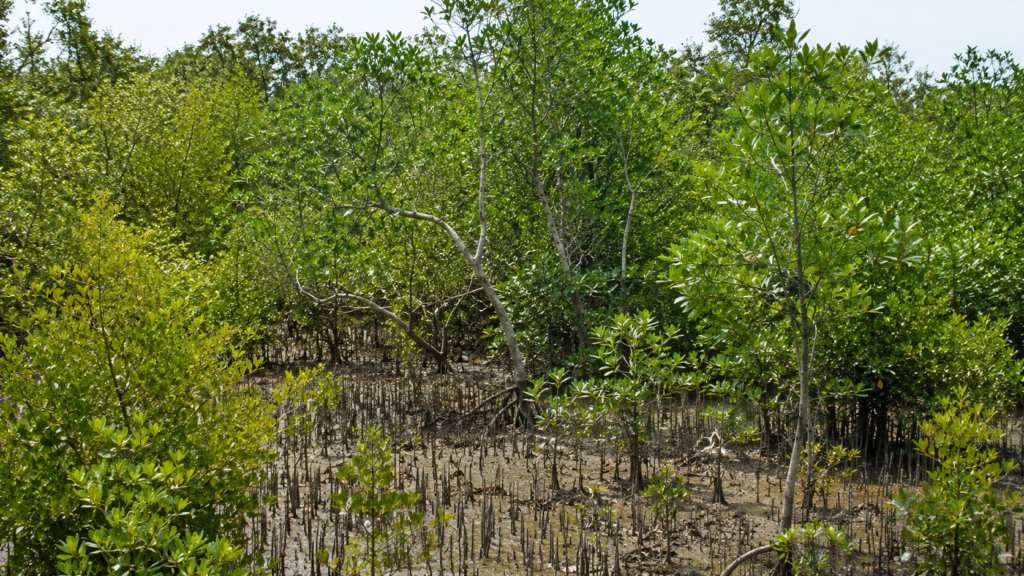
Bonnie Camp supports a representative assemblage of southern Sundarbans mangrove vegetation.
Characteristic species include:
- Sundari (Heritiera fomes)
- Gewa (Excoecaria agallocha)
- Goran (Ceriops decandra)
- Keora (Sonneratia apetala)
- Avicennia species
- Dhundul (Xylocarpus granatum)
- Hental (Phoenix paludosa)
- Passur (Xylocarpus mekongensis)
Together, these plants stabilize sediment, reduce coastal erosion, store large quantities of carbon, provide breeding habitat for aquatic organisms, and create shelter for terrestrial wildlife.
Ecological Importance
Bonnie Camp is far more than a wildlife observation point.
Ecologically, it contributes to:
- Conservation of one of the world’s largest mangrove forests.
- Protection of habitat for the Royal Bengal Tiger and numerous threatened species.
- Carbon sequestration through mature mangrove vegetation.
- Stabilization of vulnerable coastlines against erosion and storm surges.
- Nursery habitat for commercially important fish and crustaceans.
- Maintenance of nutrient cycling between terrestrial and marine ecosystems.
- Long-term scientific monitoring of mangrove biodiversity.
- Environmental education through interpretation facilities and guided observation.
Its significance therefore extends well beyond tourism. Bonnie Camp represents a living laboratory where scientists, forest managers, and conservationists continue to study the functioning and resilience of one of Earth’s most complex coastal ecosystems.
History of Bonnie Camp
Every landscape in the Sundarbans has a story shaped not only by tides and mangroves but also by the people who have worked to understand and protect it. Bonnie Camp is no exception. Although it is now widely recognised as one of the premier wildlife observation points in the Indian Sundarbans, its origins lie in the West Bengal Forest Department’s efforts to strengthen conservation, ecological monitoring, and responsible nature interpretation within the protected forest.
The camp was originally established as Sundarikati Eco Conservation Camp, reflecting its location within the Sundarikati forest area. On 15 July 2003, the camp was officially renamed Bonnie Camp by the celebrated Bengali novelist and naturalist Buddhadeb Guha, whose literary works often celebrated India’s forests and wilderness. The new name quickly gained recognition among forest officials, researchers, wildlife photographers, and visitors, becoming synonymous with one of the most remote and ecologically significant forest camps in the Indian Sundarbans.
Unlike historical settlements within the inhabited islands of the Sundarbans, Bonnie Camp was never intended as a permanent village. It developed as a conservation outpost—a place that supports wildlife monitoring, forest protection, ecological research, and carefully managed visitor access. Its evolution reflects the changing philosophy of conservation in the Sundarbans: from protecting wildlife through exclusion alone to fostering greater public understanding through responsible interpretation and environmental education.
The Bonnie Camp Watchtower
The defining landmark of Bonnie Camp is its approximately 50-foot (15-metre) watchtower, recognised as the tallest watchtower in the Indian Sundarbans. Rising above the mangrove canopy, it provides an exceptionally broad perspective of the surrounding forest, tidal waterways, and distant estuarine landscape.
From the upper platform, the geometry of the delta becomes immediately apparent. Narrow creeks branch repeatedly into smaller channels before disappearing beneath dense mangrove vegetation, while larger tidal rivers define the boundaries of distant forest islands. Unlike viewpoints that overlook a single waterbody, Bonnie Camp offers a panoramic understanding of how the Sundarbans functions as an interconnected tidal ecosystem.
The watchtower also serves practical conservation purposes. Elevated observation points assist forest personnel in monitoring wildlife movement, assessing habitat conditions, detecting illegal activities, and supporting ecological surveys. For visitors, it offers one of the few opportunities to appreciate the immense scale of the mangrove forest from above, reinforcing why the Sundarbans is regarded as one of the world’s most remarkable coastal wildernesses.
Eco Conservation Camp
Bonnie Camp functions as more than a watchtower. It is an Eco Conservation Camp, designed to support both conservation management and visitor education.
Facilities have historically included:
- Forest Department accommodation (subject to prevailing regulations)
- Interpretation areas
- Wildlife observation points
- Freshwater ponds for wildlife
- Eco-museum and educational displays
- Nature interpretation infrastructure
- Guided forest experiences under Forest Department regulations
These facilities are intentionally modest. Their purpose is not luxury tourism but to provide opportunities for visitors to understand the ecological complexity of the Sundarbans while minimising disturbance to wildlife.
The camp demonstrates how carefully planned infrastructure can support conservation objectives by promoting awareness, facilitating research, and encouraging responsible nature-based tourism.
Conservation Significance
Bonnie Camp occupies an important position within the broader conservation framework of the Indian Sundarbans.
Its significance extends across several interconnected areas:
Habitat Protection
The surrounding mangrove forests provide habitat for numerous threatened and protected species, including the Royal Bengal Tiger, Fishing Cat, Saltwater Crocodile, and several globally significant bird species.
Biodiversity Monitoring
Forest personnel and researchers use the area for wildlife observations, habitat assessments, and ecological monitoring that contribute to long-term conservation planning.
Medicinal Plant Conservation
The adjoining Medicinal Plant Conservation Area (MPCA) protects native plant diversity while supporting research into the ecological and traditional significance of mangrove vegetation.
Environmental Education
Bonnie Camp enables visitors, students, researchers, and wildlife enthusiasts to observe a functioning mangrove ecosystem directly, fostering greater appreciation for one of India’s most important protected landscapes.
Climate Resilience
Healthy mangrove forests surrounding Bonnie Camp play a critical role in coastal protection, carbon storage, sediment stabilisation, and reducing the impacts of cyclones and storm surges—ecosystem services that have become increasingly important under changing climatic conditions.
Visitor Information
Access to Bonnie Camp is carefully regulated to protect both visitors and wildlife.
Forest Permissions
Entry into the protected forest requires valid permissions issued under the applicable regulations of the West Bengal Forest Department. Visitors should always travel with authorised operators who comply with current conservation guidelines.
Responsible Behaviour
Visitors should:
- Maintain silence while observing wildlife.
- Avoid feeding or approaching animals.
- Remain within designated visitor areas.
- Follow instructions issued by forest staff.
- Never dispose of litter within the protected area.
- Respect temporary restrictions implemented for conservation or safety reasons.
Because regulations may change over time, travellers should verify current requirements with the Forest Department before planning a visit.
Seasonal Character
Bonnie Camp changes noticeably with the seasons, although the forest remains ecologically active throughout the year.
Winter (November–February)
Winter offers relatively cool temperatures, improved visibility, and generally calmer conditions for wildlife observation. Migratory birds add to the area’s avian diversity, making this the preferred period for birdwatching and photography.
Pre-Monsoon (March–May)
Temperatures and humidity rise significantly. Wildlife activity often concentrates around available freshwater sources, while tidal influences remain pronounced.
Monsoon (June–September)
Heavy rainfall transforms the landscape. Rivers swell, vegetation becomes particularly lush, and freshwater temporarily reduces salinity in many parts of the estuary. Boat navigation may become more challenging depending on weather conditions.
Post-Monsoon (October)
Fresh vegetation, improved water quality, and recovering habitats create favourable conditions for observing ecological renewal after the rainy season.
Conservation Challenges
Like the wider Sundarbans, Bonnie Camp faces a number of long-term conservation challenges.
These include:
- Sea-level rise associated with climate change.
- Increasing cyclone intensity.
- Coastal erosion.
- Changes in freshwater inflow.
- Salinity fluctuations.
- Habitat fragmentation in surrounding regions.
- Human-wildlife conflict beyond the protected forest.
- Marine pollution transported through river systems.
Addressing these challenges requires continued scientific research, adaptive management, habitat restoration where appropriate, and sustained collaboration between government agencies, researchers, local communities, and conservation organisations.
The Wild Orbit’s Interesting Facts About Bonnie Camp
- Bonnie Camp is home to the tallest watchtower in the Indian Sundarbans, offering one of the widest panoramic views of the mangrove landscape.
- The camp was formerly known as Sundarikati Eco Conservation Camp.
- It was renamed Bonnie Camp on 15 July 2003 by renowned Bengali author Buddhadeb Guha.
- The surrounding forest lies within one of the world’s largest contiguous mangrove ecosystems.
- Bonnie Camp includes a Medicinal Plant Conservation Area dedicated to protecting native mangrove flora.
- Freshwater ponds maintained near the camp support wildlife during periods when naturally available freshwater becomes limited.
- The surrounding waterways are influenced by semi-diurnal tides, which shape nearly every ecological process within the forest.
- Boat access depends on tidal timing, illustrating how natural processes continue to govern movement through the Sundarbans.
FAQs
Where is Bonnie Camp located?
Bonnie Camp is situated within the protected forests of the Indian Sundarbans in South 24 Parganas district, West Bengal.
Why is Bonnie Camp famous?
It is best known for having the tallest watchtower in the Indian Sundarbans and for its outstanding panoramic views of the mangrove forest.
Can visitors stay overnight?
Accommodation policies may change over time. Visitors should confirm the latest arrangements with authorised tour operators or the West Bengal Forest Department before planning an overnight stay.
Is Bonnie Camp inside a protected area?
Yes. It forms part of the protected Sundarbans landscape, where entry and activities are regulated under applicable conservation laws.
What wildlife can be seen?
Possible sightings include Spotted Deer, Wild Boar, numerous kingfishers, herons, Brahminy Kites, White-bellied Sea Eagles, Water Monitors, Saltwater Crocodiles, and, more rarely, the Royal Bengal Tiger.
Why is the Medicinal Plant Conservation Area important?
It conserves native medicinal plant species within their natural mangrove habitat, supporting biodiversity conservation, scientific research, and environmental education.
A Window into the Sundarbans Wilderness
Standing atop Bonnie Camp’s watchtower, it becomes clear that the Sundarbans is far more than a forest of mangroves or a landscape associated solely with tigers. It is a living delta where rivers reshape coastlines, tides govern daily life, and every organism—from microscopic plankton to the Royal Bengal Tiger—depends upon the delicate balance maintained by one of Earth’s most productive coastal ecosystems.
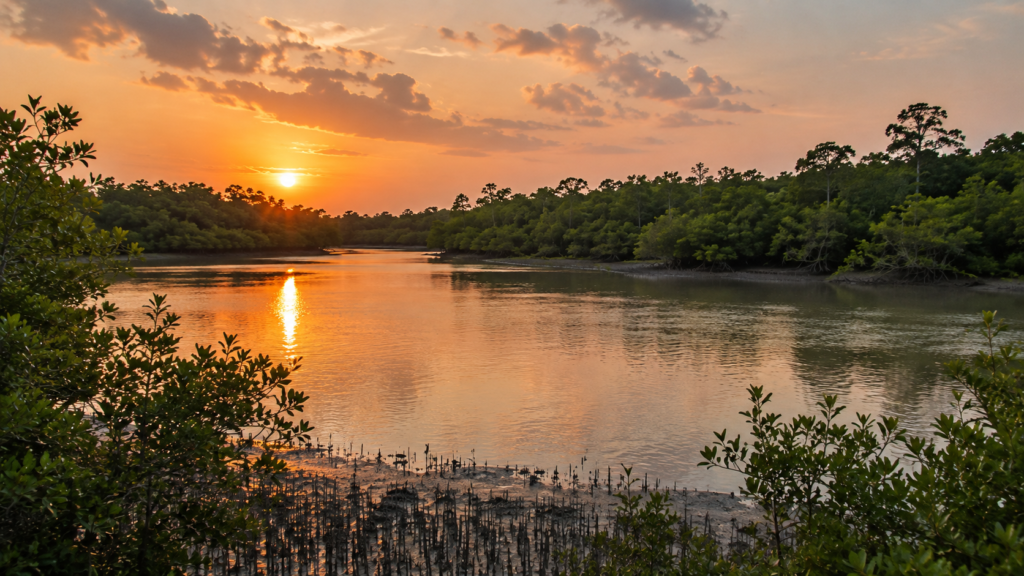
Bonnie Camp offers a rare opportunity to witness that balance. Its forests reveal how mangroves protect shorelines, how tidal creeks sustain biodiversity, and how carefully managed conservation can preserve both ecological integrity and opportunities for scientific understanding.
Perhaps the greatest value of Bonnie Camp lies not in the wildlife that visitors hope to see but in the perspective it provides. From its elevated watchtower, the immense interconnectedness of the Sundarbans becomes unmistakable. Rivers, forests, mudflats, wildlife, and tides merge into a single functioning landscape—one whose survival depends upon continued research, thoughtful conservation, and a shared commitment to protecting one of the world’s most extraordinary mangrove wildernesses.
So, Bonnie Camp reminds us that the true significance of the Sundarbans is not measured by individual sightings or memorable journeys, but by the enduring resilience of a tidal forest that continues to protect biodiversity, support coastal communities, and inspire generations of naturalists, researchers, and conservationists.
Plan your private Sundarban expedition
A private journey shaped around you — your group, your pace, your interests. Book a free consultation.