 Encyclopedia
As the tide begins to recede, a maze of narrow creeks slowly emerges from beneath the opaque brown waters of the Sundarbans. Pneumatophores—specialized breathing roots of mangrove trees—rise from the saturated mud like thousands of weathered wooden stakes. Mudskippers dart across newly exposed flats while fiddler crabs disappear into freshly opened burrows. The forest appears quiet, yet every change in water level reshapes the landscape. This constant rhythm of flooding and exposure defines Pirkhali, one of the most ecologically significant forest blocks within the Indian Sundarbans.
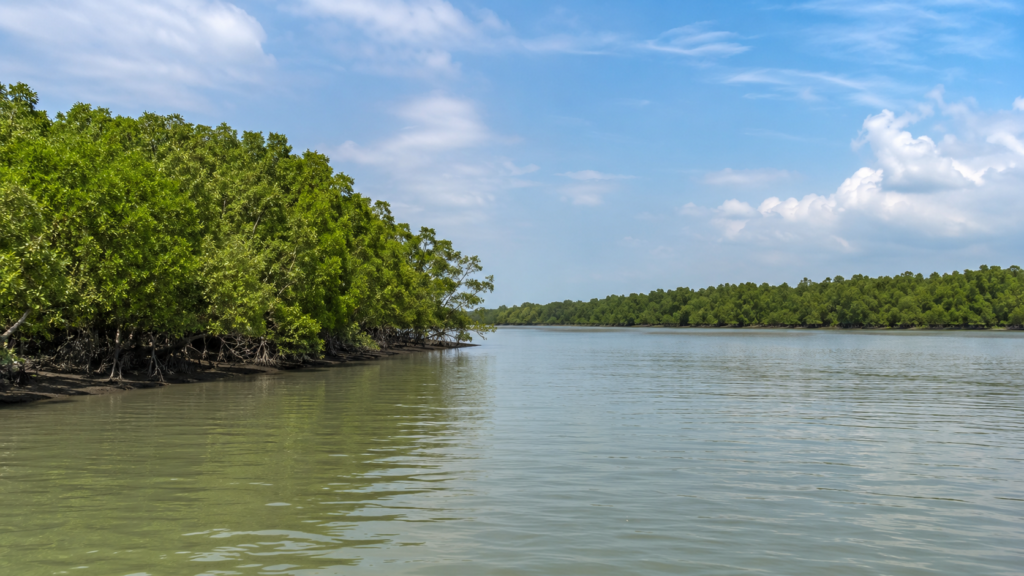
Rather than representing a single island or an isolated creek, Pirkhali is an extensive mangrove forest block within the western sector of the Sundarbans Tiger Reserve. Together with Panchamukhani, it forms the core of the Sajnekhali Wildlife Sanctuary, one of the oldest protected landscapes in the Indian Sundarbans. The sanctuary was established to conserve the mangrove ecosystem and its remarkable biodiversity, including the Royal Bengal Tiger, estuarine crocodiles, fishing cats, spotted deer, countless fish species, and hundreds of resident and migratory birds.
Pirkhali occupies a strategic ecological position within the lower Ganges–Brahmaputra–Meghna Delta. Here, freshwater transported by Himalayan rivers mixes continuously with saline water from the Bay of Bengal. Twice every day, tides redistribute sediments, nutrients, organic matter, seeds, larvae, and juvenile aquatic life through an intricate network of rivers and tidal creeks. These hydrological processes make Pirkhali not merely a forest but a dynamic ecological engine that helps sustain the wider Sundarbans landscape.
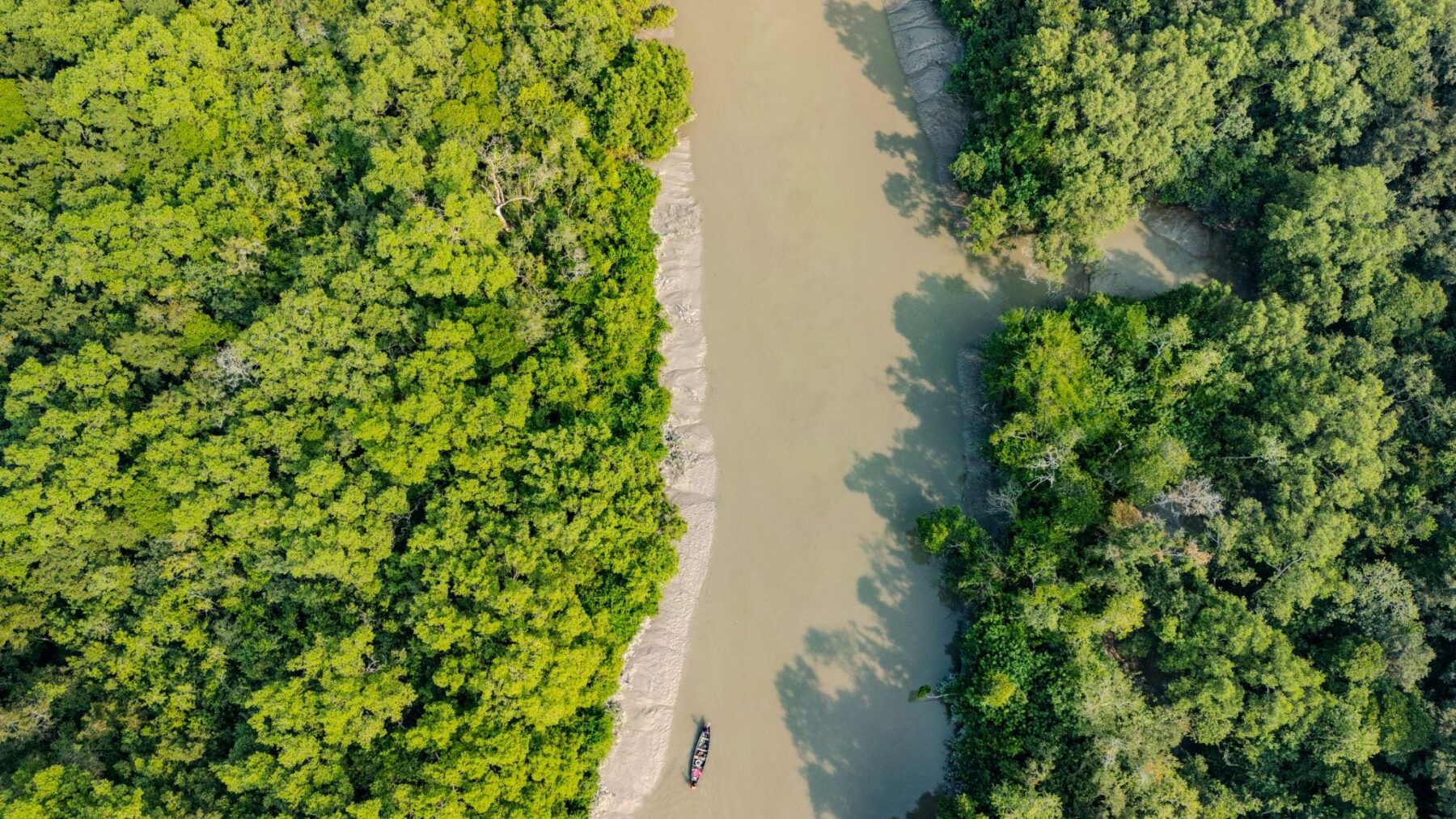
Unlike many protected forests around the world, the boundaries of Pirkhali are defined less by solid land than by water. Rivers, khals, tidal channels, mudflats, and mangrove islands continually evolve through erosion and sediment deposition. The landscape is therefore never static. Storm surges, cyclones, changing river courses, and sea-level fluctuations have shaped Pirkhali for centuries and continue to influence its ecology today.
Pirkhali is also one of the better-known forest blocks within the Sundarban Tiger Reserve because of its importance in tiger conservation and ecological research. Studies examining human–tiger interactions have repeatedly identified Pirkhali as one of the forest blocks where encounters between people entering the forest and tigers have historically occurred, underscoring both the richness of its wildlife and the challenges of conserving a large carnivore in a working mangrove landscape.
For scientists, Pirkhali provides an exceptional natural laboratory for studying mangrove ecology, estuarine hydrology, blue carbon storage, wildlife adaptation, and climate resilience. For conservation managers, it represents an essential component of India’s largest protected mangrove ecosystem. For visitors navigating nearby waterways, it offers a rare glimpse into an intact tidal forest where natural processes remain the dominant force shaping the landscape.
Understanding Pirkhali requires more than locating it on a map. It requires appreciating how rivers, tides, mangroves, wildlife, and climate interact to create one of the most complex ecosystems on Earth.
Pirkhali at a Glance
Category: Protected mangrove forest block
Type: Protected mangrove forest block
Region: Indian Sundarbans, West Bengal
Protected Area: Sundarban Tiger Reserve
Wildlife Sanctuary: Sajnekhali Wildlife Sanctuary
Forest Block: Compartments 1–7 of Pirkhali Block (Sundarban Tiger Reserve)
Ecosystem: Tidal mangrove forest
Delta: Ganges–Brahmaputra–Meghna Delta
Primary Habitat: Intertidal mangrove ecosystem
Major Ecological Features: Mangrove forests, tidal creeks, mudflats, estuarine rivers
Conservation Importance: Tiger habitat, nursery grounds for fish and crustaceans, blue carbon ecosystem
Accessibility: Accessible only by licensed boats through designated waterways, subject to Forest Department regulations and prior permission.
How to Reach Pirkhali
Reaching Pirkhali is a journey through the waterways of the Indian Sundarbans. Since it lies inside the Sundarbans Tiger Reserve and Sajnekhali Wildlife Sanctuary, there is no direct road access to the forest. Visitors can reach Pirkhali only by registered motorboats operating under Forest Department regulations.
The journey typically begins in Kolkata, from where Godkhali Jetty, about 100–110 kilometers away, serves as the main gateway to the western Sundarbans. The drive usually takes around 3 to 3.5 hours. Travelers can also take a train from Sealdah to Canning, followed by a short road transfer to Godkhali.
From Godkhali, visitors board Forest Department-approved boats that enter the protected waterways. Most safari routes pass through Sajnekhali, continue along the Bidya River, and navigate the tidal creeks surrounding Pirkhali before extending to destinations such as Dobanki or Netidhopani on longer expeditions.
Entry into Pirkhali is permitted only through licensed tour operators and authorized eco-tourism guides, ensuring that visitor access remains carefully managed while protecting the fragile mangrove ecosystem and its wildlife.
Geographic Setting
Pirkhali lies within the western portion of the Indian Sundarbans, inside South 24 Parganas district of West Bengal. It forms part of the legally protected Sundarban Tiger Reserve and falls within the Sajnekhali Wildlife Sanctuary, one of the earliest wildlife sanctuaries established in the region. Official notifications identify the sanctuary as comprising the Panchamukhani and Pirkhali forest blocks.
Geographically, the forest belongs to the lower reaches of the world’s largest active delta—the Ganges–Brahmaputra–Meghna Delta. Unlike mountainous forests or inland woodlands, the terrain here exists only because immense quantities of sediment transported from the Himalayas have accumulated over thousands of years. Rivers continually deposit fresh silt while tides redistribute these sediments, gradually creating and reshaping islands, mudbanks, and tidal channels.
The elevation across Pirkhali is extremely low, generally only a few metres above mean sea level. This makes tidal influence the dominant force controlling the landscape. During high tide, extensive areas become inundated. At low tide, exposed mudflats, creek banks, and mangrove roots reveal the underlying structure of the ecosystem.
The official sanctuary notification describes the broader protected landscape as being bounded by Bara Herobhanga Khal, Gomdi Khal, Pitch Khal, Duttar Gang, the Gosaba River, Netidhopani Khal, and the Bidya River, illustrating how watercourses define the protected area’s geography rather than artificial boundaries.
Documentary Observation
Early morning light spreads softly across the Bidya River as the incoming tide begins to fill countless narrow creeks branching into the forest. The exposed mud gradually disappears beneath brown estuarine water carrying suspended silt from upstream rivers. Egrets forage along the receding shoreline while a Brahminy kite circles overhead. There are no fixed edges between river and forest here. Water quietly claims the land twice every day before retreating again, leaving behind fresh sediment, nutrients, and new opportunities for life.
This daily transformation is not simply scenery—it is the ecological heartbeat of Pirkhali.
Landscape Character
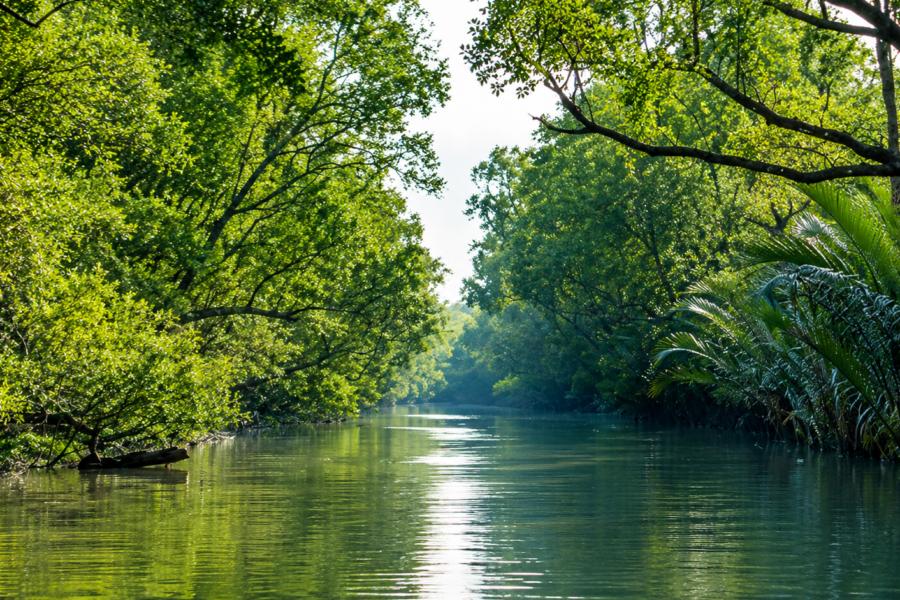
Pirkhali is best described as a tidal mangrove wilderness rather than a conventional forest.
There are no hills, cliffs, waterfalls, or permanent freshwater lakes. Instead, the landscape consists of gently undulating tidal flats dissected by an intricate network of rivers and narrow khals. The forest canopy appears relatively uniform from a distance, yet closer observation reveals remarkable structural diversity driven by subtle differences in elevation, salinity, and tidal flooding frequency.
Dense stands of mangrove trees occupy slightly elevated ground where sediments remain stable. Lower areas experience longer periods of tidal inundation and support species adapted to frequent saltwater exposure. Creek margins often display younger vegetation colonising freshly deposited sediment, while older sections contain mature mangrove communities with complex root systems that stabilize the shoreline.
One of the defining visual characteristics of Pirkhali is its extensive network of aerial root structures. Pencil-like pneumatophores protrude from oxygen-poor mud, allowing mangrove trees to obtain atmospheric oxygen during low tide. Prop roots and buttress roots further reinforce unstable substrates, helping the forest withstand tidal currents and storm surges.
Seasonal weather also transforms the landscape. During the southwest monsoon, swollen rivers deliver greater volumes of freshwater and sediment. Winter brings cooler temperatures, clearer skies, and improved visibility, while the pre-monsoon months often experience intense heat and elevated salinity.
Rivers Flowing Beside Pirkhali
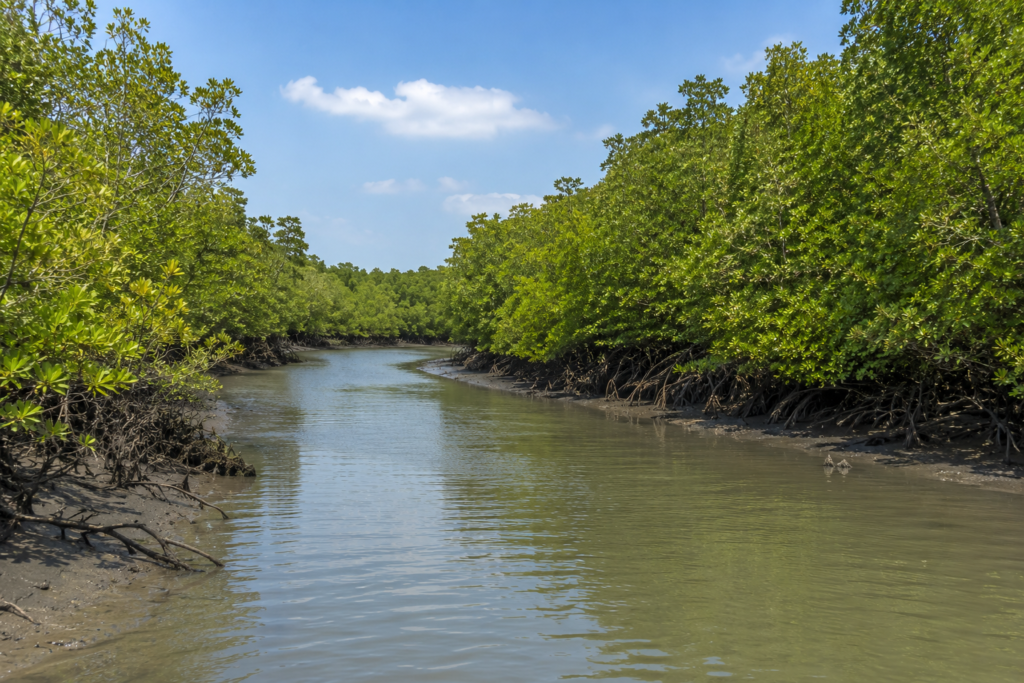
The exact hydrological network varies through natural channel evolution, but the Pirkhali landscape is closely associated with several important tidal rivers and channels, including:
- Bidya River
- Duttar Gang
- Gosaba River
- Netidhopani Khal
- Bara Herobhanga Khal
- Gomdi Khal
- Pitch Khal
These rivers define both the ecological functioning and the protected boundaries of the forest block.
Nearby Forest Blocks
Pirkhali forms part of a broader network of protected forest blocks within the Sundarban Tiger Reserve. Nearby blocks include:
- Panchamukhani
- Netidhopani
- Matla
- Goashaba
- Chandkhali
- Jhilla
- Arbesi
- Khatuajhuri
- Harinbhanga
Together, these forest blocks create one of the largest continuous mangrove landscapes on Earth.
Nearby Inhabited Islands and Human Settlements
Although Pirkhali itself remains uninhabited and legally protected, several inhabited islands and settlements lie beyond its river boundaries and serve as important gateways to the western Sundarbans.
These include:
- Gosaba
- Dayapur
- Pakhiralay
- Bali Island
- Satjelia
These settlements support fishing communities, tourism infrastructure, and forest-dependent livelihoods while also acting as staging points for scientific research and forest management activities.
Hydrology and the Tidal Engine
Water is the principal architect of Pirkhali.
Unlike inland forests where rainfall dominates ecological processes, Pirkhali is shaped primarily by semidiurnal tides. Approximately every twelve hours, tidal water enters and exits the forest through an elaborate branching network of rivers and creeks. This process transports suspended sediment, dissolved nutrients, fish larvae, crab larvae, mangrove propagules, and organic matter throughout the ecosystem.
The constant exchange between freshwater inflows and saline marine water produces dynamic salinity gradients. These gradients influence which mangrove species dominate particular locations and determine the distribution of numerous fish, crustaceans, reptiles, and birds.
Because water movement governs virtually every ecological process—from seed dispersal to nutrient cycling—understanding Pirkhali begins with understanding its tides.
Why Pirkhali Matters
Pirkhali is far more than a named forest block on an administrative map. It represents a functioning component of one of the world’s most important mangrove ecosystems.
Its forests protect fragile riverbanks from erosion, store significant quantities of carbon, provide nursery habitat for commercially important fish and crustaceans, support one of the largest remaining populations of the Royal Bengal Tiger (Panthera tigris tigris), and contribute to the ecological integrity of the Sundarban Tiger Reserve. The inclusion of Pirkhali within the Sajnekhali Wildlife Sanctuary reflects its long-recognized conservation value and its role in safeguarding the biodiversity of the Indian Sundarbans.
From the slow accumulation of Himalayan sediment to the twice-daily rhythm of the tides, every feature of Pirkhali illustrates a simple truth: this is a landscape created not by permanence, but by continuous change. Understanding that dynamic is the foundation for appreciating the extraordinary ecological significance of the Indian Sundarbans.
Mangrove Ecosystem
As the tide reaches its highest point, much of the forest floor disappears beneath opaque estuarine water. Fish move between submerged roots, crabs abandon their burrows, and juvenile prawns drift inland with the incoming tide. When the water retreats a few hours later, the same forest transforms again. Mudbanks emerge, thousands of breathing roots pierce the exposed sediment, and flocks of wading birds replace the aquatic life that occupied the landscape only moments before.
This continuous transition between land and water is the defining ecological process of Pirkhali. Unlike terrestrial forests where ecological change is often seasonal, the mangrove ecosystem here experiences fundamental environmental shifts twice every day. The lives of plants, animals, fungi, microbes, and even the soil itself are synchronized with the rhythm of the tides.
Situated within the Sajnekhali Wildlife Sanctuary of the Sundarban Tiger Reserve, Pirkhali represents one of the finest remaining examples of an intact intertidal mangrove ecosystem in the Indian Sundarbans. Every species present—from microscopic plankton to the Royal Bengal Tiger—depends directly or indirectly upon the productivity of this remarkable forest.
The Architecture of a Mangrove Forest
Pirkhali is not composed of randomly distributed trees. Instead, the forest displays distinct ecological zones shaped by tidal inundation, salinity, sediment stability, and elevation.
The outer margins bordering tidal rivers are constantly reshaped by erosion and sediment deposition. Pioneer mangrove species colonize newly formed mudflats, stabilizing the substrate with intricate root systems. As sediment accumulates over time, more mature mangrove communities establish themselves further inland, creating layered forest structures that support increasing biodiversity.
Within mature sections of Pirkhali, the canopy is generally closed but relatively low compared with tropical rainforests. Sunlight filters through dense foliage, illuminating an understory dominated by aerial roots, fallen leaves, tidal pools, and decomposing organic matter. Every layer contributes to the forest’s productivity.
Mangrove Diversity
The Indian Sundarbans support one of the richest mangrove floras in the world, and Pirkhali reflects this botanical diversity.
Characteristic mangrove species likely to occur within or around the forest block include:
- Sundari (Heritiera fomes)
- Gewa (Excoecaria agallocha)
- Goran (Ceriops decandra)
- Keora (Sonneratia apetala)
- Avicennia species
- Dhundul (Xylocarpus granatum)
- Passur (Xylocarpus mekongensis)
- Kankra (Bruguiera gymnorhiza)
- Hental (Phoenix paludosa)
- Ora (Aegiceras corniculatum)
Each occupies slightly different ecological niches determined by flooding frequency, soil salinity, sediment texture, and freshwater availability.
Rather than competing directly, these mangrove species often complement one another by occupying different positions within the tidal landscape.
Extraordinary Adaptations
Mangroves survive where most trees cannot.
The soils of Pirkhali remain waterlogged for much of the year and contain very little oxygen. To overcome this challenge, many mangrove species produce specialized aerial roots called pneumatophores. These structures project vertically above the mud during low tide, allowing oxygen to enter underground tissues before the next tidal cycle.
Several species possess salt-filtering root membranes that exclude much of the dissolved salt before it enters the plant. Others actively excrete excess salt through specialized glands on their leaves.
Many mangroves also produce buoyant propagules rather than conventional seeds. These elongated seedlings begin developing while still attached to the parent tree before falling into tidal water, where they may float for days or even weeks until becoming lodged in suitable sediment.
These remarkable adaptations explain why mangrove forests flourish along coastlines that would otherwise remain barren.
Soil, Sediment and Nutrient Cycling
The muddy substrate beneath Pirkhali is far more than wet soil.
It is a living biochemical system continuously transformed by tides, bacteria, fungi, worms, crabs, molluscs, and decaying plant material.
Leaves falling from the canopy accumulate on the forest floor before gradually decomposing into detritus. This organic material fuels one of the most productive food webs in the estuarine environment. Bacteria and fungi break down leaf litter into increasingly smaller particles that become food for crabs, worms, molluscs, shrimps, and numerous microorganisms.
Twice-daily tidal flushing redistributes this nutrient-rich material throughout the creek network, supporting fish populations far beyond the forest itself.
Blue Carbon Storage
Mangrove forests are among the planet’s most efficient natural carbon sinks.
Unlike many terrestrial forests, mangroves store enormous quantities of carbon not only within their trunks and branches but also beneath the surface in deep organic sediments that accumulate over centuries.
Because decomposition proceeds slowly within oxygen-poor mud, large amounts of carbon remain locked below ground instead of returning rapidly to the atmosphere.
The preservation of forests such as Pirkhali therefore contributes not only to biodiversity conservation but also to long-term climate regulation.
Wildlife Overview
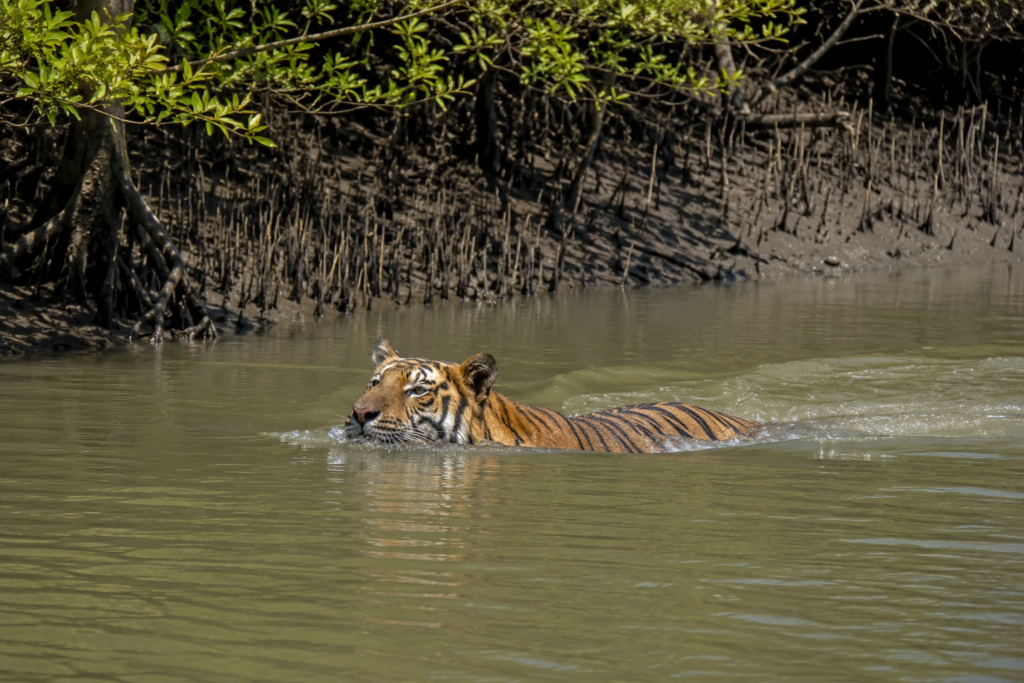
Pirkhali supports an exceptionally rich community of vertebrates and invertebrates.
Its ecological productivity allows species occupying very different trophic levels to coexist—from microscopic plankton drifting with the tides to apex predators patrolling the forest interior.
Wildlife diversity reflects the continuous interaction between terrestrial, freshwater, and marine environments.
Mammals
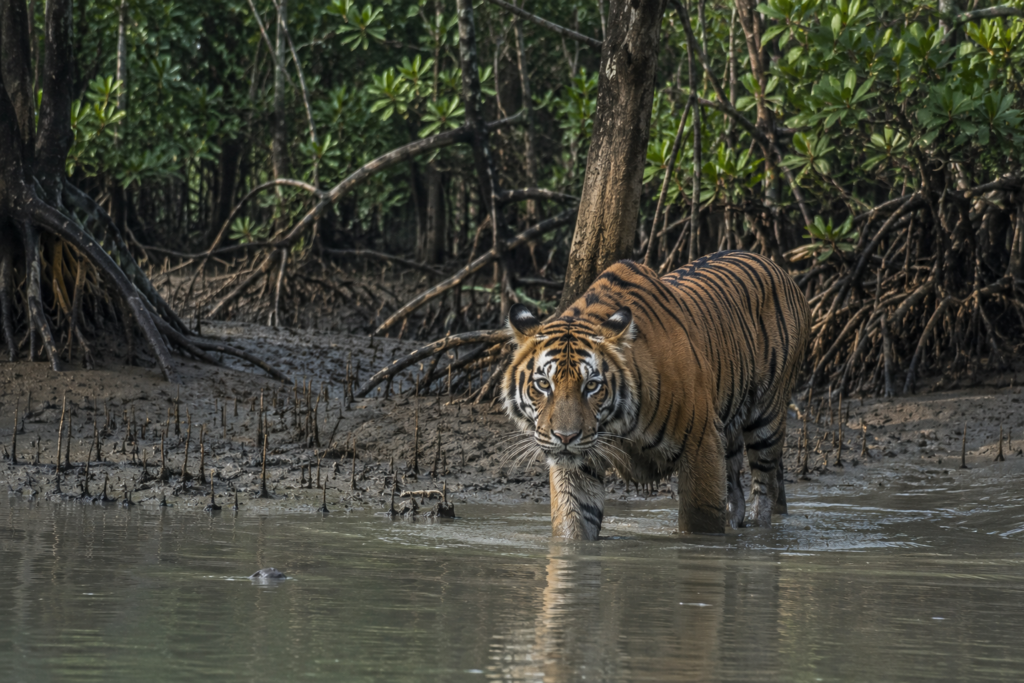
Among mammals, the undisputed ecological flagship is the Royal Bengal Tiger (Panthera tigris tigris).
Unlike tiger populations inhabiting dry forests or grasslands, Sundarbans tigers have adapted to an environment dominated by tides, saline water, and extensive creek systems.
Individuals frequently swim across rivers, navigate muddy substrates with remarkable agility, and occupy territories fragmented by tidal channels.
Other mammals associated with Pirkhali include:
- Fishing Cat (Prionailurus viverrinus)
- Leopard Cat (Prionailurus bengalensis)
- Jungle Cat (Felis chaus)
- Smooth-coated Otter (Lutrogale perspicillata)
- Spotted Deer (Axis axis)
- Wild Boar (Sus scrofa)
- Rhesus Macaque (Macaca mulatta)
Each fulfills distinct ecological roles ranging from herbivory and seed dispersal to predation.
Birds
Pirkhali’s tidal habitats attract a remarkable diversity of resident and migratory birds.
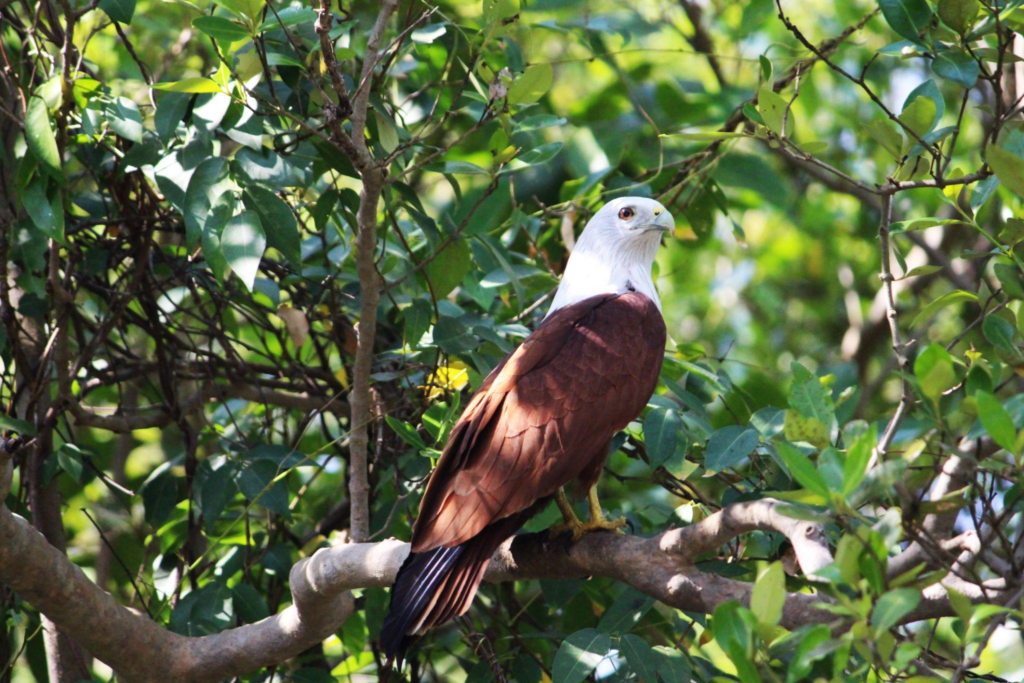
Kingfishers perch silently above creeks before plunging into the water for fish. Egrets and herons stalk exposed mudflats during low tide, while Brahminy kites patrol overhead searching for fish and carrion.
Commonly recorded groups include:
- Kingfishers
- Herons
- Egrets
- Storks
- Sandpipers
- Plovers
- Brahminy Kites
- White-bellied Sea Eagles
- Bee-eaters
- Drongos
- Woodpeckers
- Cormorants
Seasonal migration further increases avian diversity during winter months.
Reptiles
Reptiles represent another important component of the ecosystem.
Species associated with the Sundarbans include:
- Saltwater Crocodile (Crocodylus porosus)
- Water Monitor (Varanus salvator)
- King Cobra (Ophiophagus hannah)
- Indian Python (Python molurus)
- Various mud and water snakes
- Estuarine turtles
The saltwater crocodile occupies the highest trophic level among aquatic predators and frequently utilizes tidal rivers and creek mouths for hunting.
Fish Diversity
The rivers surrounding Pirkhali function as nurseries for countless fish species.
Juvenile fishes shelter among submerged mangrove roots where predators find it difficult to pursue them.
Commercially and ecologically important groups include:
- Mullets
- Catfish
- Barramundi
- Gobies
- Mudskippers
- Threadfins
- Anchovies
- Glassfish
Many marine fishes spend their juvenile stages inside mangrove forests before moving offshore as adults.
Crabs and Molluscs
Perhaps no animals influence the mangrove ecosystem more visibly than crabs.
Fiddler crabs excavate thousands of burrows that aerate sediments and improve nutrient cycling.
Sesarmid crabs consume enormous quantities of fallen leaves, accelerating decomposition and recycling nutrients back into the ecosystem.
Mud crabs represent economically important predators within tidal food webs.
Molluscs—including oysters, mussels, snails, and clams—attach themselves to roots and sediments, filtering suspended organic particles from tidal waters.
Amphibians and Invertebrates
Although less conspicuous, amphibians, insects, spiders, dragonflies, mosquitoes, butterflies, bees, ants, termites, worms, and numerous microscopic organisms collectively maintain ecological processes that larger animals depend upon.
Pollination, decomposition, nutrient recycling, and soil formation all rely heavily on these often-overlooked species.
Ecological Relationships
No organism within Pirkhali exists in isolation.
- Mangrove trees stabilize sediments.
- Stable sediments support burrowing crabs.
- Crab burrows oxygenate soils.
- Healthier soils sustain stronger mangrove growth.
- Mangrove leaves become detritus.
- Detritus feeds microorganisms.
- Microorganisms nourish shrimps and juvenile fish.
- Fish support birds, crocodiles, dolphins, otters, and larger predators.
- Spotted deer browse forest vegetation.
- Tigers regulate deer populations.
This intricate web of interactions creates resilience throughout the ecosystem. Disturbance affecting one component inevitably influences many others.
Why Biodiversity Matters
The extraordinary biodiversity of Pirkhali is not simply a collection of species. It is the result of millions of years of evolutionary adaptation to one of Earth’s most demanding environments.
- Every mangrove tree filters salt.
- Every crab recycles nutrients.
- Every tidal creek transports life.
- Every predator helps maintain ecological balance.
Together they create a self-sustaining ecosystem whose influence extends far beyond the boundaries of the forest itself. The health of coastal fisheries, regional biodiversity, climate resilience, shoreline stability, and even human livelihoods across the Indian Sundarbans remain closely connected to the continued ecological integrity of forests such as Pirkhali.
Geological and Environmental History
The origins of Pirkhali lie in the continuing evolution of the Ganges–Brahmaputra–Meghna Delta, the world’s largest active delta. Over thousands of years, enormous volumes of sediment carried from the Himalayas accumulated along the northern Bay of Bengal, gradually creating tidal islands and estuarine plains.
As sea levels fluctuated and river channels migrated, new mudflats emerged while older landforms disappeared through erosion. Mangrove vegetation colonized these unstable sediments, stabilizing them and allowing increasingly complex ecosystems to develop.
Unlike inland forests that often remain geographically stable for centuries, Pirkhali has always been dynamic. Riverbanks shift, creeks widen or close, islands fragment, and new sediment is deposited with every tidal cycle. This constant landscape evolution remains one of its defining characteristics.
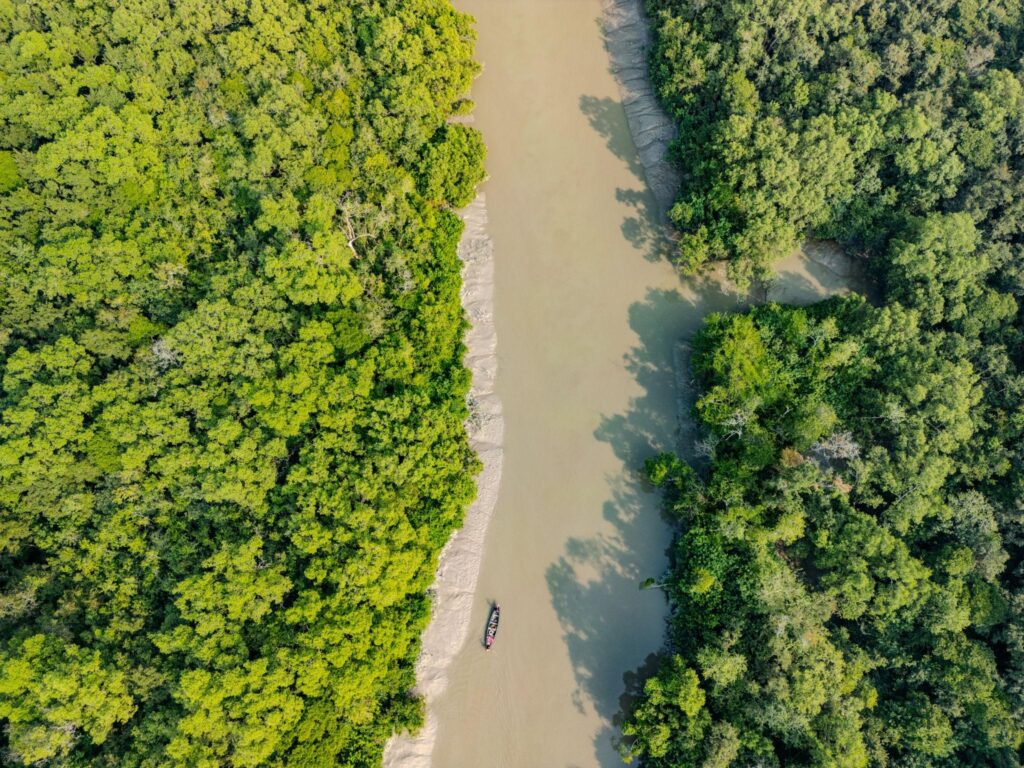
Historical Exploration
Historical records from the Mughal and British colonial periods describe the Sundarbans primarily as an extensive tidal wilderness. Dense mangrove forests, dangerous navigation channels, disease, crocodiles, and tigers limited permanent settlement within the forest interior.
During the eighteenth and nineteenth centuries, British administrators undertook surveys to map navigable waterways and identify land suitable for reclamation. While large tracts along the northern fringe of the Sundarbans were gradually converted into agricultural settlements, the deeper mangrove forests—including areas such as Pirkhali—remained largely intact because of their ecological conditions and the difficulty of permanent occupation.
Forest management gradually shifted from timber extraction toward wildlife conservation during the twentieth century as the ecological importance of the mangrove ecosystem became better understood.
Forest Administration
Today, Pirkhali is managed as part of the Sundarban Tiger Reserve, one of India’s premier protected areas. It also lies within the Sajnekhali Wildlife Sanctuary, reflecting its importance for biodiversity conservation and habitat protection.
Management responsibilities include:
- Protection of wildlife and habitats
- Anti-poaching patrols
- Scientific monitoring
- Habitat management
- Fire prevention
- Regulation of tourism
- Monitoring of human activities
- Conservation research
- Cyclone recovery measures
- Community engagement around protected area boundaries
Forest camps, patrol boats, watch towers, and floating protection units enable forest personnel to monitor an environment where roads do not exist and nearly all movement occurs by water.
Pirkhali and Tiger Conservation
Few landscapes have shaped tiger behaviour as profoundly as the Sundarbans.
The Royal Bengal Tiger (Panthera tigris tigris) inhabiting Pirkhali has adapted to an environment unlike any other tiger population in the world. Rather than moving through dry forests or grasslands, these tigers routinely negotiate tidal creeks, swim across broad rivers, and traverse muddy terrain influenced by twice-daily flooding.
The dense mangrove vegetation provides both cover and hunting opportunities. Spotted deer and wild boar form important prey species, while the intricate network of waterways fragments territories and influences tiger movement.
Pirkhali contributes to the larger landscape that sustains one of the world’s most distinctive tiger populations. Its ecological integrity is therefore essential not only for local biodiversity but also for the long-term conservation of this globally significant predator.
Human–Wildlife Relationships
The relationship between people and the forests surrounding Pirkhali has always been one of respect, dependence, and risk.
Communities living on nearby inhabited islands depend upon rivers and forests for fishing, crab collection, honey gathering, fuelwood (where legally permitted), and other natural resources. Entering the forest, however, involves navigating one of the most challenging natural environments in India.
Strong tidal currents, rapidly changing weather, crocodiles, venomous snakes, and tigers all contribute to the inherent risks of working within the mangrove ecosystem.
Consequently, forest access is regulated through permits, designated zones, and seasonal restrictions intended to balance livelihood needs with ecological protection.
Honey Collectors and Traditional Livelihoods
Among the most recognizable traditional forest users are the honey collectors, locally known as Moules.
Each year, licensed teams enter selected areas of the Sundarbans during the honey collection season. Guided by experience and traditional ecological knowledge, they search for colonies of wild giant honey bees nesting high within mangrove trees.
The work is physically demanding and potentially dangerous. Teams must navigate tidal creeks, avoid crocodiles, remain alert for tiger presence, and work efficiently before changing tides restrict movement.
Traditional practices often include prayers to Bonbibi, the guardian deity of the Sundarbans, reflecting the deep cultural relationship between local communities and the forest.
Fishing Communities
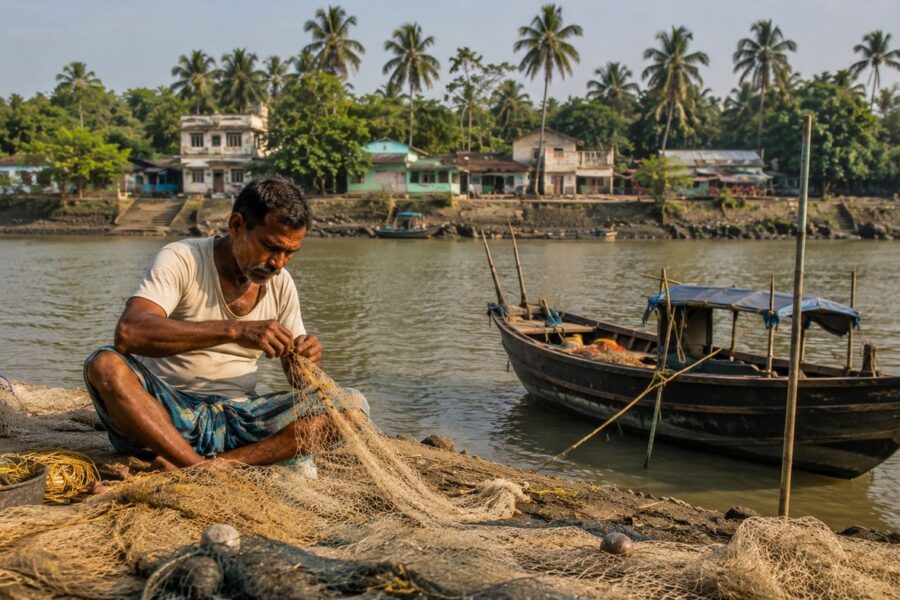
The tidal rivers surrounding Pirkhali support thousands of fishing families living on nearby islands.
These estuarine waters function as breeding and nursery grounds for numerous commercially valuable fish, prawns, and crabs. Sustainable fisheries therefore depend directly upon healthy mangrove forests.
Mangrove roots stabilize shorelines, reduce sediment loss, improve water quality, and provide shelter for juvenile aquatic life. Declining mangrove cover would inevitably reduce fisheries productivity throughout the surrounding estuary.
The ecological health of Pirkhali is therefore closely connected to regional livelihoods.
Climate Change
Few ecosystems illustrate the realities of climate change more clearly than the Sundarbans.
Pirkhali faces multiple climate-related pressures:
- Rising sea levels
- Increased coastal erosion
- Changing salinity regimes
- Stronger cyclones
- Irregular rainfall
- Temperature increases
- Sediment redistribution
- Shoreline instability
Because the forest occupies extremely low elevations, even modest changes in sea level can influence tidal flooding patterns, mangrove distribution, and habitat availability.
Long-term conservation planning increasingly incorporates climate adaptation strategies alongside conventional wildlife management.
Cyclones and Natural Disturbance
Cyclones are natural components of the Bay of Bengal environment.
Major storms periodically reshape the mangrove landscape by:
- Breaking mature trees
- Depositing sediment
- Altering creek channels
- Increasing soil salinity
- Flooding low-lying areas
- Creating new habitats for ecological succession
Although individual storms may appear destructive, mangrove ecosystems possess remarkable resilience. Regeneration begins almost immediately through surviving vegetation, seed dispersal, and natural recruitment.
This capacity for recovery has enabled the Sundarbans to persist despite centuries of extreme weather.
Blue Carbon and Global Importance
Beyond its regional ecological value, Pirkhali contributes to one of the world’s most significant blue carbon ecosystems.
Mangroves store carbon within:
- Living trees
- Roots
- Dead organic material
- Deep waterlogged sediments
Unlike many terrestrial forests where carbon cycles relatively quickly, mangrove sediments may retain organic carbon for centuries.
Protecting forests such as Pirkhali therefore contributes simultaneously to:
- Biodiversity conservation
- Climate change mitigation
- Coastal protection
- Fisheries sustainability
- Shoreline stabilization
Their importance extends far beyond India’s coastline.
Scientific Research
Pirkhali continues to attract researchers studying numerous aspects of mangrove ecology, including:
- Mangrove succession
- Sediment dynamics
- Carbon sequestration
- Tiger ecology
- Human–wildlife interactions
- Bird diversity
- Fish nursery functions
- Salinity gradients
- Climate resilience
- Estuarine hydrology
The forest serves as a living laboratory where scientists can observe ecological processes operating at landscape scale.
Long-term monitoring contributes to adaptive conservation management throughout the Sundarbans.
Conservation Challenges
Despite its protected status, Pirkhali faces ongoing conservation challenges.
These include:
- Climate change
- Sea-level rise
- Cyclone damage
- Shoreline erosion
- Illegal fishing in restricted areas
- Resource extraction pressures
- Plastic pollution transported by rivers
- Salinity changes
- Habitat fragmentation in surrounding landscapes
Addressing these issues requires cooperation among forest managers, researchers, policymakers, local communities, and conservation organizations.
Protection of the forest alone cannot guarantee ecological resilience if broader environmental pressures continue to intensify.
Why Pirkhali Matters to Conservation
Pirkhali represents far more than a single protected forest block.
It forms an essential ecological link within the wider Sundarban Tiger Reserve, helping maintain habitat connectivity for wide-ranging species while supporting the estuarine processes that sustain fisheries, wildlife populations, and mangrove regeneration throughout the western Indian Sundarbans.
- Its rivers transport nutrients.
- Its mangroves stabilize coastlines.
- Its sediments store carbon.
- Its forests protect biodiversity.
- Its ecological health influences landscapes extending far beyond its boundaries.
Conserving Pirkhali therefore means conserving one of the fundamental building blocks of the Indian Sundarbans itself.
Can Visitors Explore Pirkhali?
Unlike inhabited islands of the Sundarbans, Pirkhali is not a tourist destination in the conventional sense. It is a protected mangrove forest within the Sundarbans Tiger Reserve and forms part of the Sajnekhali Wildlife Sanctuary, where conservation remains the primary objective.
Visitors cannot freely enter the forest on foot. Access is governed by the West Bengal Forest Department, and movement within the protected landscape is generally restricted to designated waterways and approved tourism circuits. Most visitors experience the Pirkhali landscape from licensed boats travelling through surrounding tidal rivers and creeks.
This controlled approach minimizes ecological disturbance while allowing visitors to appreciate one of the world’s largest remaining mangrove wildernesses.
How Pirkhali Fits into Sundarbans Expeditions
Although visitors rarely realize it, many safari boats operating from Godkhali, Dayapur, Pakhiralay, or Gosaba navigate waterways that pass through or alongside the broader Pirkhali landscape.
Rather than being defined by a single viewpoint, Pirkhali is experienced gradually.
A typical journey may include:
- Narrow tidal creeks lined with dense mangroves
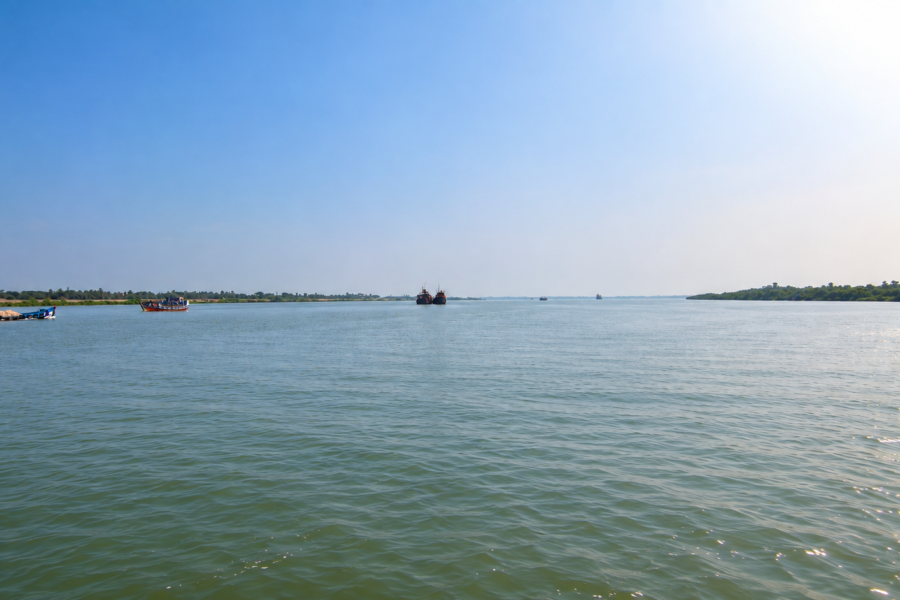
- Wide estuarine rivers
- Exposed mudflats during low tide
- Kingfishers perched over creek edges
- White-bellied Sea Eagles soaring overhead
- Saltwater crocodiles basking on muddy banks
- Fresh deer or tiger tracks visible on exposed sediments
- Quiet stretches where only tidal currents break the silence
Unlike conventional wildlife tourism, patience is essential. The Sundarbans reward careful observation rather than constant animal sightings.
Wildlife Observation Opportunities with The Wild Orbit
Pirkhali supports remarkable biodiversity, but wildlife remains naturally elusive. Depending on the season, tide, weather, and luck, visitors may observe:
Mammals
- Spotted Deer
- Wild Boar
- Rhesus Macaque
- Fishing Cat (rare)
- Royal Bengal Tiger (extremely rare)
Birds
- Brown-winged Kingfisher
- Black-capped Kingfisher
- Collared Kingfisher
- White-throated Kingfisher
- Brahminy Kite
- White-bellied Sea Eagle
- Lesser Adjutant
- Purple Heron
- Great Egret
- Little Egret
- Pond Heron
- Cormorants
- Sandpipers
- Bee-eaters
Reptiles
- Saltwater Crocodile
- Water Monitor
- Mudskipper-rich mudflats
- Estuarine snakes
Most observations occur from boats, emphasizing minimal disturbance to wildlife.
Birdwatching in Pirkhali
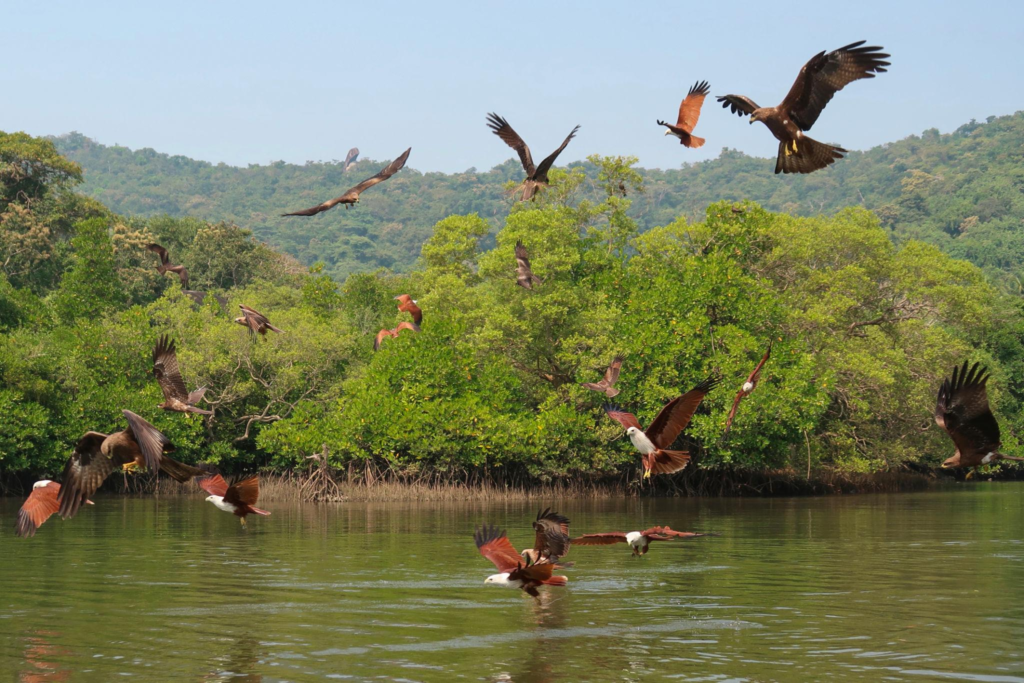
For birdwatchers, Pirkhali offers one of the richest estuarine bird habitats in India.
Its ecological diversity supports birds utilizing:
- River channels
- Creek margins
- Mangrove canopy
- Mudflats
- Open sky
- Intertidal wetlands
Winter generally brings increased avian diversity as migratory species arrive from northern regions.
Early morning and late afternoon typically provide the most favorable lighting and bird activity for observation and photography.
Photography Opportunities
Pirkhali rewards photographers interested in ecological storytelling rather than dramatic wildlife encounters alone.
Outstanding photographic subjects include:
- Mangrove root systems
- Tidal reflections
- River landscapes
- Mudflats
- Kingfishers
- Crocodiles
- Deer
- Fishing boats navigating creeks
- Sunrise mist over tidal rivers
- Monsoon cloud formations
- Patterns created by pneumatophores
- Crab colonies
- Mangrove propagules floating with tides
Documentary photography here focuses on relationships between land, water, vegetation, and wildlife.
Seasonal Character
Winter (November–February)
Winter represents the most comfortable period for field observation.
Characteristics include:
- Pleasant temperatures
- Clear skies
- Improved visibility
- Active birdlife
- Migratory birds
- Calm river conditions
- Comfortable boat travel
This season generally offers the best opportunities for wildlife observation.
Summer (March–June)
See it for yourself
A private journey shaped around you — your group, your pace, your interests. Book a free consultation.
Summer transforms Pirkhali into a warmer, more humid landscape.
Characteristics include:
- High temperatures
- Increased evaporation
- Higher salinity in some areas
- Reduced freshwater influence
- Intense sunlight
- Active reptiles
- Strong afternoon heat
Wildlife often concentrates near shaded creek systems during hotter periods.
Southwest Monsoon (June–September)
The arrival of the monsoon dramatically changes the forest.
Heavy rainfall increases freshwater input while rivers carry enormous quantities of sediment downstream.
Typical features include:
- Rising river levels
- Frequent rainfall
- Lush vegetation
- Rapid mangrove growth
- Strong tidal currents
- Increased turbidity
- Dynamic sediment movement
Boat operations may be affected by weather conditions during this period.
Post-Monsoon (October)
As rainfall decreases, the landscape begins another ecological transition.
Fresh sediments deposited during the monsoon become colonized by pioneer vegetation.
Improved weather gradually returns, while many species resume seasonal breeding or feeding activities.
Tidal Rhythm Throughout the Year
Unlike seasonal forests elsewhere in India, the defining ecological rhythm of Pirkhali is not annual—it is daily.
Approximately every twelve hours:
- Rivers rise.
- Creeks fill.
- Mudflats disappear.
- Fish enter forests.
- Crabs retreat.
- Mangrove roots become submerged.
A few hours later:
- Water recedes.
- Mudbanks emerge.
- Birds replace aquatic life.
- Crabs return.
- Fresh animal tracks appear.
This twice-daily transformation influences virtually every ecological process within the forest.
The Wild Orbit’s Interesting Facts About Pirkhali
1. It forms part of one of the world’s largest mangrove ecosystems.
The Sundarbans contain the largest continuous mangrove forest on Earth.
2. Water shapes the forest every day.
Unlike inland forests, Pirkhali experiences complete ecological transformation twice daily through tidal flooding.
3. Mangrove trees breathe through specialized roots.
Thousands of pneumatophores project above oxygen-poor mud, enabling trees to survive waterlogged conditions.
4. The forest protects coastlines naturally.
Mangrove roots reduce erosion while dissipating wave energy during storms.
5. Pirkhali supports globally significant tiger habitat.
The forest contributes to one of the world’s most distinctive tiger populations adapted to tidal environments.
6. Every fallen leaf becomes part of the food web.
Leaf litter supports microorganisms, crabs, worms, shrimps, fish, birds, reptiles, and mammals through nutrient recycling.
7. The forest stores enormous quantities of carbon.
Mangrove sediments preserve organic carbon for centuries, making the ecosystem an important natural climate regulator.
8. There are no permanent roads.
Movement within Pirkhali occurs almost entirely by waterways.
9. The landscape is constantly changing.
Riverbanks erode, sediments accumulate, creeks shift, and vegetation expands or retreats as natural processes reshape the delta.
10. Silence is one of Pirkhali’s defining characteristics.
Away from boats, the dominant sounds are wind, tidal currents, insects, birds, and occasional animal calls.
FAQs
Where is Pirkhali?
Pirkhali is a protected mangrove forest block within the western Indian Sundarbans, inside the Sundarban Tiger Reserve and Sajnekhali Wildlife Sanctuary.
Is Pirkhali inhabited?
No. The forest itself is uninhabited.
Can tourists walk inside Pirkhali?
No. Access is controlled by the Forest Department, and visitors generally observe the area from licensed boats.
Why is Pirkhali important?
It supports mangrove biodiversity, tiger habitat, estuarine fisheries, carbon storage, and coastal protection.
Are Royal Bengal Tigers found here?
Yes. Pirkhali forms part of the habitat used by the Sundarbans population of the Royal Bengal Tiger.
Which river flows beside Pirkhali?
The landscape is associated with several important tidal rivers and channels, including the Bidya River, Gosaba River, Duttar Gang, Bara Herobhanga Khal, Gomdi Khal, Pitch Khal, and Netidhopani Khal.
Why are mangroves important?
Mangroves stabilize shorelines, protect against erosion, support fisheries, store carbon, filter sediments, and provide habitat for numerous species.
Is Pirkhali affected by climate change?
Yes. Rising sea levels, changing salinity, cyclones, and coastal erosion all influence the ecosystem.
What is the best season to visit nearby areas?
Winter generally provides the most favorable weather and wildlife observation conditions.
Why is the forest flooded every day?
Semidiurnal tides from the Bay of Bengal inundate the forest approximately twice every twenty-four hours.
What Pirkhali Teaches Us
As twilight settles over the estuary, the final light reflects across the brown tidal waters before disappearing beneath the mangrove canopy. The day’s last kingfisher crosses the creek, fiddler crabs retreat into their burrows, and the incoming tide quietly begins another cycle that has continued uninterrupted for thousands of years.
Nothing within Pirkhali remains fixed for long. Rivers alter their courses, mudbanks emerge and disappear, seedlings establish themselves on newly deposited sediments, and tides erase every footprint left upon the shore. Yet amid this constant change, the ecological identity of the forest endures. It remains a place where mangroves engineer the landscape, wildlife adapts to one of the planet’s most demanding coastal environments, and natural processes continue to shape one of Earth’s greatest deltaic wildernesses.
Pirkhali is therefore more than a protected forest block within the Indian Sundarbans. It is a living demonstration of how rivers, tides, climate, vegetation, and wildlife are woven together into a single ecological system. Understanding this landscape means recognizing that its greatest value lies not only in the species it shelters, but in the dynamic relationships that sustain them.
In every incoming tide, every mangrove root, every layer of sediment, and every quiet creek disappearing into the forest, Pirkhali reminds us that the Sundarbans is not simply a place to visit—it is one of the world’s most extraordinary living ecosystems, deserving continued scientific understanding, careful stewardship, and enduring respect.