 Encyclopedia
Dobanki
Where the Mangrove Canopy Meets the Tides
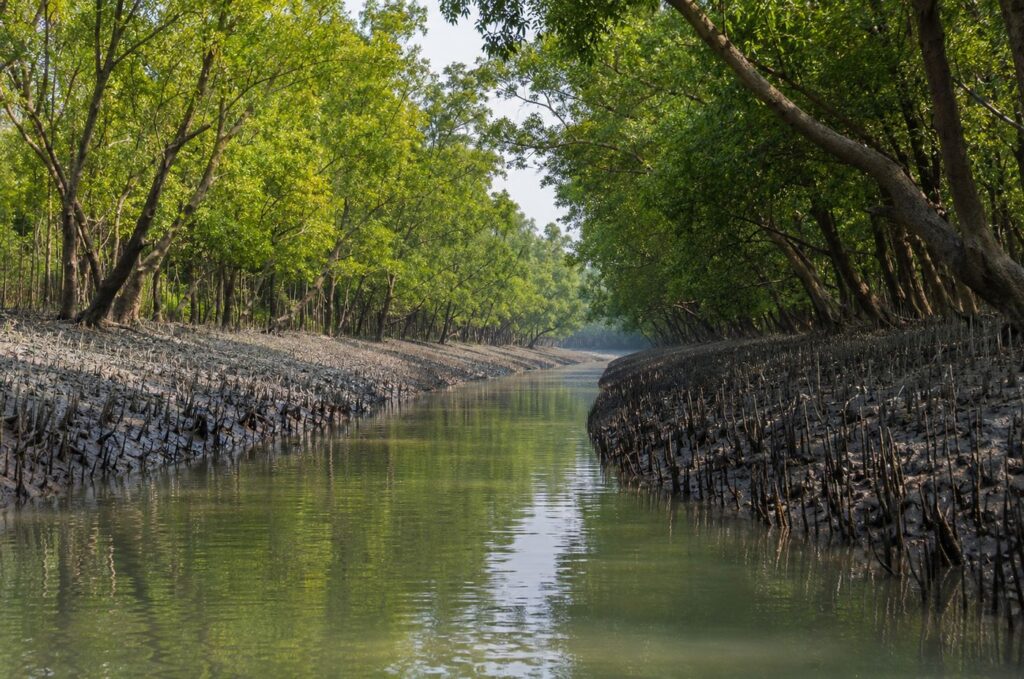
As the incoming tide slowly floods the forest floor, the narrow creeks surrounding Dobanki begin to disappear beneath opaque brown estuarine water. Mangrove roots that only moments earlier stood exposed are submerged once again, while mudskippers retreat into their burrows and fiddler crabs vanish beneath the soft sediment. Above this changing landscape, an elevated canopy walkway stretches through the forest, offering one of the rare opportunities to observe the Sundarbans from above rather than from a boat. The forest appears calm, yet every rising tide reshapes the terrain, transports nutrients, and alters the movement of wildlife.
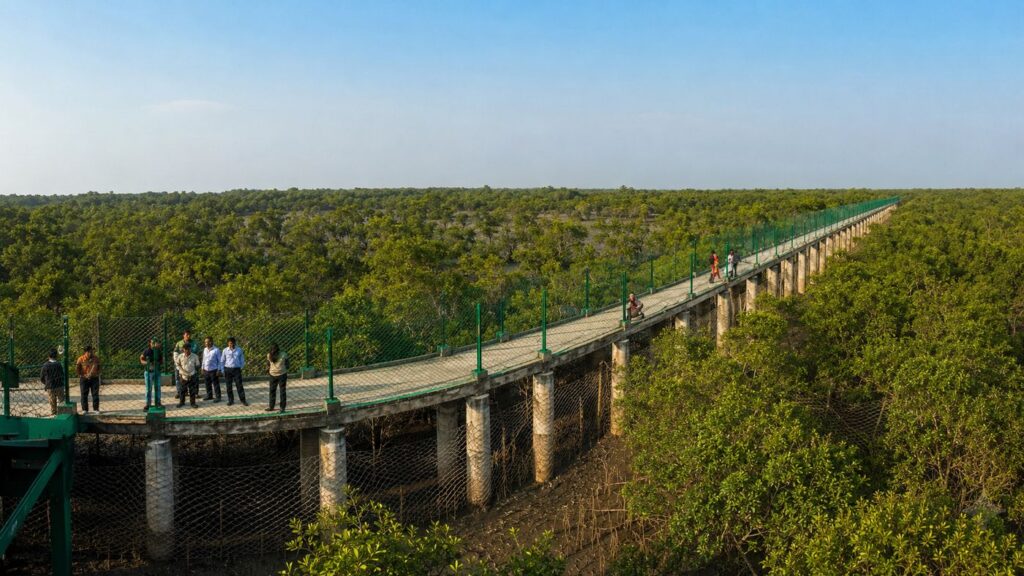
Dobanki is one of the best-known forest destinations within the Indian Sundarbans, not because it guarantees sightings of the elusive Royal Bengal Tiger, but because it reveals the remarkable complexity of the world's largest tidal mangrove ecosystem. Located inside the protected forests of the Sundarban Tiger Reserve, the Dobanki Forest Camp and its famous canopy walk provide visitors with an opportunity to understand how tides, rivers, mangroves, and wildlife interact in one of Earth's most dynamic coastal landscapes. The canopy walkway culminates at a watchtower overlooking an extensive expanse of mangrove forest, offering elevated views while minimizing disturbance to wildlife.
Unlike many protected forests where trails remain relatively stable, Dobanki is governed entirely by the rhythm of the Bay of Bengal. Twice each day, tides transform the landscape. Creek channels widen and narrow, mudflats emerge and disappear, salinity fluctuates, and the movement of fish, crustaceans, reptiles, birds, and mammals changes accordingly. Understanding Dobanki therefore requires understanding the ecological processes that define the Sundarbans rather than viewing it simply as a wildlife destination.
This article examines Dobanki through the perspective of geography, ecology, and conservation. Rather than focusing on tourism alone, it explores why this forest matters scientifically, how its mangroves survive in saline conditions, and why Dobanki represents one of the most valuable observation sites within the Indian Sundarbans.
CTA: Enter the Sundarbans
Dobanki at a Glance
Location: Sundarban Tiger Reserve, South 24 Parganas, West Bengal, India
Protected Area: Sundarban Tiger Reserve
Ecosystem: Tidal mangrove forest
UNESCO Status: Part of the Sundarbans World Heritage landscape
Famous For: Elevated canopy walk and forest watch tower
Habitat Type: Estuarine mangrove ecosystem
Dominant Influence: Semi-diurnal tides from the Bay of Bengal
Best Known Wildlife: Royal Bengal Tiger, Spotted Deer, Saltwater Crocodile, Fishing Cat, and numerous bird species
Accessibility: Reachable only by licensed boats with forest permission
Forest Management: West Bengal Forest Department
How to Reach Dobanki
Dobanki is located inside the Sundarban Tiger Reserve and cannot be reached by road. The final journey is by registered boat through the reserve's tidal waterways.
From Kolkata by Road
The most convenient option is to travel from Kolkata directly to Godkhali, one of the main boarding points for the Sundarbans.
Route: Kolkata → Godkhali → Registered Boat → Dobanki
From Kolkata by Train
Take a local train from Sealdah to Canning, the nearest railway station to the Sundarbans. From Canning, continue by road to Godkhali, then board a registered boat for the journey into the reserve.
Route: Sealdah → Canning → Godkhali → Registered Boat → Dobanki
By Bus
Buses are available from Kolkata toward Godkhali and Dhamakhali. From either boarding area, visitors continue by registered boat into the Sundarbans. Current bus schedules should be checked before departure because services can change.
The Boat Journey
There is no road access to Dobanki. Once the boat leaves Godkhali or another authorized boarding point, the journey continues through the Sundarbans' tidal rivers and creeks.
Travel time by boat is not fixed because it depends on the itinerary, tide, weather, water conditions, and other forest locations included in the trip.
Do You Need Permission?
Yes. Entry into the protected Sundarban Tiger Reserve is regulated. Visitors should travel on a registered/booked boat with the required Forest Department permissions and an authorized guide.
It is best to arrange the boat and forest-entry formalities before reaching the jetty rather than trying to arrange everything after arrival.
Geographic Setting
Dobanki lies within the central sector of the Indian Sundarbans, inside the Sundarban Tiger Reserve in South 24 Parganas district of West Bengal. It occupies a strategic position within a maze of tidal rivers and interconnected creeks that form part of the lower Ganges–Brahmaputra–Meghna Delta—the largest active delta on Earth.
Unlike inland forests bounded by fixed landscapes, Dobanki exists within an environment where land and water are inseparable. Every section of forest is surrounded by tidal channels, and the exact appearance of the landscape changes continually as water levels rise and fall. The forest is shaped not by rainfall alone but by the combined influence of freshwater flowing downstream from the Ganges system and saline water entering from the Bay of Bengal.
The result is a landscape that is neither fully terrestrial nor fully marine. Instead, Dobanki represents a transition zone where sediment deposition, tidal exchange, salinity gradients, and mangrove vegetation interact continuously. These processes create habitats capable of supporting a remarkable diversity of wildlife while simultaneously protecting the coastline from storms, erosion, and sea-level rise.
Its location also places Dobanki within one of the most intensively protected sections of the Sundarban Tiger Reserve, making it important not only for wildlife observation but also for long-term ecological monitoring and conservation management.
Rivers Flowing Beside Dobanki
The waterways surrounding Dobanki form part of an intricate estuarine network rather than a single river system. Important rivers and tidal channels associated with the Dobanki landscape include:
- Gomor River
- Gazikhali River
- Matla River (regional influence)
- Numerous unnamed tidal creeks connecting adjacent forest compartments
These waterways transport nutrient-rich sediment, regulate salinity, sustain mangrove forests, and serve as movement corridors for aquatic life, crocodiles, dolphins, and fish. They also determine the accessibility of Dobanki, as all travel into the area is by boat and is heavily influenced by tidal conditions.
Nearby Forest Blocks
Dobanki is connected ecologically to several important protected forest areas within the Sundarban Tiger Reserve, including:
- Sajnekhali
- Sudhanyakhali
- Netidhopani
- Panchamukhani
- Chora Gazi
Together these forest blocks form an interconnected landscape through which wildlife moves freely, emphasizing that Dobanki should be viewed as one component of a much larger mangrove ecosystem rather than an isolated destination.
Nearby Inhabited Islands & Human Settlements
Human settlements are located outside the protected forest boundary. Communities that serve as important gateways to the Sundarbans include:
- Gosaba
- Dayapur
- Bali Island
- Pakhiralay
- Godkhali (major embarkation point)
These settlements provide logistical support for research teams, forest staff, and regulated visitors while remaining physically separated from the protected core forest.
Landscape Character
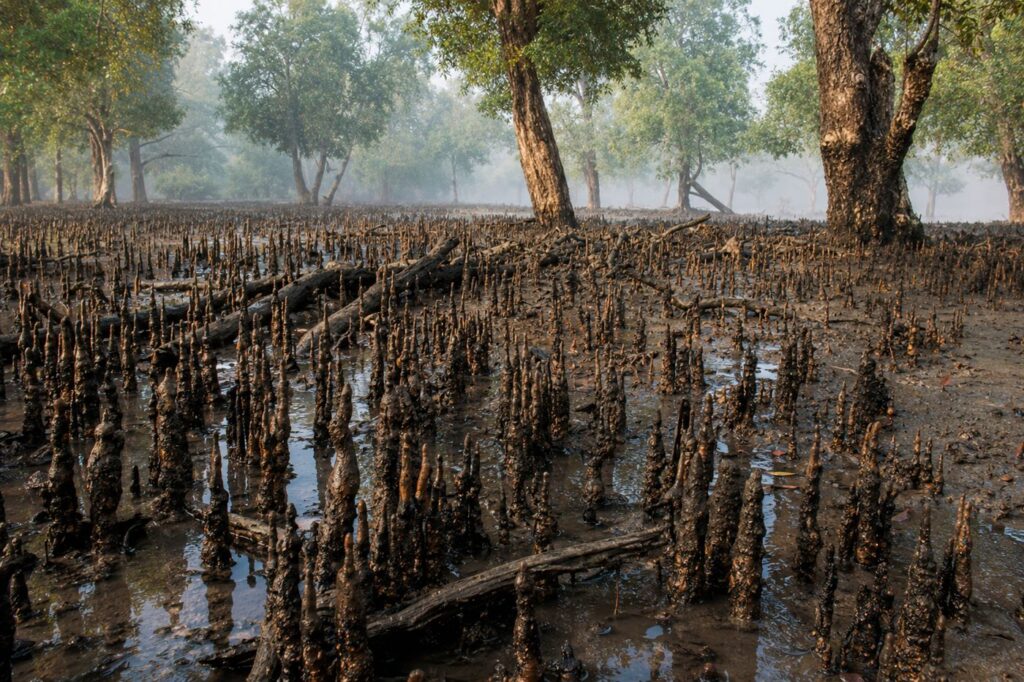
At first glance, Dobanki appears almost uniform—a seemingly endless expanse of green stretching across low-lying islands intersected by tidal waterways. A closer look reveals an exceptionally varied landscape shaped by water rather than elevation.
There are no hills, cliffs, or permanent freshwater lakes. Instead, the terrain consists of mudbanks, tidal creeks, mangrove islands, sediment flats, and dense forests whose boundaries shift subtly over time as rivers deposit or erode sediment.
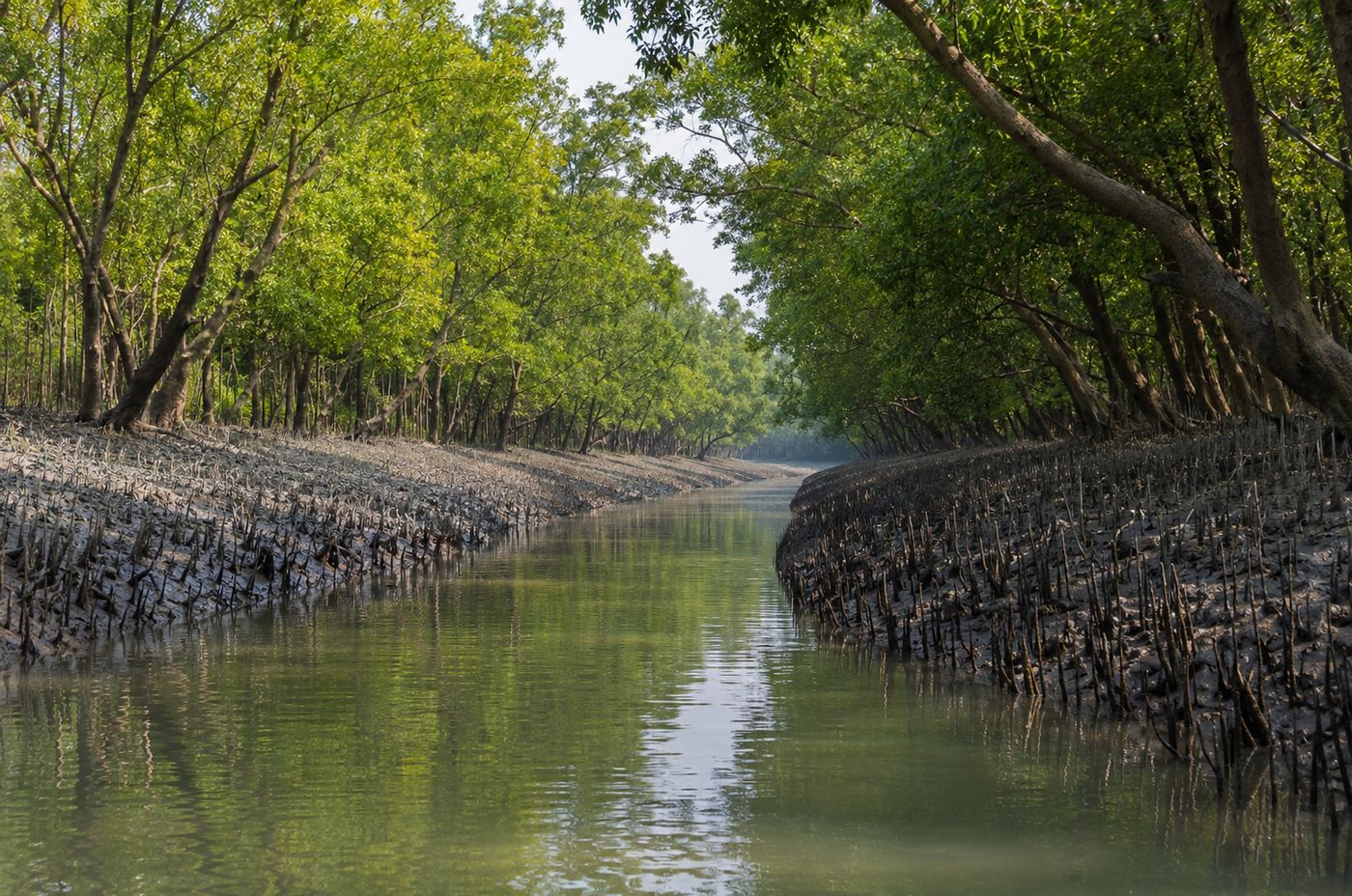
The most striking visual characteristic is the dense canopy of mangrove trees interrupted by winding channels of opaque brown water carrying enormous quantities of suspended silt from upstream rivers. The colour of these waters reflects natural sediment loads rather than pollution, and this suspended sediment is fundamental to delta formation and mangrove growth.
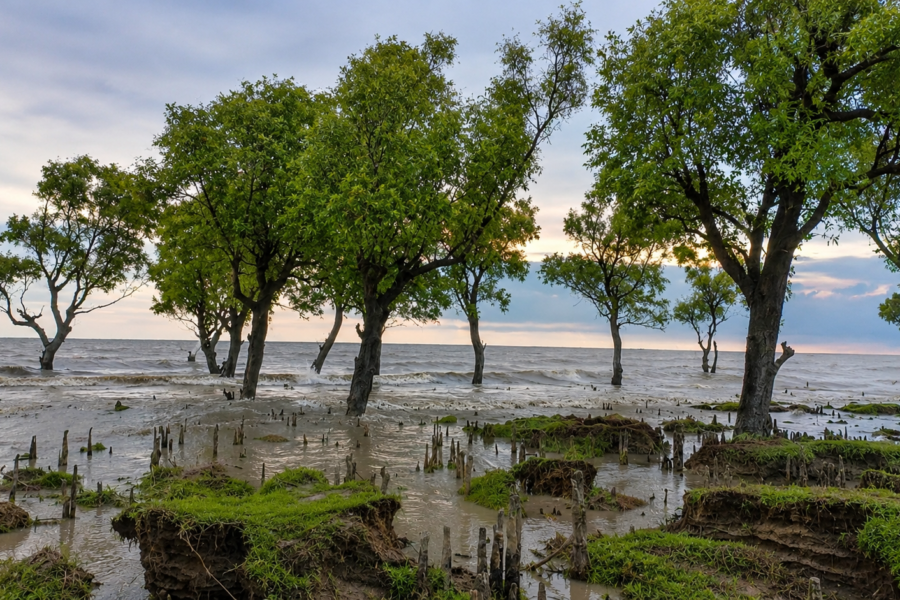
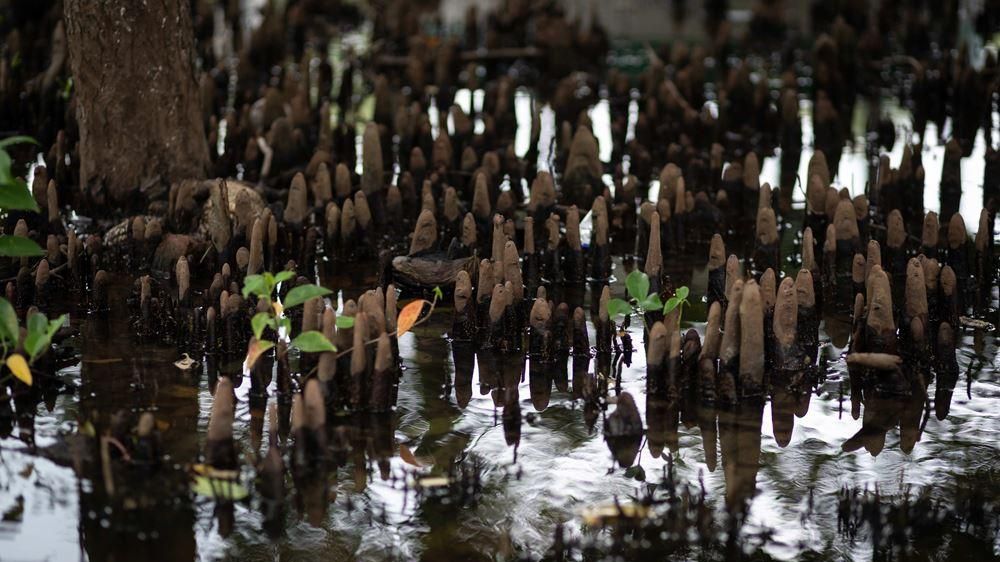
Twice each day, the incoming tide transforms the forest. Exposed pneumatophores—specialized aerial roots that allow mangroves to breathe in waterlogged soils—gradually disappear beneath rising water. As the tide retreats, thousands of these pencil-like roots emerge once again, illustrating the remarkable adaptations that enable mangroves to survive where most terrestrial plants cannot.
Documentary Field Observation
Standing on the Dobanki canopy walkway shortly before high tide, the forest seems almost motionless. The air is humid, the calls of kingfishers echo across nearby creeks, and only the occasional splash of a fish disturbs the silence. Slowly, the advancing tide reaches the forest floor, swallowing exposed mud and surrounding the trunks of mangrove trees. Within less than an hour, the same landscape has been transformed from a network of muddy flats into what appears to be a flooded woodland. Nothing dramatic has occurred—yet the entire ecological stage has changed, demonstrating how the tides dictate every aspect of life in the Sundarbans.
Geology and Delta Formation
Dobanki occupies part of the active Ganges–Brahmaputra–Meghna Delta, a landscape built over thousands of years through the continual deposition of sediment transported from the Himalayas and central India.
Unlike ancient mountain landscapes carved by erosion, the Sundarbans are geologically young and remain in constant transition. Rivers deliver vast quantities of silt that accumulate in low-energy coastal environments, gradually creating new mudflats and islands. At the same time, tidal currents and storms erode other areas, producing a landscape where land is continually being created and removed.
This balance between deposition and erosion explains why the exact shapes of islands and creek systems change over time. Even small shifts in river flow or sea level can alter local geomorphology, influencing mangrove distribution, wildlife habitat, and navigation channels.
The fine alluvial sediments found around Dobanki are rich in minerals and organic matter, providing an ideal substrate for mangrove forests. These sediments also store significant quantities of carbon, making the Sundarbans an important natural carbon sink with global significance for climate regulation.
Tidal Dynamics and Water Systems
More than any other environmental factor, tides govern Dobanki.
The Sundarbans experiences semi-diurnal tides, meaning that two high tides and two low tides typically occur each day. These tidal cycles influence water depth, salinity, sediment transport, nutrient exchange, and the daily behaviour of many species.
For researchers and forest managers, the tide is not merely a hydrological phenomenon but the principal ecological driver of the entire ecosystem. Fish enter flooded forests during high tide to feed, juvenile crustaceans disperse through tidal creeks, mangrove seeds are transported by moving water, and predators adjust their movements according to changing water levels.
Because navigation depends on tidal conditions, travel to Dobanki also varies with the state of the tide. Official guidance notes that access by boat and visitor movement within the reserve are influenced by these changing conditions.
Mangrove Ecosystem
The mangrove forests surrounding Dobanki represent one of the most specialized ecosystems on Earth. Unlike terrestrial forests, mangroves must survive in saline, waterlogged, oxygen-poor soils that are inundated by tides twice daily.
Their survival depends on a remarkable suite of adaptations. Many species develop aerial breathing roots known as pneumatophores, while others possess salt-filtering or salt-excreting mechanisms that allow them to regulate internal salt concentrations. Seeds of several mangrove species begin germinating while still attached to the parent tree—a process known as vivipary—enabling young plants to establish quickly when carried by tidal currents.
These adaptations transform the forest into a living engineering system. Mangrove roots trap sediment, stabilize shorelines, reduce coastal erosion, store carbon, and create nursery habitats for fish, crabs, molluscs, and countless microorganisms. In turn, these organisms support larger predators, linking Dobanki to the broader food web of the Sundarbans.
Wildlife and Ecological Dynamics
As daylight filters through the mangrove canopy, Dobanki rarely appears crowded with wildlife. Unlike open grasslands where animals may be visible across great distances, this forest reveals its inhabitants gradually.
- A splash in a narrow creek may indicate a fish pursuing smaller prey.
- Fresh hoofprints pressed into the mud hint at a herd of Spotted Deer that passed only hours earlier.
- Claw marks on soft sediment may belong to a Fishing Cat searching for crabs during the previous night.
Every sign is part of an ecosystem where survival depends on camouflage, timing, and adaptation to the tides.
Dobanki supports an exceptional diversity of life because it occupies the intersection of terrestrial, freshwater, and marine environments. Mangrove forests, tidal creeks, mudflats, estuaries, and saline waterways create numerous ecological niches that sustain mammals, reptiles, birds, fish, crustaceans, molluscs, insects, and countless microorganisms. Rather than existing independently, these species form a tightly interconnected food web in which the health of one group often depends upon another.
Why Dobanki Supports Such Rich Biodiversity
The biological richness of Dobanki is not accidental. Several ecological factors combine to make the area one of the most productive habitats within the Indian Sundarbans.
First, the twice-daily tidal exchange continually transports nutrients throughout the ecosystem. Organic matter produced by mangrove trees enters the water as fallen leaves and decomposing wood, feeding bacteria and microscopic organisms that form the base of the food chain.
Second, the intricate network of tidal creeks provides shelter for juvenile fish, prawns, and crabs before they migrate into larger rivers and coastal waters. These nursery habitats support commercial fisheries far beyond the boundaries of the Sundarbans.
Third, the dense mangrove vegetation offers food, nesting sites, shade, and protection from predators. The structural complexity of mangrove roots creates microhabitats for organisms ranging from algae and oysters to mudskippers and juvenile crustaceans.
Finally, Dobanki's protected status within the Sundarban Tiger Reserve reduces direct human disturbance, allowing ecological processes to continue with comparatively limited interference.
Mammals of Dobanki
See it for yourself
A private journey shaped around you — your group, your pace, your interests. Book a free consultation.
Although mammal sightings are often infrequent because of dense vegetation and elusive behaviour, Dobanki supports several iconic species that are closely associated with the Indian Sundarbans.
Royal Bengal Tiger (Panthera tigris tigris)
No animal defines the Sundarbans more than the Royal Bengal Tiger. Yet Dobanki reminds visitors that the tiger is not simply a powerful predator but an extraordinary ecological specialist.
Unlike tiger populations inhabiting grasslands or tropical forests elsewhere in Asia, Sundarbans tigers have adapted to a landscape dominated by tides, saline waterways, and soft mud. They routinely swim across wide rivers, navigate narrow creeks, and travel through mangrove forests where firm ground is often absent.
The dense vegetation surrounding Dobanki provides ideal cover for stalking prey. Tigers typically rely on stealth rather than speed, approaching silently before launching a short, explosive attack. Their principal prey includes Spotted Deer and Wild Boar, although hunting success varies considerably depending on tidal conditions, vegetation density, and prey availability.
Modern monitoring using camera traps, pugmark analysis, and genetic sampling has greatly improved scientific understanding of tiger distribution within the Sundarban Tiger Reserve. Because tigers occupy extensive territories and move freely between forest compartments, Dobanki should be viewed as part of a much larger landscape supporting this globally significant population.
Fishing Cat (Prionailurus viverrinus)
Often overshadowed by the tiger, the Fishing Cat is among the Sundarbans' most remarkable predators. Adapted to wetlands rather than dry forests, it feeds primarily on fish, crabs, frogs, and other aquatic prey.
Its partially webbed feet, powerful limbs, and exceptional night vision enable it to hunt efficiently along muddy creek banks. Rather than avoiding water, Fishing Cats frequently enter shallow tidal channels to capture prey.
Because of their nocturnal behaviour and secretive nature, they are seldom seen by visitors. Nevertheless, they play an important ecological role by regulating populations of aquatic animals within mangrove habitats.
Spotted Deer (Axis axis)
Among the most frequently observed mammals around Dobanki is the Spotted Deer. Their reddish-brown coats covered with white spots provide effective camouflage beneath dappled sunlight filtering through mangrove foliage.
These deer browse on leaves, shoots, grasses, and fallen fruits, often moving in small herds that remain alert for predators. Their sharp hearing and constant vigilance are essential survival strategies in tiger habitat.
The abundance of Spotted Deer strongly influences predator distribution. Healthy deer populations support tiger conservation by providing a reliable prey base throughout the Sundarbans.
Visitors at the Dobanki watchtower frequently observe deer feeding in open clearings during the cooler hours of the morning or late afternoon, although sightings are never guaranteed.
Wild Boar (Sus scrofa)
Wild Boars occupy a different ecological niche from deer. Their powerful snouts allow them to dig beneath soft mud in search of roots, tubers, molluscs, crustaceans, and insects.
As omnivores, they consume an exceptionally varied diet, contributing to seed dispersal while also disturbing the soil surface through their rooting behaviour. This disturbance can influence plant regeneration and nutrient cycling within mangrove forests.
Wild Boars are also an important prey species for adult tigers, particularly larger individuals capable of subduing these powerful animals.
Smooth-coated Otter (Lutrogale perspicillata)
The Smooth-coated Otter inhabits rivers and tidal creeks throughout the Sundarbans, although sightings remain relatively uncommon.
Highly social and exceptionally agile swimmers, these otters feed primarily on fish while using coordinated hunting strategies. Family groups often communicate through whistles and body movements as they search shallow waterways.
Because otters require healthy aquatic ecosystems with abundant fish populations, their continued presence reflects the ecological integrity of tidal waterways surrounding Dobanki.
Reptiles
The warm, humid environment of the Sundarbans supports numerous reptile species, several of which are among the largest predators in the ecosystem.
Saltwater Crocodile (Crocodylus porosus)
The Saltwater Crocodile is the largest living reptile on Earth and one of the apex predators of the Sundarbans.
Adult crocodiles occupy rivers, estuaries, and tidal creeks where they hunt fish, birds, reptiles, and mammals. Their remarkable ability to remain submerged for extended periods allows them to approach prey with extraordinary stealth.
Young crocodiles feed primarily on insects, crustaceans, and small fish before gradually shifting toward larger prey as they mature.
Conservation programs have helped restore Saltwater Crocodile populations within parts of the Sundarbans following historical declines caused by hunting and habitat loss.
Water Monitor (Varanus salvator)
Water Monitors are among the largest lizards found in Asia and are relatively widespread throughout mangrove habitats.
Excellent climbers and swimmers, they consume fish, crabs, eggs, carrion, birds, and small mammals. Their opportunistic feeding behaviour makes them important scavengers as well as predators.
Although often mistaken for crocodiles when swimming, Water Monitors possess elongated necks and distinctive forked tongues characteristic of monitor lizards.
King Cobra (Ophiophagus hannah)
The King Cobra represents one of the most specialized predators within the reptile community.
Unlike many snakes, it feeds primarily on other snakes, including venomous species. Despite its reputation, encounters with humans are extremely uncommon because King Cobras generally avoid disturbance whenever possible.
Their presence reflects the high biodiversity of Dobanki, as sustaining a specialized predator requires healthy populations of numerous other reptiles.
Birds of Dobanki
Birdlife is among the most rewarding aspects of exploring Dobanki. The mosaic of mangrove forests, tidal mudflats, and waterways supports resident species throughout the year while attracting numerous migratory birds during winter.
Kingfishers
Few groups symbolize the Sundarbans more vividly than the kingfishers. Several species may occur around Dobanki, including:
- Brown-winged Kingfisher
- Black-capped Kingfisher
- White-throated Kingfisher
- Collared Kingfisher
- Common Kingfisher
Each occupies slightly different ecological niches, feeding primarily on fish, crustaceans, insects, or amphibians.
The globally significant Brown-winged Kingfisher is particularly associated with mature mangrove forests and is regarded as one of the flagship bird species of the Sundarbans.
Birds of Prey
Raptors occupy the highest levels of the avian food chain.
Species regularly recorded within the Sundarbans include:
- White-bellied Sea Eagle
- Brahminy Kite
- Grey-headed Fish Eagle
- Crested Serpent Eagle
These birds regulate populations of fish, reptiles, and smaller vertebrates while serving as indicators of ecosystem health.
Wading Birds
As tides recede, extensive mudflats emerge around Dobanki, attracting numerous wading birds searching for crabs, worms, molluscs, and small fish.
Commonly observed groups include:
- Egrets
- Herons
- Pond Herons
- Sandpipers
- Redshanks
- Greenshanks
The timing of low tide often determines bird activity, illustrating once again how strongly tidal cycles influence the ecology of Dobanki.
Winter Migrants
Between approximately November and February, migratory birds from Central Asia, Siberia, and northern Eurasia augment the resident avifauna.
Although annual species composition varies according to climatic conditions and migration patterns, winter generally represents the richest season for birdwatching within the Sundarbans.
Fish, Crustaceans, and Aquatic Life
Although visitors naturally focus on large mammals and birds, the true biological foundation of Dobanki lies beneath the water's surface.
The tidal creeks function as nurseries for countless fish species whose juveniles develop among submerged mangrove roots before dispersing into larger estuaries and coastal waters. These fish support predators ranging from kingfishers and otters to crocodiles and dolphins.
Crabs play an equally important role. Fiddler Crabs aerate sediments through their burrowing activities, improving oxygen exchange within otherwise waterlogged soils. Mud Crabs recycle organic matter while also supporting local fisheries outside protected forest areas.
Mudskippers—remarkable amphibious fish capable of moving across exposed mud using modified fins—illustrate the evolutionary transitions possible within intertidal environments. Their behaviour bridges aquatic and terrestrial ecosystems in ways rarely observed elsewhere.
Ecological Relationships
Dobanki demonstrates that biodiversity is sustained not by individual species but by relationships among them.
- Mangrove trees capture sunlight and produce organic matter.
- Fallen leaves nourish decomposers.
- Decomposition supports microscopic organisms, which feed small invertebrates.
These invertebrates sustain fish and crustaceans. Fish nourish birds, otters, crocodiles, and larger predators. Herbivores such as Spotted Deer convert plant biomass into animal energy, supporting tigers at the top of the terrestrial food web.
Disturbance at any level of this network—whether through habitat loss, pollution, altered tidal flows, or climate change—can ripple throughout the ecosystem. Conserving Dobanki therefore means protecting not only its iconic wildlife but also the intricate ecological processes that sustain life in one of the world's most extraordinary mangrove forests.
History, Conservation, and the Visitor Experience
Long before Dobanki became known for its elevated canopy walk, it was simply another stretch of tidal mangrove forest shaped by rivers, sediment, and the daily rhythm of the Bay of Bengal. The landscape existed without roads, settlements, or permanent human infrastructure. Wildlife moved freely between islands, rivers shifted their courses over decades, and mangrove forests expanded or retreated according to the changing balance between freshwater, tides, and sediment deposition.
Today, Dobanki remains one of the most carefully managed visitor locations within the Indian Sundarbans. Its watchtower, canopy walkway, and regulated access demonstrate an important principle of modern conservation: allowing people to appreciate a fragile ecosystem while minimizing their ecological footprint.
Rather than encouraging unrestricted tourism, the management philosophy at Dobanki emphasizes controlled visitation, scientific monitoring, habitat protection, and environmental education. The result is a model where visitors become observers rather than participants in the daily life of the forest.
The Evolution of Dobanki as a Protected Forest
The forests surrounding Dobanki have long formed part of the protected mangrove landscape of the Indian Sundarbans. As conservation priorities evolved during the twentieth century, the ecological importance of these forests became increasingly recognized.
The establishment of the Sundarban Tiger Reserve in 1973 under Project Tiger marked a turning point in the protection of the region's biodiversity. Later, the area gained additional recognition through its designation as a National Park, UNESCO World Heritage Site, Biosphere Reserve, and Ramsar Wetland of International Importance, strengthening the framework for long-term conservation. These layered protections acknowledge the Sundarbans not only as critical tiger habitat but also as one of the world's most significant mangrove ecosystems. Project Tiger UNESCO
Within this broader protected landscape, Dobanki developed as one of the designated interpretation and observation sites where carefully managed public access could coexist with conservation objectives.
The Dobanki Canopy Walk
The most distinctive feature of Dobanki is its elevated canopy walkway, one of the earliest structures of its kind within the Indian Sundarbans.
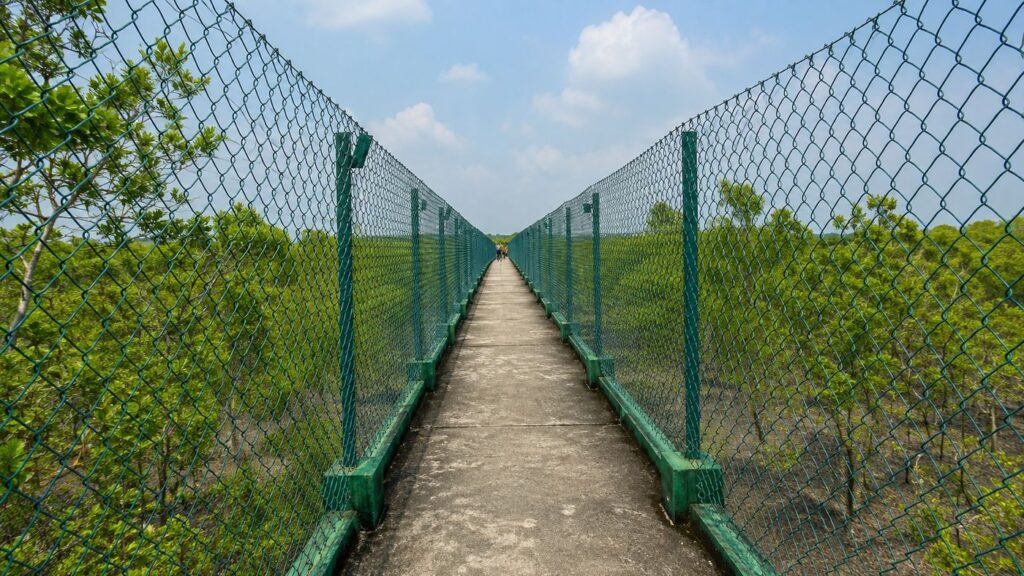
Unlike conventional forest trails that pass directly through wildlife habitat, the canopy walk raises visitors above the forest floor on a secure, elevated pathway enclosed with protective mesh. This design serves several important purposes.
First, it allows visitors to move through the forest without disturbing wildlife movements along the ground.
Second, it minimizes habitat degradation by reducing trampling of fragile mangrove soils and vegetation.
Third, the elevated perspective offers a rare opportunity to observe the vertical structure of the mangrove ecosystem—from pneumatophores emerging from tidal mud below to the dense canopy above.
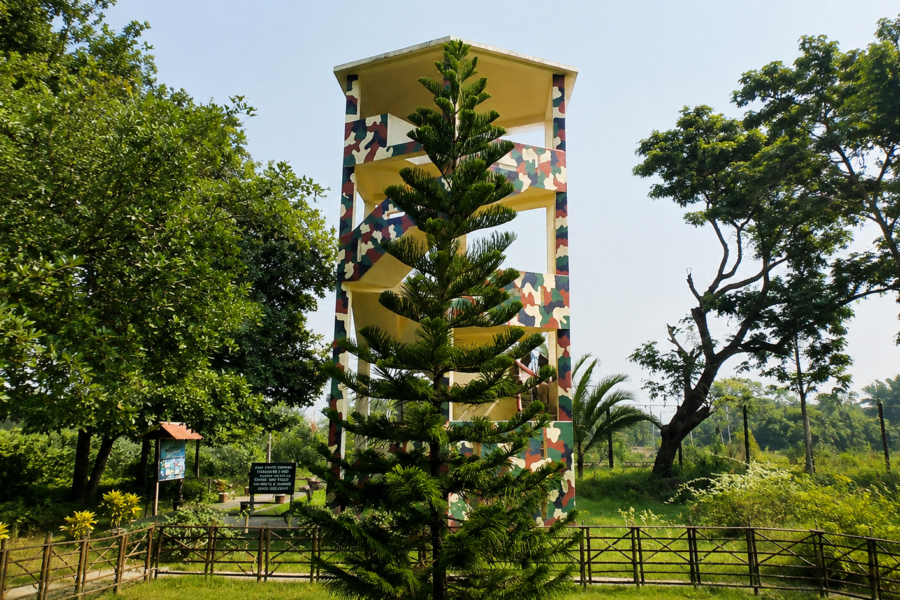
The walkway extends for approximately 500 metres, culminating at the Dobanki Watch Tower. From this vantage point, visitors can observe expansive sections of mangrove forest while remaining safely separated from wildlife. Official tourism information identifies the canopy walk as one of the defining experiences within the Indian Sundarbans.
Beyond its appeal to visitors, the canopy walk functions as an educational platform. Standing several metres above the ground reveals ecological relationships that are difficult to appreciate from a boat. The varying heights of mangrove species, the distribution of tidal creeks, and the layered structure of the forest become immediately apparent.
Dobanki Watch Tower
At the end of the canopy walkway stands the Dobanki Watch Tower, an elevated observation platform overlooking surrounding mangrove forests and adjacent open areas.
The watchtower serves several complementary functions.
- For visitors, it provides panoramic views across the mangrove landscape, allowing observation without entering sensitive wildlife habitat.
- For forest managers, elevated observation points facilitate monitoring of animal movements and visitor safety.
- For educators and naturalists, the tower offers an excellent location to interpret the ecology of tidal forests, explaining how rivers, tides, vegetation, and wildlife interact across the wider landscape.
Wildlife sightings vary considerably depending on season, time of day, weather conditions, and tidal stage. Visitors may observe Spotted Deer grazing in nearby clearings, Water Monitors basking along creek edges, kingfishers hunting over tidal channels, or raptors soaring above the canopy. The Royal Bengal Tiger is occasionally recorded in the vicinity, but sightings remain uncommon and should never be expected.
This unpredictability is central to the Wild Orbit philosophy of wildlife observation: authentic nature is never staged. The absence of guaranteed sightings reflects the integrity of a functioning wild ecosystem.
The Deer Rehabilitation & Acclimatization Enclosure
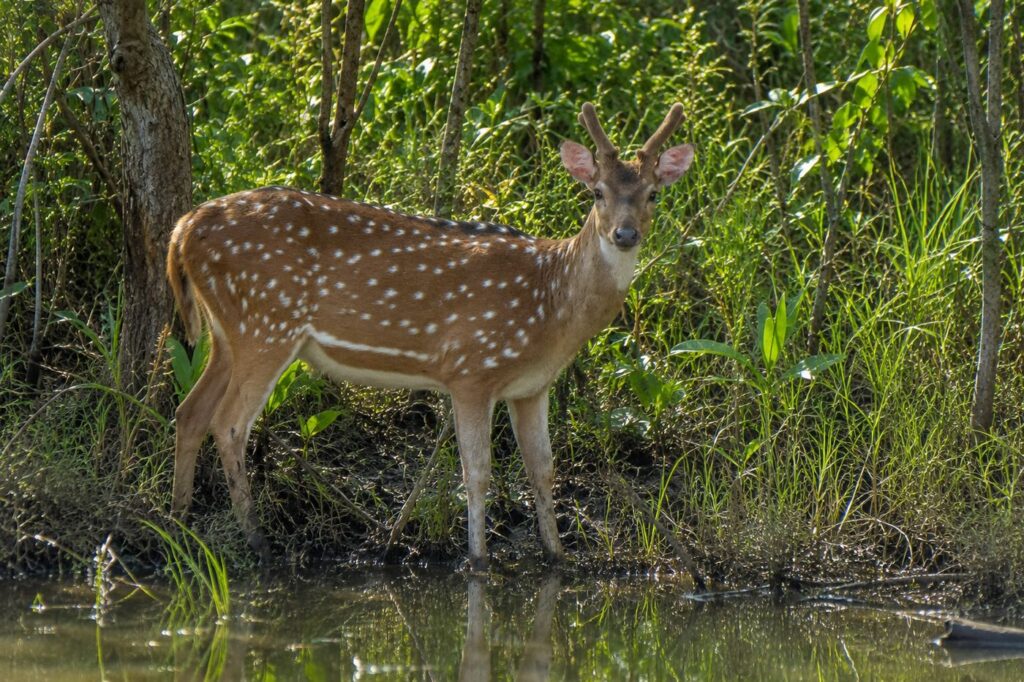
Adjacent to the watchtower is a fenced deer enclosure often referred to as the Dobanki Deer Rehabilitation or Acclimatization Centre.
This facility is sometimes misunderstood by visitors. It is not a zoo and should not be viewed as a permanent display of captive wildlife.
Instead, the enclosure has historically been used by the Forest Department for temporary care, rehabilitation, or acclimatization of rescued or vulnerable Spotted Deer under specific management circumstances. The objective is animal welfare and conservation rather than entertainment.
Because management practices evolve according to conservation priorities, the number of deer present and the operational role of the enclosure may change over time.
Understanding this distinction helps reinforce an important conservation message: wildlife management interventions are undertaken only when they contribute to the health of wild populations.
Forest Management and Protection
Protecting Dobanki requires continuous management across a landscape influenced by tides, cyclones, erosion, and wildlife movements.
The West Bengal Forest Department oversees visitor regulation, habitat protection, infrastructure maintenance, scientific monitoring, and enforcement against illegal activities within the reserve.
Key management priorities include:
- Protecting tiger habitat.
- Conserving mangrove forests.
- Preventing illegal fishing inside protected zones.
- Combating poaching.
- Monitoring crocodile and deer populations.
- Maintaining visitor safety.
- Managing tourism within ecological limits.
Because the Sundarbans consist of hundreds of interconnected islands and waterways, conservation is managed at the landscape scale rather than focusing on individual sites.
Monitoring the Royal Bengal Tiger
Modern tiger conservation depends increasingly on scientific monitoring rather than anecdotal observations.
Within the Sundarban Tiger Reserve, researchers employ several complementary techniques:
- Camera trap surveys.
- Pugmark documentation.
- Genetic analysis from scat samples.
- Habitat assessments.
- GIS-based landscape mapping.
- Population estimation following national monitoring protocols.
These methods improve understanding of tiger distribution, movement corridors, breeding success, and habitat use while reducing reliance on subjective estimates.
Monitoring also informs broader conservation decisions, including habitat restoration and anti-poaching strategies.
Climate Change and Dobanki
Few ecosystems illustrate the challenges of climate change as clearly as the Sundarbans.
Dobanki is increasingly influenced by several interacting environmental pressures:
- Sea-level rise.
- Coastal erosion.
- Increasing salinity.
- More intense tropical cyclones.
- Changes in sediment dynamics.
- Altered freshwater inflow.
Because mangrove forests occupy extremely low elevations, even modest changes in sea level or river flow can reshape habitats over time.
Cyclones such as Aila (2009), Amphan (2020), and Yaas (2021) demonstrated the vulnerability of both human communities and mangrove ecosystems. Yet these events also highlighted the protective value of intact mangrove forests, which reduce storm surge energy and stabilize coastlines.
For this reason, conserving Dobanki contributes not only to biodiversity but also to long-term climate resilience for surrounding regions.
Human–Wildlife Coexistence
Although Dobanki itself remains free from permanent human settlement, nearby islands support thousands of people whose livelihoods are closely connected to the Sundarbans.
Fishing, honey collection, crab harvesting, and eco-tourism all depend upon healthy mangrove ecosystems.
Managing the interface between people and wildlife remains one of the greatest conservation challenges. Forest authorities regulate access, issue permits, conduct awareness programmes, and work with local communities to reduce conflict while protecting both biodiversity and livelihoods.
This relationship illustrates an important reality: conserving the Sundarbans requires balancing ecological integrity with the social and economic needs of the people living along its boundaries.
Responsible Exploration
Visiting Dobanki carries a responsibility to minimize disturbance to one of the world's most sensitive ecosystems.
Good field practice includes:
- Maintain silence while observing wildlife.
- Follow all Forest Department instructions.
- Never feed or approach wild animals.
- Remain on designated boats, platforms, and walkways.
- Avoid littering or introducing plastic waste.
- Respect photography restrictions where applicable.
- Do not attempt to attract wildlife using sounds or food.
- Wear muted clothing that blends with the natural environment.
- Observe from a distance using binoculars rather than seeking close encounters.
Responsible behaviour protects wildlife while ensuring future visitors can experience the forest under equally natural conditions.
Photography in Dobanki
Dobanki offers excellent opportunities for wildlife and landscape photography, but success depends more on patience than equipment.
Early morning and late afternoon generally provide the most favourable light. Telephoto lenses are particularly useful for photographing birds and mammals without disturbance, while wide-angle lenses capture the architectural beauty of mangrove forests and the elevated canopy walkway.
Rather than focusing solely on charismatic species, photographers are encouraged to document ecological details—tidal reflections, mangrove roots, mudskippers, crab burrows, and the changing geometry of creeks—as these elements tell the broader story of the Sundarbans.
Best Season to Visit
Although Dobanki can be visited for much of the official tourism season, environmental conditions vary considerably throughout the year.
Winter (November to February) offers cooler temperatures, clearer skies, and peak opportunities for birdwatching, making it the preferred season for many visitors.
Spring (March to April) often brings active wildlife behaviour before the onset of intense summer heat.
Summer (May to June) is hotter and more humid, with wildlife activity often concentrated during cooler parts of the day.
During the monsoon, heavy rainfall, rough waterways, and conservation-related restrictions may affect visitor access, and travel conditions can change rapidly.
Regardless of season, the rhythm of the tides remains the defining influence on every visit to Dobanki.
Scientific Importance of Dobanki
Dobanki is an important field site for ecological observation because it demonstrates the interactions between hydrology, vegetation, wildlife, and climate in a relatively intact mangrove landscape.
Researchers working within the Sundarban Tiger Reserve study a wide range of subjects in and around areas such as Dobanki, including:
- Mangrove ecology and forest regeneration.
- Tidal hydrology and sediment transport.
- Carbon sequestration in mangrove soils.
- Tiger ecology and habitat connectivity.
- Bird diversity and seasonal migration.
- Estuarine fisheries and aquatic biodiversity.
- Climate change adaptation.
- Coastal resilience and shoreline stabilization.
- Human–wildlife coexistence.
- Restoration of degraded mangrove habitats.
The Sundarbans are also internationally recognized as one of the world's most significant "Blue Carbon" ecosystems. Mangrove forests store substantial amounts of carbon in both vegetation and waterlogged soils, making them highly effective natural carbon sinks. Protecting forests such as Dobanki therefore contributes not only to biodiversity conservation but also to global climate mitigation.
Seasonal Character
Although the Sundarbans remain green throughout the year, each season changes the appearance, behaviour, and ecological rhythms of Dobanki.
Winter (November–February)
Winter is widely regarded as the most comfortable season for exploration.
Typical characteristics include:
- Pleasant temperatures.
- Lower humidity.
- Improved visibility.
- Increased bird activity.
- Arrival of migratory waterbirds.
- Calm river conditions on many days.
Spotted Deer are often more active during the cooler morning hours, while kingfishers, egrets, and raptors are frequently observed around tidal creeks.
Spring (March–April)
As temperatures begin to rise, vegetation remains lush and many mangrove species enter important phases of flowering and fruiting.
During this period:
- Insect activity increases.
- Bird breeding behaviour becomes more noticeable.
- Juvenile fish continue utilizing tidal nursery habitats.
- Wildlife often concentrates around shaded creek systems during warmer afternoons.
Summer (May–June)
Summer brings high temperatures and intense humidity.
The forest becomes quieter during midday as many animals reduce activity to conserve energy.
Visitors often experience:
- Strong sunlight.
- Rapid tidal changes.
- Warm river water.
- Increased evaporation.
- Afternoon thunderstorms.
Monsoon (June–September)
The southwest monsoon transforms Dobanki.
Heavy rainfall combines with powerful tides to produce dramatic hydrological changes.
Characteristic features include:
- Flooded creek systems.
- Rapid vegetation growth.
- Increased freshwater influence.
- Dynamic sediment transport.
- Reduced accessibility due to weather conditions.
The monsoon is also an important period for nutrient cycling and mangrove regeneration.
Why Dobanki Matters to the Sundarbans
Dobanki illustrates several ecological principles that define the entire Sundarbans.
1. Tides Shape Everything
Unlike inland forests where rainfall dominates ecological processes, Dobanki is governed primarily by tidal cycles.
2. Mangroves Are Ecosystem Engineers
Mangrove roots stabilize sediments, reduce erosion, improve water quality, provide nursery habitats, and support complex food webs.
3. Predators Depend on Healthy Ecosystems
The Royal Bengal Tiger cannot survive without healthy prey populations.
- Herbivores depend on mangrove vegetation.
- Fish depend on tidal creeks.
Every level of the food web is interconnected.
4. Conservation Extends Beyond Wildlife
Protecting Dobanki also protects:
- Fisheries.
- Carbon storage.
- Coastal communities.
- Storm protection.
- Biodiversity.
- Scientific knowledge.
The Wild Orbit’s Interesting Facts About Dobanki
- Dobanki is home to one of the most famous canopy walkways in the Indian Sundarbans.
- The canopy walk allows visitors to observe the forest from above while minimizing disturbance to wildlife.
- The forest experiences two high tides and two low tides each day.
- Mangrove trees growing around Dobanki possess specialized aerial roots called pneumatophores, enabling them to survive in oxygen-poor soils.
- Many mangrove species reproduce through vivipary, where seeds germinate while still attached to the parent tree.
- The surrounding tidal creeks function as nursery grounds for numerous fish and crustacean species.
- Dobanki forms part of the Sundarban Tiger Reserve, one of the world's most important tiger conservation landscapes.
- The area contributes to one of the planet's largest continuous mangrove ecosystems.
- Healthy mangrove forests reduce cyclone impacts by dissipating wave energy and stabilizing coastlines.
- Every visit to Dobanki is different because tides continually alter the landscape.
FAQs
Where is Dobanki located?
Dobanki is situated within the Sundarban Tiger Reserve in South 24 Parganas district, West Bengal, India.
Why is Dobanki famous?
It is best known for its elevated canopy walkway, forest watchtower, and rich mangrove biodiversity.
Is Dobanki inside the Sundarban Tiger Reserve?
Yes. Dobanki lies within the protected landscape of the Sundarban Tiger Reserve.
Can Royal Bengal Tigers be seen at Dobanki?
Tigers inhabit the surrounding forests, but sightings are uncommon and cannot be predicted.
How do visitors reach Dobanki?
Access is possible only by authorized boats operating with Forest Department permission.
What wildlife is commonly seen?
Visitors frequently observe Spotted Deer, kingfishers, egrets, Brahminy Kites, Water Monitors, and occasionally crocodiles. Larger mammals are far more elusive.
What is the Dobanki Canopy Walk?
It is an elevated enclosed walkway that allows visitors to move through the forest canopy while reducing disturbance to wildlife.
What is the best time to visit?
Winter (November to February) generally offers the most comfortable weather and excellent opportunities for birdwatching.
Are guides mandatory?
Visitors typically enter the protected forest under the supervision of authorized guides and boat operators in accordance with Forest Department regulations.
Why are mangroves important?
Mangroves stabilize coastlines, store carbon, support fisheries, protect against cyclones, and provide habitat for hundreds of species.
Is Dobanki suitable for birdwatching?
Yes. The diversity of resident and migratory birds makes Dobanki one of the most rewarding birdwatching locations within the Indian Sundarbans.
Why does the river water appear brown?
The colour results from suspended sediments carried by the Ganges–Brahmaputra river system rather than pollution.
Are there roads inside Dobanki?
No. Movement is primarily by boat and along designated visitor infrastructure such as the canopy walkway.
Can the canopy walk be visited year-round?
Visitor access depends on weather, official regulations, and operational conditions. Travelers should verify current access arrangements before planning a visit.
Why is Dobanki scientifically important?
It provides opportunities to study mangrove ecology, estuarine hydrology, biodiversity conservation, climate resilience, and predator–prey dynamics within one of the world's largest tidal mangrove forests.
Dobanki and the Sundarbans
As evening approaches, the outgoing tide once again reveals the forest floor beneath Dobanki's mangroves. Thousands of pencil-like breathing roots emerge from the mud, fiddler crabs resume their constant excavation, and narrow creeks begin tracing familiar paths through the forest. The landscape appears unchanged, yet every tide has redistributed sediment, transported nutrients, altered salinity, and influenced the movements of countless organisms.
Dobanki teaches an essential lesson about the Sundarbans: this is not a wilderness defined solely by its famous tiger, but by relationships.
- Rivers shape forests.
- Mangroves stabilize land.
- Crabs recycle nutrients.
- Fish sustain birds.
- Deer support predators.
Every organism contributes to the resilience of the ecosystem.
The elevated canopy walkway offers more than a scenic viewpoint—it provides perspective. Looking across the mangrove canopy, it becomes evident that conservation is not simply about protecting individual species but about preserving the intricate ecological processes that have sustained this remarkable delta for thousands of years.
In an era of rising seas, intensifying cyclones, and accelerating environmental change, Dobanki stands as both a sanctuary and a scientific classroom. Its value lies not only in what visitors may see during a single journey, but in what the forest continues to teach about adaptation, resilience, and the enduring importance of one of Earth's greatest mangrove ecosystems.
CTA: Walk Into the Wild with The Wild Orbit
Plan your private Sundarban expedition
A private journey shaped around you — your group, your pace, your interests. Book a free consultation.