 Encyclopedia
The river had already awakened before the first hint of dawn reached the eastern horizon.
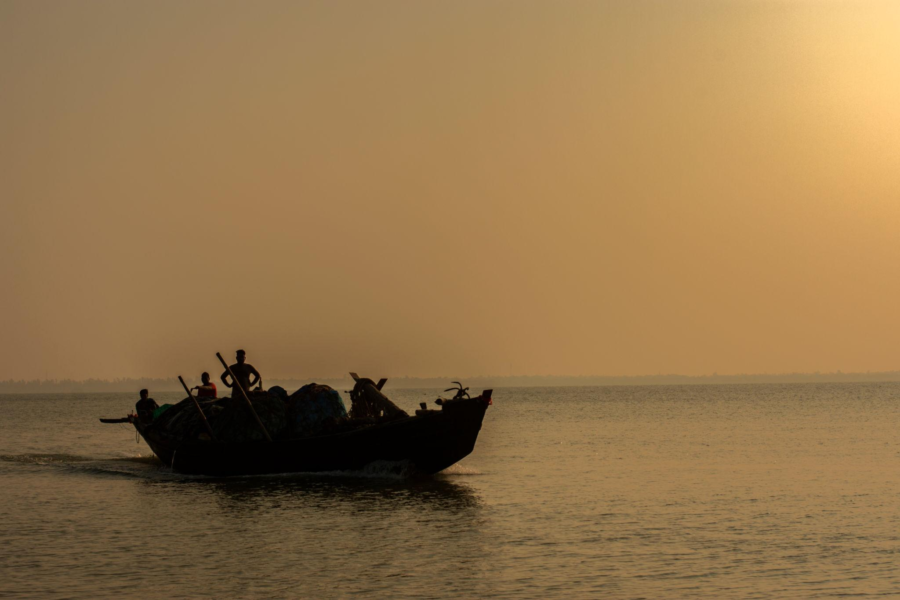
A thin veil of mist drifted above the tidal water, softening every outline into shadow. The engine of our wooden boat had fallen silent several minutes earlier, leaving only the gentle slap of water against the hull and the quiet creaking of old timber responding to the incoming tide.
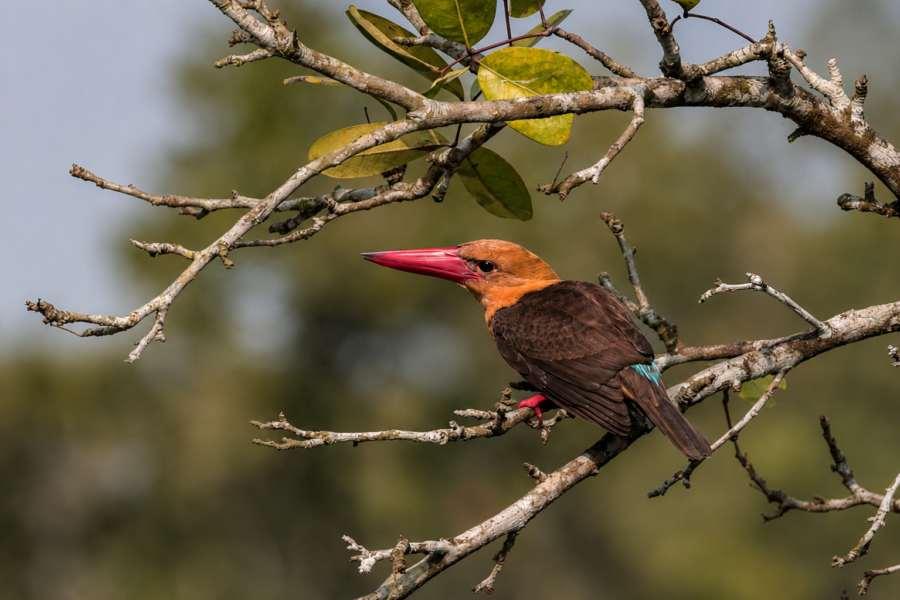
Somewhere beyond the darkness, a White-throated Kingfisher announced the morning with its unmistakable call, followed by the distant whistle of a Black Drongo perched high above an unseen field.
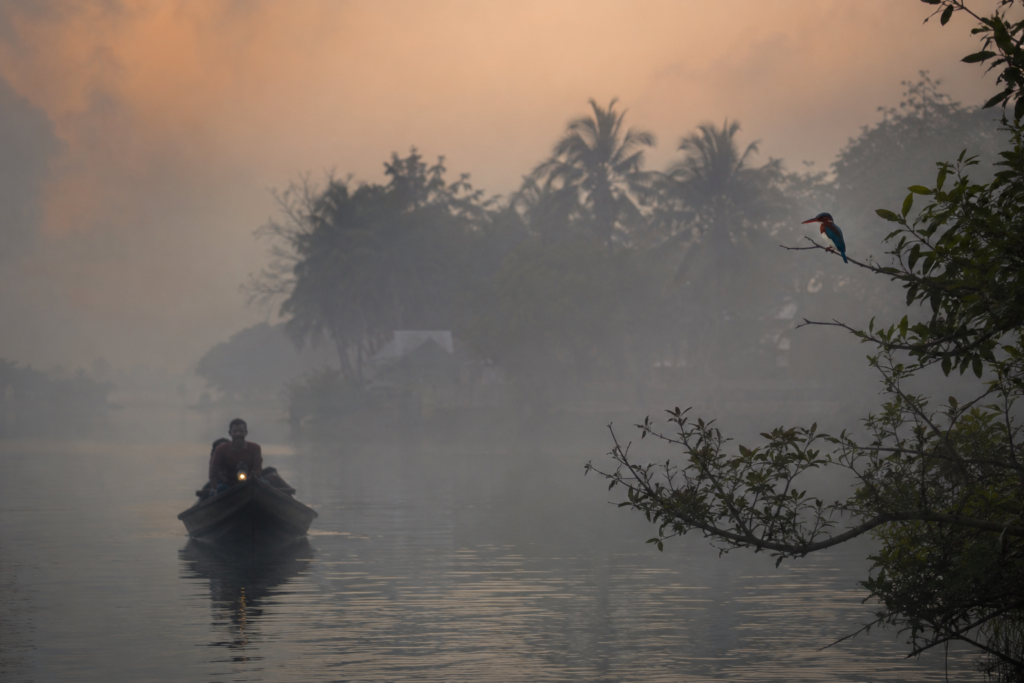
The boatman stood motionless, his eyes fixed not on the shoreline but on the water itself.
“The tide is changing,” he said softly.
Nothing more.
No explanation was needed.
Here, the tide has always been the first language.
Slowly, almost reluctantly, the darkness began to withdraw.
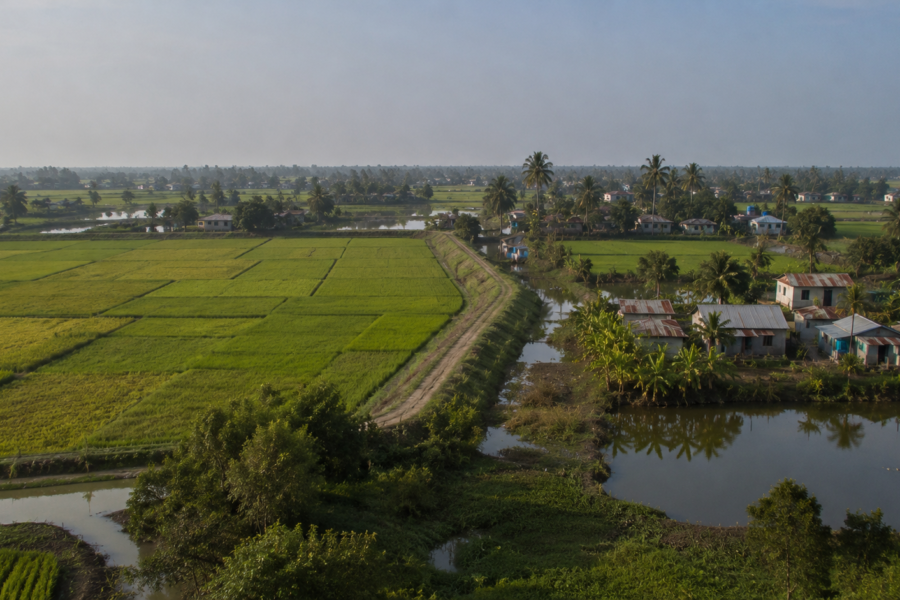
The silhouettes of coconut palms emerged first, followed by scattered bamboo groves, fishing boats resting beside muddy banks, and a long earthen embankment separating cultivated land from the tidal river.
Unlike the dense mangrove forests farther south, this was a different face of the Sundarbans—a landscape where generations of people had patiently negotiated with water instead of retreating from it.
As daylight strengthened, the island revealed itself piece by piece.
- A fisherman untied his boat without speaking.
- Smoke curled upward from village kitchens.
- Egrets crossed the river in perfect silence.
Somewhere beyond the embankment, the first bicycle bell echoed through the morning.
This is Minakhan.
- Not a wilderness untouched by people.
- Nor a town that had forgotten its rivers.
- It was something far rarer.
A living frontier where the northern plains of Bengal slowly surrender themselves to the tides of the Sundarbans.
First Encounter
The boat eased gently against a modest riverside landing where years of tidal movement had polished the wooden posts smooth. There was no formal jetty announcing arrival, no monument welcoming visitors, only an embankment rising steadily above the river and a narrow path disappearing into the village beyond.
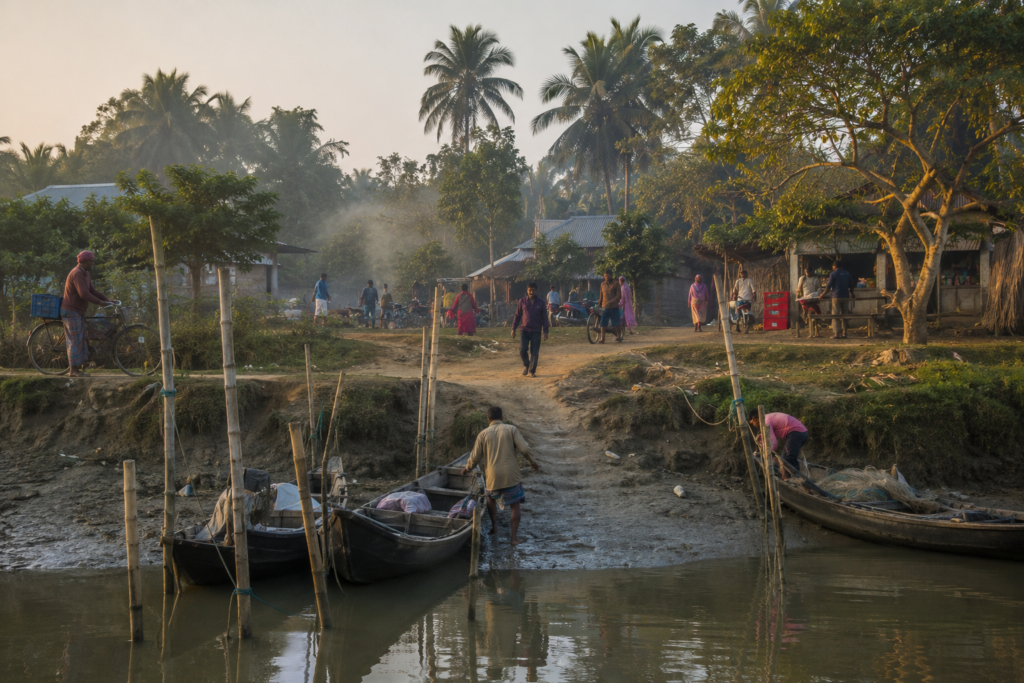
The first footsteps onto Minakhan were accompanied by familiar sounds of rural Bengal.
- The rhythmic scrape of a broom across an earthen courtyard.
- The metallic clink of milk cans being loaded onto a bicycle.
- Children laughed as they hurried toward school.
- A kettle whistling inside a roadside tea stall.
Life here had been underway long before the first visitor arrived.
Walking inland, the embankment became the island’s spine.
On one side flowed the tidal river, forever changing with the moon and the seasons. On the other stretched ponds filled with freshwater fish, paddy fields catching the first sunlight, vegetable gardens enclosed by bamboo fences, and clusters of homes shaded by mango, jackfruit, coconut and areca palms.
Nothing appeared accidental.
- Every pond had a purpose.
- Every embankment carried memory.
- Every tree seemed planted by someone whose grandchildren still lived nearby.
The deeper you walk, the clearer Minakhan becomes. Its identity was not written in monuments.
It lived in everyday routines repeated across generations.
Minakhan’s Identity
Only after spending time on its roads, embankments and riverbanks does Minakhan begin to explain itself.
Administratively, Minakhan is a Community Development Block within the Basirhat Subdivision of the North 24 Parganas district in West Bengal. Covering approximately 158.82 square kilometres, it consists of eight Gram Panchayats, seventy-three inhabited villages and seventy-four mouzas, forming one of the inhabited northern gateways to the Indian Sundarbans.
Unlike the forest islands farther south, Minakhan is overwhelmingly rural. Fields, ponds, canals and villages dominate the landscape, while tidal rivers continue to influence settlement patterns, agriculture and transport.
Nearly every village has evolved around slightly elevated ground protected by embankments, a reminder that survival in the delta has always depended upon understanding water rather than resisting it.
The Gram Panchayats—
- Atpukur
- Bamanpukur
- Chaital
- Champali
- Dhuturdaha
- Kumarjole
Minakhan and Mohanpur are more than administrative divisions. Together they represent a landscape shaped by generations of farmers, fishermen, teachers, artisans and boatmen whose lives remain inseparable from the rhythms of the delta.
Although roads now connect much of the block, rivers still define its geography.
Canals branch away from larger tidal channels. Ponds mirror the changing sky. The floodplain continues to receive fresh layers of alluvial soil brought by rivers that have spent millennia building this extraordinary landscape.
Minakhan is often described as part of the northern Sundarbans.
Walking through it, however, another description feels more appropriate. It is where the Sundarbans begin. Where cultivated Bengal gradually gives way to the tidal world beyond.
The Rivers That Built the Minakhan
Every map of Minakhan is, in truth, a map of water.
Long before roads connected villages, rivers determined where people could settle, cultivate land and exchange goods. The wider landscape belongs to the lower Ganges Delta, where countless tidal rivers, distributaries and creeks have shaped both geography and history.
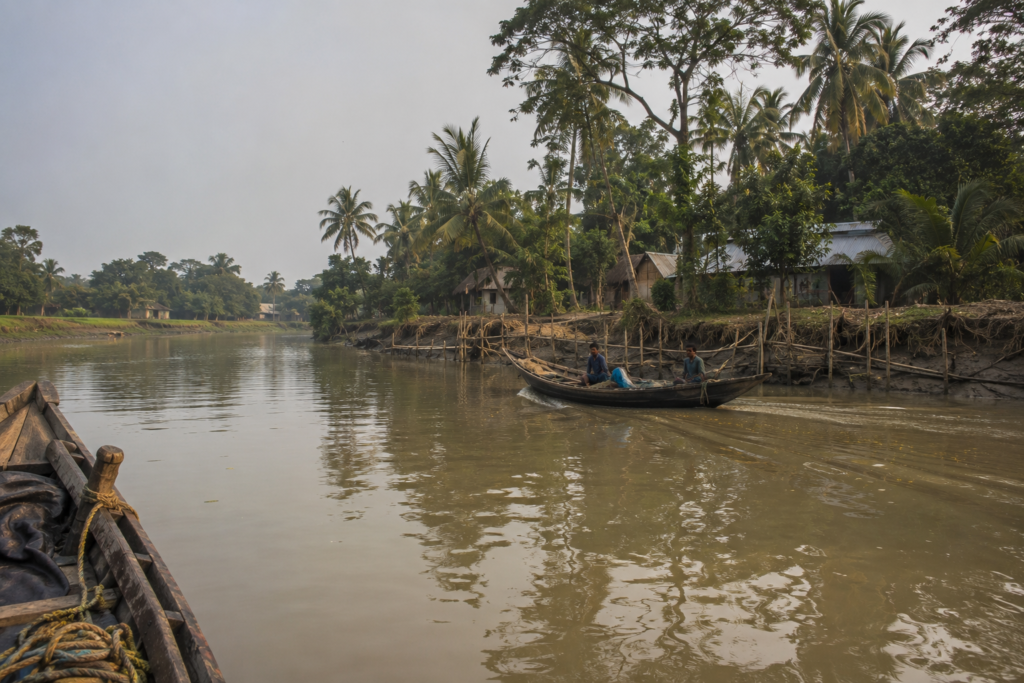
These rivers are neither fixed nor predictable.
They deposit fertile silt during one season and erode embankments during the next. They provide fish, irrigation and transport, yet they also carry saline water inland during cyclones and storm surges. Every generation has inherited the same lesson: the river gives generously, but it always expects respect in return.
Older residents still remember when boats carried almost everything.
- Rice travelled by water.
- Livestock crossed by ferry.
- Children visited relatives by country boat.
- Markets depended upon the tide.
Even today, despite improved roads, the river continues to influence the timing of daily life.
Departure is planned around currents. Fishing follows the tide. The river remains the island’s oldest road.
Historical Footprints
Minakhan’s history is not marked by grand forts or royal palaces.
Its greatest monument is the landscape itself.
Much of this region was once an expanse of tidal marshes, mangrove vegetation and wetlands. During the late eighteenth and nineteenth centuries, colonial land policies encouraged reclamation across the northern Sundarbans. Forests were gradually cleared, embankments constructed and land converted into agricultural fields.
The work demanded extraordinary patience.
- Settlers dug canals by hand.
- Families strengthened embankments season after season.
- Fields damaged by saline flooding were restored repeatedly until crops could once again grow.
- Migration played an equally important role.
Farmers, fishermen, craftsmen and traders arrived from different parts of Bengal, bringing agricultural knowledge, religious traditions and cultural practices that gradually blended into the island’s identity.
Minakhan’s history is therefore not the story of conquest.
It is the story of coexistence.
People learned to live with the river instead of attempting to defeat it.
Historical Personalities & Transformations
Unlike places celebrated for famous rulers, Minakhan owes much of its transformation to individuals whose names rarely appear in history books.
- Teachers established schools where formal education had once been absent.
- Boatmen connected isolated settlements before roads existed.
- Community leaders organised embankment repairs after devastating floods.
- Farmers experimented with crops suited to changing soil conditions.
- Health workers travelled across rivers to reach villages during the monsoon.
Their contributions quietly reshaped the island.
Following Independence, improvements in education, healthcare, transport and rural development gradually strengthened Minakhan’s connection with the rest of North 24 Parganas while preserving its distinctive riverine identity.
- Electricity reached villages that had long depended upon kerosene lamps.
- Schools expanded educational opportunities for younger generations.
- Roads reduced travel times that had once been dictated entirely by the tide.
Yet despite these changes, one relationship remains unchanged.
Every generation continues to inherit the responsibility of protecting embankments, understanding rivers and adapting to a landscape that never stops changing.
In Minakhan, history is not something left behind.
It arrives twice each day with the tide.
Folklore & Legends
By the time the sun climbed above the palms, Minakhan had found its morning rhythm. Nets were drying along the embankments, tea stalls were crowded with farmers discussing the weather, and boats continued to move quietly through the tidal channels.
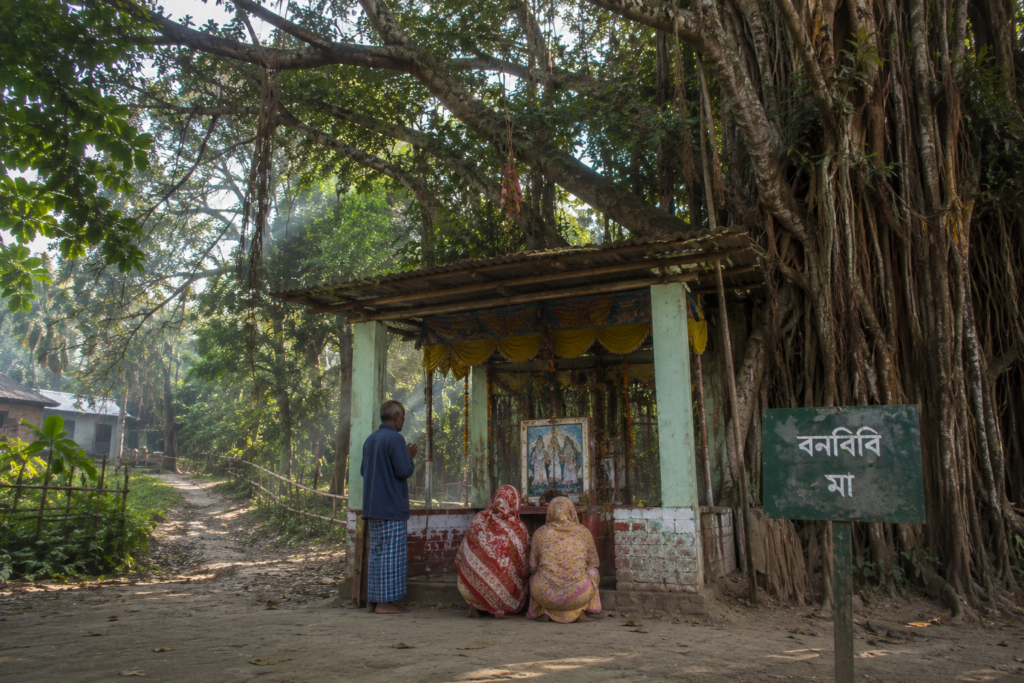
This was also the hour when stories began.
Not stories found in history books.
Stories carried from one generation to the next.
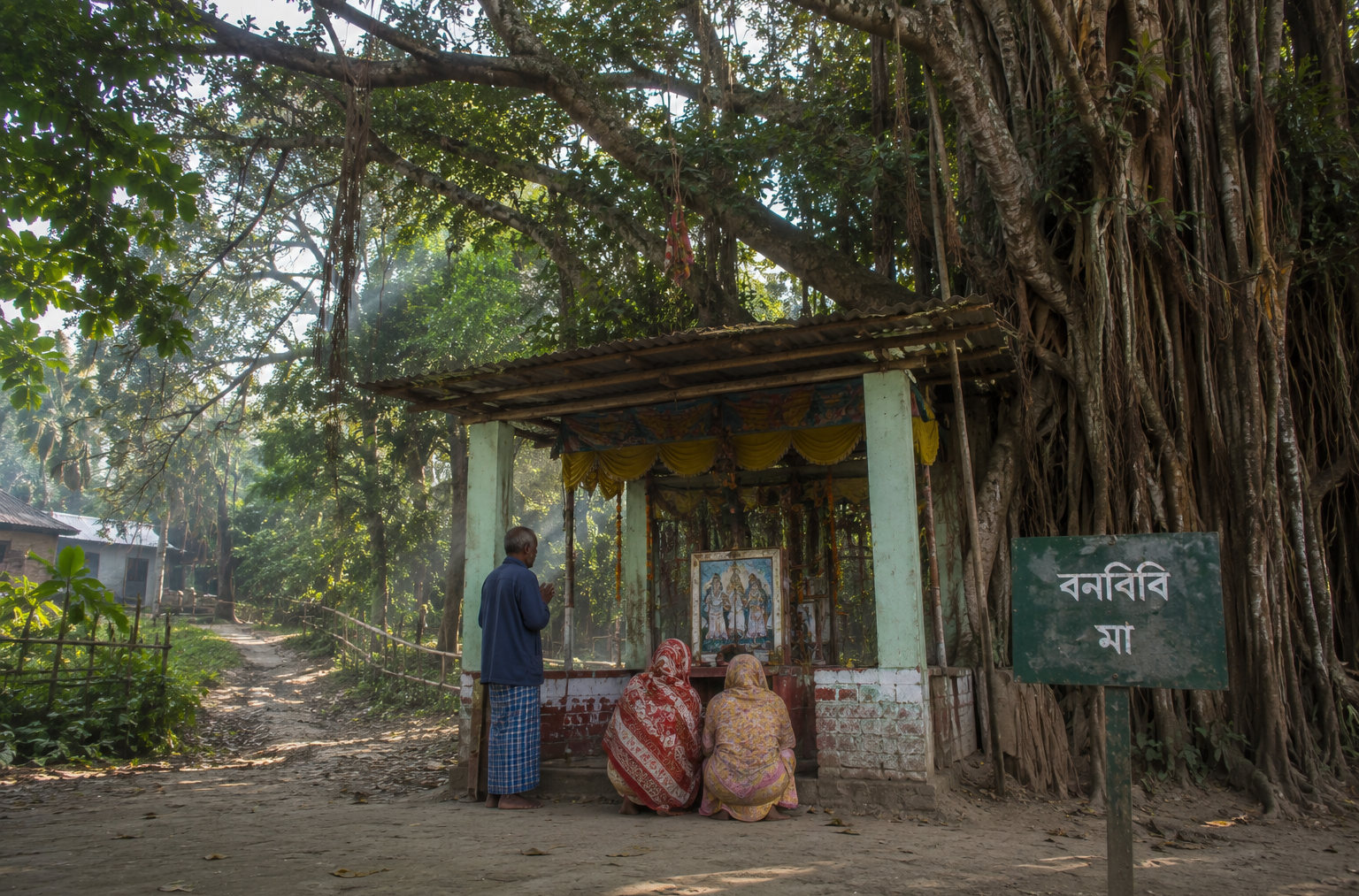
Although Minakhan lies outside the dense mangrove forests of the southern Sundarbans, it remains deeply connected to the region’s spiritual landscape. Families here have long maintained relationships with fishermen, crab collectors and forest workers who travelled farther south into the mangrove wilderness. Along with goods and memories, they brought home the stories of Bonbibi, the revered guardian of the Sundarbans.
Older residents still speak of Bonbibi with respect rather than mythology. She represents balance between humans and nature—a reminder that greed has no place in the forest. Her story often accompanies that of Shah Jongoli, her faithful companion, and Dakshin Ray, the powerful lord of the forest who is traditionally associated with the tiger. These beliefs continue to influence the wider Sundarbans, even in villages where daily life revolves more around agriculture than forest gathering.
Minakhan has its own quieter beliefs as well.
- Boatmen avoid unnecessary arrogance while crossing rivers during storms.
- Some elders still touch the water before beginning a long journey.
- Others believe that rivers deserve silence when the weather suddenly changes.
No written record confirms when these customs began.
Perhaps they were never meant to be written.
Like the tides, they simply continue.
Life Between the Tides
By late morning, Minakhan belongs to its workers.
Across the paddy fields, farmers move steadily through waterlogged soil, transplanting rice beneath an increasingly warm sun. Along narrow canals, fishermen lift bamboo traps that have rested overnight beneath the tide. Nearby, women clean freshly harvested vegetables while children return briefly from school before afternoon classes.
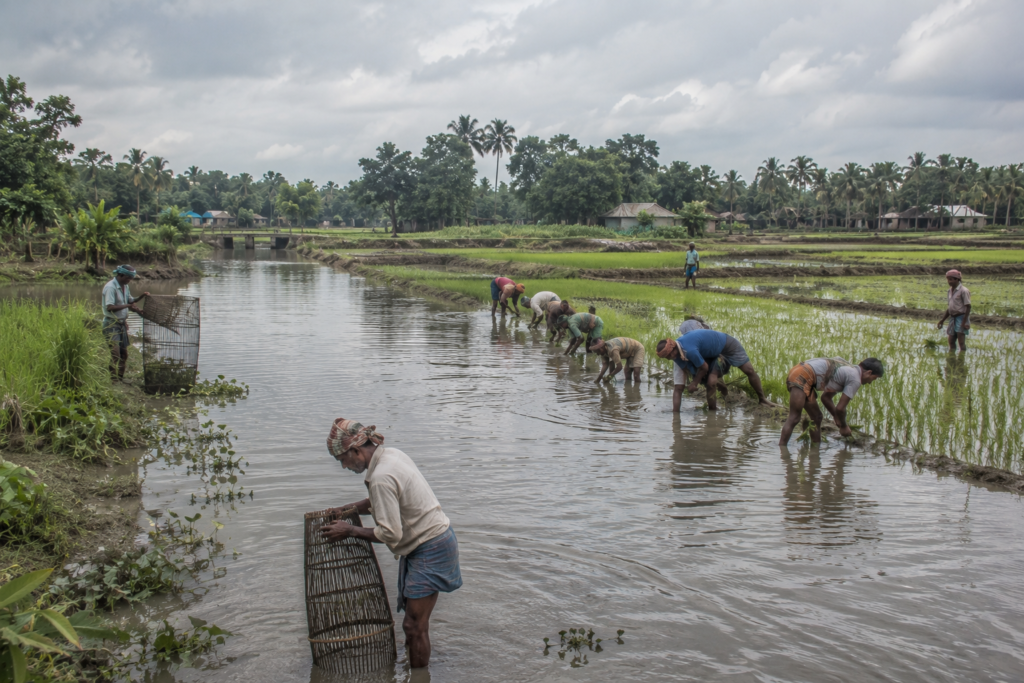
Life here follows a timetable written not by clocks but by water.
- High tide determines when boats leave.
- Low tide reveals muddy banks where repairs become possible.
- Monsoon rain fills ponds.
- Winter allows fields to recover.
Agriculture remains the backbone of Minakhan’s economy.
Rice dominates much of the cultivated land, supported by vegetables, betel leaf, fruit trees and seasonal crops.
Alongside farming, freshwater aquaculture has become equally important.
Household ponds stocked with carp and other fish provide both food and income, reducing dependence upon a single livelihood.
Unlike the forest islands farther south, honey collection and large-scale crab harvesting are not defining occupations here. Those activities belong more closely to communities living beside the protected mangrove forests. Minakhan’s relationship with the Sundarbans is different.
It is a landscape where fields meet tides.
- Where ponds stand beside canals.
- Where rivers support agriculture instead of replacing it.
Walking Through the Villages
The villages of Minakhan reveal themselves one courtyard at a time.
- Walking through settlements under the eight Gram Panchayats, every turn presents another small detail that explains the island’s character.

- Brick houses stand beside older mud-walled homes carefully maintained through generations.
- Banana plants lean over bamboo fences.
- Mango and jackfruit trees shade courtyards where ducks wander freely between ponds and vegetable gardens.
Temples rarely dominate the skyline.
They appear naturally within neighbourhoods, often shaded by ancient banyan or peepal trees.
Nearby, mosques quietly serve their communities, their calls to prayer drifting across fields already busy with agricultural work.
Schools occupy a special place in village life.
As the afternoon session ends, narrow lanes fill with children carrying backpacks larger than themselves, bicycles weaving carefully between goats, pedestrians and handcarts.
Every village possesses its own tea stall.
These are more than places to drink tea.
They function as community newspapers, weather stations, employment exchanges and informal meeting halls.
Here, rainfall predictions receive as much attention as politics.
Everyone has an opinion.
Nobody appears in a hurry.
Sounds of the Island
See it for yourself
A private journey shaped around you — your group, your pace, your interests. Book a free consultation.
Close your eyes.
Minakhan can still be understood.
The morning belongs to birds.
- White-throated Kingfishers whistle from electric wires.
- Red-vented Bulbuls chatter within fruit trees.
- Common Mynas patrol village paths while Black Drongos chase insects above grazing cattle.
Later, the human orchestra gradually grows louder.
- The thump of rice being cleaned.
- The ringing of bicycle bells.
- The distant cough of diesel engines started before another river crossing.
- The chatter of schoolchildren.
- The bargaining voices of the fish market.
By afternoon, the island grows quieter.
- Heat slows movement.
- Even the birds retreat into shade.
- Only cicadas continue their endless chorus.
Evening transforms everything again.
- Temple bells echo gently across the villages.
- The call to prayer follows from a nearby mosque.
- Pressure cookers hiss inside kitchens.
- Frogs begin calling from ponds after sunset.
Above all these sounds remains one constant presence.
The river.
- Sometimes calm.
- Sometimes restless.
- Always speaking.
Wildlife Expedition
Minakhan rewards careful observation rather than dramatic spectacle.
Its wildlife lives quietly alongside people.
- The first kingfishers appear before sunrise, waiting patiently above canals and fish ponds.
- Pond Herons stalk shallow water with extraordinary patience.
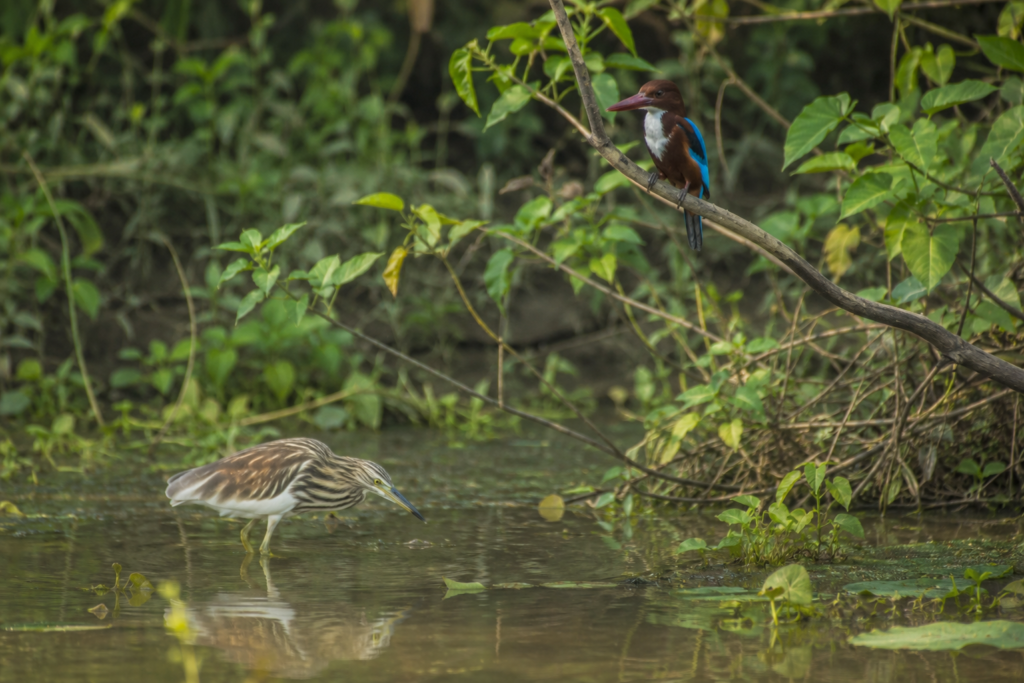
- Little Egrets follow grazing cattle through freshly cultivated fields searching for disturbed insects.
- Cormorants dry their wings beside larger ponds.
- Black Kites circle high above markets.
During winter, migratory waterbirds visit nearby wetlands, adding another layer to the island’s seasonal biodiversity.
Among reptiles, the Water Monitor occasionally patrols muddy canal banks before disappearing into the water with surprising speed. Various frog species become highly active after monsoon rain, while dragonflies and damselflies dominate the air above ponds throughout much of the year.
Visitors often ask whether tigers roam in Minakhan.
The answer requires honesty.
Minakhan is not recognised as a regular tiger habitat. Although rare dispersal events have occasionally occurred elsewhere in the northern inhabited Sundarbans, the island itself should not be presented as a place where tiger sightings are expected.
The same caution applies to Fishing Cats and otters.
Suitable habitats exist within the wider delta, yet confirmed records specific to Minakhan remain limited.
A true field naturalist records what can be observed.
Not what might be imagined.
Mangrove Chronicles
Standing beside one of Minakhan’s quieter tidal creeks, it becomes clear that the island’s mangroves tell a story different from those of the great forest farther south.
Here, mangroves survive in fragments.
Small stands cling to muddy banks where tides still shape the land.
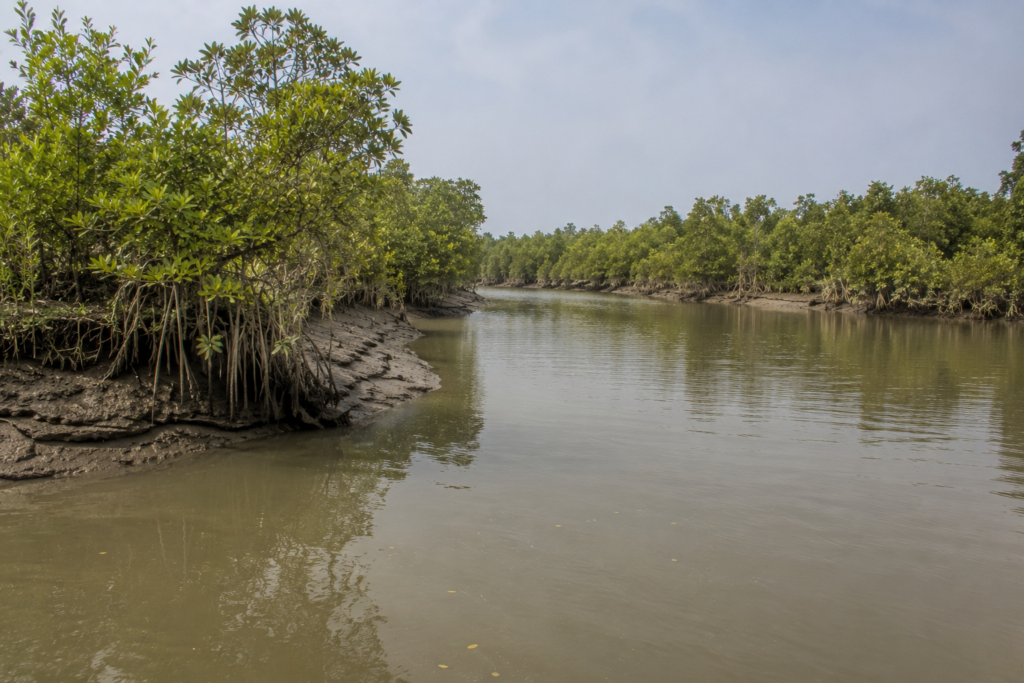
Their roots grip soft sediment with remarkable determination, reducing erosion while providing shelter for juvenile fish, crabs and countless aquatic organisms.
Grey Mangroves, Gewa and other salt-tolerant species appear where conditions remain suitable, though never in the vast uninterrupted forests associated with the Sundarbans Tiger Reserve.
These surviving patches perform work far beyond their size.
- They are slow waves.
- Trap sediment.
- Protect embankments.
- Support biodiversity.
- Filter water moving between the land and the river.
For generations, local communities have recognised their value.
Older residents remember when larger stretches of natural vegetation lined certain creeks before expanding settlements and agriculture transformed the landscape.
Today, conservation carries a different meaning.
Protecting these remaining mangrove corridors is no longer simply about preserving trees.
It is about protecting the natural infrastructure that helps Minakhan withstand erosion, storm surges and an increasingly uncertain climate.
The mangroves remain patient.
Rooted between land and water.
Still holding the island together, one tide at a time.
Explorer’s Field Notes
A single day rarely explains an island. Yet sometimes, if observed carefully enough, one day reveals its entire rhythm.
05:07 AM
The eastern horizon begins to brighten beyond the river. The incoming tide carries floating hyacinth silently past the boat while a White-throated Kingfisher claims the first call of the morning.
05:34 AM
Smoke rises from village kitchens. The smell of damp firewood mixes with the scent of wet earth left behind by the retreating night.
06:02 AM
Fishermen untie their boats one after another. Nobody appears hurried. Departure depends on the tide, not the clock.
06:48 AM
Egrets scatter across freshly cultivated paddy fields behind grazing cattle. Black Drongos patrol overhead, catching insects disturbed by the movement below.
07:26 AM
The embankment comes alive. Cyclists, schoolchildren and vegetable vendors all share the narrow road overlooking the tidal canal.
08:11 AM
A roadside tea stall becomes unexpectedly busy. Conversations drift effortlessly from rainfall predictions to fish prices, then to memories of last year’s monsoon.
09:03 AM
The morning market reaches its busiest hour. Fresh fish, vegetables and seasonal fruit fill wooden stalls while traders greet familiar customers by name.
10:27 AM
A Water Monitor slips quietly from the muddy edge of a canal before disappearing beneath the surface.
11:46 AM
The heat settles heavily over the fields. Birdsong becomes noticeably quieter. Only cicadas continue uninterrupted.
01:15 PM
Farmers pause beneath mango trees for lunch. Rice, vegetables and freshly cooked fish arrive in steel containers carried from nearby homes.
03:02 PM
Dragonflies patrol irrigation canals. Children returning from school stop briefly beside household ponds to feed fish before continuing home.
04:39 PM
The falling tide exposes muddy banks alive with fiddler crabs. Within minutes, hundreds emerge from tiny burrows as though responding to an unseen signal.
05:31 PM
Temple bells ring softly across one village. Moments later, the evening call to prayer drifts from another. The sounds overlap without competing.
06:18 PM
Fruit bats leave their daytime roosts. The sky turns copper before fading slowly into blue.
08:07 PM
Only the river continues moving. The island grows quiet, preparing for another tide.
Nightfall on the Minakhan
Night does not arrive abruptly in Minakhan.
It settles gently, almost respectfully.
The last sunlight lingers on coconut palms before slipping behind distant clouds. The river darkens first. Then the ponds. Finally, the narrow lanes connecting one village to another disappear into the shadows.
Cooking fires become the island’s evening constellations.
The smell of steamed rice, mustard oil and freshly prepared fish drifts across courtyards where families gather after the day’s work. Children complete homework beneath electric lights while grandparents sit outside discussing weather patterns, harvests and memories that seem inseparable from the rivers themselves.
Boats continue crossing the waterways long after darkness falls.
Their lanterns move slowly across black water like wandering stars.
Beyond the villages, frogs begin their nightly chorus from ponds and flooded fields. Crickets answer from the embankments. Occasionally, a dog barks somewhere in the distance before silence returns once more.
Standing beside the river after sunset, one realises something unusual.
Even in darkness, Minakhan never stops moving.
The tide continues its patient work.
- Invisible.
- Unhurried.
- Constant.
The Seasons of the Minakhan
Minakhan cannot be understood through a single visit. Each season redraws the landscape.
Winter (December – February)
Cool mornings arrive wrapped in mist. Wetlands attract migratory birds while harvested fields glow beneath soft winter sunlight. This is the season of long walks, clear skies and exceptional visibility across the delta.
Spring (March – April)
The countryside becomes quieter before summer arrives. Mango blossoms perfume village lanes. New leaves brighten roadside trees while bird activity reaches its seasonal peak during the cooler hours of early morning.
Summer (May – June)
Heat dominates daily life.
Work begins before sunrise.
Afternoons empty the roads as temperatures climb. Thunderstorms arrive dramatically, bringing lightning, heavy rain and welcome relief to fields waiting for the monsoon.
Monsoon (June – September)
Water becomes the island’s defining force.
- Rice fields flood.
- Canals overflow.
- Fish ponds refill.
Roads occasionally disappear beneath standing water while boats regain importance as local transport.
The landscape turns brilliantly green. Everywhere, life responds to rain.
Post-Monsoon (October – November)
Perhaps Minakhan’s most beautiful season.
- The sky clears.
- Harvest approaches.
- The rivers become calmer.
Evening light softens every embankment, creating ideal conditions for documentary photography and long observations of village life.
Cyclone Season
Unlike the calendar seasons, the cyclone season arrives with uncertainty.
- Every family watches weather forecasts more closely.
- Boats return earlier.
- Loose roofing sheets are secured.
- Emergency supplies quietly appear inside homes.
Preparedness becomes another seasonal ritual.
Cyclones and Survival
Every embankment in Minakhan tells a story.
Some stories are visible.
Others exist only in memory.
Ask an older resident about Cyclone Aila, Amphan or Yaas, and the conversation rarely begins with wind.
Instead, people remember water.
Saline water entering fields.
- Ponds are becoming undrinkable.
- Broken embankments.
- Destroyed homes.
- Weeks without electricity.
- Months spent rebuilding.
For outsiders, a cyclone is measured in hours.
For island communities, recovery is measured in years.
The embankments surrounding Minakhan are therefore more than barriers between land and river.
They are living structures requiring constant care.
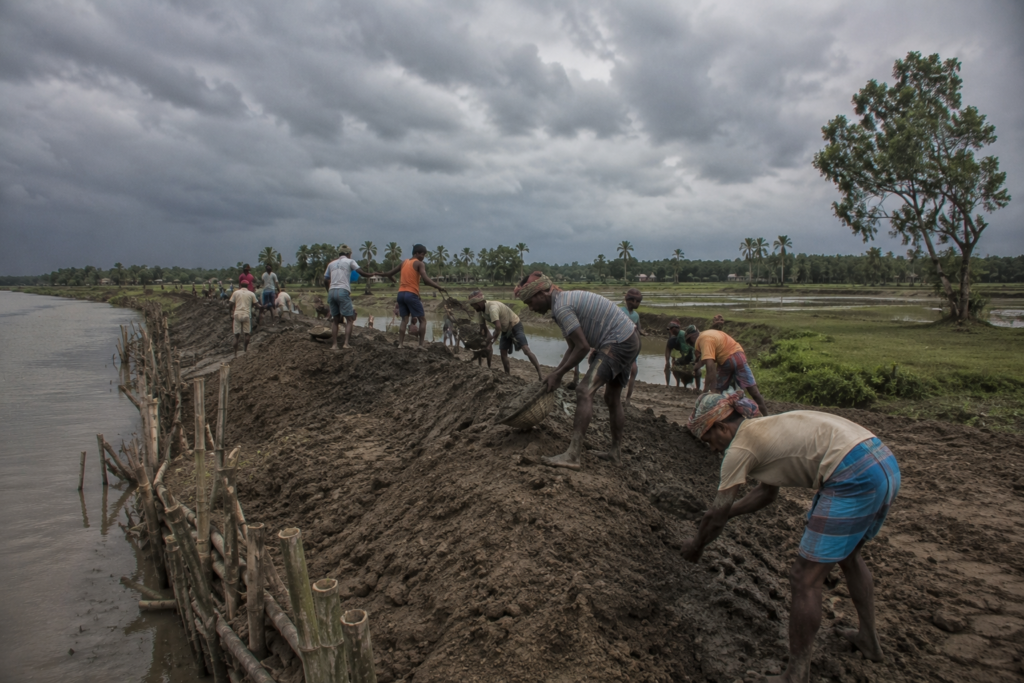
After every major storm, damaged sections are repaired through a combination of government intervention and community effort. Fresh soil replaces eroded banks. Bamboo reinforcements are installed where needed. Grass is planted to stabilise vulnerable slopes.
The work never truly ends.
Climate change has introduced new uncertainty.
- Higher sea levels.
- Changing rainfall patterns.
- Increasingly intense storms.
Yet Minakhan continues adapting.
- Farmers experiment with crops suited to altered soil conditions.
- Fish farming diversifies household income.
- Rainwater harvesting has become increasingly important wherever salinity threatens freshwater supplies.
Perhaps the island’s greatest strength lies not in resisting change but in accepting that adaptation has always been part of life here.
- The river changes.
- The climate changes.
- The people change with them.
Tomorrow morning, before sunrise, boats will once again leave the riverbank.
- Children will return to school.
- Farmers will walk back into their fields.
- The embankments will stand quietly beside the tide.
And life in Minakhan will begin again, just as it has for generations.
Ferry Routes & Hidden Paths
Every journey through Minakhan eventually leads back to the water.
Although roads now connect most villages, the rivers have never surrendered their importance. They remain silent highways carrying people, produce and memories between settlements.
Long before bridges and buses became common, boats connected every corner of this landscape, and even today, many families instinctively measure distance by the time taken to cross a river rather than by kilometres.
The smaller ferry ghats reveal a quieter side of the island.
Early each morning, schoolchildren wait beside bicycles, farmers carry sacks of vegetables harvested before dawn, fishermen return with the night’s catch, and traders load supplies bound for neighbouring villages.
Nobody rushes. Everyone understands that the river decides the schedule.
Watching a country boat approach a muddy landing is to witness generations of accumulated experience. The boatman adjusts the angle of the vessel long before reaching the bank, allowing the current to complete most of the work. Passengers step ashore with practiced ease, greeting familiar faces before disappearing into narrow village lanes.
Away from the ferry crossings, hidden embankment paths become the explorer’s greatest reward.
Some run beside fish ponds shimmering beneath the afternoon sun.
Others disappear into rice fields where egrets accompany farmers through shallow water.
Occasionally, a path ends beneath an ancient banyan tree overlooking a quiet canal where only dragonflies disturb the silence.
These routes rarely appear on tourist maps.
They belong to the people who use them every day.
Walking them offers a deeper understanding of Minakhan than any road ever could.
Photography Expedition Guide
Minakhan is not photographed.
It is observed.
Its beauty lies not in dramatic landmarks but in quiet moments that unfold naturally for those willing to wait.
Sunrise Photography
Arrive before dawn.
The finest light appears while mist still floats above ponds and tidal canals. Coconut palms emerge slowly from the darkness, their reflections mirrored perfectly in still water. The first boats leaving village ghats create gentle ripples that transform otherwise motionless landscapes into living compositions.
Morning Documentary Photography
Between sunrise and nine o’clock, Minakhan becomes a gallery of everyday life.
- Farmers preparing fields.
- Children cycling to school.
- Women sweeping courtyards.
- Tea stalls are welcoming their first customers.
These scenes require patience rather than direction. The strongest documentary photographs are never staged.
Wildlife Photography
Focus on behaviour.
- Kingfishers diving into canals.
- Pond Herons hunting beside fish ponds.
- Dragonflies resting on reeds after rainfall.
- Water Monitors are disappearing silently into muddy creeks.
Winter mornings provide additional opportunities to photograph migratory wetland birds across flooded agricultural landscapes.
Landscape Photography
Each season transforms the island.
- Winter offers mist.
- Summer produces dramatic thunderclouds.
- The monsoon fills fields with reflective water.
- Post-monsoon evenings deliver warm golden light across embankments and ponds.
Photograph the relationship between land, water and people.
That relationship defines Minakhan.
Cultural Photography
Always begin with a conversation.
Whether visiting a market, a tea stall or a village festival, genuine interaction creates stronger photographs than hurried observation.
Respect remains the photographer’s most valuable lens.
Expedition Notes
Every expedition leaves behind observations too small to fit within maps.
Minakhan rewards those who notice them.
Almost every pond tells a different story.
- Some support fish farming.
- Others collect rainwater.
- Several have served the same family for generations.
Look closely at the embankments.
- Older sections curve gently beneath decades of monsoon rain.
- Newer repairs appear brighter, revealing where recent storms tested the island’s defences.
Observe the trees.
- Large banyans often mark gathering places.
- Mango trees shade schoolyards.
- Areca palms surround village homes.
- Coconut trees stand like patient sentinels overlooking ponds and canals.
Notice the conversations.
Weather is discussed with remarkable precision.
People rarely ask whether it will rain.
Instead, they ask when.
Watch the birds.
- Kingfishers choose the same perches repeatedly.
- Drongos follow grazing cattle.
- Egrets move wherever freshly disturbed soil promises insects.
Nothing here feels random.
The longer one observes, the more organised the landscape becomes.
Connected Landscapes
Minakhan is only one chapter within the vast story of the Sundarbans.
Its rivers do not end at administrative boundaries.
They continue outward, linking neighbouring villages, wetlands and islands into a single living delta.
To the south, the landscape gradually becomes more saline, eventually giving way to the great mangrove forests that have made the Sundarbans famous across the world.
To the north, agriculture becomes increasingly dominant as the delta merges into the wider plains of Bengal.
Nearby settlements remain connected through markets, schools, healthcare facilities, marriages, festivals and trade routes that have existed for generations.
- Vegetables harvested in Minakhan travel to nearby towns.
- Fish raised in household ponds reach markets beyond the block.
- Students commute daily between villages and educational institutions.
- Birds ignore these human boundaries altogether.
- A migratory duck resting in one wetland today may feed in another tomorrow.
- Kingfishers follow canals wherever fish remain abundant.
The river carries everyone.
- People.
- Wildlife.
- Stories.
Understanding Minakhan, therefore means understanding connection rather than isolation.
It belongs to the Sundarbans.
But it also belongs to the larger story of Bengal’s riverine civilisation.
Oral Histories
Every village preserves a history that official records rarely capture.
An elderly fisherman smiles while remembering the years when every journey depended upon the tide.
“There were fewer roads,” he says. “We knew every bend in the river.”
A retired schoolteacher recalls walking long distances along embankments before bicycles became common. “If the tide was high,” she laughs, “everyone arrived at school with muddy feet.”
Another resident points toward a stretch of newly repaired embankment. “My grandfather helped build the first one here.”
His grandson now cycles across the same embankment every morning on the way to college.
Generations remain connected through the landscape itself.
One farmer remembers Cyclone Aila not by the date but by the taste of the water afterwards.
“The ponds became salty.” “We spent months bringing them back.”
These memories rarely appear in archives. Yet they explain the island better than statistics ever could. History here survives through conversation. Passed quietly from one generation to the next.
Food of the Minakhan
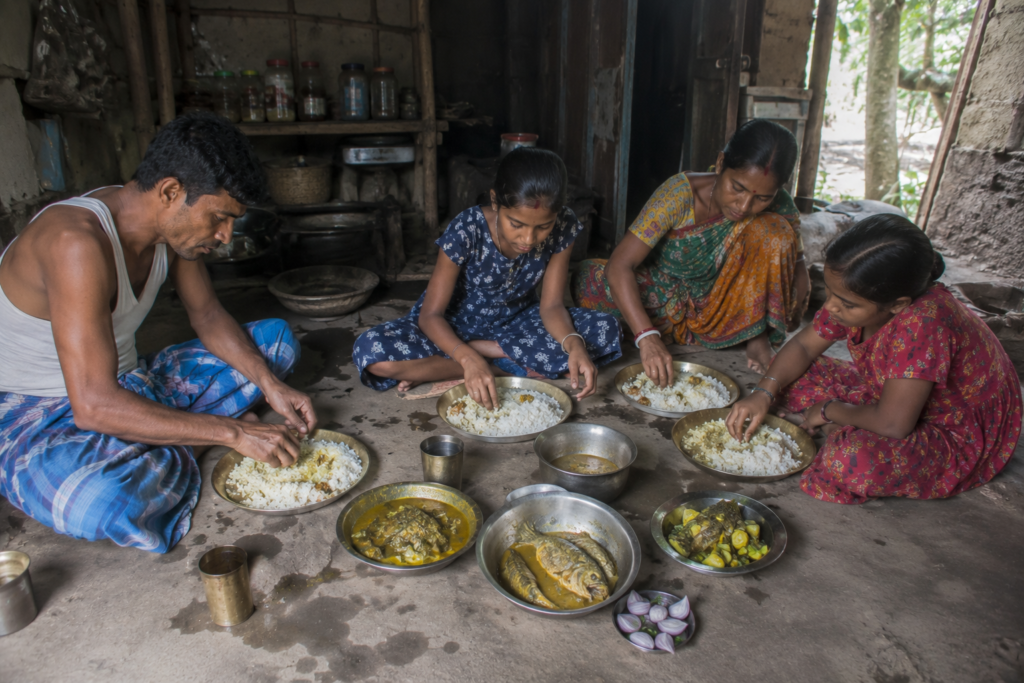
Lunch in Minakhan arrives without ceremony.
Freshly steamed rice occupies the centre of every meal. Around it comes whatever the season and the surrounding landscape have provided. Fish remains the defining ingredient.
- Rohu.
- Catla.
- Small freshwater species from ponds.
- Seasonal prawns when available.
Mustard oil, green chillies and turmeric provide familiar flavours that have shaped Bengali kitchens for centuries.
Vegetables often come directly from household gardens.
- Bottle gourd.
- Pumpkin.
- Spinach.
- Okra.
- Papaya.
- Seasonal leafy greens.
Coconut appears frequently—grated into curries, prepared as sweets or served fresh during warmer months.
- Tea binds the day together.
- Morning tea before work.
- Afternoon tea beside the market.
Evening tea shared with neighbours discussing the weather, crops and family news.
Food here reflects the island itself.
- Simple.
- Fresh.
- Seasonal.
Deeply connected to the surrounding land and water.
Minakhan’s Economy
Minakhan has never depended upon a single livelihood.
Its economy reflects the adaptability that defines life across the delta.
Agriculture remains the foundation.
Rice cultivation dominates much of the landscape, supported by vegetables, fruit orchards and household gardens that provide both food and supplementary income.
Aquaculture has expanded significantly over recent decades.
Thousands of freshwater ponds support fish farming, supplying local markets as well as neighbouring towns.
Fishing continues in rivers, canals and wetlands, particularly during favourable seasons when tidal conditions support productive catches.
Small businesses form another essential layer of village life.
- Tea stalls.
- Rice mills.
- Tailoring shops.
- Boat repair workshops.
- Local grocery stores.
- Transport services.
Together, they create a resilient rural economy.
Migration also shapes modern Minakhan.
Many younger residents pursue education or employment in Kolkata, Basirhat and other urban centres before returning home during festivals, harvest seasons or family occasions.
Yet despite these changing opportunities, the island retains a remarkably strong sense of identity.
Because here, success is rarely measured by leaving.
- It is measured by returning.
- Returning to the river.
- Returning to the fields.
Returning to the community that has always understood how to live with the tide.
Then & Now
Every island exists in two landscapes.
The one we see today.
And the one remembered by those who watched it change.
Older residents of Minakhan remember when journeys were planned around boats rather than buses. Rivers served as the primary roads, while embankments were little more than narrow earthen paths connecting scattered villages. Electricity was limited, communication depended on word of mouth, and weather forecasts came from experience rather than mobile phones.
Today’s Minakhan is different.
Concrete roads connect villages that were once separated by seasonal mud. Schools, healthcare facilities and digital communication have transformed everyday life. Young people travel to nearby towns and Kolkata for higher education and employment while maintaining close ties with their ancestral homes.
Yet beneath these visible changes, the island remains remarkably familiar.
The first question each morning is still about the weather.
- Farmers continue reading the sky before planting.
- Fishermen still study the tide before launching their boats.
- Embankments remain the guardians of every settlement.
- Cyclones continue testing the resilience of both people and landscape.
Minakhan has embraced modernity without abandoning its riverine identity.
It continues to evolve.
But always at the pace of the tide.
The Wild Orbit Quick Facts
| Category | Details |
| Location | Minakhan Community Development Block, Basirhat Subdivision, North 24 Parganas, West Bengal |
| Coordinates | Approximately 22.62° N, 88.80° E |
| Area | 158.82 sq km |
| Population (2011 Census) | 199,084 |
| Administrative Block | Minakhan CD Block |
| Gram Panchayats | Atpukur, Bamanpukur, Chaital, Champali, Dhuturdaha, Kumarjole, Minakhan and Mohanpur |
| Inhabited Villages | 73 |
| Landscape | Deltaic floodplain, ponds, canals, agricultural land and tidal wetlands |
| Nearest Major City | Kolkata |
| Principal Livelihoods | Agriculture, fisheries, aquaculture, small businesses and services |
| Best Season to Explore | November to February |
| Wildlife Highlights | Kingfishers, pond herons, egrets, cormorants, water monitors, and migratory wetland birds |
| Major Challenges | Cyclones, embankment erosion, salinity intrusion and climate change |
The Wild Orbit Expedition Snapshot
Accessibility
★★★★☆
One of the most accessible gateways into the inhabited northern Sundarbans, with good road connectivity complemented by traditional river transport.
Wildlife Potential
★★★☆☆
Ideal for birdwatching, wetland ecology and documentary observation rather than large wildlife encounters.
Photography Potential
★★★★★
Excellent opportunities for documentary photography, rural landscapes, wetlands, village life, agriculture and changing seasonal light.
Cultural Richness
★★★★★
A remarkable cultural landscape where rivers, farming traditions, village life and community resilience remain inseparable.
Historical Interest
★★★★☆
An outstanding example of reclaimed delta land shaped by centuries of settlement, embankment building and adaptation.
Solitude Level
★★★☆☆
Minakhan is lived-in rather than isolated.
Its appeal lies in authenticity instead of remoteness.
The Wild Orbit Verdict
Minakhan is not defined by spectacle.
It is defined by quiet resilience.
For photographers, researchers, naturalists and explorers seeking to understand how people and rivers shape one another, few places in the northern Sundarbans are more rewarding.
FAQs
1. Is Minakhan part of the Sundarbans?
Yes. It forms part of the inhabited northern Indian Sundarbans.
2. Is Minakhan inside the Sundarbans Tiger Reserve?
No. It lies outside the protected core forest.
3. What makes Minakhan unique?
Its combination of agriculture, tidal rivers, wetlands and long-established settlements.
4. How many villages are there?
There are 73 inhabited villages.
5. How many Gram Panchayats?
Eight.
6. Is Minakhan suitable for birdwatching?
Yes, particularly around ponds, canals and wetlands.
7. Are there mangroves?
Yes, mainly in fragmented tidal patches.
8. Are Bengal Tigers found here?
Routine tiger presence is not characteristic of Minakhan.
9. What are the main occupations?
Agriculture, fisheries, aquaculture and small businesses.
10. Which crops dominate?
Rice is the principal crop, supported by vegetable and fruit cultivation.
11. Is fish farming important?
Yes, it is a major contributor to household income.
12. What is the best season to visit?
Winter and the post-monsoon months.
13. Does Minakhan experience cyclones?
Yes. Cyclones remain one of the island’s greatest environmental challenges.
14. Why are embankments important?
They protect villages and farmland from tidal flooding and saline water.
15. Are there weekly markets?
Yes, they remain central to local trade and social life.
16. Is Minakhan good for photography?
Excellent, especially for documentary, cultural and landscape photography.
17. Are there ferries?
Yes. Local ferries continue to connect communities where waterways remain important.
18. Is Minakhan suitable for researchers?
Very much so, particularly for studies of delta ecology, rural livelihoods and climate adaptation.
19. What wildlife is commonly seen?
Kingfishers, herons, egrets, cormorants, water monitors, frogs and numerous wetland species.
20. What is the greatest environmental threat?
Climate change is combined with stronger cyclones and increasing salinity.
21. Does Bonbibi remain culturally important?
Yes, as part of the wider spiritual traditions of the Sundarbans.
22. What should visitors observe first?
The relationship between rivers, embankments, ponds and villages.
23. Is Minakhan a good starting point for understanding the Sundarbans?
Yes. It represents the transition between mainland Bengal and the tidal delta.
24. What defines everyday life here?
Living in harmony with changing water levels and seasonal cycles.
25. What is the greatest lesson Minakhan offers?
That survival in the delta is never achieved by controlling nature.
It is achieved by learning to live beside it.
How to Reach Minakhan
Minakhan is one of the northern gateways to the Indian Sundarbans, located in North 24 Parganas district. Owing to its proximity to Kolkata and its well-developed road network, it is among the most accessible entry points into the delta’s inhabited landscape.
By Road:
Minakhan is approximately 55–65 km from Kolkata, depending on the route. The journey typically takes 2 to 2.5 hours via Barasat, Berachampa, and State Highway 3 (SH-3). The drive passes through agricultural plains, freshwater ponds, fish farms, and wetlands before reaching the tidal environment of the lower delta.
By Rail:
There is no direct railway station at Minakhan. Travelers can take Eastern Railway suburban trains from Sealdah Station to nearby stations such as Basirhat, Hasnabad, or Champapukur, and then continue to Minakhan by bus, shared vehicle, or taxi. Road transport from these stations generally takes 30 to 60 minutes, depending on the route.
By Bus:
Regular government and private buses operate from Kolkata (Esplanade/Dharmatala) and nearby towns, providing direct connectivity to Minakhan. Shared vehicles and local transport are also widely available from Barasat and Basirhat throughout the day.
By Water:
While Minakhan itself is connected by road, local ferries and country boats remain essential for travel within the surrounding riverine landscape. These services connect villages separated by tidal creeks and distributaries, supporting the daily movement of residents, agricultural produce, and fishing communities across the delta.
Travel During the Monsoon:
Between June and September, heavy rainfall, high tides, and occasional waterlogging may increase travel times and affect local ferry operations. Travelers planning to visit nearby islands or remote villages should check local transport conditions before departure. The cooler months from November to February offer the most comfortable weather for exploring the region.
Things to See Around Minakhan
The finest places around Minakhan are rarely marked on signboards.
They reveal themselves through observation.
Watch the sunrise from an embankment overlooking tidal canals.
Explore village markets where fish, vegetables and local conversation arrive together each morning.
Spend time beside household ponds that quietly support fisheries, agriculture and daily life.
Walk through the Gram Panchayats of Atpukur, Bamanpukur, Chaital, Champali, Dhuturdaha, Kumarjole and Mohanpur, where every village offers a slightly different expression of the same riverine landscape.
Seek out surviving mangrove-lined creeks where mudskippers, dragonflies, kingfishers and wetland birds continue to thrive.
Visit temples and mosques respectfully.
Listen to the sounds of the villages rather than searching for monuments.
In Minakhan, the landscape itself is the destination.
Continue the Journey
No island explains the Sundarbans alone.
Every river leaving Minakhan flows toward another story.
Southward, the tidal influence grows stronger until the great mangrove forests dominate the horizon.
Northward, the delta merges gradually into the fertile plains of Bengal.
Continue exploring neighbouring islands, rivers, wetlands and villages to understand how each landscape contributes another chapter to the wider Sundarbans.
Some reveal remarkable wildlife. Others preserve centuries of human history. Together they form one of the world’s most extraordinary living deltas.
The journey does not end at Minakhan.
It simply follows the river onward.
When the River Says Goodbye
The boat pushed gently away from the riverbank just as the last light faded behind the palms.
Minakhan slowly receded into the evening.
The embankments that had carried farmers, schoolchildren and fishermen throughout the day became quiet silhouettes against the twilight sky. A final fishing boat crossed the river.
Its lantern shimmered briefly upon the darkening water before disappearing around a bend. The tide had already begun to change again.
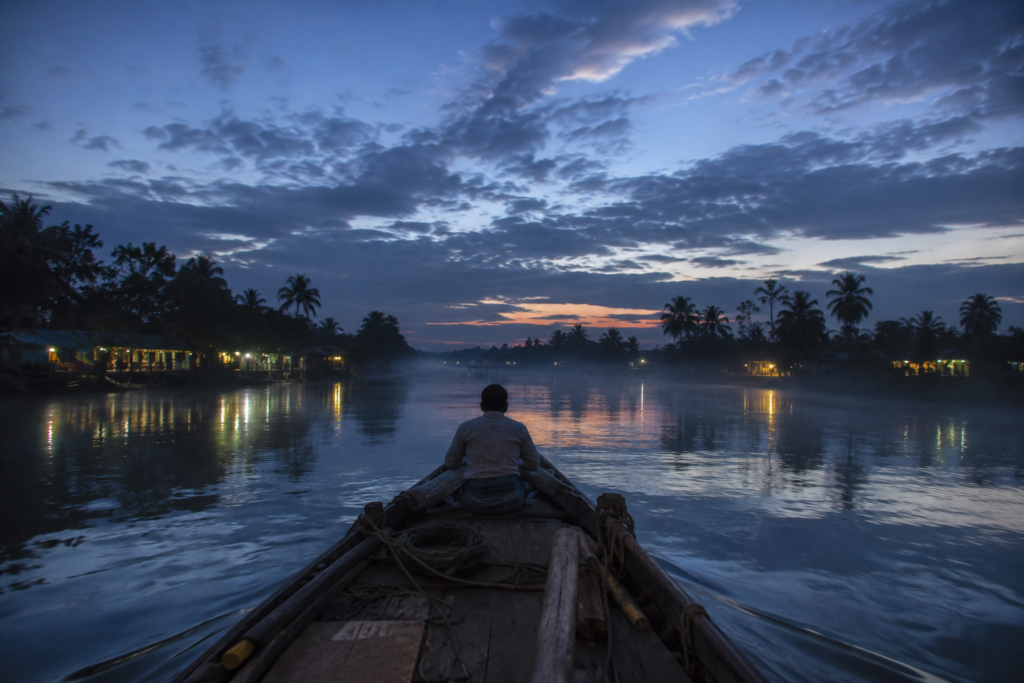
Tomorrow morning, these same banks would awaken before sunrise.
- Tea stalls would open.
- Boats would return to the river.
- Children would cycle to school.
The island would continue its conversation with water, exactly as it had for generations.
Looking back, Minakhan no longer appeared simply as a collection of villages. It had become something larger.
- A landscape shaped by patience.
- A community defined by resilience.
- A place where rivers are not obstacles but companions.
As darkness settled completely across the northern Sundarbans, the shoreline dissolved into the night. Only the sound of the river remained.
Steady.
Timeless.
Carrying the boat—and the memory of Minakhan—toward the next bend in the delta.