 Field guide
At the edges of the Indian Sundarbans, where mangrove roots rise through soft mud and narrow tidal creeks divide the forest into shifting islands, survival often depends on noticing what others overlook. Among the mammals inhabiting this landscape is a small, alert carnivore that can pass through the undergrowth with little disturbance: the Common Grey Mongoose.
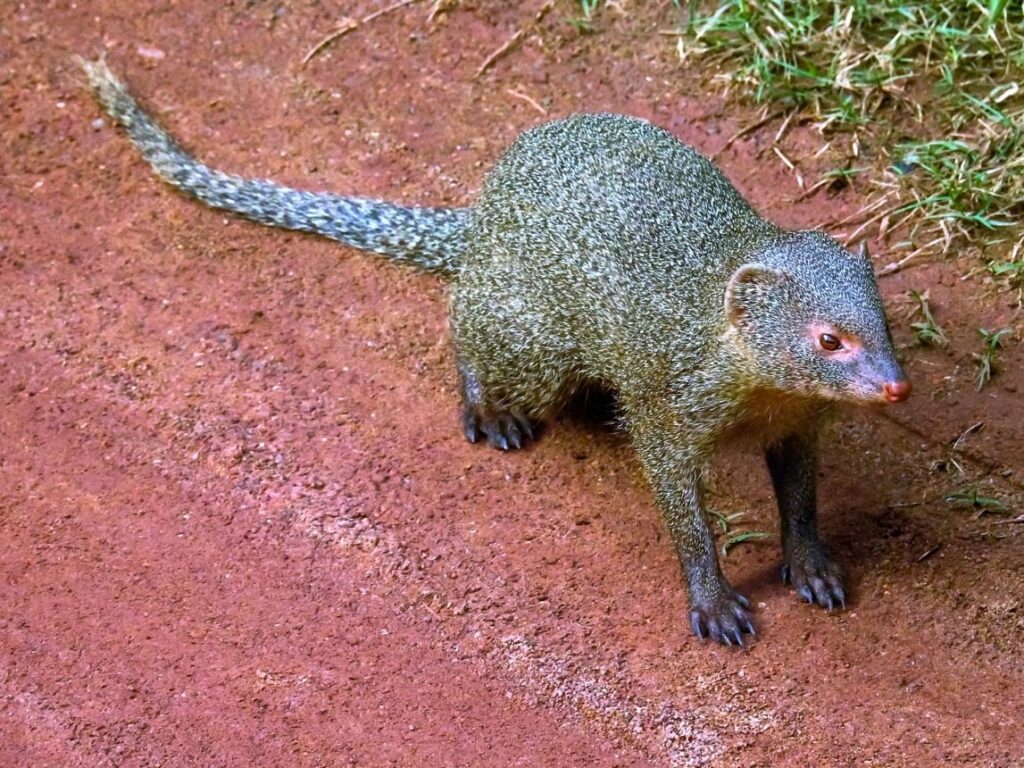
Known scientifically as Urva edwardsii, and widely referred to in older literature as Herpestes edwardsii, this adaptable member of the mongoose family occupies a broad range of habitats across the Indian subcontinent. It is recognised in West Bengal’s biodiversity records, and a recent wildlife checklist for Sundarban National Park includes the Grey Mongoose among the mammals observed in the area.
Unlike the Royal Bengal Tiger, whose presence can shape the experience of an entire expedition, the Common Grey Mongoose is a more understated part of the landscape. Its ecological importance lies not in spectacle but in its everyday activities: searching for small animals, exploring cover, responding to danger and occupying the spaces where vegetation, wetlands and human settlements meet.
The Sundarbans, however, is not simply another green forest. Its terrain is influenced by tidal water, sediment, salinity and seasonal changes. Understanding the mongoose here requires looking beyond a general description of the species and considering how its adaptable terrestrial habits fit into a wetland environment.
There is an important distinction to maintain throughout this account. The species is recognised in regional biodiversity records, and a Sundarban National Park checklist reports its presence. Nevertheless, detailed, peer-reviewed research on its population size, movement, breeding ecology and specific adaptations within the Indian Sundarbans remains limited in the sources reviewed. The animal’s established biology can help explain its ecological role, but it should not be mistaken for direct evidence of a unique Sundarbans population.
Meet the Common Grey Mongoose
The Common Grey Mongoose is a medium-sized terrestrial carnivore belonging to the family Herpestidae. It is native to South Asia and is known for its adaptable feeding habits, alert behaviour and ability to use a variety of habitats, from scrubland and open woodland to cultivated landscapes and areas close to people.
Its appearance is distinctive without being especially conspicuous. The body is elongated, the legs are relatively short, and the long, tapering tail balances the animal’s proportions. Its coat generally appears greyish, sometimes with a yellowish or tawny cast, while the feet are darker and the tail tip can be reddish. Exact colour varies between individuals and with lighting, so colour alone is not a reliable means of identification.
The mongoose’s familiar alert posture reflects its way of life. It must investigate possible food sources while remaining ready to retreat into cover. Small vertebrates, insects and other accessible food resources can all become part of its diet, allowing it to exploit environments in which food availability changes across space and time.
In the Indian Sundarbans, this flexibility is particularly relevant. The forest is interspersed with waterways, mudbanks, vegetated islands and areas influenced by human activity. A mammal capable of using different types of ground cover and switching between food sources may find opportunities in such a varied landscape. That ecological explanation is plausible, although it does not establish how frequently mongooses use individual mangrove habitats.
Common Grey Mongoose At a Glance
| Feature | Details |
| Common name | Common Grey Mongoose; also called Indian Grey Mongoose |
| Scientific name | Urva edwardsii |
| Older scientific name | Herpestes edwardsii |
| Family | Herpestidae |
| Order | Carnivora |
| Conservation status | Least Concern (IUCN Red List classification reported in established species references) |
| Natural distribution | Indian subcontinent and parts of western and southern Asia |
| Habitat | Open woodland, scrub, forest edges, cultivated land and other suitable vegetated habitats |
| Diet | Small mammals, reptiles, birds and their eggs, insects and other accessible food |
| Typical body length | Approximately 36–45 cm, excluding the tail; general species reference, not a Sundarbans measurement |
| Tail | Long, approximately comparable to body length in commonly cited descriptions |
| Activity | Primarily diurnal in many parts of its range |
| Social behaviour | Usually solitary or encountered in pairs |
| Ecological role | Small-animal predator and opportunistic feeder |
| Sundarbans significance | Included in a published Sundarban National Park wildlife checklist; local population details remain insufficiently documented |
Scientific Classification and Identity
The Common Grey Mongoose belongs to the order Carnivora, the group that includes cats, dogs, bears and several other lineages of meat-eating mammals. Within this order, it belongs to Herpestidae, the mongoose family.
Its scientific name deserves a brief explanation. Older wildlife literature commonly uses Herpestes edwardsii. More recent taxonomic treatments place the species in the genus Urva, giving the currently accepted combination Urva edwardsii. The older name remains widespread in Indian biodiversity resources and field documents, so readers may encounter both names when consulting different sources.
The Common Grey Mongoose should not be confused with the Small Indian Mongoose, Urva auropunctata, or the Bengal Marsh Mongoose, Herpestes palustris. These are distinct species, despite overlapping common names and some similarities in their ecological associations. The distinction matters in wetland surveys, where an imprecise record of a “mongoose” may not be sufficient to establish the species.
Conservation Status: Secure Globally, Worth Monitoring Locally
The Common Grey Mongoose is classified as Least Concern in the IUCN status information reported by established species references. This category indicates that the species is not currently assessed as meeting the global criteria for a threatened category. It does not mean that every local population is stable, abundant or free from threats.
That distinction is important in the Sundarbans. A species can remain widespread across its range while particular populations face habitat disturbance, road mortality, persecution or other local pressures. Yet it would be equally misleading to suggest that the Common Grey Mongoose is declining in the Indian Sundarbans without supporting monitoring data.
The appropriate position is therefore measured: the species has a relatively favourable reported global conservation status, but its distribution, abundance and local pressures in the Sundarbans deserve better documentation. Reliable camera-trap records, verified field observations and systematic habitat surveys could help establish whether it is widespread across suitable areas or concentrated around particular forest edges and settlements.
Where Does the Common Grey Mongoose Live?
Across its wider range, the Common Grey Mongoose uses a broad selection of terrestrial habitats. These include scrub, open forest, cultivated land, bushy margins and places where shelter and food occur close together. It can also occupy landscapes modified by people.
The species’ occurrence in the Sundarbans should be understood against that broader ecological background.
The Indian Sundarbans consists of a mosaic of mangrove forest, tidal waterways, mudflats, estuarine margins, islands and inhabited landscapes. Not every part of this environment offers the same opportunities to a terrestrial mammal. The character of the ground, availability of dry resting places, density of vegetation, proximity to freshwater and exposure to tidal inundation can all influence which locations are usable.
The mongoose is not an aquatic specialist, nor is it known for a specialised dependence on mangrove trees. Its likely opportunities are associated with suitable ground-level cover and accessible food, especially where vegetation provides shelter and the terrain allows it to forage safely. This is an ecological interpretation based on the species’ general habitat preferences, not proof that it uses all mangrove forest types equally.
Why Does It Occur in the Sundarbans?
The presence of the Common Grey Mongoose in the Sundarbans is best understood through habitat flexibility rather than a claim of unique mangrove adaptation.
Mangrove landscapes contain more than inundated forest. They include forest margins, elevated or less frequently flooded ground, vegetated embankments, village surroundings and other terrestrial interfaces. Such places may provide shelter and opportunities to search for small prey. The mongoose’s established ability to occupy varied habitats offers a reasonable explanation for its presence in this broader landscape.
The Sundarbans also contains a dynamic boundary between wildlife habitat and human use. Agricultural land, settlements, pathways and vegetated edges can create conditions different from those in the interior forest. In many regions, the Common Grey Mongoose uses such mixed landscapes, although the degree to which it relies on comparable habitats in the Sundarbans has not been adequately quantified.
Tidal influence is a further consideration. Unlike mammals adapted to frequent immersion, a terrestrial mongoose must use ground and cover appropriate to its needs. It would be premature, however, to claim that the species follows particular tidal schedules, selects specific mangrove species or possesses physiological adaptations to saline conditions. Those are questions for local field research.
A Small Predator in a Complex Ecosystem
The Common Grey Mongoose contributes to the food web by consuming small animals and exploiting a range of accessible food resources. Depending on local conditions, its prey may include rodents, reptiles, insects and birds’ eggs.
Predation on small animals is one part of its ecological function. By feeding on different prey, the mongoose participates in the transfer of energy through the ecosystem and forms part of the network linking invertebrates, small vertebrates and larger predators.
Its feeding habits also make it an opportunistic forager. The availability of one food source may vary with season, weather, habitat structure or human activity, while other food sources remain accessible. Such flexibility can be useful in changing environments, though the actual diet of Sundarbans individuals has not been established through a dedicated local dietary study in the sources reviewed.
It is important not to overstate the effect of the species. There is no sufficient evidence here to quantify its influence on rodent populations, its contribution to pest control in Sundarbans settlements or its importance relative to other local predators. Its role is meaningful as part of the ecosystem, but the magnitude of that role remains a research question.
A Body Designed for a Life Close to the Ground
The Common Grey Mongoose has a long, comparatively slender body, short limbs and a tail that extends well behind it. Its proportions allow it to move close to the ground while investigating openings, vegetation and potential food sources.
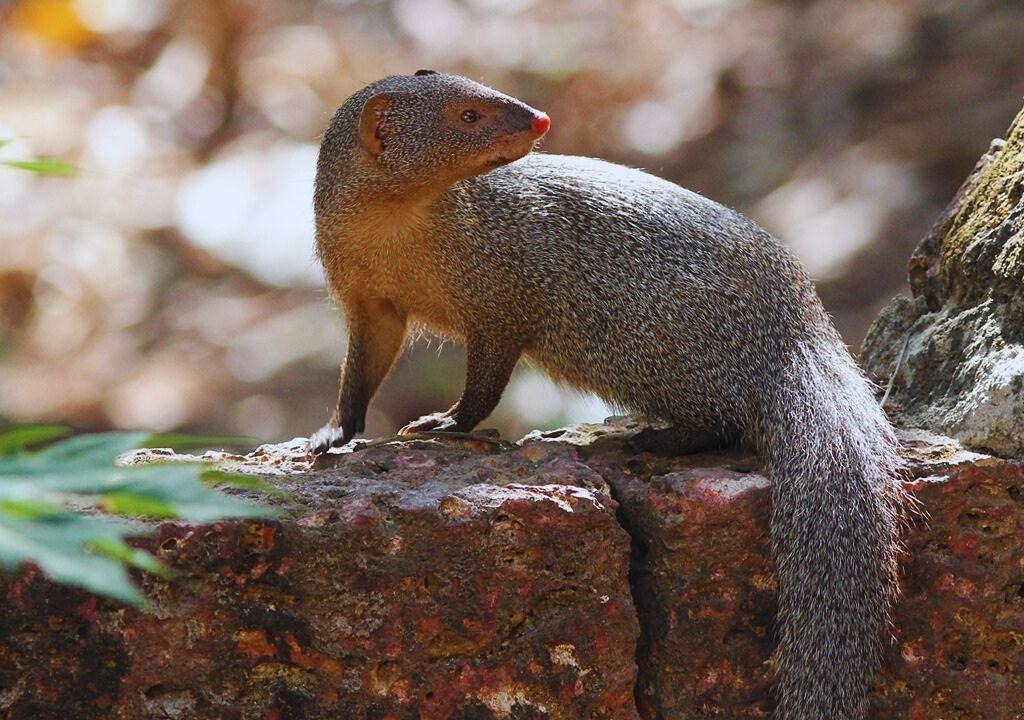
The body is generally covered in grey or grey-brown fur with a slightly grizzled appearance. Individual hairs can produce a mixture of pale and darker tones, making the animal appear more muted than a uniformly coloured mammal. Its underside is usually lighter, while the feet tend to be darker. The tail is long and bushy, often ending in a reddish or darker tip.
In a mangrove landscape, such colouring may make a moving animal less visually conspicuous against shaded earth and mixed vegetation. That is a reasonable observation about appearance, not evidence that the species has evolved a specialised camouflage pattern for mangroves.
Its physical form is suited primarily to terrestrial movement. The mongoose can travel along the ground, enter dense cover and investigate sheltered spaces. It is also recognised as a capable climber, although climbing ability should not be confused with a specialised arboreal lifestyle.
The Feet, Claws and Art of Moving Through Cover
The mongoose’s feet and claws help it negotiate uneven ground and investigate spaces where food or shelter may be available. Its movements combine forward travel with frequent changes in direction as it examines its surroundings.
In scrubland and open woodland, these abilities allow it to use vegetation as both cover and a source of potential prey. The same general skills could be useful around suitable forest margins in the Sundarbans, where exposed mud, plant litter, roots and patches of firmer ground create a varied terrestrial surface.
Nevertheless, the mud of an estuarine forest is not equivalent to dry woodland soil. Soft sediment can impede movement, while tidal inundation may make certain surfaces temporarily unsuitable. There is insufficient local evidence to claim that the Common Grey Mongoose possesses specialised feet, claws or gait adaptations for walking across tidal mudflats.
Its relationship with the mangrove floor is therefore best described as one of general terrestrial adaptability, subject to the limits imposed by the terrain.
Teeth and the Mechanics of an Opportunistic Diet
The Common Grey Mongoose belongs to a carnivorous mammal family, and its teeth are suited to capturing and processing animal food. The species’ skull and jaw anatomy have been examined in anatomical research, including a study published in 2022 that described the skull, mandible and hyoid apparatus.
Its diet is not restricted to a single prey species. Depending on availability, the mongoose consumes small mammals, reptiles, birds and their eggs, insects and other accessible food. The balance between these food types can differ between habitats.
In the Sundarbans, the surrounding ecosystem contains numerous potential prey groups, but their presence alone does not prove that they form a regular part of the mongoose’s local diet. For example, it would be inaccurate to assume that the animal routinely hunts crabs or fish merely because it inhabits a coastal wetland. Such claims would require direct dietary evidence, such as verified feeding observations or analysis of scat.
The broader point is that the mongoose is a flexible predator rather than a specialist dependent on one food source. This flexibility can help it occupy landscapes where resources are unevenly distributed.
Eyes, Ears and Whiskers: Reading the Environment
For a small predator, finding food is only part of the challenge. It must also recognise danger, navigate through vegetation and assess unfamiliar objects.
The Common Grey Mongoose has forward-facing facial features, mobile-looking ears and whiskers around the muzzle. These structures form part of the sensory equipment used to explore its surroundings. Vision, hearing and smell all contribute to the way a terrestrial mammal locates food and responds to changes in its environment.
Scent is particularly relevant to mongoose behaviour because chemical signals can convey information about other individuals and reproductive condition. The use of scent marking and scent-producing glands has been described in accounts of this species.
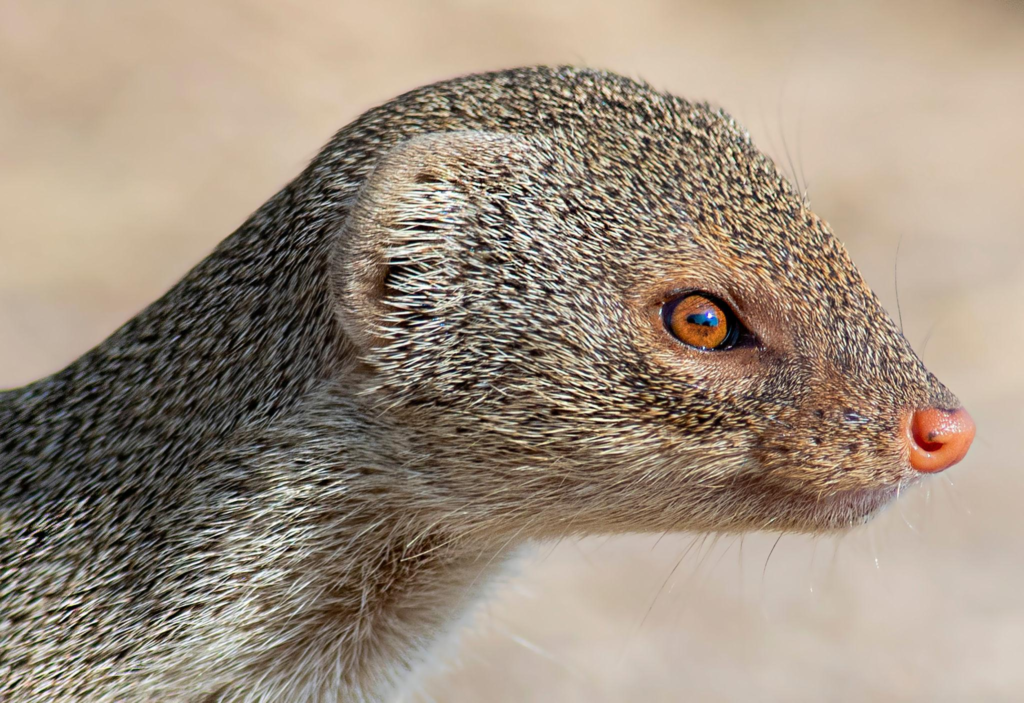
However, detailed claims about the relative importance of individual senses in the Indian Sundarbans would go beyond the available evidence. There is no reason to suppose that the species possesses a special ability to detect changes in salinity, predict tidal movements or navigate mangrove channels through a unique sensory mechanism.
What can be said with confidence is more fundamental: the mongoose’s survival depends on detecting food and danger while remaining able to retreat into cover.
How Does the Common Grey Mongoose Move Through the Mangroves?
See it for yourself
A private journey shaped around you — your group, your pace, your interests. Book a free consultation.
The Common Grey Mongoose is primarily a ground-dwelling mammal, although it can climb. Its typical habitat use favours places where vegetation, shelter and foraging opportunities are available together.
In the Indian Sundarbans, a distinction must be made between the forest itself and the mosaic of habitats surrounding it. A mongoose may encounter quite different conditions along a vegetated margin, a settlement boundary, an elevated patch of ground or a frequently inundated forest floor.
The most suitable routes for a terrestrial animal are likely to depend on local cover and ground conditions. Firm surfaces, sheltered passages and access to food may matter more than proximity to the water itself. This remains a hypothesis about habitat use, not a documented movement map for Sundarbans mongooses.
There is also no established basis for describing the species as a regular swimmer in tidal channels or as an animal that deliberately crosses wide creeks between mangrove islands. Its ability to climb does not establish a capacity for routinely navigating the watery barriers that define this landscape.
Understanding these limitations is essential to interpreting its ecology accurately.
What Does It Eat in the Indian Sundarbans?
The Common Grey Mongoose is an opportunistic predator whose general diet includes small mammals, reptiles, birds and eggs, and invertebrates. Regional biodiversity information for West Bengal also lists fruits among its food resources.
| Food category | Established species-level information | What remains uncertain locally |
| Small mammals | Rodents and other small mammals are recognised prey | Their proportion in the Sundarbans diet |
| Reptiles | Lizards and snakes are documented prey groups | Which species are most frequently consumed locally |
| Birds and eggs | Birds’ eggs and hatchlings may be taken | Frequency of nest predation in the mangroves |
| Invertebrates | Insects and other small invertebrates are potential food | Seasonal changes in their contribution to the diet |
| Plant material | Fruits are reported in regional species accounts | How regularly they are eaten by Sundarbans individuals |
The mongoose’s diet may change with the availability of food and the suitability of different foraging areas. A local study of scat or feeding observations would help establish whether its diet in the Sundarbans differs from that documented in other habitats.
Until such evidence is available, the most scientifically defensible description is that the species is a flexible feeder whose exact dietary composition in this landscape remains insufficiently studied.
When Is It Most Active?
The Common Grey Mongoose is generally described as diurnal, meaning that it is active primarily during daylight hours. This is a broad species-level pattern, rather than a guarantee that every individual will be active at the same time or under the same conditions.
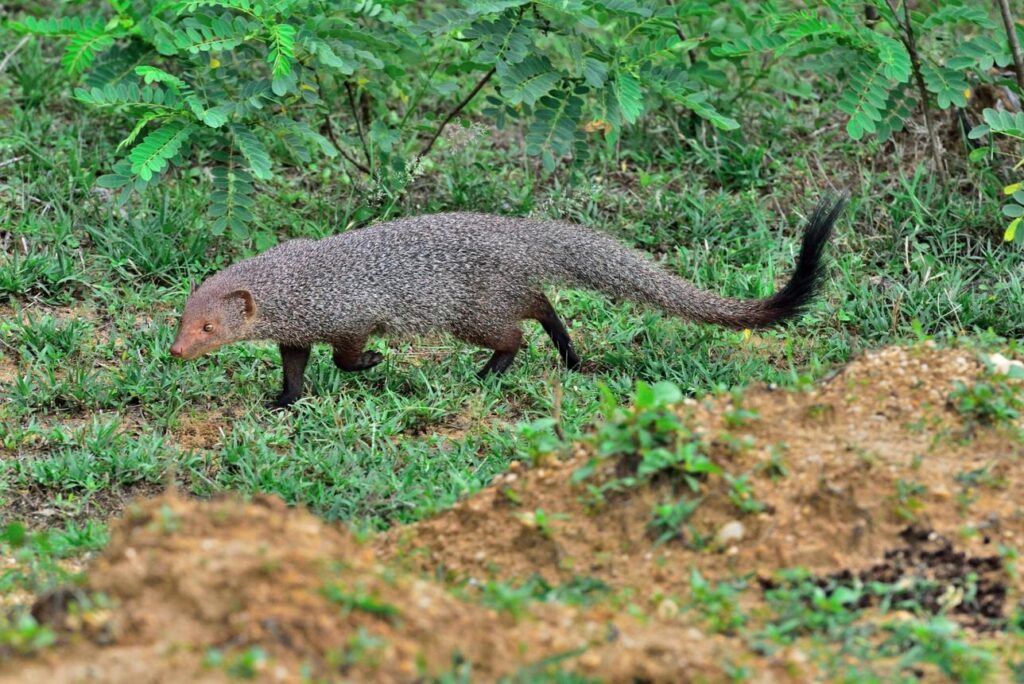
Weather, local disturbance, food availability and the availability of safe shelter may influence its activity. The relative importance of these factors in the Indian Sundarbans has not been established through dedicated local research.
It would therefore be inappropriate to promise visitors that mongooses can be seen at a particular hour, or to assign them a precise activity peak without supporting evidence. Daylight activity makes observation possible, but it does not make the species predictable.
Surviving a Landscape That Never Stays Still
The Sundarbans is shaped by tidal exchange, sediment movement and the interaction of freshwater and saline water. The resulting landscape changes across time, from exposed mudbanks to flooded margins and shifting channels.
For the Common Grey Mongoose, the central ecological question is not whether it has adapted to life underwater or in saline water. It is how a terrestrial mammal uses suitable ground and cover within a landscape that periodically becomes wet or inaccessible.
Its general habitat flexibility may help it use terrestrial portions of the region. At the same time, a dependence on accessible ground-level shelter could limit its use of frequently inundated locations. Both possibilities require local observation to establish their importance.
There is no verified basis for claiming that the Common Grey Mongoose has special salt-excreting adaptations, a physiological tolerance beyond that expected of the species, or a unique ability to forecast tides.
The more revealing story is one of ecological opportunity and limitation: an adaptable land predator occupies a landscape whose boundaries are continually reshaped by water.
Solitary Hunter, Not a Pack Predator
The Common Grey Mongoose is usually encountered alone or in pairs. It is not a pack-hunting predator in the manner of wolves, nor does it depend on large, coordinated groups to capture prey.
Solitary foraging allows an individual to investigate food resources independently. A pair may be seen together in certain circumstances, including breeding-related interactions, but the presence of two animals does not automatically establish a permanent social group.
The species’ social behaviour should not be confused with that of the Small Indian Mongoose or other members of its family. Different mongooses have different social systems, and general statements about one species cannot be transferred indiscriminately to another.
For the Indian Sundarbans, detailed information about home ranges, territory size, population density and the frequency of encounters between individuals remains limited. These are important gaps because they affect how researchers interpret sightings and estimate local abundance.
Communication Through Scent and Behaviour
Chemical communication is an important feature of mammalian life, particularly for species that move independently through their habitat. The Common Grey Mongoose possesses scent-producing glands, and species accounts describe scent marking as part of its communication.
Scent can potentially convey information about the presence of another individual, reproductive condition or the use of a particular area. Such communication is especially relevant when animals do not remain in constant visual contact.
Behaviour also provides information. Body posture, movement, alertness and retreat can indicate whether an animal is exploring, investigating a possible food source or responding to a disturbance.
However, the precise vocal repertoire and communication patterns of the Common Grey Mongoose in the Sundarbans have not been adequately documented in the sources reviewed. Nor is there a sound basis for attributing specific meanings to individual calls or movements without behavioural research.
A careful observer should therefore distinguish between what can be seen and what can reasonably be inferred from it.
Breeding and the Arrival of Young
The Common Grey Mongoose reproduces sexually and gives birth to live young. Species-level accounts describe a gestation period of approximately 60–65 days and litters commonly containing two to four offspring. These figures come from general accounts of the species, not from a breeding study of the Sundarbans population.
Breeding observations in captivity and reports from other parts of the species’ range provide useful information about its reproductive biology. They do not, however, establish a fixed breeding calendar for the Indian Sundarbans.
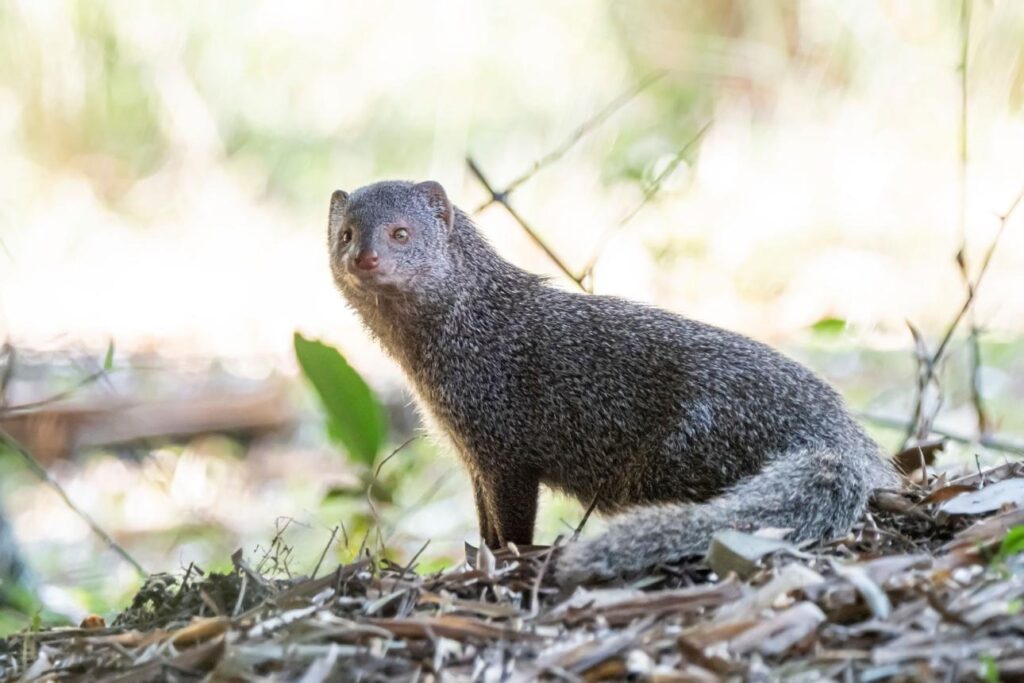
The availability of sheltered sites is likely to be important when females give birth and rear their young. Suitable shelter protects vulnerable offspring from disturbance and exposure. In terrestrial mongoose populations, burrows, covered spaces and dense vegetation can provide refuge, but the precise denning sites used by Sundarbans individuals have not been confirmed in the available evidence.
It would be equally inappropriate to assume that all litters are born during a single local season or that reproductive success is identical across habitats.
Raising the Next Generation
Young mongooses are dependent on their mother during early development. As mammals, they are nourished with milk, and maternal care is necessary before they can become independent.
Beyond these basic features, detailed evidence about parental care and juvenile development in wild Common Grey Mongooses is limited. General life-history accounts should not be treated as a complete description of the species’ family life.
In the Sundarbans, a breeding female would face the same broad ecological challenges as other small terrestrial mammals: securing food, maintaining access to shelter and reducing the risks faced by dependent young. The influence of flooding, human disturbance and local prey availability on breeding success remains an open question.
Observations of females with young could help researchers identify reproductive periods and the types of habitat used by families. Such records should be collected without approaching dens, pursuing animals or disturbing young.
Encounters with Predators and Competitors
As a relatively small carnivore, the Common Grey Mongoose is part of a food web in which larger predators may pose a threat. Its survival also depends on access to food resources that may be used by other animals.
In the Sundarbans, this relationship must be considered in the context of a diverse mammal community that includes the Royal Bengal Tiger, fishing cats, jungle cats, jackals and other potential predators or competitors. Their presence in the same region does not mean that direct encounters are frequent, nor does it establish a particular predator–prey relationship for every species.
Competition can occur when animals use similar food resources or require the same shelter. The extent of such overlap depends on where and when each species forages.
For the Common Grey Mongoose, detailed studies of competition, predation risk and habitat overlap in the Indian Sundarbans are lacking in the sources reviewed. It is therefore better to describe these as ecological relationships worth investigating than to claim that one particular predator controls its local population.
The Mongoose and the Human–Wildlife Interface
Across its wider range, the Common Grey Mongoose is known to occupy landscapes close to human habitation. Cultivated areas, vegetated margins and other modified environments can provide shelter or opportunities to find food.
This adaptability creates opportunities for coexistence, but it can also expose the species to human-related risks. Habitat clearance, disturbance, traffic and direct persecution are potential pressures on terrestrial wildlife. The relevance and severity of each pressure in the Sundarbans would need to be assessed through local evidence.
It is important not to portray the mongoose as either an automatic friend of people or a persistent nuisance. Its effect depends on circumstances. An animal feeding on rodents in a particular setting may be regarded differently from one entering a poultry enclosure or disturbing a nest.
For communities living around the Sundarbans, practical coexistence begins with understanding the animal’s behaviour rather than assigning it a fixed moral character.
Coexistence Without Disturbance
The Common Grey Mongoose is not a large animal, but it is a wild carnivore and should be treated accordingly. It should not be approached, cornered, handled or encouraged to feed near people.
Where mongooses occur near homes, sensible measures include keeping food waste managed, securing poultry and avoiding attempts to capture or kill wildlife unnecessarily. Such actions can reduce unwanted encounters without requiring the animal to be treated as an enemy.
In protected forest areas, visitors should follow the directions of authorised forest personnel, avoid leaving food behind and refrain from pursuing animals for photographs. The objective is not to force wildlife to remain visible, but to allow animals to use their habitat without additional pressure.
Responsible coexistence also depends on reliable information. If a local population is experiencing a genuine problem, it should be documented and assessed rather than explained through assumptions about the species.
How Do Researchers Study the Common Grey Mongoose?
Small carnivores can be difficult to monitor because their movements are often brief, their bodies remain close to the ground, and vegetation can conceal them quickly. In the Indian Sundarbans, the combination of dense cover and a complex network of tidal waterways presents additional challenges.
A reliable monitoring programme would use several complementary methods.
| Monitoring method | What it can reveal | Important limitation |
| Direct observation | Appearance, behaviour, feeding and habitat use | Brief encounters rarely establish population size |
| Camera traps | Presence, activity patterns and repeated detections | Detection depends on camera placement and animal movement |
| Track surveys | Possible movement routes and use of particular surfaces | Tracks may be unclear or confused with those of other animals |
| Scat analysis | Dietary evidence and, where feasible, genetic identification | Scat must be identified correctly; results depend on sampling quality |
| Repeated habitat surveys | Distribution across different habitat types | Requires consistent effort and comparable survey conditions |
| Community observations | Information about encounters near settlements and agricultural margins | Reports need verification and accurate location records |
These are suitable approaches for studying a small terrestrial carnivore. Their inclusion here describes potential research methods, not a claim that a comprehensive mongoose-monitoring programme is already operating throughout the Indian Sundarbans.
For camera-trap work, researchers would need to distinguish the Common Grey Mongoose from other small carnivores. Records should ideally include identifiable photographs, date, habitat information and precise survey metadata. Where visual identification is uncertain, the record should remain unconfirmed until it can be reviewed.
The Importance of Better Local Data
The available regional evidence establishes that the Grey Mongoose is included in a Sundarban National Park wildlife checklist. However, a checklist is not the same as a systematic population assessment.
Several questions remain important:
- How widely is the species distributed across the Indian Sundarbans?
- Does it occur more frequently around forest edges than in frequently inundated mangrove interiors?
- Which prey species contribute most to its diet locally?
- Are its activity patterns influenced by seasonal changes in rainfall, water levels or human disturbance?
- How do settlement expansion and habitat alteration affect its use of the landscape?
Answering these questions would make it possible to move from general species knowledge to a more precise understanding of the mongoose’s ecological relationship with the Sundarbans.
It would also prevent an important mistake in wildlife interpretation: treating every confirmed sighting as proof that a species is abundant, or treating a lack of sightings as evidence that it is absent.
Conservation Challenges in a Changing Landscape
The Common Grey Mongoose is not currently identified here as a threatened species on the basis of its reported global conservation classification. Nevertheless, several environmental changes could influence the habitats it uses locally.
Erosion and changing shorelines
Tidal currents and riverbank erosion continually reshape parts of the Sundarbans. Where suitable terrestrial cover is lost, small mammals may have to adjust their movements or use different patches of habitat. The magnitude of this effect on mongoose populations is not established.
Cyclones and extreme weather
Severe storms can damage vegetation, alter local ground conditions and disrupt access to shelter. These are plausible pressures on terrestrial wildlife, but species-specific mortality or population effects for the Common Grey Mongoose require direct evidence.
Human pressure and habitat alteration
Changes to vegetation, increasing disturbance and the loss of suitable ground cover may affect small terrestrial mammals. The consequences depend on the scale of the change and whether alternative shelter and food remain available.
Sea-level rise and salinity changes
These are major considerations for the long-term future of mangrove landscapes. For the mongoose, the relevant pathways would include changes in the availability of suitable terrestrial habitat, vegetation and prey. A direct effect on its local population should not be assumed without supporting research.
These pressures are relevant to the wider ecological setting, but they should not be presented as a demonstrated list of causes of decline for the Common Grey Mongoose in the Sundarbans.
What Conservation Should Focus On
Conservation of this species begins with protecting the broader ecological system in which it occurs.
Maintaining habitat diversity, limiting unnecessary disturbance and protecting wildlife from deliberate harm are sensible measures for small terrestrial mammals. Effective management also requires identifying which pressures are actually affecting a particular population, rather than assuming that every threat documented elsewhere applies equally to the Sundarbans.
The most useful next step for the Common Grey Mongoose would be improved documentation of its local distribution and habitat use. Verified sightings, systematic camera-trap surveys and studies of diet could help establish its ecological requirements. Such work would also contribute to a more complete understanding of the Sundarbans’ less frequently discussed mammals.
Where Can the Common Grey Mongoose Be Observed in the Sundarbans?
The Grey Mongoose is included in a wildlife checklist for Sundarban National Park that identifies Herpestes edwardsii among mammals reportedly observed during the preceding five years. The checklist is a useful regional indication of occurrence, but it is not an official population census or a guarantee of sightings at a particular location.
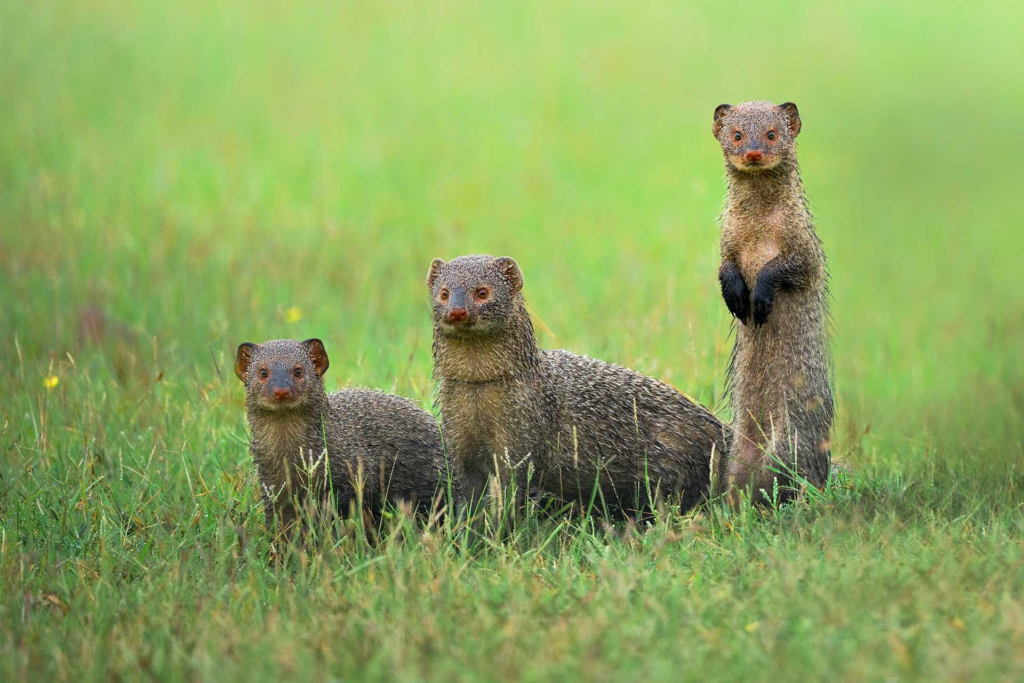
For a responsible wildlife observer, the most appropriate approach is to watch suitable terrestrial habitats and vegetated margins without assuming that the species will appear.
| Habitat or setting | What can reasonably be said |
| Suitable forest margins | Potential habitat based on the species’ general preference for vegetated cover |
| Less frequently inundated ground | A reasonable habitat feature to investigate for a terrestrial mammal |
| Vegetated settlement edges | The species is known to use human-modified habitats elsewhere in its range |
| Specific Sundarbans watchtowers or camps | No particular site should be advertised as a mongoose hotspot without reliable, location-specific evidence |
No specific camp, watchtower, island or creek is identified here as a confirmed high-probability viewing site for the Common Grey Mongoose. Its presence in a regional checklist does not establish how often it can be seen from a boat, a designated viewing point or a particular forest route.
For wildlife expeditions, this distinction matters. An authentic observation is valuable precisely because it is not guaranteed.
The Important Truth About Wildlife Sightings
A species may inhabit an area without being visible during a particular visit. Animals move according to their own needs, and their behaviour is influenced by food availability, shelter, disturbance and environmental conditions.
This is especially important for small mammals in the Sundarbans. An animal moving through dense vegetation can remain unnoticed even when an observer is nearby. The absence of a sighting does not establish the absence of the species.
The same principle applies to photographs and field records. A single image can confirm the presence of an identifiable animal at a particular time and place, but it cannot, on its own, reveal the size of the population or how frequently the species occurs there.
The best wildlife observation combines patience with restraint. Watching carefully, recording what is genuinely seen and allowing the animal to continue undisturbed are more valuable than pursuing a sighting.
What Makes the Sundarbans Common Grey Mongoose Unique?
The most distinctive aspect of the Common Grey Mongoose in the Sundarbans is not a proven physical adaptation to saltwater or a specialised way of living among mangrove roots. It is the ecological question posed by its presence in one of the world’s most dynamic mangrove landscapes.
The species is a flexible terrestrial carnivore whose established habitat preferences include open woodland, scrub and modified landscapes. The Sundarbans offers a different combination of conditions: tidal flooding, saline influence, shifting sediment and a close relationship between forest and settlement.
Its occurrence in the region suggests that suitable habitat exists somewhere within this wider mosaic. Exactly how the mongoose uses that habitat, and whether its local behaviour differs from that of populations elsewhere, remains insufficiently documented.
This uncertainty is not a weakness in the natural-history account. It identifies where further observation could make a meaningful contribution.
The Common Grey Mongoose also broadens our understanding of the Sundarbans beyond its most celebrated wildlife. The ecological character of a mangrove forest is shaped not only by its large predators and aquatic animals but also by smaller terrestrial mammals whose lives receive less attention.
Its importance lies partly in that wider perspective: the Sundarbans is a connected ecosystem in which many different species occupy different niches, even when some remain difficult to observe or poorly studied.
Myths and Facts About the Common Grey Mongoose
| Myth | Fact |
| Every mongoose is the same species. | The Common Grey Mongoose, Small Indian Mongoose and Bengal Marsh Mongoose are distinct species. |
| A mongoose eats only snakes. | Its diet is varied and includes small mammals, reptiles, birds, eggs and invertebrates. |
| A Least Concern classification means the animal faces no risks. | The global category does not rule out local pressures or gaps in population knowledge. |
| A mongoose recorded in the Sundarbans can be seen at any particular camp. | Regional presence does not establish a reliable sighting location or frequency. |
| The species has proven special adaptations to saline mangrove water. | No such specific adaptation is established by the evidence discussed here. |
FAQs
1. What is the scientific name of the Common Grey Mongoose?
Its currently used scientific name is Urva edwardsii. Older literature and some Indian biodiversity records use Herpestes edwardsii.
2. Is the Common Grey Mongoose found in the Sundarbans?
A wildlife checklist for Sundarban National Park includes the Grey Mongoose under the name Herpestes edwardsii. However, this does not establish its population size or frequency of occurrence across the entire Indian Sundarbans.
3. Is the Common Grey Mongoose endangered?
The species is reported as Least Concern in the IUCN status information associated with established species references. This global classification does not mean that every local population is free from threats.
4. What does the Common Grey Mongoose eat?
Its diet includes small mammals, reptiles, birds and their eggs, insects and other accessible food. The precise composition of its diet in the Sundarbans has not been established in the sources reviewed.
5. How can you identify a Common Grey Mongoose?
Look for an elongated body, greyish or yellowish-grey fur, relatively short legs and a long, bushy tail. Colour alone is insufficient for identification, particularly when distinguishing it from other mongoose species.
6. Is the Common Grey Mongoose active during the day?
It is generally described as diurnal, although activity can vary with local conditions. Daytime activity does not guarantee that it will be visible during a wildlife expedition.
7. Does the Common Grey Mongoose eat snakes?
Yes. Snakes are among the documented prey of the species. However, it also eats a variety of other animals, so it should not be described as a snake specialist.
8. How many young does a Common Grey Mongoose have?
General species accounts commonly report litters of two to four young and a gestation period of approximately 60–65 days. These are species-level figures, not measurements from a Sundarbans breeding study.
9. Where can you see a Common Grey Mongoose in the Sundarbans?
The species is included in a regional wildlife checklist, but the available evidence does not justify naming a particular camp or viewing point as a reliable mongoose hotspot. Sightings should be treated as unpredictable.
10. Why is the Common Grey Mongoose important to the Sundarbans ecosystem?
As a small predator and opportunistic feeder, it participates in the local food web. Its exact ecological contribution in the Sundarbans remains insufficiently quantified, making further research into its distribution, diet and habitat use valuable.
The Wild Orbit Perspective
The Common Grey Mongoose reminds us that the Sundarbans is more than a landscape of dramatic encounters. Its ecological story also unfolds through the lives of smaller animals that move through the margins of forests, search for food beneath vegetation and use whatever suitable shelter the terrain provides.
A tidal creek may dominate the view, but the life of a terrestrial mammal depends on the ground beside it. A mangrove island may appear uniform from a distance, yet its ecological value can vary greatly between flooded forest, vegetated margins and more sheltered ground.
Understanding the mongoose means paying attention to those differences without inventing certainty where evidence is incomplete. It means recognising its established biology, acknowledging the limits of current local knowledge and allowing future field research to refine our understanding.
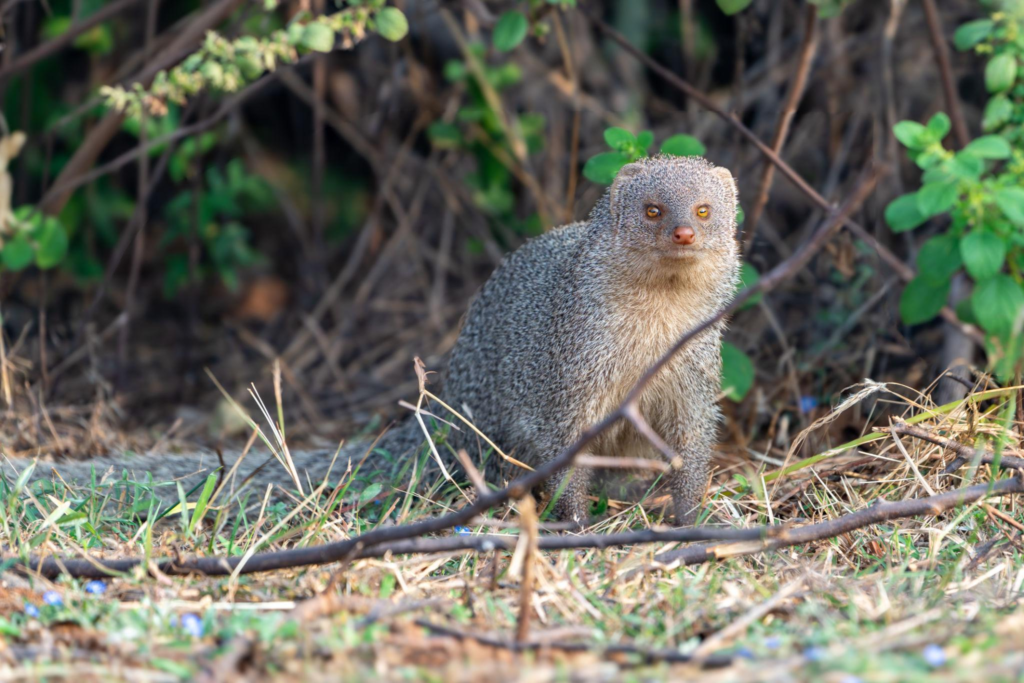
The wider lesson is equally important. Conservation depends not only on protecting animals that are already famous, but also on understanding the many species that quietly form part of the living landscape.
In the Sundarbans, every confirmed species record adds another piece to the ecological picture. The Common Grey Mongoose is one of those pieces: modest in size, adaptable in habit and worthy of attention in its own right.
The future of a living forest depends on how well we understand even the animals that rarely stop long enough to be seen.
Plan your private Sundarban expedition
A private journey shaped around you — your group, your pace, your interests. Book a free consultation.