 Field guide
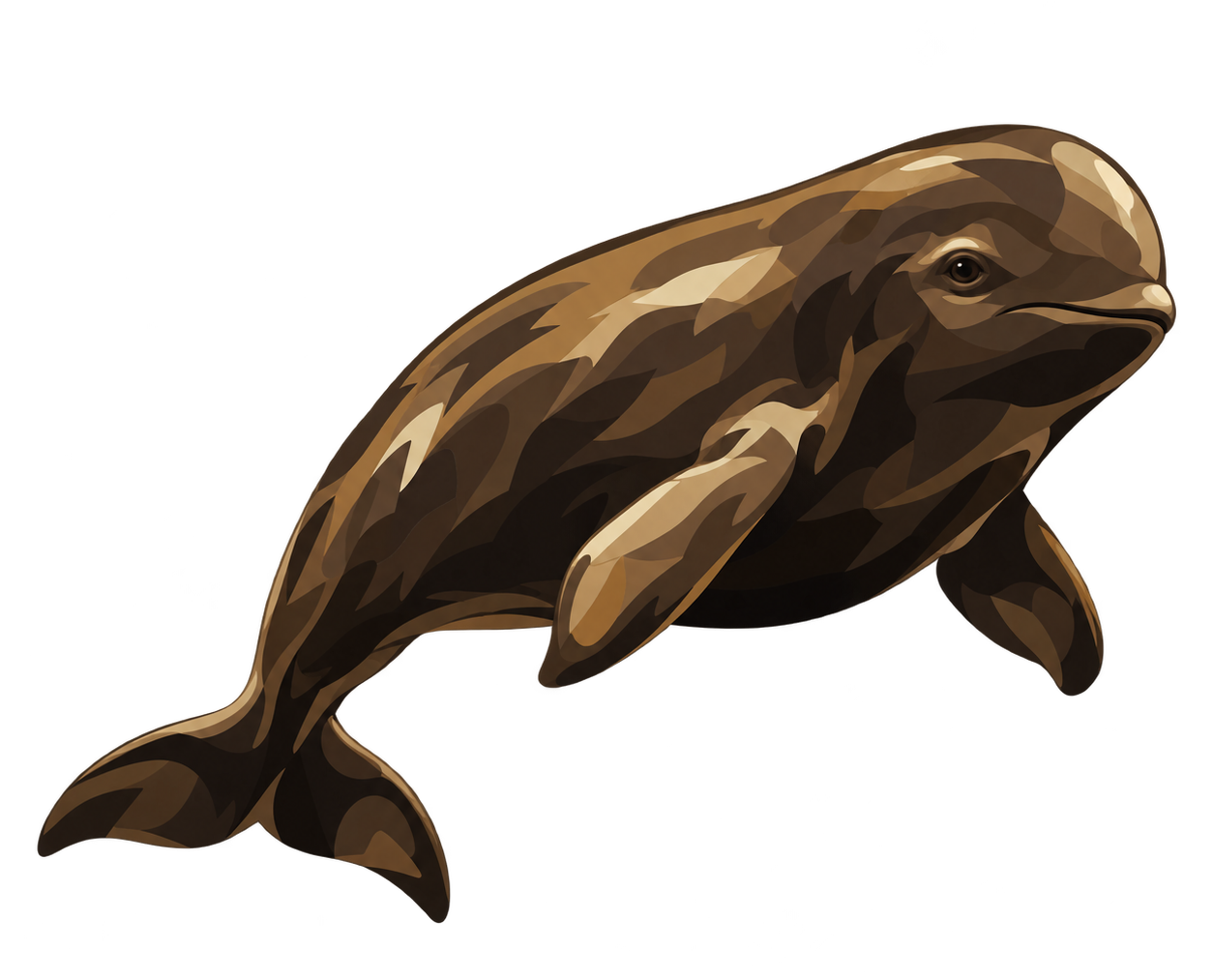
The Indo-Pacific finless porpoise (Neophocaena phocaenoides) is a small, elusive cetacean that inhabits shallow coastal waters, estuaries and mangrove-associated waterways across the Indo-Pacific. In the Indian Sundarbans, it represents a lesser-known part of the region’s aquatic wildlife, linking the productive tidal environment with the wider coastal ecosystem of the northern Bay of Bengal.
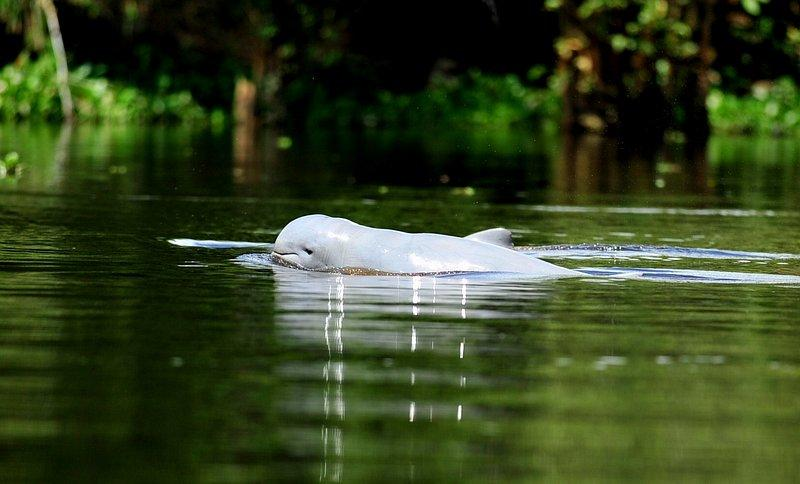
Unlike dolphins that frequently leap, ride boat waves or approach vessels, finless porpoises are generally inconspicuous. Their rounded heads, compact bodies and complete lack of a dorsal fin make them distinctive, but also easy to overlook in turbid estuarine water.
The species is globally classified as Vulnerable. Accidental capture in fishing gear, habitat degradation, pollution and disturbance from vessel activity are among the threats affecting its survival. Although the species is documented in the broader Sundarbans region, reliable information about its distribution, abundance and population trends specifically within the Indian Sundarbans remains limited.
Indo-Pacific Finless Porpoise At a Glance
| Feature | Description |
| Adult length | Commonly around 1.5–1.7 metres; larger individuals have been reported |
| Maximum reported weight | Approximately 70 kg in reference accounts |
| Body colour | Grey to dark grey, with variation according to age and region |
| Dorsal fin | Absent |
| Distinctive feature | Broad dorsal ridge covered with small tubercles |
| Head | Rounded, with no prominent beak |
| Feeding method | Captures aquatic prey using echolocation and other sensory information |
| Social behaviour | Usually solitary or found in small groups |
| Reproduction | Gives birth to live young and provides maternal care |
| Main documented threats | Fishing-gear entanglement, habitat degradation, pollution and vessel-related impacts |
| Sundarbans significance | A documented member of the wider region’s marine mammal community, with local population information still incomplete |
The Mammal of the Tidal Wilderness
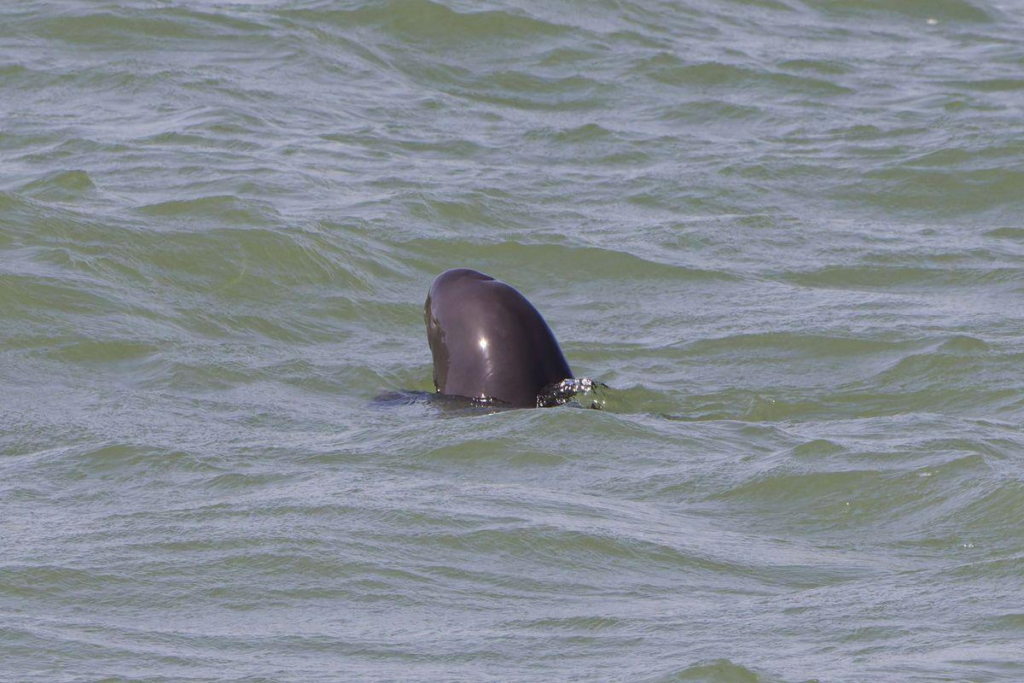
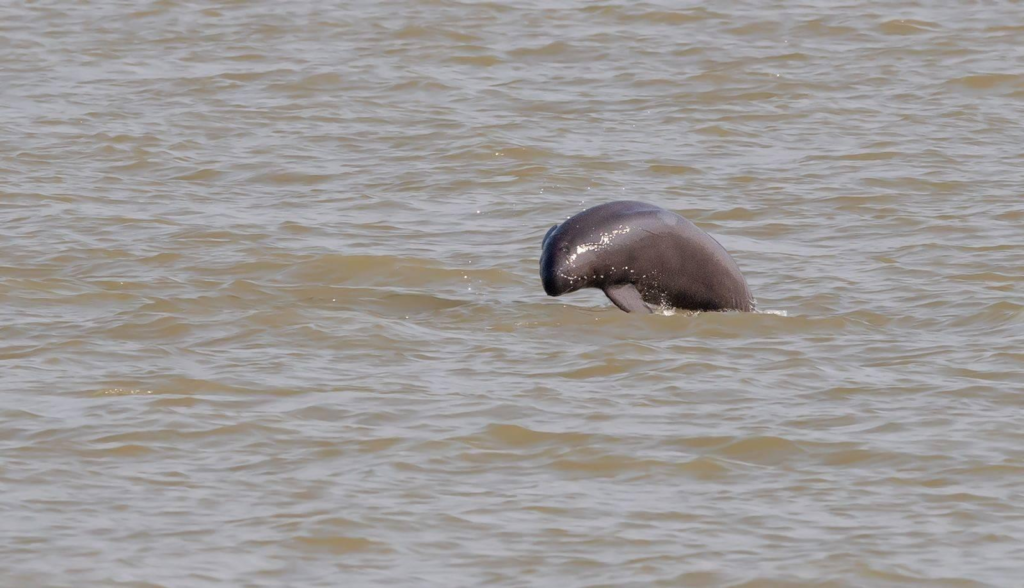
In the shifting waterways of the Sundarbans, a mammal can be present without making its presence obvious. A small grey back may briefly break the surface of a tidal channel before disappearing into opaque water. There may be no dramatic leap, no visible splash and no opportunity for a second look.
A finless porpoise moves through this landscape as a quiet marine predator. It belongs to a group of toothed cetaceans adapted to finding prey underwater, often in environments where visibility is poor and the water carries suspended sediment.
The Indo-Pacific finless porpoise occurs in warm coastal waters from the Persian Gulf and the Indian Ocean through parts of South and Southeast Asia to the western Pacific. It uses shallow marine habitats, bays, estuaries and mangrove-associated waters. Its association with these environments makes it relevant to the ecological story of the Sundarbans, where river discharge, tidal movement and coastal processes interact.
Despite its name, this animal is neither a fish nor a true dolphin. It is a mammal that breathes air, gives birth to live young and nurses its offspring. It must repeatedly surface to breathe, even when feeding beneath the water.
Its survival depends on a combination of biological adaptations and suitable habitat. Prey availability, water depth, underwater sound, access to feeding grounds and the intensity of human activity can all influence how it uses coastal waters.
For the Indian Sundarbans, the species raises an important conservation question: how can a mammal that is difficult to observe be adequately protected in a vast, constantly changing network of tidal waterways?
Scientific Classification and Identity
The Indo-Pacific finless porpoise belongs to the family Phocoenidae, which contains the porpoises. Although porpoises and dolphins are both toothed cetaceans, they belong to different families and differ in several anatomical features.
The accepted scientific name is Neophocaena phocaenoides. The genus includes a second recognized species, the narrow-ridged finless porpoise (Neophocaena asiaeorientalis). Distinguishing these species is important when interpreting records, particularly in regions where their distributions or historical taxonomic treatments may complicate identification.
| Classification | Details |
| Common name | Indo-Pacific finless porpoise |
| Scientific name | Neophocaena phocaenoides |
| Kingdom | Animalia |
| Phylum | Chordata |
| Class | Mammalia |
| Order | Cetacea |
| Suborder | Odontoceti |
| Family | Phocoenidae |
| Genus | Neophocaena |
| Species | N. phocaenoides |
| IUCN Red List status | Vulnerable (VU) |
| Primary habitat | Shallow coastal waters, estuaries, bays and mangrove-associated waters |
| Typical diet | Small fish, cephalopods and crustaceans |
| Geographic relevance | Coastal Indo-Pacific, including India and the northern Bay of Bengal |
Conservation Status: A Vulnerable Coastal Mammal
The Indo-Pacific finless porpoise is classified as Vulnerable on the IUCN Red List. This category indicates that the species faces a high risk of extinction in the wild under the applicable assessment criteria; it does not mean that extinction is imminent or that every population is declining at the same rate.
The IUCN assessment identifies incidental mortality in fisheries, habitat loss or degradation, and pollution as important concerns. The animal’s relatively small body makes escape from some fishing nets difficult, while its preference for shallow coastal waters brings it into contact with fishing activities and human development.
A 2025 review of the genus Neophocaena also emphasizes the need for improved research and conservation planning across the species’ range. Such work is especially important in regions where sightings are scattered and systematic monitoring remains insufficient.
The global status should not be confused with a formal assessment of the Indian Sundarbans population. There is no sufficiently robust, current local population estimate that allows a precise regional extinction-risk calculation.
Where the Indo-Pacific Finless Porpoise Lives
The species occupies a broad but predominantly coastal distribution across the Indo-Pacific. Its range includes the Persian and Arabian Gulf region, the Indian coastline, the Bay of Bengal and coastal waters extending through parts of Southeast Asia. Its distribution is not uniform: habitat suitability, prey availability, depth and environmental conditions affect where animals occur.
Finless porpoises are commonly associated with shallow waters, often less than 50 metres deep, although the wider documented habitat range extends into deeper coastal waters. Estuaries, bays and mangrove swamps can provide suitable habitat where water conditions and prey communities meet their ecological requirements.
In India, records exist from both eastern and western coastal regions. The availability of suitable habitat and the amount of research conducted vary considerably between locations, so the number of recorded animals should not be interpreted as a direct measure of abundance.
The Indo-Pacific Finless Porpoise in the Indian Sundarbans
The Indian Sundarbans forms part of a complex coastal landscape in which tidal rivers, freshwater discharge, saline influence and the Bay of Bengal interact. Its waterways support several cetaceans, including river dolphins, estuarine dolphins and coastal marine species.
The finless porpoise is documented in the wider Sundarbans region. The Sundarbans Important Marine Mammal Area factsheet lists Neophocaena phocaenoides among the other marine mammal species documented there. A separate assessment of the coastal northern Bay of Bengal also identifies the species as part of the region’s threatened cetacean community.
These regional records establish ecological relevance, but they do not demonstrate a known population size or continuous distribution throughout the Indian Sundarbans.
A further distinction matters: a species being documented in the broader Sundarbans does not mean it is equally common in every river, creek or forest block. Evidence from Bangladesh’s Sundarbans and the wider Bay of Bengal helps explain the regional context, but it should not automatically be presented as a confirmed sighting record from a particular Indian river.
For that reason, the most scientifically defensible description is that the Indo-Pacific finless porpoise is a documented member of the wider Sundarbans marine mammal community, while its abundance and fine-scale distribution in the Indian portion remain insufficiently resolved.
Why the Sundarbans Can Support This Species
The Sundarbans is not simply a forest that happens to contain water. It is a connected tidal system whose estuarine and coastal habitats support diverse aquatic food webs.
Several ecological characteristics are relevant to finless porpoises:
| Ecological feature | Relevance to the porpoise |
| Shallow coastal and estuarine waters | Correspond to habitats used by the species elsewhere in its range |
| Soft sediment and muddy bottoms | May provide suitable feeding habitat for demersal prey communities |
| Fish and invertebrate communities | Supply potential prey, depending on local species and availability |
| Tidal exchange | Changes water depth, currents and the movement of prey through channels |
| Connection with the Bay of Bengal | Places the estuarine landscape within the species’ wider coastal range |
Ecological Importance in the Tidal System
The Indo-Pacific finless porpoise is a predator that consumes small fish and aquatic invertebrates. Through feeding, it participates in the transfer of energy between lower trophic levels and larger components of the coastal food web.
Its ecological role is not unique to mangrove forests, nor is it a substitute for the roles played by river dolphins, larger marine predators or the mangroves themselves. Rather, it is one component of a broader system in which estuarine productivity supports fish, crustaceans, cephalopods, birds and marine mammals.
The species may also serve as an indicator of conservation concerns affecting coastal wildlife. Entanglement, chemical pollution, habitat degradation and underwater noise are pressures that can affect multiple species sharing the same waters.
However, the porpoise should not be described as a proven indicator species for the health of the Indian Sundarbans without supporting local research. Its presence and condition can contribute useful information, but reliable interpretation requires monitoring alongside other ecological measurements.
The significance of this small cetacean lies partly in what its survival represents: the continuing connection between coastal habitat quality, functioning aquatic food webs and responsible use of the waters on which both wildlife and local communities depend.
A Body Without a Dorsal Fin
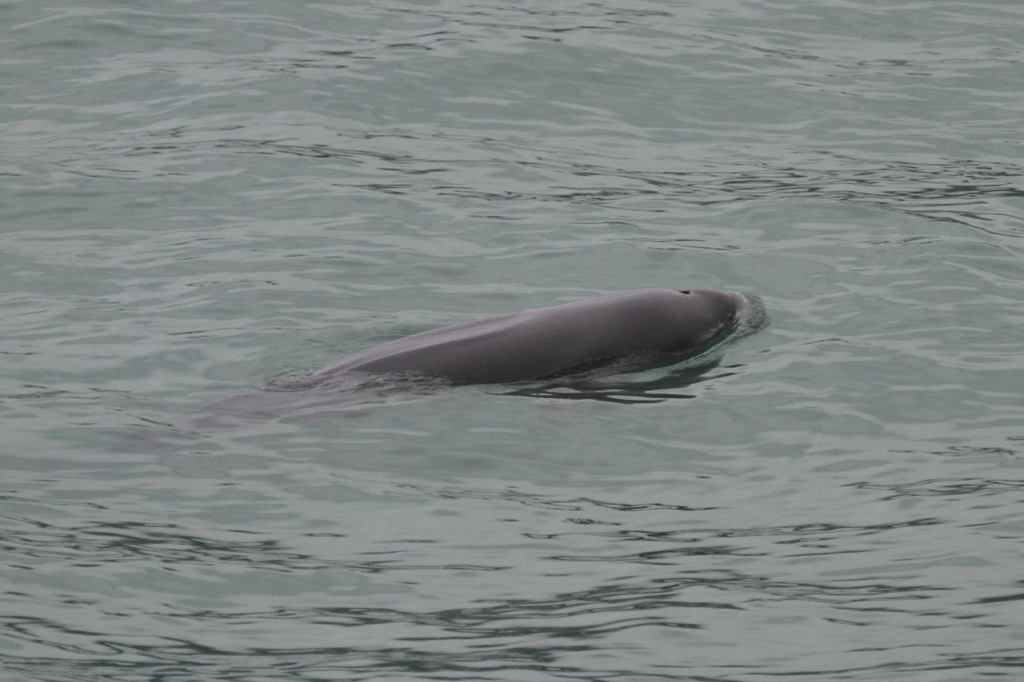
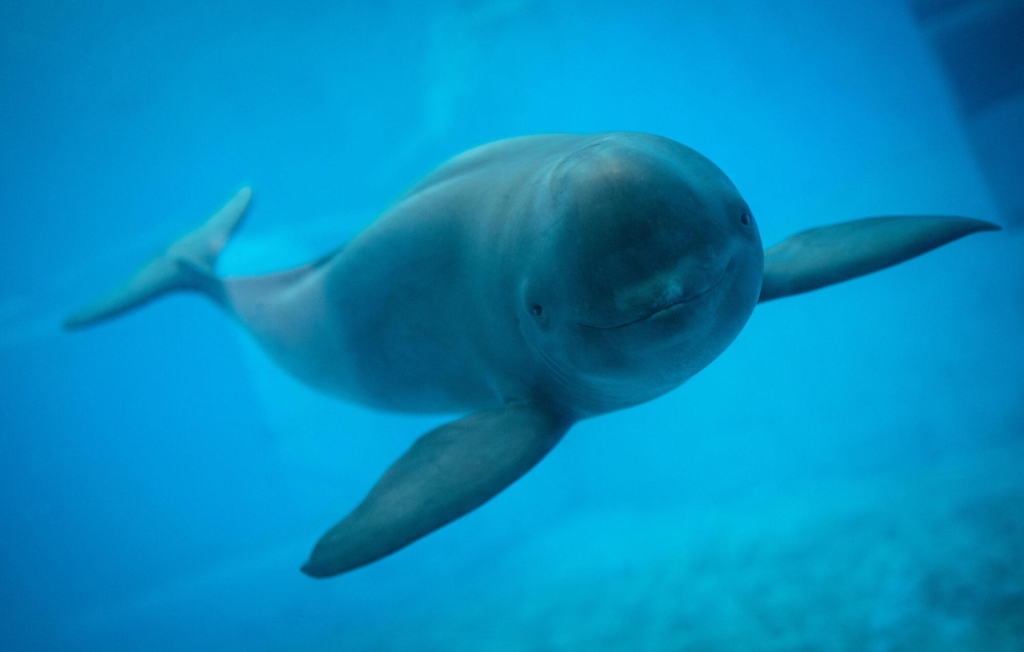
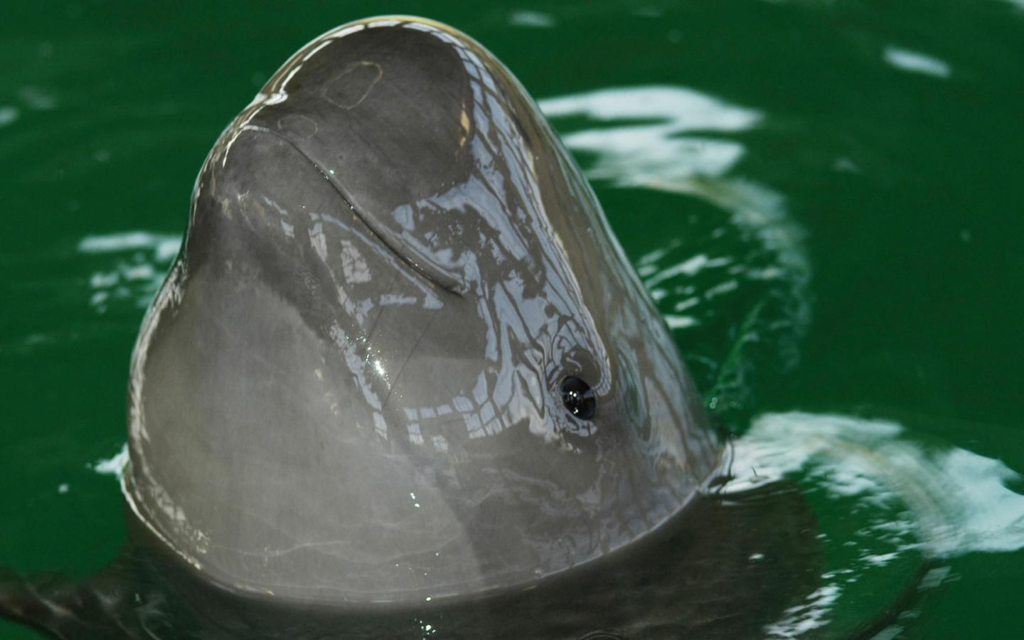
The most immediately recognizable feature of the Indo-Pacific finless porpoise is the absence of a dorsal fin. Where many dolphins have a prominent fin rising from the middle of their backs, this porpoise has a low, broad dorsal ridge instead.
The ridge extends along the back and bears numerous small, rounded tubercles. These structures are distinctive anatomical features, although their precise functional significance should not be overstated. They are not evidence of a special adaptation to mangrove roots or muddy water specifically.
Its body is compact and streamlined, tapering towards the tail. This shape supports efficient movement through water without the exaggerated profile seen in some larger cetaceans.
The head is rounded, with a short, indistinct snout rather than the long, conspicuous beak of many dolphins. The mouth contains small, spade-shaped teeth, a characteristic feature of porpoises that distinguishes them from dolphins with their typically conical teeth.
The animal’s grey colouring helps it blend into the subdued visual environment of coastal water. Shade varies with age and geographic region, so no single colour should be treated as universal.
Size and Physical Characteristics
The Indo-Pacific finless porpoise is relatively small among cetaceans. Adults commonly measure around 1.5–1.7 metres long, although larger individuals have been reported in some reference accounts. Newborn calves are considerably smaller, typically measuring roughly 65–85 centimetres. Reported adult weights can reach approximately 70 kilograms.
| Body feature | Biological significance |
| Compact body | Supports movement through shallow coastal waters |
| Rounded head | A characteristic feature of the species’ body shape |
| No dorsal fin | Distinguishes the porpoise from many dolphins |
| Low dorsal ridge | Bears rows of distinctive tubercles |
| Short, rounded pectoral fins | Used for steering and manoeuvring |
| Horizontal tail flukes | Provide the principal source of swimming propulsion |
| Spade-shaped teeth | Characteristic of the porpoise family |
The finless porpoise is not adapted for walking, climbing or travelling across exposed mudbanks. Its habitat is aquatic. Even where mangrove roots and mudflats dominate the surrounding landscape, the animal must remain in water to move, feed and survive.
How It Moves Through the Water
Finless porpoises often swim close to the surface, with brief, understated surfacings. Their movements may appear as a low rolling back or a short glimpse of the head and upper body.
They can change direction rapidly and move beneath the surface without the conspicuous leaps commonly associated with some dolphin species. Their behaviour can make visual identification difficult, especially when waves, reflections, suspended sediment or boat wakes disturb the surface.
The tail flukes generate forward propulsion through repeated vertical movements of the rear body. The pectoral fins help control direction and posture. As in other cetaceans, the animal’s streamlined shape reduces resistance as it moves through water.
These are adaptations to aquatic life generally. There is no basis for claiming that the finless porpoise can navigate mangrove roots by squeezing through them or that it possesses a special swimming technique unique to the Sundarbans.
The landscape affects its movements in a more indirect way. Changing water levels, current strength, channel depth and the availability of prey influence where suitable feeding opportunities may occur.
The Senses Behind Survival
Echolocation in Turbid Water
Water in estuaries often carries suspended sediment, limiting how far an animal can see. For a small toothed cetacean, underwater sound is therefore especially important.
Finless porpoises use echolocation: they emit high-frequency clicks and interpret returning echoes to obtain information about their surroundings and potential prey. This sensory system helps them function in conditions where vision alone would be inadequate.
Echolocation is not the same as seeing through muddy water. It is an acoustic process, and its effectiveness depends on the properties of the sound, the target and the surrounding environment.
Finless porpoises also use sound in a wider underwater setting filled with natural and human-generated noise. The exact consequences of particular noise levels for an individual porpoise in the Indian Sundarbans have not been adequately established, but acoustic disturbance is recognized as a concern for marine mammals across the species’ range.
Hearing, Touch and Vision
Hearing is central to the porpoise’s underwater sensory world. Vision also contributes to its interaction with the environment, particularly when the animal surfaces, but it should not be assumed to be its dominant feeding sense.
Like other cetaceans, finless porpoises do not have external ear flaps. Their hearing anatomy is adapted to receiving sound in water.
There is insufficient evidence to assign the species a special sensitivity to the sound of particular Sundarbans boats, fishing nets or tidal conditions. Such questions require targeted acoustic and behavioural research.
What Does the Indo-Pacific Finless Porpoise Eat?
See it for yourself
A private journey shaped around you — your group, your pace, your interests. Book a free consultation.
The diet of the Indo-Pacific finless porpoise includes small fish, cephalopods and crustaceans. Depending on the location, its prey may include squid, shrimp, crabs and bottom-associated fish. The precise composition of its diet changes with prey availability and local ecological conditions.
| Prey group | Examples | Ecological context |
| Fish | Small coastal and bottom-associated fish | Important components of estuarine food webs |
| Cephalopods | Squid, cuttlefish and octopus | Mobile invertebrates found in marine and coastal habitats |
| Crustaceans | Shrimp and crabs | Important prey groups in many shallow-water ecosystems |
This is a general dietary profile, not a verified list of the principal prey species of finless porpoises in the Indian Sundarbans.
The species does not depend exclusively on fish. Its consumption of different aquatic prey groups places it within a wider food web, connecting fish communities and invertebrate populations with marine mammal predators.
Feeding takes place underwater. The porpoise must locate prey, approach it and capture it while managing its need to return to the surface to breathe. Echolocation helps it gather information about nearby targets, while prey movement and water conditions influence the difficulty of feeding.
Feeding in a Changing Estuary
In the Sundarbans, the same channel can change considerably between tidal phases. Water depth, current direction and the distribution of aquatic organisms are not constant.
For a coastal cetacean, these changes can influence access to feeding areas. Shallow channels may offer suitable prey habitat under some conditions, while strong currents or altered water levels can change the opportunities available.
However, the specific tidal phases preferred by finless porpoises in the Indian Sundarbans have not been sufficiently documented. It would be misleading to claim that they feed only at high tide, follow a fixed daily schedule or regularly enter particular creeks to hunt.
Their broad association with shallow coastal habitats provides a sound ecological basis for research, but it does not establish a detailed local feeding calendar.
Living in a Saline and Brackish Environment
The Indo-Pacific finless porpoise occupies coastal waters and estuaries, environments in which salinity may vary. The Sundarbans presents a particularly dynamic example because river discharge and tidal exchange continually influence water conditions.
Like other marine mammals, finless porpoises have physiological systems that regulate the balance of water and salts in their bodies. These systems allow them to live in marine environments without drinking seawater in the manner of a terrestrial animal.
Yet the ability to tolerate a coastal salinity regime should not be confused with proof that a porpoise can thrive at every salinity level. The physiological limits of the species and its response to local salinity changes need to be distinguished from general cetacean biology.
There is no verified evidence that the Indian Sundarbans population has developed a unique salt-tolerance mechanism or a special adaptation exclusive to this mangrove region.
Activity Patterns and Daily Movement
Finless porpoises may be observed singly or in small groups. They are generally considered less showy than many dolphins and may avoid close approaches to vessels. In some regions, researchers have documented seasonal variation in their occurrence, but such patterns cannot automatically be transferred to the Indian Sundarbans.
Their activity is influenced by the need to feed, breathe, reproduce and avoid danger. Local prey distribution, water depth and human activity may also affect where they spend time.
A porpoise that disappears below the surface has not necessarily left the area. It may simply be travelling or feeding underwater. Conversely, a single sighting does not establish that the same location supports a resident group.
Understanding these patterns requires repeated observations, reliable identification and records collected across seasons. Until such information becomes available, descriptions of the species’ daily behaviour in the Indian Sundarbans should remain cautious.
Solitary Animals and Small Social Groups
The Indo-Pacific finless porpoise is usually encountered alone or in small groups. Regional studies and reference accounts commonly describe groups of only a few animals, although larger loose aggregations have also been recorded.
Group size may vary with location, season, feeding conditions and reproductive behaviour. A group seen together does not necessarily represent a permanent family unit or a stable social group.
The species is not known for the elaborate aerial displays associated with some dolphins. Its surface behaviour is typically more restrained, and it seldom approaches boats in the conspicuous manner of bow-riding dolphins. This relative lack of display contributes to its reputation as an elusive coastal mammal.
In the Sundarbans, these characteristics have practical implications for observation. A person may pass through suitable habitat without seeing an animal, even if porpoises use that broader area.
Communication and Social Behaviour
Sound plays an essential role in the lives of toothed cetaceans. Finless porpoises use high-frequency clicks for echolocation, allowing them to obtain information about their underwater surroundings.
Their acoustic behaviour should not be reduced to the idea that every click is a social call. Echolocation and communication are related aspects of the acoustic lives of cetaceans, but they serve different functions and require careful scientific interpretation.
There is limited evidence to describe the full repertoire of social sounds, individual recognition or long-term social relationships of finless porpoises specifically in the Indian Sundarbans.
For this reason, it would be premature to assign particular calls to courtship, territorial defence or family communication in this regional population.
Breeding and the Arrival of Calves
Finless porpoises give birth to live young, as expected of mammals. A calf depends on its mother for milk and early care, while developing the ability to swim, surface and feed independently.
Reference accounts report newborn lengths of approximately 65–85 centimetres. Sexual maturity has been reported at around four to six years in some studied populations, although estimates vary by source and region.
| Reproductive feature | What is known |
| Reproduction | Sexual reproduction with live birth |
| Newborn size | Approximately 65–85 cm in reference accounts |
| Maternal care | Calves receive milk and care from their mothers |
| Age at maturity | Around 4–6 years in some regional accounts |
| Breeding season | Varies geographically; a specific Indian Sundarbans season is not established |
| Local reproductive success | No sufficiently robust regional estimate identified |
Reproduction is particularly important for a species exposed to accidental mortality. When adult animals die in fishing gear or through other human-related causes, the loss can affect the population’s future reproductive capacity.
However, there are no adequate local data to calculate how many calves are born in the Indian Sundarbans each year, how many survive to adulthood or how quickly the regional population might recover from losses.
Maternal Care and Juvenile Development
A young porpoise must learn to coordinate swimming, surfacing and breathing while remaining close enough to its mother to nurse and receive protection.
Cetacean calves are adapted to life in water from birth, but they are not immediately independent. Maternal care provides the nourishment and support necessary during early development.
Observations from other populations can help explain the general biology of the species. They should not be represented as direct observations of mother-and-calf pairs in the Indian Sundarbans unless a documented regional record supports that claim.
Calving sites, nursery areas and seasonal concentrations would be valuable subjects for future research in the northern Bay of Bengal. Identifying such areas could help conservation planners determine whether particular coastal habitats deserve additional protection during sensitive life stages.
Predators and the Wider Food Web
The Indo-Pacific finless porpoise is a predator of small aquatic animals. It occupies a different ecological role from the fish and invertebrates it consumes, while also sharing coastal waters with other cetaceans and larger marine predators.
Predation on the porpoise may occur, but it should not be exaggerated or assigned to particular Sundarbans predators without reliable evidence. There is no sound basis for presenting the Royal Bengal Tiger as a regular predator of finless porpoises.
The species’ more clearly documented conservation concerns involve human activities, especially accidental capture in fishing gear and the degradation of its coastal habitat.
Its place in the food web is nevertheless important. The porpoise is one of the larger consumers within a network supported by aquatic primary production, fish and invertebrate communities. Changes in prey availability or habitat quality can affect its ability to feed and survive.
The Relationship Between Porpoises and People
The waterways of the Sundarbans support wildlife as well as fishing, transport and other activities essential to local livelihoods. These uses of the aquatic environment overlap with the habitats occupied by coastal cetaceans.
The relationship is not simply one of conflict. Local fishers and boat operators may encounter marine mammals through their work, and their observations can contribute valuable information about distribution and strandings when recorded systematically.
At the same time, the overlap creates risks. Fishing gear can trap a porpoise unintentionally, while vessel movement can cause disturbance and, in some circumstances, physical injury. Pollution and habitat degradation can affect the same waters on which people and wildlife depend.
Conservation efforts are most likely to be effective when they recognize both ecological needs and the practical realities of coastal livelihoods. Blaming fishing communities for every mortality event would overlook the distinction between deliberate harm and accidental capture, as well as the need for workable, evidence-based solutions.
Why Fishing Nets Are a Serious Threat
Incidental capture, commonly called bycatch, is a major threat to finless porpoises across their range. Gillnets are of particular concern because the porpoise may become entangled while moving through coastal waters and may be unable to reach the surface to breathe.
The risk is especially important for a relatively small mammal that must breathe air. Unlike a fish, it cannot remain underwater indefinitely when trapped.
| Threat | Potential consequence |
| Gillnet entanglement | Injury, drowning or death |
| Vessel strikes | Physical trauma or fatal injury |
| Underwater noise | Interference with acoustic behaviour, depending on exposure |
| Chemical pollution | Potential health effects and degradation of habitat |
| Habitat modification | Reduced access to suitable feeding areas |
| Changes in prey availability | Reduced feeding opportunities |
These are recognized threats at the species or broader regional level. Their relative importance within the Indian Sundarbans has not been quantified adequately.
Human–Wildlife Coexistence in Shared Waters
Effective coexistence requires more than asking people to avoid wildlife. It depends on understanding where animals occur, how fishing practices overlap with their habitat and what measures can reduce accidental mortality without placing unreasonable burdens on local communities.
Potential approaches include documenting bycatch, reporting strandings, improving the collection of fishing-effort data and evaluating locally appropriate ways to reduce interactions between cetaceans and fishing gear.
Boat operators can also help by maintaining safe speeds, avoiding attempts to chase or surround animals and reporting injured or dead marine mammals to the appropriate authorities.
These actions are useful, but they do not replace systematic research or fisheries management. Conservation measures should be designed with local evidence, stakeholder participation and attention to the practical needs of people who depend on the waterways.
The finless porpoise offers a reminder that the health of the Sundarbans cannot be measured solely by what happens inside the forest boundary. The connected coastal waters matter too.
Documenting an Elusive Coastal Mammal
Monitoring a small cetacean in turbid coastal water presents different challenges from surveying a terrestrial mammal in a forest. Tracks, droppings and camera-trap photographs are not generally the primary tools for studying a free-ranging porpoise. Researchers instead rely on methods suited to aquatic mammals, including visual surveys, acoustic monitoring, stranding records and, where appropriate, biological sampling.
The Marine Mammal Research and Conservation Network of India maintains a database of marine mammal sightings and strandings. Such records are valuable because they can document species occurrence in places where dedicated surveys are limited. Their limitations must also be recognized: opportunistic records do not necessarily provide reliable estimates of abundance or trends.
| Monitoring method | What it can establish |
| Boat-based visual surveys | Sightings, group size and observed distribution under surveyed conditions |
| Passive acoustic monitoring | Presence of identifiable vocalizations and patterns of acoustic activity |
| Stranding records | Evidence of occurrence, mortality and potential injury |
| Necropsy and biological sampling | Possible causes of death, health information and species identification |
| Photo-identification, where feasible | Potential information about individuals and repeated encounters |
| Environmental measurements | Context on depth, salinity, prey habitat and other conditions associated with sightings |
Each method answers different questions. A visual survey can miss animals that remain underwater; acoustic monitoring can detect sounds without necessarily revealing the number of animals present; and a stranding record confirms that an animal reached a location but does not establish that a living population resides there.
For the Indian Sundarbans, combining multiple methods would help build a more reliable picture of distribution and conservation needs.
Acoustic Monitoring in the Sundarbans
Because finless porpoises use echolocation, underwater acoustic surveys may provide information that visual observation alone cannot deliver.
Hydrophones can record underwater sound, allowing researchers to investigate patterns of porpoise activity and potential habitat use. However, acoustic identification requires suitable equipment, validated detection methods and careful separation of porpoise signals from other sounds.
The Sundarbans presents additional challenges: boat engines, fishing activities, tidal currents and other natural and human-generated sounds may complicate recordings. Acoustic detections must therefore be interpreted using established methods rather than assuming that every high-frequency click belongs to a finless porpoise.
A sustained programme combining acoustic monitoring with visual surveys could help determine where and when the species uses particular waterways. Such work would be especially valuable if repeated across seasons and coordinated with observations from the wider northern Bay of Bengal.
Strandings as Evidence of Presence
A stranded porpoise can provide valuable information, even when its death prevents researchers from learning about the circumstances of its life.
A record may establish the species’ presence in a coastal area, provide a physical specimen for identification and reveal injuries or other evidence that could help determine the cause of death. Yet a single stranded animal cannot establish the size of a local population, whether a location is a regular habitat or whether the animal died nearby.
Recent records from West Bengal illustrate why these distinctions matter.
In April 2024, a finless porpoise was reported stranded on the coast at Digha. The incident was covered by The Times of India, with identification attributed to experts who examined photographs of the animal.
The Marine Mammal Research and Conservation Network of India also records a dead Indo-Pacific finless porpoise on a sandbank between Bakkhali and Frazergunj, with a record date of 19 April 2026. The database entry describes the animal as a dead stranding and indicates that no necropsy or sample collection was recorded.
These records are relevant to the wider coastal distribution of the species in West Bengal. They should not be interpreted as proof that finless porpoises are abundant around Digha, Bakkhali or Frazergunj, nor as evidence of a resident population in a particular Indian Sundarbans river.
Stranding response is most useful when it follows a consistent protocol: record the location and date, photograph the animal, document its condition, seek expert identification and arrange a necropsy or sample collection where feasible and authorized. Members of the public should report strandings to relevant wildlife or marine mammal authorities rather than attempting to handle a carcass themselves.
Protecting the Habitat That Supports Coastal Wildlife
Conservation of the Indo-Pacific finless porpoise depends on protecting the quality and ecological functioning of its coastal habitat.
The Indian Sundarbans is part of a much larger estuarine and marine system. Conditions within it are influenced by river discharge, sediment transport, tidal exchange and the wider Bay of Bengal. The porpoise’s conservation therefore cannot be separated from the management of fisheries, water quality and coastal development.
The global IUCN assessment identifies habitat degradation and pollution among the factors contributing to the species’ threatened status. Research from other parts of its range also identifies underwater noise, vessel activity and incidental mortality as significant concerns.
| Conservation priority | Why it matters |
| Reduce accidental capture | Directly addresses a recognized cause of mortality |
| Improve stranding response | Strengthens species identification and mortality investigations |
| Monitor coastal habitat | Helps identify environmental changes relevant to cetaceans |
| Assess underwater noise | Improves understanding of disturbance in busy waterways |
| Maintain prey availability | Supports the food web on which porpoises depend |
| Improve regional data sharing | Connects observations from West Bengal, Bangladesh and the wider Bay of Bengal |
| Involve local communities | Encourages practical reporting and conservation measures |
The effectiveness of any intervention depends on the local evidence. For example, identifying a fishing method as a regional threat does not automatically establish that it accounts for a particular proportion of mortality in the Indian Sundarbans.
A strong conservation programme should measure the problem before evaluating whether a proposed intervention works.
Climate Change and a Changing Coastline
The Sundarbans is exposed to coastal processes that include erosion, sediment deposition, cyclones and changes in salinity. Climate change and sea-level rise add further pressure to this already dynamic landscape.
For finless porpoises, the effects are likely to be mediated through the aquatic environment rather than through direct exposure to land-based changes alone. Alterations in estuarine circulation, prey communities, water quality and the distribution of suitable coastal habitat could influence where the animals can feed and travel.
Nevertheless, the specific effects of sea-level rise or changing salinity on finless porpoises in the Indian Sundarbans have not been quantified sufficiently to predict a local population decline or identify particular future refuges.
These questions require long-term monitoring that combines marine mammal observations with measurements of habitat and prey. Without such evidence, climate-related risks should be recognized as research priorities rather than described as established causes of regional decline.
Where Can the Indo-Pacific Finless Porpoise Be Observed in the Sundarbans?
The Indo-Pacific finless porpoise is an elusive marine mammal, and a responsible wildlife guide must distinguish documented regional occurrence from a reliable wildlife-watching destination.
The broader Sundarbans has documented finless porpoise records, while the northern Bay of Bengal is recognized as an important region for threatened coastal cetaceans. West Bengal’s coastal strandings also demonstrate that the species occurs in the wider area. These sources do not establish a dependable sighting location within the Indian Sundarbans.
| Area or habitat | Evidence and interpretation |
| Wider Sundarbans region | The species is included among documented marine mammals in the regional Important Marine Mammal Area assessment |
| Coastal northern Bay of Bengal | Recognized as a region supporting threatened cetaceans, including finless porpoises |
| Digha coast, West Bengal | A stranded animal was reported in April 2024; this is a stranding record, not proof of a wildlife-watching hotspot |
| Bakkhali–Frazergunj coast | A dead stranding was recorded in April 2026; this confirms an occurrence record, not regular live sightings |
| Shallow estuarine and coastal waters | Potentially suitable habitat based on the species’ general ecology, but not a guarantee of local presence |
For the Indian Sundarbans, no particular named creek, river, watchtower or forest block can responsibly be promoted as a high-probability finless porpoise sighting location on the evidence reviewed here.
This is an important distinction for wildlife tourism. The presence of a species in a region does not mean that it can be reliably observed from a boat, and the existence of a stranding record does not identify a suitable place to search for living animals.
The Important Truth About Wildlife Sightings
Wildlife observation is inherently unpredictable. Porpoises spend much of their time underwater, surface briefly and may be difficult to distinguish from other cetaceans at a distance.
An unsuccessful search does not demonstrate that the species is absent. Equally, a single sighting should not be used to claim that a particular waterway supports a large or permanent population.
Responsible observation means keeping a suitable distance, never chasing or surrounding the animal, and avoiding attempts to feed or touch it. A clear photograph or a carefully documented sighting, recorded without disturbing the animal, can contribute more to conservation than a prolonged pursuit.
What Makes the Sundarbans Indo-Pacific Finless Porpoise Unique?
The most distinctive feature of the finless porpoise in the Sundarbans is not a proven local physical adaptation or a unique behavioural trait. It is its place within a coastal ecosystem where marine, riverine and mangrove influences meet.
Three aspects make this relationship particularly important.
First, the porpoise belongs to a connected coastal system. Its broader distribution includes the northern Bay of Bengal, linking the Sundarbans with a much wider network of estuaries and nearshore waters. Conservation planning must therefore consider regional connectivity rather than treating the Indian Sundarbans as an isolated biological unit.
Second, its ecological needs overlap with human use of the waterways. Fishing, vessel movement and habitat change can influence the same coastal environments on which porpoises depend. Understanding these interactions is central to practical conservation.
Third, its local ecology remains incompletely documented. The wider region has confirmed records, but there is no robust local population estimate or sufficiently detailed account of its distribution throughout the Indian Sundarbans. This uncertainty is itself an important conservation concern because effective management requires reliable information.
The finless porpoise should not be described as a separate Sundarbans subspecies, a mangrove specialist found nowhere else, or an animal that has evolved a unique ability to survive the region’s tides. Such claims are not supported by the available evidence.
Its genuine significance is more compelling: a vulnerable coastal mammal occupies a landscape in which ecological connections are extensive, human activity is unavoidable and many aspects of marine mammal distribution still need to be understood.
Myths and Facts About the Indo-Pacific Finless Porpoise
| Myth | Fact |
| It is a fish because it lives underwater. | It is a mammal that breathes air and nurses its young. |
| It is a dolphin. | It is a porpoise in the family Phocoenidae, not a member of the dolphin family Delphinidae. |
| It has no dorsal fin because it lives in mangroves. | The absence of a dorsal fin is a characteristic of the species, not a demonstrated adaptation unique to mangrove habitat. |
| A stranding proves a nearby resident population. | A stranding confirms an occurrence record but does not establish population size or residency. |
| It can be seen reliably in a particular Sundarbans creek. | No dependable local sighting hotspot has been established by the evidence reviewed here. |
| Its global Vulnerable status gives an exact measure of its local population. | The global assessment and the status of an individual regional population are different questions. |
FAQs
What Is the Indo-Pacific Finless Porpoise?
The Indo-Pacific finless porpoise (Neophocaena phocaenoides) is a small toothed marine mammal in the family Phocoenidae. It inhabits shallow coastal waters, estuaries, bays and mangrove-associated environments across the Indo-Pacific.
Is the Indo-Pacific Finless Porpoise Endangered?
It is classified as Vulnerable on the IUCN Red List. Fishing-gear entanglement, habitat degradation and pollution are among the major recognized threats to the species.
Does the Finless Porpoise Live in the Indian Sundarbans?
The species is documented in the wider Sundarbans region and the northern Bay of Bengal. However, its population size and precise distribution throughout the Indian Sundarbans remain insufficiently established.
What Does the Indo-Pacific Finless Porpoise Eat?
Its diet includes small fish, squid, other cephalopods and crustaceans such as shrimp. The precise composition varies with local prey availability.
Why Does the Finless Porpoise Have No Dorsal Fin?
The absence of a dorsal fin is a defining anatomical characteristic of the species. It has a low dorsal ridge instead, but there is insufficient evidence to attribute this feature specifically to life in mangrove forests.
How Does the Finless Porpoise Find Food in Muddy Water?
It uses echolocation, emitting high-frequency sounds and interpreting their returning echoes to obtain information about its surroundings and potential prey. This is particularly useful in aquatic environments where visibility is limited.
Is the Finless Porpoise a Dolphin?
No. Both dolphins and porpoises are toothed cetaceans, but finless porpoises belong to the family Phocoenidae. They typically have a rounded head, no prominent beak and spade-shaped teeth, unlike the conical teeth characteristic of dolphins.
Where Can You See the Finless Porpoise in the Sundarbans?
The species is documented in the broader region, but the available evidence does not establish a reliable sighting hotspot within the Indian Sundarbans. It should be treated as an elusive wild animal rather than a guaranteed wildlife encounter.
What Are the Biggest Threats to the Finless Porpoise?
Accidental capture in fishing gear, habitat degradation and pollution are major recognized threats. Vessel strikes and underwater noise are additional concerns in parts of its range. Their relative contribution to mortality in the Indian Sundarbans needs further investigation.
How Can People Help Protect the Indo-Pacific Finless Porpoise?
People can report sightings and strandings responsibly, avoid disturbing marine mammals, support sustainable fisheries and contribute to habitat conservation. Reliable records and cooperation between researchers, authorities and coastal communities are essential for improving protection.
The Wild Orbit Perspective
The Sundarbans is often understood through the life visible on its islands: mangrove trees, birds above the creeks, crocodiles on the banks and the possibility of a tiger moving through the forest. Yet the living system extends beyond the exposed mud and the mangrove roots, into the tidal water that connects the forest with the Bay of Bengal.
The Indo-Pacific finless porpoise belongs to that less visible world. It is a small predator moving through coastal waters, finding prey through sound and returning to the surface to breathe. Its existence depends on ecological conditions that can be altered by fishing pressure, pollution, vessel activity and changes in habitat.
There is much that remains unknown about the species in the Indian Sundarbans. That uncertainty should not be filled with invented sighting locations or exaggerated claims of uniqueness. It should guide the next stage of research: careful observation, reliable records, stronger regional collaboration and conservation measures grounded in evidence.
For The Wild Orbit, understanding wildlife means looking beyond the animals that are easiest to photograph. It means recognizing the ecological relationships that connect the mangroves, the tides, the aquatic food web and the people who depend on these waters.
The finless porpoise may appear only briefly at the surface, but its place in the Sundarbans is part of a much larger story.
A wilderness is understood not only by what it reveals, but also by what we learn to protect before we fully understand it.
Plan your private Sundarban expedition
A private journey shaped around you — your group, your pace, your interests. Book a free consultation.