 Field guide
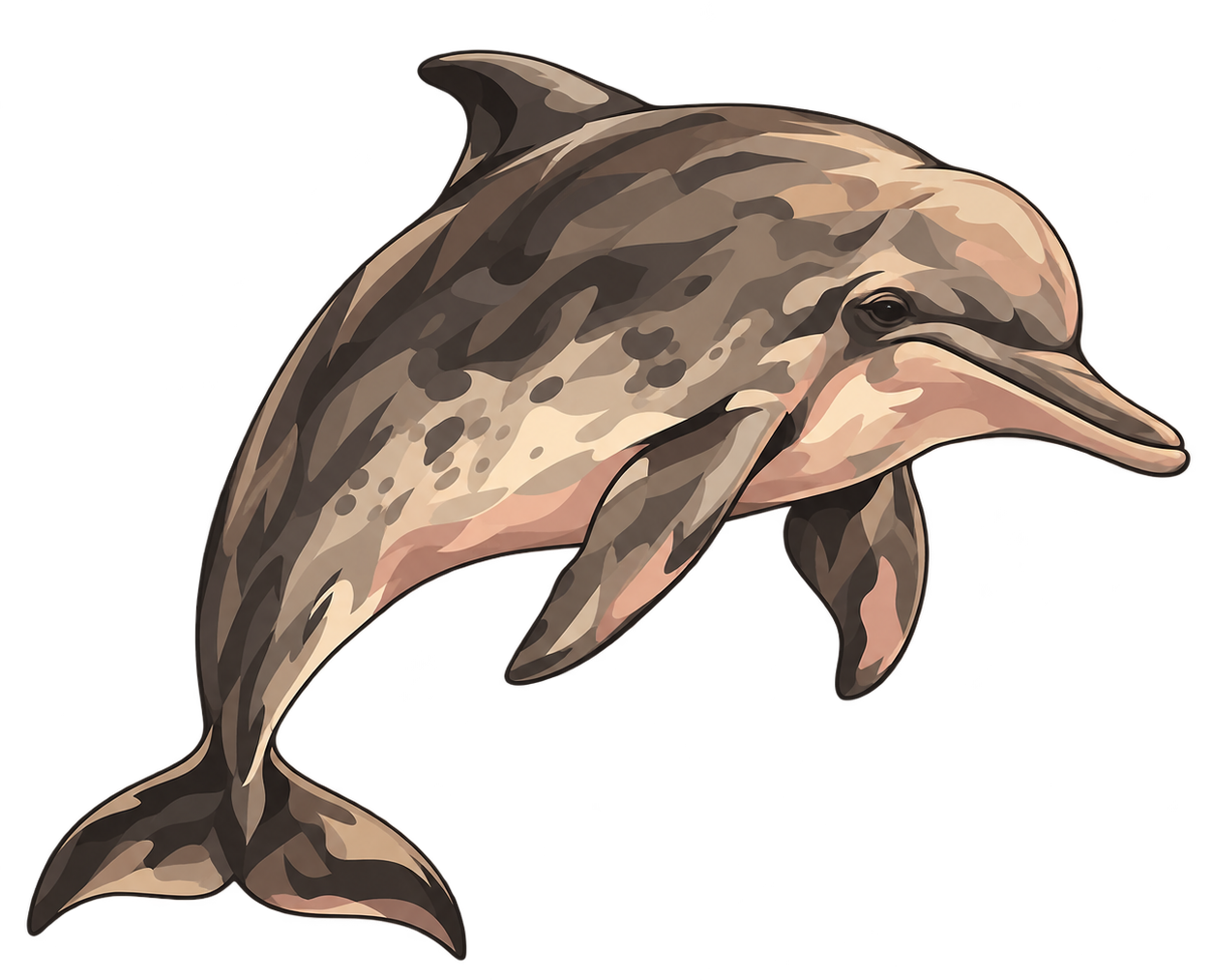
The Indo-Pacific Humpback Dolphin is a coastal dolphin shaped by the meeting of land and sea. It inhabits shallow coastal waters, river mouths and estuarine environments, where tides redistribute fish, sediment and nutrients. Its rounded forehead, elongated beak and distinctive dorsal hump make it recognisable, although its appearance varies across its range.
For the Indian Sundarbans, this dolphin presents an important scientific distinction: humpback dolphins are associated with the wider Bay of Bengal region, but their exact taxonomic identity and distribution in the Indian Sundarbans are not sufficiently established to claim a confirmed local population of Sousa chinensis. Records from neighbouring Bangladesh and a recent photographic record from the Rupnarayan River in West Bengal provide valuable regional context, but they do not establish regular occurrence throughout the Indian Sundarbans.
This distinction matters. A credible wildlife guide must separate what is known about the species globally from what researchers have actually documented in the Sundarbans. The following feature follows The Wild Orbit’s natural-history framework, combining species biology, estuarine ecology, conservation and responsible wildlife observation without inventing local sightings or population statistics.
Indo-Pacific Humpback Dolphin At a Glance
| Feature | Natural-history description |
| Body form | Robust, streamlined body with a distinct beak |
| Forehead | Rounded forehead, or melon |
| Dorsal profile | A low hump with a relatively small dorsal fin |
| Colour | Variable, from grey to pale grey, with pinkish tones in some populations |
| Movement | Swimming and surfacing for air; movements depend on local water depth and prey |
| Senses | Hearing and echolocation are central to underwater orientation and feeding |
| Social behaviour | Seen alone or in groups; group size varies by location and activity |
| Feeding | Primarily piscivorous, with prey composition varying by habitat |
| Reproduction | Gives birth to live young and nurses them |
| Principal conservation concerns | Fishing-gear entanglement, vessel activity, habitat alteration, pollution and underwater noise |
A Mammal in a World of Moving Water
In the tidal landscapes surrounding the Bay of Bengal, water is never simply a backdrop. It carries sediment, transports nutrients, shifts the boundaries between river and sea, and determines where fish gather. For a coastal dolphin, these changing conditions influence the availability of food, the routes it can travel and the sounds it uses to understand its surroundings.
The Indo-Pacific Humpback Dolphin (Sousa chinensis) is adapted to this coastal world. Unlike dolphins associated primarily with deeper offshore waters, it typically occupies relatively shallow nearshore habitats. These may include coastal bays, sheltered channels and estuaries, where freshwater and seawater mix and underwater visibility can be poor.
In the Sundarbans, the ecological setting is familiar: muddy riverbanks, winding tidal creeks, mangrove islands and channels influenced by the tides. Yet the presence of suitable habitat alone cannot establish that a particular dolphin species lives there regularly. The Indian Sundarbans needs its own documented records, repeated surveys and reliable species identification.
That is the starting point for understanding this mammal: its natural history is well documented in parts of its wider range, while its precise relationship with the Indian Sundarbans remains an important subject for further research.
Scientific Identity and Classification
The Indo-Pacific Humpback Dolphin belongs to the dolphin family Delphinidae, which includes oceanic dolphins such as bottlenose dolphins. It is a toothed whale, or odontocete, rather than a baleen whale. Like other toothed whales, it uses echolocation to detect objects and help locate prey underwater.
Its scientific name, Sousa chinensis, was established by the naturalist Peter Osbeck in 1765. The genus Sousa contains several closely related humpback dolphin species whose identification and geographic boundaries have been refined through taxonomic research.
| Classification | Details |
| Common name | Indo-Pacific Humpback Dolphin |
| Scientific name | Sousa chinensis |
| Kingdom | Animalia |
| Class | Mammalia |
| Order | Cetacea |
| Family | Delphinidae |
| Genus | Sousa |
| Diet | Primarily fish; other prey may be consumed |
| Main habitat | Shallow coastal waters, bays and estuaries |
| Geographic range | Parts of the eastern Indian Ocean and western Pacific |
| Global IUCN assessment | Vulnerable in the published assessment cited below |
| Key ecological role | Coastal predator within nearshore food webs |
| Distinctive feature | A low dorsal hump supporting a relatively small dorsal fin |
An Important Taxonomic Distinction for West Bengal
The name Indo-Pacific Humpback Dolphin is sometimes used loosely for humpback dolphins across a broad region. Modern taxonomy distinguishes the Indo-Pacific Humpback Dolphin (Sousa chinensis) from the Indian Ocean Humpback Dolphin (Sousa plumbea). The latter was historically grouped with S. chinensis before research identified differences in morphology and genetics.
The Bay of Bengal complicates this picture. The IUCN assessment for S. plumbea notes uncertainty about the taxonomic identity of humpback dolphins farther east, including the possibility that some animals in the region do not fit neatly into either currently recognised species.
A 2025 natural-history paper documented photographic evidence of a humpback dolphin identified as S. chinensis in the tidal Rupnarayan River in West Bengal. That is an important regional record, but it does not establish the identity or population status of humpback dolphins throughout the Indian Sundarbans.
For wildlife reporting, the responsible approach is to use the species name supported by the particular record and avoid treating every humpback dolphin reported in the northern Bay of Bengal as automatically belonging to the same taxon.
The Natural Distribution of the Species
The Indo-Pacific Humpback Dolphin occurs across parts of the eastern Indian Ocean and western Pacific, including coastal waters around South and Southeast Asia. Its distribution is not continuous in the sense of a single, uniformly occupied habitat: local populations depend on suitable coastal environments, and the amount of scientific monitoring differs substantially between regions.
Studies from parts of its range have investigated its use of shallow coastal waters, its social behaviour and its responses to human activity. Research in Hong Kong, for example, has documented acoustic communication, the use of coastal habitats and concerns about noise generated by shipping and industrial activity. These findings help explain the species’ ecology but should not be presented as direct measurements of behaviour in West Bengal.
In India, published records have historically been scattered. An overview of Indian and Sri Lankan records documented humpback dolphins along multiple coastal areas, while noting that the species had not been studied in detail along much of the Indian coastline. The authors also reported records from the northeast Andaman Islands.
These records establish a wider regional context, not a complete map of current distribution. Historical sightings, strandings and incidental captures provide valuable evidence, but they cannot independently show how many dolphins remain in an area or whether a population is resident.
The Indian Sundarbans: Suitable Habitat, Uncertain Distribution
The Indian Sundarbans forms part of the Ganges–Brahmaputra–Meghna delta system. Its network of tidal waterways connects rivers, estuarine channels, mudflats and mangrove-fringed islands with the Bay of Bengal.
Several characteristics of this landscape are relevant to coastal dolphins:
- Some estuarine channels offer habitat conditions comparable to those used by coastal dolphin species elsewhere.
- River discharge and tidal exchange create shifting mixtures of fresh and saline water.
- Estuarine fish provide prey for aquatic predators, although the prey available to a particular dolphin depends on its habitat and feeding behaviour.
- Water movement continually changes channel depth, turbidity and the distribution of prey.
- Fishing, vessel movement and development can influence the quality and accessibility of aquatic habitat.
These are ecological characteristics of the landscape, not proof of regular Indo-Pacific Humpback Dolphin occurrence. The species should not be described as abundant, resident or regularly visible in named Sundarbans rivers without suitable supporting records.
A separate line of evidence comes from the Bangladesh Sundarbans. A national assessment records a 2002 sighting of humpback dolphins in a relatively high-salinity channel in the southwestern portion of the mangrove forest. This demonstrates regional relevance, but the record does not by itself prove a stable population in the Indian portion of the delta or settle the species’ precise taxonomy.
Why Coastal Estuaries Matter to Humpback Dolphins
Estuaries are productive but demanding environments. Their food webs are influenced by river discharge, tidal exchange, sediment movement and the movement of fish between different salinity zones.
For a dolphin that hunts in shallow water, the estuary offers access to prey concentrated in a relatively confined area. At the same time, the animal must navigate shifting currents, variable visibility, shallow sections and a water column increasingly shared with human activity.
The ecological value of an estuary therefore extends beyond the presence of a single species. Fish populations, plankton, crustaceans, mangrove vegetation and tidal processes collectively sustain the environment. Dolphins occupy a higher level of this food web, linking prey populations with the broader ecological processes that shape coastal waters.
Mangroves do not need to form the dolphin’s primary habitat for their surrounding waterways to matter. Mangrove-lined creeks and adjacent estuarine channels can form parts of a connected coastal system. However, the strength of this relationship must be established species by species and location by location.
A Body Shaped for Swimming
The Indo-Pacific Humpback Dolphin has a streamlined, muscular body suited to movement through water. Its shape balances propulsion, manoeuvrability and the need to surface regularly for air.
Its most recognisable feature is the low hump along the back, on which the dorsal fin sits. The prominence of the hump varies between humpback dolphin species, making it useful as one part of a wider identification assessment rather than an isolated diagnostic feature.
The body tapers towards the tailstock, where powerful muscles drive the horizontal tail flukes. Unlike a fish, a dolphin generates most of its forward propulsion through vertical movement of the tail. Its pectoral flippers assist with steering and stability, allowing it to adjust its position as it moves through a channel or turns after prey.
These adaptations are not unique to the Sundarbans. They are part of the evolutionary equipment of a marine mammal living in a fluid environment, where efficient movement matters for travel, feeding and escape.
The Hump, Fin and Beak
The name humpback dolphin comes from the raised dorsal profile rather than from the large, curved flippers associated with humpback whales.
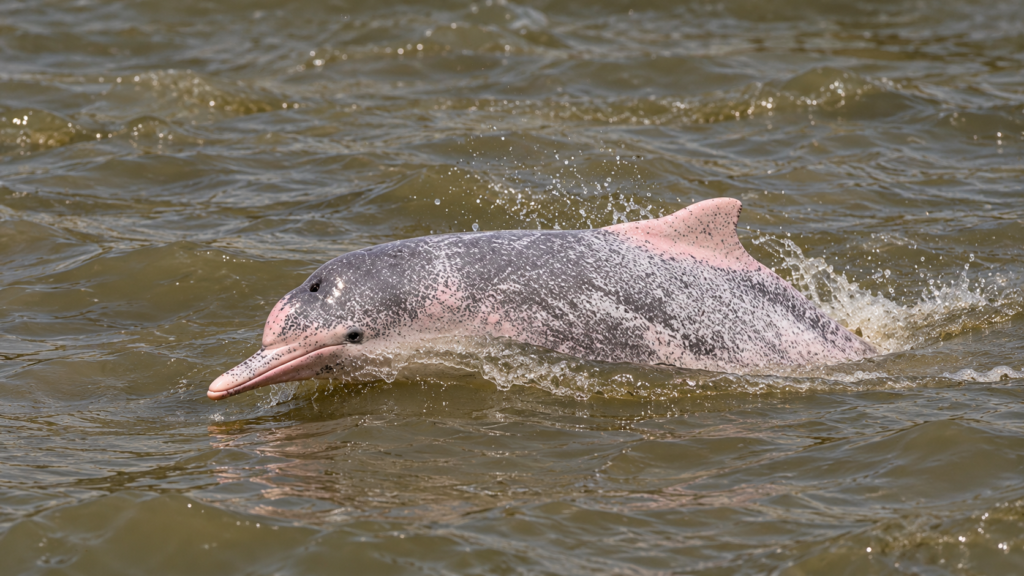
The Indo-Pacific Humpback Dolphin generally has a distinct beak separated from its rounded forehead by a visible crease. The beak carries conical teeth suited to catching and holding prey. This body plan helps distinguish it from dolphins with shorter, less clearly defined snouts, although identification in the field may be difficult when only a brief glimpse is available.
The dorsal fin is relatively small compared with the body’s overall size. Its shape, position and relationship with the hump may help experienced observers distinguish different species within the genus Sousa. Yet waves, distance, viewing angle and incomplete photographs can obscure these features.
For conservation surveys in the Bay of Bengal, photographs of the dorsal region, head profile and body coloration are especially useful when they can be obtained without approaching or disturbing the animal.
Colour Changes Across a Lifetime
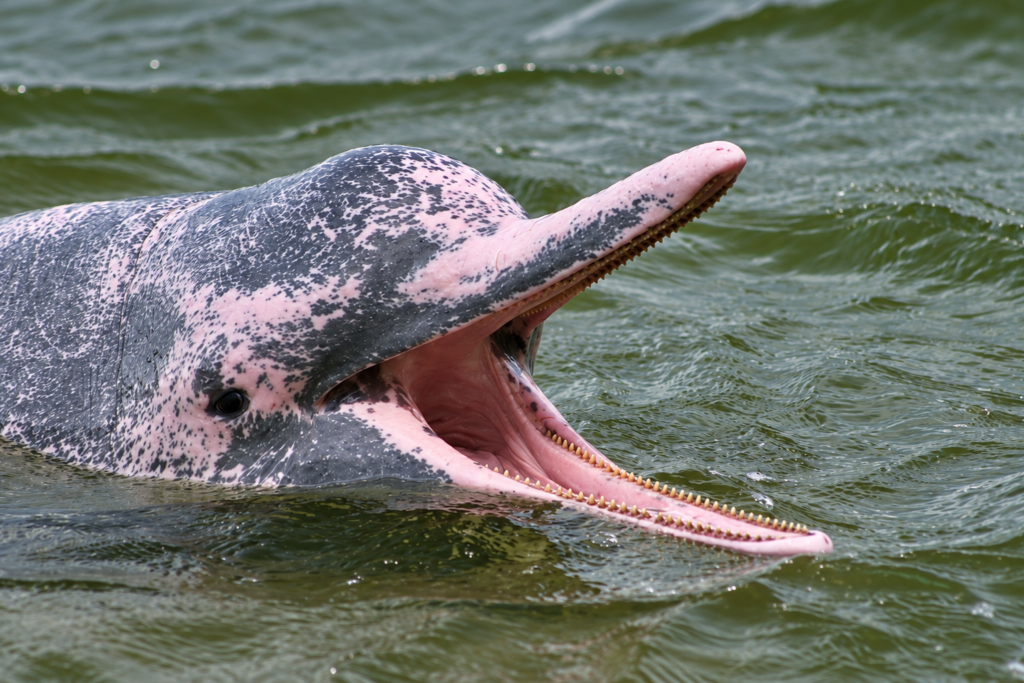
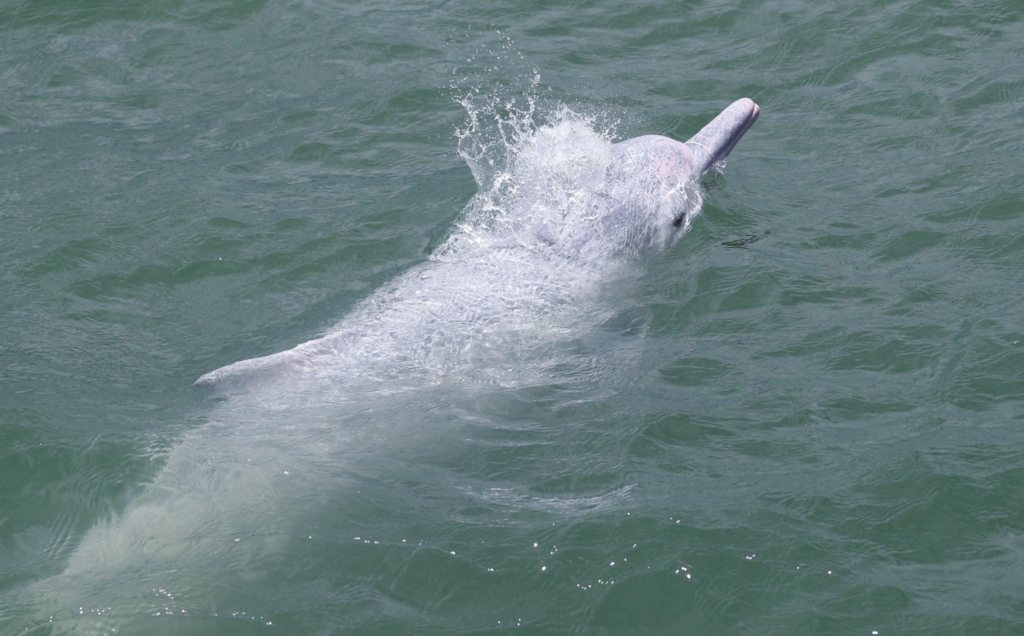
Humpback dolphins display considerable variation in colour. Indo-Pacific Humpback Dolphins may appear grey, pale grey or nearly white, and some individuals develop conspicuous pinkish tones. The pattern varies between populations and across age classes.
Young dolphins are generally darker than many older individuals. In some populations, the skin becomes paler with age, while visible pink colouration may be associated with blood vessels close to the skin rather than with a uniformly pink pigment.
Colour alone cannot reliably determine a dolphin’s species, age or health. Light reflecting off turbid water, wet skin and changing weather can also alter how the animal appears in photographs.
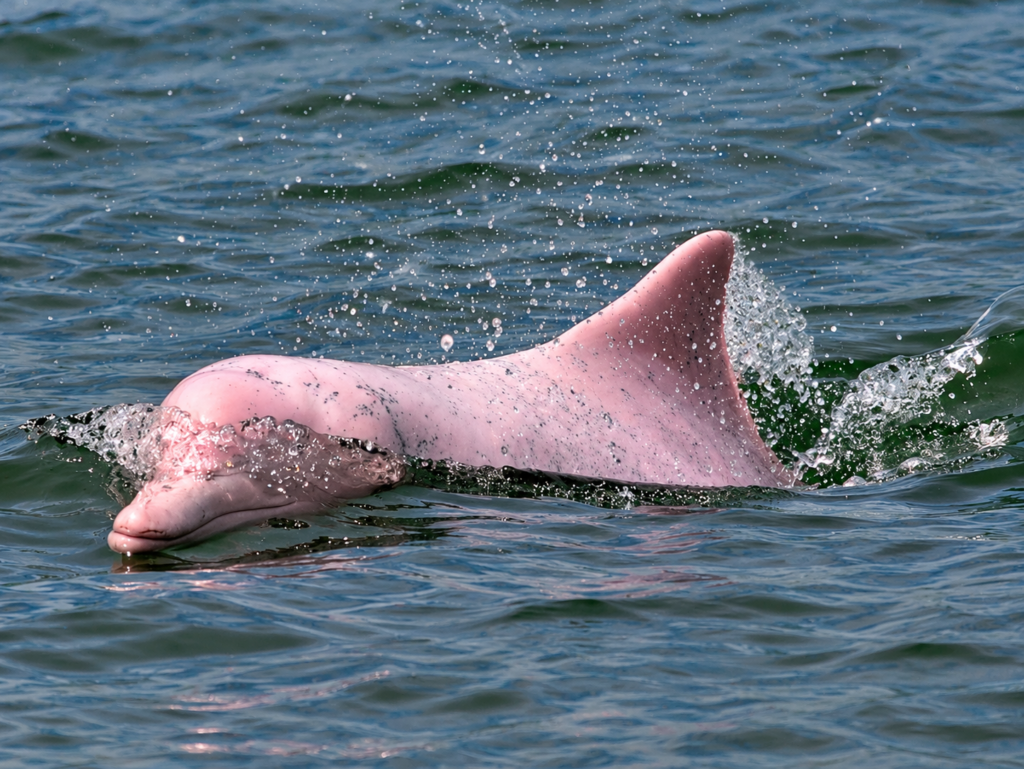
This variability is one reason why wildlife imagery should be paired with accurate species identification. A pale dolphin in an estuary should not automatically be labelled an Indo-Pacific Humpback Dolphin without considering its other characteristics and the location where it was observed.
How It Breathes and Moves
Although dolphins live in water, they breathe air through a blowhole on top of the head. Each surfacing allows the animal to exchange air before it returns underwater. The blowhole closes during a dive, helping prevent water from entering the respiratory tract.
Dolphins are voluntary breathers. They must surface consciously, unlike humans, whose breathing continues automatically during ordinary sleep. Their rest therefore involves behavioural and physiological adaptations that allow periods of reduced activity while maintaining access to air.
The frequency of surfacing changes with activity. A dolphin feeding, travelling or interacting with other individuals may show a different surfacing pattern from one resting near the surface.
For an observer on a boat, the visible sign may be brief: a curved back, a small dorsal fin or a momentary glimpse of the head. A single surfacing can easily be missed in rough water, particularly where the background consists of moving ripples, suspended sediment and reflections.
The Senses Behind Survival
See it for yourself
A private journey shaped around you — your group, your pace, your interests. Book a free consultation.
In an estuary, sight alone is not enough to understand the underwater environment. Suspended silt can reduce visibility, and the bottom may change from a shallow mudbank to a deeper channel over a relatively short distance.
Toothed dolphins use echolocation by producing high-frequency sounds and interpreting returning echoes. This system helps them detect objects and locate prey even when visual conditions are poor. Sound also plays a wider role in dolphin behaviour, including communication and social interactions.
Research on Indo-Pacific Humpback Dolphins in Hong Kong has investigated how their acoustic behaviour relates to habitat use and how vessel noise may affect communication and prey detection. Studies of underwater sound in other parts of the species’ range likewise demonstrate that coastal soundscapes are influenced by shipping and natural biological activity.
These findings support a broader ecological principle: water is not simply a medium for movement. It is also an acoustic environment. Excessive human-generated noise can alter the conditions in which dolphins locate prey and communicate.
However, the specific effects of noise on humpback dolphins in the Indian Sundarbans have not been established by the cited regional records. Local impact assessments would need to measure vessel activity, underwater sound and dolphin behaviour together.
What Does the Indo-Pacific Humpback Dolphin Eat?
The Indo-Pacific Humpback Dolphin is primarily a fish-eating predator. Its diet may include different coastal and estuarine fish, with the composition influenced by local prey availability. Research across the species’ range also considers the importance of habitat, feeding behaviour and the distribution of prey.
Its conical teeth are adapted to grasping prey rather than chewing it as a terrestrial mammal would. The dolphin captures fish underwater and swallows its food, with prey size and handling depending on the species and feeding situation.
A productive estuary may bring fish into shallow channels or concentrate them around changing water currents. Such conditions can create feeding opportunities, but it would be inaccurate to claim that humpback dolphins in the Indian Sundarbans specifically follow a particular fish species or tidal schedule without local observations.
| Feeding characteristic | What is known |
| Main food category | Fish |
| Feeding environment | Coastal and estuarine waters |
| Capture method | Pursuit and capture using the mouth and teeth |
| Role of echolocation | Helps detect prey and navigate underwater |
| Local Sundarbans diet | Not sufficiently documented for a verified species-specific diet profile |
Surviving a Landscape That Never Stays Still
The coastal habitat of a humpback dolphin is dynamic. Water depth changes with the tide, prey move between channels, and the same stretch of coastline can present different conditions across the day.
Dolphins occupying shallow coastal waters must navigate these changing conditions while maintaining access to sufficient prey and safe routes through their habitat. Their mobility allows them to move between suitable feeding areas, although the extent and timing of movement vary between populations.
It is important not to confuse general coastal adaptations with special adaptations to the Sundarbans. There is no adequate evidence here to claim that Sousa chinensis possesses a unique ability to tolerate the delta’s salinity fluctuations, navigate every tidal creek or withstand the particular conditions of a Sundarbans cyclone.
Instead, the more defensible interpretation is that its established preference for nearshore habitats makes estuarine ecology relevant to understanding the species, while its precise responses to the Indian Sundarbans environment remain a research question.
When Is the Dolphin Most Active?
Activity patterns differ between populations and may vary with feeding, social behaviour, environmental conditions and human disturbance.
Research in Hong Kong has used acoustic recordings to investigate when Indo-Pacific Humpback Dolphins use different coastal areas. The results indicated differences in acoustic activity between day and night, illustrating why observations made only during daylight may not capture a population’s full pattern of habitat use.
These findings should not be converted into a universal rule that the species is nocturnal or that it is easier to see at a particular hour in West Bengal.
For the Indian Sundarbans, a scientifically useful activity study would combine repeated visual surveys with acoustic monitoring, tidal information and records of boat traffic. That approach could help determine whether local dolphins use certain channels at particular times and whether their behaviour changes in response to environmental conditions.
Solitary Dolphins and Social Groups
Indo-Pacific Humpback Dolphins may be encountered alone or in groups. Group size can vary according to location, prey availability and the activity of the animals. The presence of several dolphins together does not necessarily indicate a permanent family group, and a solitary sighting does not mean that an individual always lives alone.
Social associations in dolphins can change over time. Individuals may come together to feed, travel or engage in social behaviour, then separate again. The structure of these relationships can differ across populations, making local observation important for understanding a particular community.
For the Sundarbans, this means that one photograph or a brief sighting would be valuable as a record of occurrence, but insufficient to describe the population’s social structure. Repeated identification of individuals and groups would be needed to investigate residency, association patterns and movement.
Communication Beneath the Surface
Dolphins communicate through sound, and acoustic signals are particularly important in an environment where visibility may be limited.
Research on S. chinensis has documented whistles and other vocalisations, including high-frequency clicks associated with echolocation. These sounds serve different functions; echolocation clicks help an animal gather information about objects and prey, while other signals can contribute to social communication.
A dolphin’s underwater world is therefore both physical and acoustic. The echoes returning from prey and the sounds produced by other animals help it interpret an environment that human observers can only partially experience.
In busy coastal waters, this acoustic world may overlap with the low-frequency sound of ships, engines and industrial activity. Research reviews identify underwater noise as a potential conservation concern for humpback dolphins because of their dependence on sound and their use of nearshore habitats.
Acoustic research could be particularly useful in the Sundarbans, where murky water may make visual surveys difficult. However, recordings would need to be analysed carefully to distinguish humpback dolphin vocalisations from those of other cetaceans and from non-biological noise.
Breeding, Calves and Parental Care
Like other dolphins, the Indo-Pacific Humpback Dolphin is a mammal that gives birth to live young and nurses them with milk. A calf must reach the surface to breathe from the beginning of its life, and maternal care is essential during early development.
The precise timing of reproduction, gestation and calving can vary among populations and is not sufficiently established for a specific Indian Sundarbans population. Research from Hong Kong has documented reproductive activity across the year, with a seasonal peak in that particular population. Those findings should not be applied automatically to dolphins elsewhere.
A local breeding study would need sustained observations, reliable identification of mother–calf pairs and information about seasonal habitat use. Opportunistic photographs may document a calf, but they cannot establish a regional breeding season or estimate reproductive success.
The distinction is important for conservation. A coastal area may be used for feeding, travelling or occasional passage without serving as a regular nursery. Protecting a true breeding or calf-rearing area requires evidence that identifies its role in the animals’ lives.
Predators, Prey and the Coastal Food Web
The humpback dolphin occupies a position as a predator in the coastal food web. By consuming fish, it participates in the flow of energy through the estuarine ecosystem.
Its ecological role should not be exaggerated. Dolphins do not independently maintain the health of an entire estuary, and their presence alone cannot prove that a waterway is ecologically intact. The condition of a coastal ecosystem depends on a much wider network of processes, including nutrient cycling, habitat integrity, prey populations and the effects of human activity.
Humpback dolphins also share coastal waters with other marine mammals and numerous fish-eating predators. Competition for prey may occur in some circumstances, but its significance depends on the species involved, the availability of food and the characteristics of the local habitat.
In the Sundarbans, this wider food-web perspective matters more than assigning the dolphin an unsupported, uniquely defined role in mangrove ecology.
The Human Connection: Fishing, Boats and Shared Waterways
The same coastal waters used by dolphins support fishing communities, transport, trade and other livelihoods. People and dolphins can therefore depend on overlapping spaces, creating both opportunities for coexistence and risks to wildlife.
One of the major documented threats to humpback dolphins is accidental entanglement in fishing gear. An animal that becomes trapped in a net may be unable to surface to breathe. The risk varies with the type of gear, how and where it is deployed, and the species’ movements. Vessel strikes, pollution, habitat modification and underwater noise are additional concerns for coastal dolphin conservation.
These risks must be understood in their socioeconomic context. Fishing is a livelihood, and conservation measures that ignore the needs of local communities may be difficult to sustain. Effective responses can include documenting entanglement events, identifying high-risk fishing practices, improving reporting systems and developing practical measures with fishers.
In the Indian Sundarbans, any claim about the frequency of humpback dolphin entanglement or conflict with local fishing communities requires local evidence. The wider species literature establishes plausible threats, not their measured severity in this particular landscape.
Coexistence in a Working Estuary
A dolphin does not need a landscape free of people to survive. It needs habitat that continues to provide food, suitable water conditions and enough space to carry out essential behaviour.
Where dolphins and fishing activity overlap, conservation may involve reducing accidental capture while maintaining livelihoods. Where vessel traffic is substantial, route management and reduced disturbance may be relevant. Where pollution or habitat modification affects coastal waters, monitoring and environmental safeguards become important.
The appropriate intervention depends on the evidence. There is no single measure that solves every threat across the species’ range.
For the Indian Sundarbans, an early priority is to improve the evidence base: establish where humpback dolphins occur, determine which taxon is represented, record how they use tidal channels, and document any interaction with fishing gear or vessels. Only then can conservation actions be designed around the local population rather than assumptions drawn from other regions.
How Scientists Study Humpback Dolphins
Studying a coastal dolphin requires methods that account for its mobility, the difficulty of observing underwater animals and the possibility of confusing closely related species.
| Research method | Purpose |
| Boat-based visual surveys | Record sightings, group sizes, locations and behaviour |
| Photographic identification | Compare distinctive body markings and dorsal-fin features where usable |
| Acoustic monitoring | Detect vocal activity and investigate habitat use |
| Stranding records | Document animals found dead or stranded and collect information when permitted |
| Fisheries interviews | Gather carefully verified reports of encounters and entanglements |
| Environmental measurements | Relate observations to water depth, tides, salinity and other conditions |
| Genetic sampling | Help resolve taxonomic identity when suitable samples are available |
No single method provides every answer. Visual surveys may miss animals that remain underwater, while acoustic equipment may detect sounds that cannot be confidently assigned to species without expert analysis.
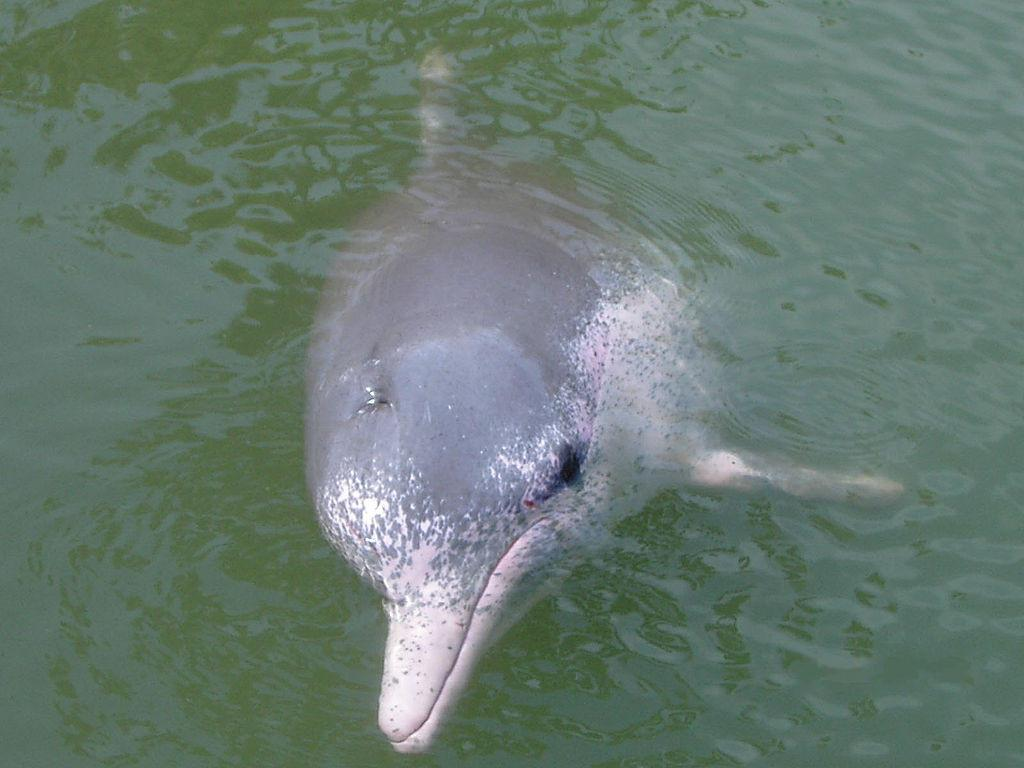
Photographs can provide strong evidence of a sighting, as demonstrated by the published record from the Rupnarayan River. Yet a photographic record does not, on its own, establish population size, long-term residency or breeding status.
Why Long-Term Monitoring Matters
A handful of observations can establish that an animal was present at a particular time and place. Repeated surveys are needed to determine whether the area is used regularly, whether individuals return, and how habitat use changes through the year.
Long-term monitoring can also help distinguish changes in dolphin occurrence from changes in detection. For example, a period with fewer sightings may reflect altered survey effort, weather, water conditions or animal behaviour rather than an actual decline in abundance.
For the Sundarbans, a useful monitoring programme would cover multiple tidal channels and seasons, record survey effort systematically, and document the characteristics needed to distinguish Sousa species. It should also assess the effects of vessel traffic and fishing activity where evidence indicates that these factors overlap with dolphin habitat.
Conservation Status and Legal Protection
The global IUCN assessment cited for Sousa chinensis classified the species as Vulnerable, based on an assessment completed in 2015 and published in 2017. That classification describes the species at the global level in that assessment; it is not a population estimate for the Indian Sundarbans.
The genus Sousa includes species with different conservation assessments. The Indian Ocean Humpback Dolphin (S. plumbea), for example, was assessed as Endangered in the IUCN assessment published in 2023. Its status should not be substituted for the status of S. chinensis, nor should the uncertainty surrounding Bay of Bengal taxonomy be ignored.
The Convention on International Trade in Endangered Species (CITES) lists S. chinensis in Appendix I, which subjects international commercial trade in specimens to stringent controls. The species is also listed under the Convention on the Conservation of Migratory Species of Wild Animals. International listings are important, but they do not replace the need for effective habitat protection and conservation action within individual countries.
For conservation planning in West Bengal, the species identity of any local population must be established before its status is assessed at a regional scale. National wildlife laws, applicable protected-area rules and current government guidance should be checked against the actual taxon and location involved.
The Principal Threats to Coastal Humpback Dolphins
Fishing-Gear Entanglement
Accidental entanglement is a recognised threat to coastal dolphins. Nets can prevent an animal from reaching the surface to breathe, and interactions may go undetected when gear is deployed in remote or turbid waters.
Understanding the local risk requires information about the fishing gear used, fishing locations, reported encounters and the movements of the dolphins themselves. Measures should be developed with fishers and evaluated for both conservation effectiveness and practical feasibility.
Vessel Traffic and Underwater Noise
Dolphins depend on sound to navigate, detect prey and communicate. Engine noise and other human-generated sounds may interfere with these functions, while vessel movement can also create collision risks.
Scientific reviews identify shipping noise as a concern for Indo-Pacific Humpback Dolphins, especially because the species occupies nearshore environments that are frequently used by people.
Potential responses include improved vessel practices, reduced disturbance in important habitat and appropriate environmental assessment of new maritime infrastructure. Any specific restriction in the Indian Sundarbans would need to be based on local evidence and applicable regulations.
Pollution and Habitat Modification
Coastal dolphins depend on the wider health of the aquatic environment. Pollution can affect prey species and water quality, while dredging, land reclamation and construction can alter shallow-water habitats.
The significance of each pressure depends on its location, intensity and duration. A local assessment should therefore examine water quality, habitat change, prey availability and dolphin occurrence together instead of attributing a population trend to a single factor without evidence.
Climate Change and a Changing Delta
The Sundarbans is a dynamic delta exposed to tidal flooding, erosion, cyclones and changes in freshwater and saline influence. These processes can alter channels, mudbanks and the distribution of aquatic habitats.
For a coastal dolphin, climate-related changes may matter if they alter prey distribution, suitable water depths or access to feeding areas. However, the specific effects on S. chinensis in the Indian Sundarbans have not been established by the records cited here.
A credible climate assessment would need to connect measured environmental changes with documented dolphin distribution and behaviour. It should not assume that every change in salinity or every cyclone necessarily causes a decline in dolphins.
Where Can the Indo-Pacific Humpback Dolphin Be Observed in the Sundarbans?
The most important distinction is between a place where a species has been documented and a place where suitable habitat exists.
A 2025 natural-history paper reported photographic evidence of a humpback dolphin identified as Sousa chinensis in this tidal river. The record is valuable evidence from West Bengal, but it is not a record from the Indian Sundarbans itself.
A 2002 sighting of humpback dolphins was recorded in a relatively high-salinity channel in the southwestern part of the Bangladesh Sundarbans. This provides relevant regional context, but it does not establish a resident population of S. chinensis in the Indian Sundarbans.
The estuarine waterways of the Indian Sundarbans offer a relevant setting for future cetacean surveys. However, without a reliable species-specific record, individual rivers, forest blocks or watchtowers should not be promoted as established humpback dolphin sighting locations.
The available evidence does not justify assigning a high probability of observing this dolphin at Sajnekhali, Sudhanyakhali, Dobanki, Netidhopani, Bonnie Camp or any other named Sundarbans wildlife observation area.
The appropriate next step is to expand systematic surveys, verify photographic records and distinguish humpback dolphins from other cetaceans. This would provide a stronger basis for identifying any genuine observation zones in the Indian Sundarbans.
The Important Truth About Wildlife Sightings
Wildlife does not follow a timetable designed for human observation.
Even in an area where a species is reliably documented, its presence at any particular moment depends on movement, food availability, water conditions and other factors. Dolphins spend much of their lives below the surface, and a passing boat may miss an animal that surfaces only briefly.
A lack of sightings does not prove that a species is absent. Equally, a single sighting does not prove that a permanent population exists.
For the Indo-Pacific Humpback Dolphin, responsible observation begins with acknowledging what the evidence can and cannot establish. A verified photograph, a carefully recorded location and a reliable account of the circumstances can contribute more to wildlife knowledge than an unsupported claim of a guaranteed encounter.
What Makes the Indo-Pacific Humpback Dolphin of the Sundarbans Unique?
The most distinctive aspect of this dolphin’s relationship with the Sundarbans is currently the scientific question itself: how do humpback dolphins use the wider Bay of Bengal’s interconnected coastal and estuarine waters, and which taxonomic group do the animals in this region belong to?
Several features make this question important.
- The Sundarbans combines tidal rivers, shifting sediment, freshwater influence and saline channels. Understanding how coastal dolphins use this environment requires observations across changing conditions.
- Modern research recognises Sousa chinensis and Sousa plumbea as distinct species, while the identity of humpback dolphins in parts of the Bay of Bengal remains uncertain.
- Regional records from West Bengal and Bangladesh make further research worthwhile, but they do not establish the abundance, residency or breeding status of humpback dolphins in the Indian Sundarbans.
- Fishing, transport and other human activities overlap with the coastal environments used by marine mammals. Conservation must account for both ecological requirements and the people who depend on these waterways.
- Photographic surveys, acoustic recordings and environmental measurements could help establish species identity and reveal how dolphins use individual estuarine habitats.
The Sundarbans should not be described as a unique stronghold of the Indo-Pacific Humpback Dolphin without evidence supporting that claim. Its importance here lies in the opportunity to investigate a poorly resolved part of the species’ wider regional ecology.
Myths and Facts About the Indo-Pacific Humpback Dolphin
| Myth | Fact |
| Every humpback dolphin in the Bay of Bengal is Sousa chinensis. | The taxonomy of humpback dolphins in parts of the Bay of Bengal remains uncertain. |
| A suitable estuary proves that a species lives there. | Habitat suitability is not equivalent to documented occurrence. |
| All humpback dolphins are pink. | Colour varies between individuals, ages and populations. |
| Dolphins can breathe underwater like fish. | Dolphins are mammals that must surface to breathe air. |
| One sighting proves a resident population. | Repeated, systematic observations are needed to assess residency and population status. |
| A lack of sightings proves that dolphins are absent. | Animals may be present but remain undetected during a survey. |
FAQs
1. What is the Indo-Pacific Humpback Dolphin?
The Indo-Pacific Humpback Dolphin is a coastal marine mammal scientifically known as Sousa chinensis. It is recognised by its elongated beak and the low hump beneath its relatively small dorsal fin.
2. Is the Indo-Pacific Humpback Dolphin found in the Sundarbans?
Humpback dolphins have been reported in the wider Bay of Bengal region, including the Bangladesh Sundarbans. However, the available evidence does not establish a confirmed resident population of Sousa chinensis in the Indian Sundarbans.
3. What is the scientific name of the Indo-Pacific Humpback Dolphin?
Its scientific name is Sousa chinensis. It belongs to the family Delphinidae, which includes several other dolphin species.
4. Is the Indo-Pacific Humpback Dolphin endangered?
The IUCN assessment published in 2017 classified S. chinensis as Vulnerable. That assessment was based on information evaluated in 2015, so it should not be described as a new assessment for 2026.
5. What does the Indo-Pacific Humpback Dolphin eat?
It feeds primarily on fish. The exact composition of its diet varies with local prey availability and has not been adequately established for a population in the Indian Sundarbans.
6. Why is the dolphin called a humpback dolphin?
The name refers to the raised area on its back, where the dorsal fin is situated. The prominence of this hump varies between species within the genus Sousa.
7. Can the Indo-Pacific Humpback Dolphin survive in muddy water?
It can inhabit coastal and estuarine waters where visibility may be limited. Echolocation helps toothed dolphins detect objects and prey underwater, but the species’ specific responses to the conditions of the Indian Sundarbans require further study.
8. What are the main threats to humpback dolphins?
Recognised threats include accidental entanglement in fishing gear, vessel strikes, underwater noise, pollution and coastal habitat modification. Their relative importance varies between locations.
9. What is the difference between Sousa chinensis and Sousa plumbea?
Sousa chinensis is the Indo-Pacific Humpback Dolphin, while Sousa plumbea is the Indian Ocean Humpback Dolphin. They are recognised as separate species, although the identity of humpback dolphins in parts of the Bay of Bengal remains uncertain.
10. Where can I see humpback dolphins in the Indian Sundarbans?
No specific location can be responsibly recommended as an established sighting hotspot for S. chinensis based on the evidence reviewed here. The Rupnarayan River has a published photographic record from West Bengal, but it is outside the Indian Sundarbans.
The Wild Orbit Perspective
The Sundarbans is often understood through its most visible wildlife, its shifting mangrove islands and the immense power of its tides. Yet the ecological story of this delta extends far beyond what can be seen from a boat.
A dolphin moving through a coastal channel depends on a complex underwater world of prey, sound, water movement and habitat. Its survival is connected to the condition of the estuary, just as the estuary is connected to the wider delta and the communities that live alongside it.
For the Indo-Pacific Humpback Dolphin, there is still an important story to establish in the Indian Sundarbans. Reliable observations, careful taxonomy and sustained research are needed before its local distribution can be described with confidence.
That uncertainty is not a reason to overlook the animal. It is a reason to investigate more carefully, protect the waterways that support coastal wildlife and recognise the value of evidence gathered patiently over time.
In the Sundarbans, the unseen is not necessarily absent; sometimes, it is a reminder of how much there is still to learn.
Plan your private Sundarban expedition
A private journey shaped around you — your group, your pace, your interests. Book a free consultation.