 Field guide
In the Indian Sundarbans, wildlife is often associated with the movement of a tiger through mangrove shadows, the splash of a fishing cat in a creek, or the distant silhouette of an eagle above the tidal forest. Yet another mammal connects this landscape to the wider world of trees, fruits and seeds: the Indian Flying Fox.
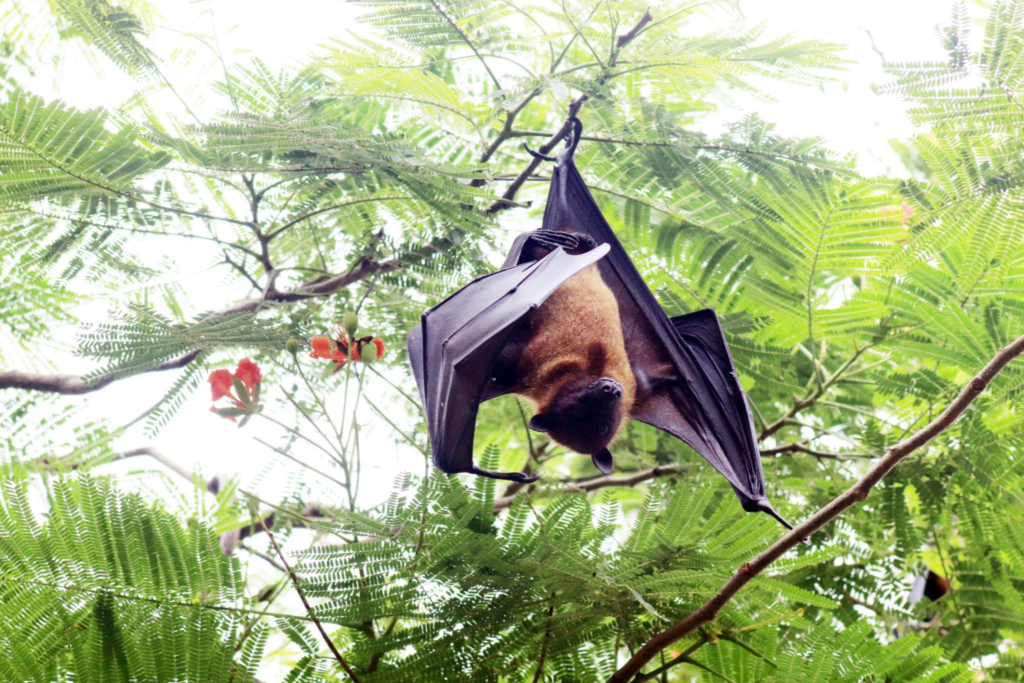
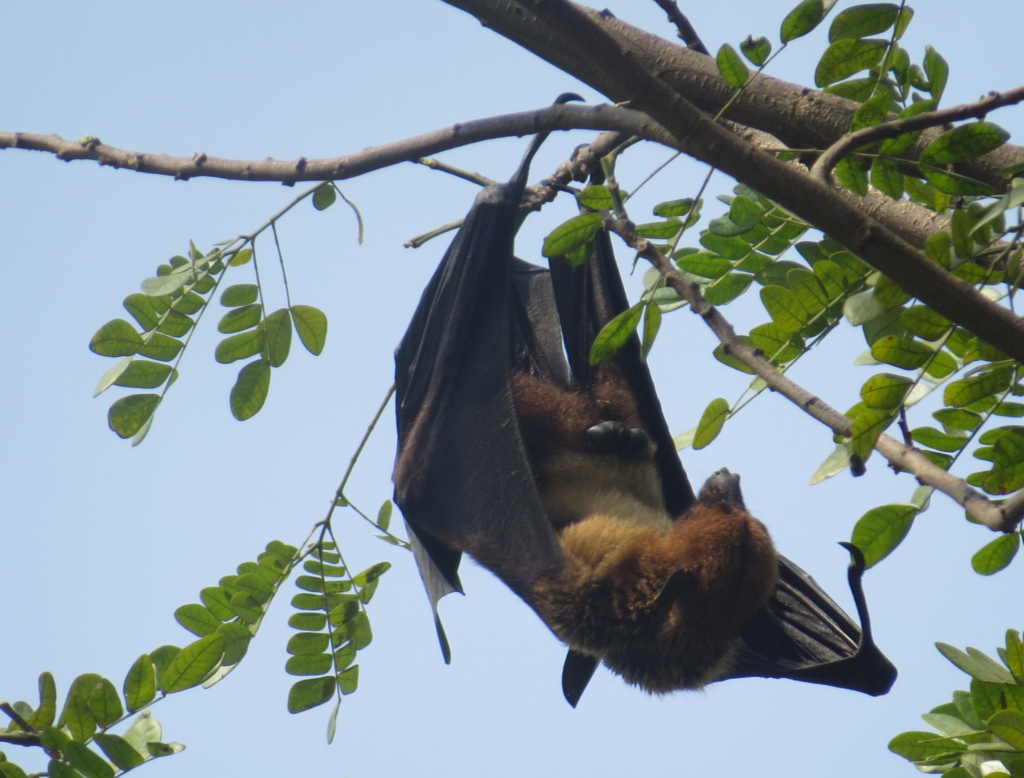
One of the largest bats in the Indian subcontinent, the Indian Flying Fox (Pteropus medius) is a fruit-eating mammal whose life revolves around trees. By day, flying foxes may hang from branches in communal roosts, their dark wings folded around their bodies. As evening approaches, they begin to stir. One by one, then in small groups, they launch into the air in search of food.
Their movements connect roosting trees with feeding grounds, gardens, orchards and patches of natural vegetation. Across South Asia, research has established their importance as seed dispersers and pollinators. In West Bengal, studies of flying foxes in Kolkata have also demonstrated how the availability of trees influences their feeding movements.
The Sundarbans offers a different ecological setting for understanding this relationship. Here, freshwater influence meets tidal salinity, mangrove islands are separated by creeks, and the landscape changes with every tide. However, an important distinction must be maintained: the Indian Flying Fox is documented in West Bengal, but detailed, species-specific information about its roosts, population size and seasonal behaviour within the Indian Sundarbans is limited in the sources consulted. Its wider biology helps explain how it may function in this landscape, but it does not justify inventing local population estimates or claiming particular forest blocks as established sighting hotspots.
For The Wild Orbit, this distinction is central to understanding the species. The Indian Flying Fox is not simply an unusually large bat. It is a mobile, tree-dependent mammal whose ecological importance extends beyond the branches on which it rests.
Indian Flying Fox At a Glance
| Feature | Details |
| Common Name | Indian Flying Fox |
| Scientific Name | Pteropus medius Temminck, 1825 |
| Other Name | Greater Indian fruit bat |
| Class | Mammalia |
| Order | Chiroptera |
| Family | Pteropodidae |
| Conservation Status | Near Threatened, according to the 2024 IUCN assessment; see conservation section for context |
| Natural Distribution | South Asia and adjacent parts of Asia |
| Habitat | Tree-rich landscapes, forest edges, orchards, gardens and other areas with suitable roosting and feeding resources |
| Diet | Primarily fruits, supplemented by flowers and nectar |
| Ecological Role | Seed dispersal and pollination |
| Typical Size | Body length around 20–23 cm; wingspan can exceed 1 m, with variation among individuals |
| Activity Pattern | Primarily nocturnal for feeding; generally roosts during the day |
| Distinctive Adaptation | Elongated fingers supporting a broad flight membrane |
| Sundarbans Significance | A potentially important fruit-eating mammal whose local distribution and ecological contribution require more focused documentation |
Taxonomic and conservation references: Mammal Diversity Database and the IUCN Red List assessment for Pteropus medius.
Scientific Classification and Identity
The Indian Flying Fox belongs to the family Pteropodidae, a group commonly known as Old World fruit bats. Unlike many smaller insect-eating bats, which locate prey through sophisticated echolocation, fruit bats of this family rely heavily on vision, smell and other sensory information to locate food.
Its scientific name is Pteropus medius. Older literature frequently uses Pteropus giganteus, a name that remains familiar in wildlife publications and historical records. The name Pteropus medius is recognised by the Mammal Diversity Database, although older publications may need to be consulted under the former name when tracing historical research.
The common name is descriptive. Its large body, fox-like face and elongated muzzle distinguish it from many other bats. Yet it is neither a fox nor a bird. It is a mammal capable of sustained powered flight, with its forelimbs transformed into wings.
Its size can make it appear imposing when viewed beneath a roosting tree. But the animal’s physical scale should not be confused with aggression. Its ordinary feeding ecology is centred on plant resources rather than the pursuit of animal prey.
Natural Distribution and the Indian Sundarbans
The Indian Flying Fox is widely distributed across the Indian subcontinent, including India, Bangladesh, Nepal, Bhutan, Pakistan, Sri Lanka and the Maldives. Its wider range also includes parts of adjacent Asia. Within India, its distribution extends across several states, including West Bengal.
This broad distribution reflects its ability to use a variety of landscapes, provided suitable roosting trees and food resources are available. Flying foxes can occupy natural and human-modified environments, including rural settlements, agricultural areas and urban green spaces.
In West Bengal, a peer-reviewed study documented the species’ foraging ecology in Kolkata. Researchers followed bats from a communal daytime roost and identified feeding locations, demonstrating that the species can move between roosting and feeding areas within a developed landscape. The findings are relevant to understanding flying fox ecology in the state, but Kolkata’s urban tree cover is not equivalent to the Indian Sundarbans’ mangrove forest.
The Indian Sundarbans is part of a wider deltaic landscape shaped by tidal rivers, sediment deposition, freshwater input, saline water and periodic disturbances. Its forested islands support specialised mangrove vegetation, while settlements and cultivated land occur along parts of the inhabited fringe.
These contrasting habitats matter for a fruit-eating mammal. A flying fox needs places to rest safely during daylight and a sufficient supply of suitable food throughout the year. A landscape that offers both resources may be usable even when its vegetation differs considerably from the inland forests or urban tree cover studied elsewhere.
However, the presence of suitable habitat does not, by itself, prove that a particular forest block supports a resident colony. A reliable account of the Indian Flying Fox in the Sundarbans must distinguish the species’ established West Bengal distribution from its incompletely documented local ecology within the mangrove forest.
Habitat and Its Relationship With Mangroves
Flying foxes are closely associated with trees, but not every tree-rich habitat provides the same conditions. Roosting requires branches capable of supporting resting animals, space for communal groups and sufficient protection from disturbance. Feeding requires fruiting or flowering plants that provide energy at different times of the year.
Research elsewhere in India has recorded flying foxes using a range of tree species, including figs and several large-canopied trees in urban environments. In Kolkata, researchers found that tree cover was an important factor influencing the number of flying foxes using different feeding sites.
The mangroves of the Sundarbans present a more specialised setting. Many mangrove trees grow in saline, waterlogged sediment, develop distinctive root systems and experience regular tidal inundation. Their plant communities are not interchangeable with the banyan-rich groves, orchards and parks commonly used by flying foxes elsewhere.
For the Indian Flying Fox, the key ecological question is therefore not simply whether mangrove forest exists, but whether the surrounding landscape supplies appropriate roost trees and accessible food. Trees outside the dense mangrove interior, along forest margins or within inhabited areas may be relevant to this relationship, but their use by the species must be documented locally rather than assumed.
The Sundarbans should consequently be understood as a potential network of connected habitats, not automatically as one continuous feeding ground. Rivers, creeks, open water, settlements and vegetation patches may influence how animals move between resources. The importance of each feature to local flying foxes remains a subject for field investigation.
Why This Mammal Matters to the Ecosystem
The ecological value of the Indian Flying Fox extends beyond the tree in which it sleeps. As it feeds on fruits, it can carry seeds away from parent plants. Some seeds may be dropped during flight or feeding, while others may pass through the digestive tract before being deposited elsewhere.
Such movement can influence where plants regenerate. The degree of benefit depends on the plant species, seed viability, the distance travelled and whether the seed reaches a site where germination and establishment are possible. Seed dispersal is therefore a process with variable outcomes, not a guarantee that every seed will grow into a tree.
Flying foxes also consume flowers and nectar. When they visit flowers, pollen may be transferred between them, contributing to pollination in suitable plant species. Research on the Indian Flying Fox identifies both pollination and seed dispersal as important ecological functions.
In a landscape undergoing ecological change, these functions may be particularly valuable. Yet the contribution of this species to mangrove regeneration in the Indian Sundarbans has not been quantified by the sources consulted. It would be inaccurate to attribute the regeneration of particular mangrove species to flying foxes without evidence of their feeding behaviour and the plants involved.
Its broader importance is nonetheless clear: flying foxes link the fortunes of individual trees with the movement of wildlife across the landscape. Their conservation is connected not only to the survival of bats, but also to the availability of the vegetation on which they depend.
A Body Built for Flight
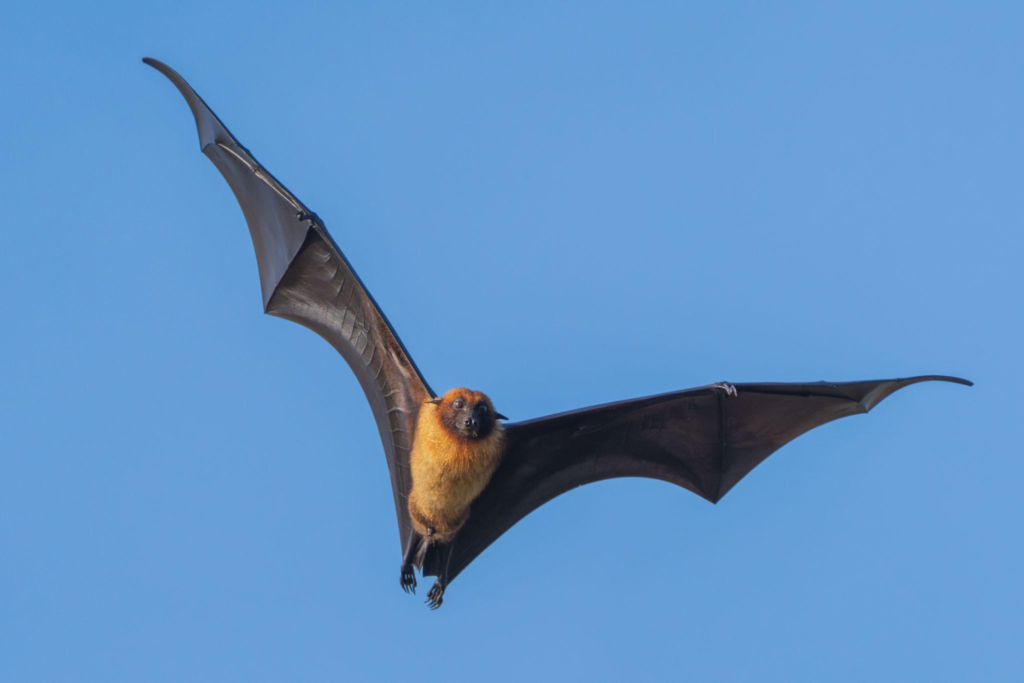
The Indian Flying Fox has a body designed around one defining ability: powered flight. Its forelimbs are elongated, and the bones of its fingers support a thin membrane that stretches along the sides of the body and connects with the hind limbs. The thumb remains free at the leading edge of the wing and bears a claw that helps the animal grip branches.
This wing structure differs fundamentally from a bird’s wing. Rather than relying on feathers to form its main flight surface, the flying fox uses a membrane supported by its elongated digits. The arrangement allows the animal to alter the shape of its wings during flight.
Its wingspan can exceed a metre, giving the animal a striking silhouette against the evening sky. Body size and wingspan vary among individuals, and published measurements from different populations should not be treated as a single exact specification for every animal.
For an animal that may travel between a daytime roost and several feeding sites, flight offers access to resources that are separated by distance. In a deltaic environment, it also provides a means of crossing rivers, channels and open areas without depending on ground-level routes.
However, flight is not an adaptation specifically for tidal forests. It is a general feature of the species’ biology. The Sundarbans connection lies in how this capability may be used within a landscape divided by water and vegetation.
The Fox-Like Face and the Senses Behind Survival
The Indian Flying Fox has a relatively elongated muzzle, prominent eyes and pointed ears. Its face gives the species the appearance that inspired its common name, although its anatomy and behaviour are those of a bat.
Its large eyes are important for locating food and navigating visually. Smell also helps fruit bats identify food resources. These senses work together as the animal approaches fruiting trees and assesses the available food.
This is one of the most important differences between a large fruit bat and many insectivorous bats. Echolocation, in which a bat emits sounds and interprets returning echoes, is highly developed in many insect-eating species. The Indian Flying Fox is not generally understood to depend on echolocation in the same way for finding food. Vision and olfaction are central to its feeding ecology.
These sensory capabilities are useful in landscapes where fruiting trees may be dispersed rather than concentrated in one place. They do not, however, mean the bat can locate every fruiting tree regardless of weather, distance or the availability of food.
In the Sundarbans, where vegetation is divided by tidal channels and the visual environment changes between open water and dense foliage, the precise ways in which flying foxes navigate and select feeding sites would be an interesting subject for local research.
Wings, Feet and the Art of Hanging
A flying fox spends much of the daylight period resting while suspended from branches. Its feet and claws allow it to grip a suitable perch, while its wings can be folded around its body when it is at rest.
At a communal roost, individuals may hang close together, although the spacing and density of animals vary with the site and conditions. Their upside-down posture is a normal feature of bat biology rather than a sign of distress.
This way of resting is closely connected to the structure of their limbs. The feet provide a secure grip, leaving the forelimbs available for flight. When the bat is ready to leave, it releases its hold and opens its wings.
Roost trees are therefore more than convenient resting places. They are essential habitat resources. The loss of a major roosting tree can displace many individuals at once, particularly where bats depend on a limited number of established communal sites.
For the Indian Sundarbans, identifying whether the species uses trees in settlements, forest margins or other parts of the delta would help clarify the habitat features that matter most to local populations.
What Does the Indian Flying Fox Eat?
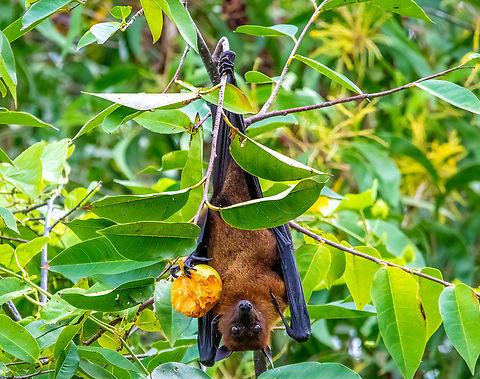
The Indian Flying Fox is primarily frugivorous, meaning that fruit forms the main part of its diet. It also feeds on flowers and nectar, with the relative importance of these resources varying according to their availability.
Studies across the species’ range have recorded a variety of cultivated and wild fruits, including mangoes, guavas and figs. Flower resources are also used. The specific composition of the diet depends on local vegetation and seasonal food availability.
A flying fox does not necessarily consume fruit in the same way as a person. It may bite into a fruit, extract the pulp and discard fibrous material or seeds, depending on the fruit’s structure and the animal’s feeding behaviour. This process can influence seed dispersal, particularly when the bat carries fruit away from the parent tree.
The animal’s dietary flexibility helps explain why flying foxes can use landscapes containing different combinations of natural vegetation and cultivated plants. In Kolkata, researchers recorded feeding on numerous tree species and found that fig trees were particularly important among the observed resources. Those findings demonstrate the species’ capacity to use diverse food sources, but they should not be interpreted as a complete dietary list for the Sundarbans.
Within the Indian Sundarbans, determining its actual diet would require direct observations, identification of feeding trees and, where appropriate, analysis of feeding remains or faecal samples. Without such evidence, it is not possible to specify which local mangrove or non-mangrove plants contribute most to its diet.
Feeding After Sunset
Indian Flying Foxes generally feed at night and return to daytime roosts after their feeding activities. As light fades, animals may begin moving around the roost before taking flight.
A study in Kolkata observed the species leaving its daytime roost after sunset and travelling towards feeding sites. The study also showed that bats used multiple feeding locations rather than relying on a single tree.
This movement is an important feature of flying fox ecology. The tree that provides a secure place to rest may not be the same tree that provides food. Successful survival depends on the relationship between these resources and the animal’s ability to travel between them.
Food availability can change as fruits ripen, flowers open and seasonal conditions alter the vegetation. Consequently, the location and intensity of feeding activity may also change over time.
In the Sundarbans, tidal cycles, rainfall, salinity and the distribution of suitable vegetation create a dynamic environment. These conditions are important to the wider ecosystem, but their precise effects on Indian Flying Fox feeding patterns in this region remain insufficiently documented.
How It Navigates a Fragmented Landscape
See it for yourself
A private journey shaped around you — your group, your pace, your interests. Book a free consultation.
A flying fox can travel between separate trees, agricultural areas and other feeding grounds. Its ability to fly makes it less dependent on continuous ground cover than many terrestrial mammals.
Nevertheless, long-distance movement comes with energetic costs. A suitable feeding tree must provide enough reward to justify the journey, while the availability of a secure daytime roost influences where an animal can regularly return.
A study of the Indian Flying Fox in Kolkata demonstrated how individual feeding locations could be linked to a communal roost through observations of flight paths. The researchers also found that tree cover was positively associated with the number of bats recorded at feeding sites.
For the Sundarbans, this suggests a useful research direction: mapping potential roost trees and nearby food resources across the inhabited fringe and other suitable habitats. It does not establish that the bats follow a particular route over any named creek or island.
The species’ capacity to cross water should not be confused with a special adaptation to saline conditions. Its wings enable it to travel over estuarine channels, but this is different from being physiologically adapted to saltwater. There is no basis here for claiming that Indian Flying Foxes have a specialised mechanism for tolerating saline water or tidal flooding.
Living Through Heat and Humidity
The Indian Sundarbans experiences hot, humid conditions, seasonal rainfall and periods of intense weather. Such environmental conditions can affect wildlife by changing the availability of food, suitable shelter and opportunities for movement.
For a large bat, the daytime roost provides a place to rest through the hours when feeding activity is generally reduced. The suitability of that roost may depend on the canopy, exposure, disturbance and local temperature conditions.
However, it would be misleading to attribute a particular heat-resistance mechanism to the Indian Flying Fox without species-specific evidence. Its use of shaded roosts and changes in activity can be discussed as aspects of general bat ecology, but the exact physiological limits of local animals should not be guessed.
Climate change adds a further uncertainty. Research included in the 2024 IUCN assessment identifies extreme heat events among the pressures that may affect this species across its range. The implications for the Indian Sundarbans specifically require local monitoring.
The important point is that survival depends on more than flight. Suitable roosts, reliable food and the ability to move between them remain central to the animal’s ecology.
A Social Life in the Canopy
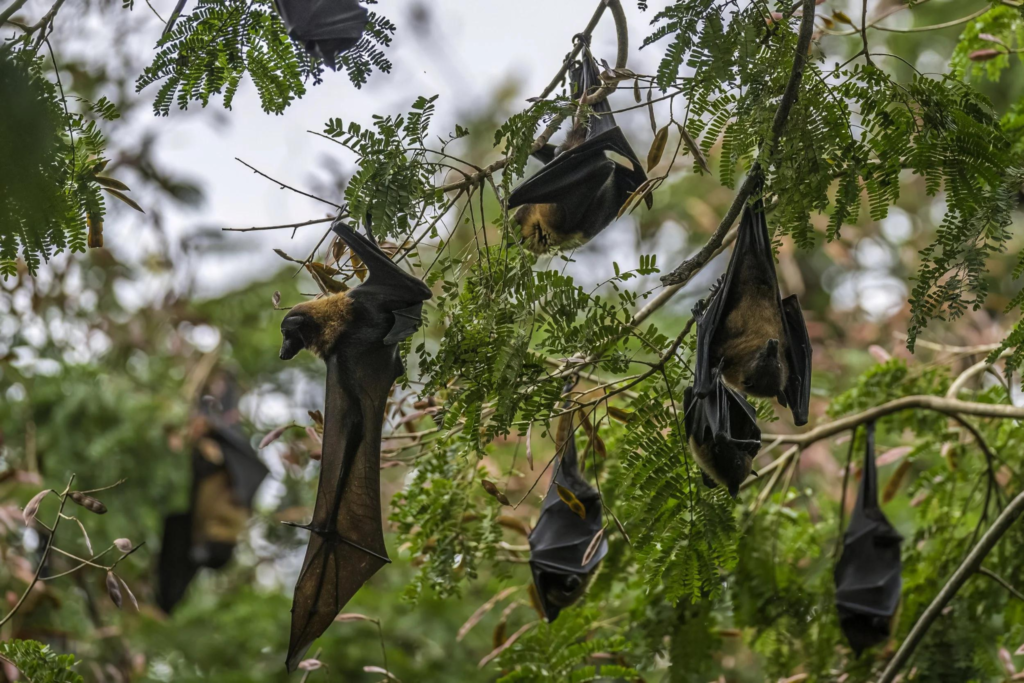
Indian Flying Foxes are known for their communal daytime roosts, where groups may gather in tall trees. A large roost can become a conspicuous feature of the landscape, with dark bodies hanging among the branches and wings occasionally opening as individuals adjust their positions.
Communal roosting brings many animals together at a shared location, but it does not mean that all individuals behave as a single coordinated group. Bats may arrive and depart at different times, move between branches and leave the roost to feed independently or alongside a small number of others.
Research on roosting ecology across the species’ range indicates that the characteristics of the roost tree and the surrounding habitat can influence how many bats occupy a site. Studies in India have recorded roosts in large trees in urban and other human-modified landscapes.
Roosts can also be dynamic. Disturbance, changes in vegetation and the availability of alternative trees may influence whether bats remain at a site. A roost that appears permanent during one observation period should not automatically be assumed to remain occupied indefinitely.
In the Indian Sundarbans, identifying communal roosts would help establish whether the species occurs as a resident population, uses the region seasonally or appears only intermittently. These distinctions are important because a single observation of a flying bat cannot establish the presence of a breeding colony.
Communication and Behaviour at the Roost
A communal roost is not silent. Indian Flying Foxes may vocalise, shift position, spread their wings and interact with nearby individuals. These behaviours can be associated with maintaining space, social interaction and changes in activity around the roost.
The density of animals may vary within a tree, and roosting groups can change in composition over time. Behaviour should therefore be interpreted in context rather than assigning a single meaning to every movement or call.
As daylight fades, increased movement around a roost can precede the evening departure. Individuals may take flight in succession, sometimes following similar directions towards feeding areas. Their departure patterns can provide researchers with useful clues about nearby food resources.
Such observations are valuable for monitoring because they can reveal changes in activity without requiring animals to be captured. However, behavioural interpretation requires repeated observations. A short period of noise or movement does not, on its own, establish conflict, courtship or distress.
For the Sundarbans, systematic observations of known roosts would help determine how local bats respond to weather, seasonal changes and human disturbance.
Breeding and the Next Generation
The Indian Flying Fox has a relatively slow reproductive strategy compared with many small mammals. Females generally give birth to a single young at a time, and parental investment continues after birth.
The 2024 IUCN assessment describes breeding as typically occurring between September and November, with births commonly recorded between February and April. Other studies have reported variation in reproductive timing, including observations suggesting more than one mating period in some populations. These findings indicate that breeding schedules should not be treated as identical throughout the species’ range.
The young bat depends on its mother for nourishment and protection during early development. As it grows, it becomes increasingly capable of independent movement and feeding. The timing of independence and the precise details of parental care can vary with biological and environmental conditions.
The availability of suitable roost trees matters during this period. A communal roost is not merely a place for adults to rest; it can also provide the setting in which young animals remain close to their mothers during early life.
Disturbance at a breeding roost may have consequences beyond the immediate displacement of adults. If animals are forced to abandon a site or if suitable alternatives are scarce, young bats may face additional challenges.
Nevertheless, the breeding season documented in other parts of the range cannot automatically be assigned to the Indian Sundarbans. Local studies would be needed to establish when mating and births occur, whether breeding is seasonal and whether particular roosts serve as important nursery sites.
Relationships With Other Species
The Indian Flying Fox is a plant-feeding mammal, but its ecological relationships extend across several levels of the food web.
Its most direct relationships are with the plants that provide fruit, flowers and nectar. By moving between feeding sites, it can transfer pollen and transport seeds, contributing to plant reproduction and regeneration under suitable conditions.
Flying foxes are also part of a wider ecological community. Their roosts may be used by other organisms, and their presence creates opportunities for researchers to study how tree structure supports different forms of wildlife. Interactions with predators and other animals can occur, but their importance varies across habitats and should not be overstated without local observations.
Within the Sundarbans, the significance of these relationships depends on which plants the bats use and where they feed. The region’s mangrove ecosystem is sustained by interactions among vegetation, tidal water, sediment, wildlife and environmental processes. The contribution of flying foxes to that system should be established through evidence rather than inferred from their general reputation as pollinators and seed dispersers.
This is a useful distinction in natural-history writing. A species can perform an important ecological function across its range while the extent of that function in a particular landscape remains unknown.
Living Alongside People
Across South Asia, Indian Flying Foxes frequently occupy landscapes shared with people. They may roost in trees near settlements and feed in orchards, gardens or other places where fruiting trees are available.
This proximity can create both opportunities and tensions. Trees in inhabited areas may offer food and shelter, while the consumption of cultivated fruit can lead to losses for growers. Roosting colonies may also be perceived as noisy or inconvenient, particularly where animals gather in large numbers.
Research on the species identifies habitat loss, disturbance of roosting trees, persecution and electrocution among the conservation pressures affecting populations in parts of its range. The severity of each pressure varies by location.
A balanced approach to coexistence recognises that people have legitimate concerns about crops, trees and public health, while also acknowledging the ecological value of bats. Removing a roost tree may solve an immediate inconvenience but can displace a large group of animals and remove an established habitat resource.
Where conflict occurs, practical responses can include protecting important roost trees where feasible, managing access to vulnerable crops and using locally appropriate, non-lethal measures to reduce damage. Decisions should be based on the circumstances of the site rather than a universal prescription.
The human–wildlife relationship in the Indian Sundarbans is already shaped by livelihoods, land use and environmental change. Any future study of flying foxes should include the experiences of local residents and farmers, rather than treating communities simply as a source of disturbance.
Bats and Public Health: Understanding the Risks
The Indian Flying Fox has been studied in relation to viruses that can affect people and other animals, including Nipah virus in parts of South Asia. This subject requires careful communication because the presence of a pathogen in wildlife does not mean that every bat is infected or that ordinary proximity inevitably leads to disease.
The risk of transmission depends on several factors, including the pathogen involved, the nature of contact and whether infectious material reaches a person. Direct handling of bats and contact with their saliva, urine, blood or other biological material should be avoided.
A sensible approach is to observe bats without touching them, avoid disturbing roosts and keep children and domestic animals away from fallen or injured individuals. Fruit or other food that may have been contaminated by wildlife should not be consumed.
Research in Bangladesh has examined the relationship between changes in bat habitat, feeding behaviour and human exposure, particularly where wildlife and people share resources. Those findings provide useful regional context, but they should not be treated as direct measurements of disease risk in the Indian Sundarbans.
Conservation and public health are not opposing goals. Protecting roosts, reducing unnecessary disturbance and improving understanding of wildlife behaviour can support both. The aim should be informed coexistence, not fear or indiscriminate persecution.
Conservation Status and the Pressures It Faces
The Indian Flying Fox was assessed as Near Threatened in the 2024 IUCN Red List assessment. That assessment projected a population reduction of approximately 25–29% over three generations, reflecting pressures including persecution, hunting, electrocution and the loss or degradation of roosting habitat.
Near Threatened does not mean that the species is uniformly rare throughout its range. The animal remains widespread, and local populations may differ substantially in abundance and trend. Conversely, seeing a large colony in one location does not prove that the species is secure across its entire distribution.
It is also important to distinguish the 2024 assessment from earlier assessments that used the name Pteropus giganteus and assigned a different conservation category. Historical literature and taxonomic updates can create apparent inconsistencies, which is why current scientific names and assessment dates should be stated explicitly.
The major conservation pressures identified across the species’ range include the following.
| Threat | Potential consequence |
| Loss of roosting trees | Displacement of colonies and reduced access to established resting sites |
| Habitat degradation | Reduced availability of suitable feeding and resting resources |
| Persecution and hunting | Direct mortality and disruption of local populations |
| Electrocution | Injury or death where bats encounter hazardous electrical infrastructure |
| Human–wildlife conflict | Pressure to remove bats or destroy occupied trees |
| Extreme heat | Potential physiological stress, particularly where suitable roost conditions are limited |
Why Roosting Trees Deserve Protection
A mature tree can provide more than a resting place. For a communal bat colony, it may be a familiar daytime shelter close to feeding resources. The loss of such a tree can affect many animals at once.
Studies in India have documented the importance of tree cover and suitable roost structures for the Indian Flying Fox. In Kolkata, researchers found that greater tree cover was associated with increased use of feeding sites. Research from Aligarh likewise identified characteristics of trees and the surrounding landscape associated with roosting.
These findings support a practical conservation principle: protect the habitat resources that the species actually uses.
For the Sundarbans, this means that research should first establish where the bats roost, what trees they use and how their feeding areas relate to those sites. Conservation measures can then be tailored to the habitat and the needs of local communities.
Tree protection should also be considered alongside the wider vegetation landscape. A roost tree cannot sustain a colony indefinitely if suitable food resources disappear from the surrounding area. Equally, planting trees without considering whether they provide appropriate food or roost structure may not meet the species’ needs.
Monitoring the Indian Flying Fox in the Sundarbans
The Indian Flying Fox is large enough to be conspicuous when it is seen in good conditions. Its communal roosts and evening flights can make it easier to detect than many smaller, more secretive mammals. Yet reliable monitoring still requires a consistent method.
Several approaches could help establish its status in the Indian Sundarbans.
| Monitoring method | What it can reveal |
| Daytime roost surveys | The location and continued use of communal roost trees |
| Repeated visual counts | Changes in the number of bats at known roosts, allowing for counting uncertainty |
| Evening emergence observations | Departure timing and possible directions of movement towards feeding sites |
| Feeding-tree surveys | The plants used as food resources and changes in their seasonal use |
| Community interviews | Local knowledge of roosts, seasonal presence and human–bat interactions |
| Habitat mapping | The distribution of potential roost trees and feeding resources across the landscape |
Counts at a roost should be repeated over time and interpreted carefully. Bats may move between roosts, remain hidden in dense foliage or change their behaviour during disturbance. A single count is therefore not a complete measure of population size.
Camera traps are not necessarily the first choice for monitoring large colonies in exposed tree canopies. Direct observation, binocular surveys and structured roost counts may provide more useful initial data, depending on the site. Cameras could be used where they answer a specific research question and can be deployed without causing disturbance.
For a species whose local ecology is incompletely documented, establishing a reliable baseline is particularly important. It would provide a foundation for detecting future changes rather than relying on anecdotal reports.
Climate Change and the Changing Delta
The Sundarbans is exposed to cyclones, erosion, tidal flooding and changes in salinity and freshwater influence. These processes affect vegetation, sediment, settlements and the availability of habitat across the delta.
The implications for the Indian Flying Fox are not straightforward. Its ability to fly may allow it to move between separated patches of vegetation, but flight alone cannot replace the loss of suitable roost trees or reliable food resources.
Extreme weather may also damage trees, alter flowering and fruiting patterns or change the distribution of vegetation. Whether such effects cause local population declines depends on the severity of the disturbance, the availability of alternative resources and the species’ ability to adapt its movements.
The 2024 IUCN assessment identifies climate-related pressures, including extreme heat, as a concern for the species across its range. However, no local population projection should be made for the Indian Sundarbans without supporting evidence.
Long-term monitoring would help determine whether bats remain in established roosts after major storms, shift to other trees or alter their feeding movements. Such information could reveal how the species responds to environmental change in a delta where habitat conditions are continually evolving.
Where Can the Indian Flying Fox Be Observed in the Sundarbans?
The Indian Flying Fox is documented in West Bengal, and its ecology has been studied in Kolkata. However, the sources consulted do not establish a verified list of regular roosting or sighting locations within the Indian Sundarbans’ mangrove forest.
It would therefore be premature to recommend Sajnekhali, Sudhanyakhali, Dobanki, Netidhopani or any other named forest block as a confirmed flying fox hotspot without specific records supporting that claim.
For anyone exploring the region, suitable places to investigate would include tree-rich inhabited areas, forest margins and other landscapes where potential roost trees and food resources are present. These are habitat-based possibilities, not confirmed sighting guarantees.
A scientifically useful local record should include the date, approximate location, number of animals observed, habitat type and, where possible, photographic evidence. Repeated records can help distinguish occasional passage from regular roosting or feeding activity.
Responsible observation also means maintaining distance, avoiding flash photography that disturbs animals, and never attempting to handle a bat. A sighting should contribute to understanding the species, not compromise its behaviour or welfare.
The Important Truth About Wildlife Sightings
Wildlife observation is unpredictable. A suitable habitat may contain animals that remain hidden, move elsewhere to feed or are active at times when observers are not present.
The absence of a sighting does not establish the absence of the species. Equally, a single sighting does not prove that a location supports a permanent population.
For the Indian Flying Fox in the Sundarbans, this distinction matters because the local evidence base is limited. A careful record of an individual or a group can be valuable, but it should be interpreted alongside repeated observations and other ecological information.
Good natural-history observation begins with curiosity and ends with evidence. It does not require every outing to produce a dramatic encounter.
What Makes the Sundarbans Indian Flying Fox Unique?
The Indian Flying Fox is not unique to the Sundarbans, and there is no verified evidence in the sources consulted that the region supports a distinct subspecies or a population with unique adaptations.
What makes the species interesting in this landscape is the opportunity to understand how a highly mobile, tree-dependent mammal uses a delta dominated by tidal waterways, specialised vegetation and shifting environmental conditions.
Its flight could allow it to cross channels and move between separated feeding resources. Its dependence on trees creates a connection between habitat availability and the movement of seeds and pollen. Its possible use of settlement-edge vegetation also raises questions about how wildlife and people share the delta’s limited land resources.
These are meaningful ecological relationships, but their local details remain open questions. Which trees are used for roosting? Does the species feed regularly within the mangrove landscape or mainly in surrounding inhabited areas? How does its activity change through the seasons? Do major storms alter roost occupancy?
Answering these questions would make the Indian Flying Fox more than a species listed in a regional mammal inventory. It would reveal how its movements fit into the living geography of the Indian Sundarbans.
The most distinctive feature may ultimately be the relationship between an animal capable of crossing broad stretches of water and a landscape in which suitable trees and food resources remain essential.
Myths and Facts About the Indian Flying Fox
| Myth | Fact |
| All bats are blind. | Indian Flying Foxes have well-developed eyes and rely substantially on vision and smell. |
| Flying foxes are birds. | They are mammals belonging to the order Chiroptera. |
| Large bats mainly hunt animals. | The Indian Flying Fox primarily eats fruit, with flowers and nectar also forming part of its diet. |
| Every flying fox carries a dangerous infection. | Infection cannot be inferred from appearance or species identity alone; contact with bats should nevertheless be avoided. |
| A large roost proves the species is secure. | A visible colony provides local evidence, not a complete picture of population trends across the species’ range. |
| The Sundarbans is a confirmed flying fox hotspot. | West Bengal records establish regional occurrence, but verified local hotspots require specific evidence. |
FAQs
What Is the Indian Flying Fox?
The Indian Flying Fox (Pteropus medius) is a large fruit-eating bat native to South Asia. It feeds mainly on fruit, along with flowers and nectar, and contributes to seed dispersal and pollination.
Is the Indian Flying Fox Found in the Sundarbans?
The species is documented in West Bengal, but detailed records confirming regular roosting sites and population distribution within the Indian Sundarbans remain limited in the sources consulted.
Is the Indian Flying Fox Endangered?
The 2024 IUCN Red List assessment classifies the species as Near Threatened. Habitat loss, persecution, hunting, electrocution and other pressures contribute to conservation concerns across its range.
What Does the Indian Flying Fox Eat?
It primarily eats fruit and also consumes flowers and nectar. Its diet varies with the availability of suitable food plants.
How Large Is the Indian Flying Fox?
It is one of the largest bats in the world. Its body length is approximately 20–23 cm, and its wingspan can exceed one metre, although measurements vary among individuals.
Is the Indian Flying Fox Nocturnal?
Yes. It generally rests during daylight and travels to feeding areas after sunset. Communal roosts may become active as evening approaches.
Why Is the Indian Flying Fox Important to Forests?
It helps disperse seeds and can pollinate flowers while feeding. These processes contribute to plant reproduction and regeneration where suitable ecological conditions exist.
Does the Indian Flying Fox Live in Groups?
It commonly forms communal daytime roosts in trees. Individuals may leave to feed separately or in small groups, and roost composition can change over time.
Is It Safe to Touch an Indian Flying Fox?
No. Bats should not be handled, whether alive, injured or dead. Avoid direct contact and seek assistance from appropriate wildlife or veterinary authorities if an animal needs intervention.
Where Can I See the Indian Flying Fox in West Bengal?
The species has been studied in Kolkata, including its roosting and feeding movements. Specific regular sighting locations within the Indian Sundarbans should be verified through reliable local records rather than assumed.
The Wild Orbit Perspective
The Indian Flying Fox reminds us that the ecology of a forest extends beyond the animals most easily recognised from the ground.
A tiger may embody the power of the Sundarbans, but the life of a forest is also shaped by the quieter movement of seeds, the pollination of flowers and the availability of trees that sustain wildlife through changing seasons. The flying fox connects these processes through its daily movement between roosting and feeding sites.
In the Indian Sundarbans, the story is still incomplete. Its broader biology is understood, its importance as a fruit-eating mammal is well established, and its conservation challenges are documented across much of its range. What remains to be clarified is how consistently it uses the mangrove landscape, which trees support its local populations and how its movements respond to the changing delta.
That knowledge will depend on careful observation, credible records and a willingness to distinguish what is known from what is merely plausible.
The future of this mammal depends on the survival of suitable trees, accessible food and landscapes in which wildlife can coexist with people. Protecting those connections is part of protecting the wider ecological fabric of the Sundarbans.
The forest does not live by its most famous inhabitants alone. Sometimes, its future is carried on wings.
Plan your private Sundarban expedition
A private journey shaped around you — your group, your pace, your interests. Book a free consultation.