
 Field guide
The Short-nosed Fruit Bat is a small but ecologically important mammal of the Indian subcontinent. Active after sunset, it moves among trees and fruit-bearing plants, feeding on fruits and other plant material while contributing to the natural processes that sustain vegetation.
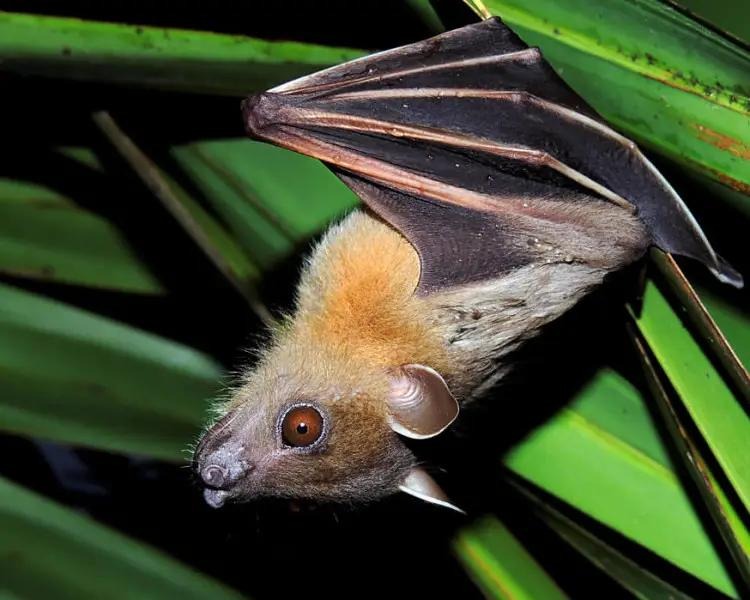
In West Bengal, this species is recorded as widely distributed, and the state’s biodiversity information system lists it as Cynopterus sphinx sphinx, with the Bengali name Kala Badur. However, detailed, site-specific evidence of its distribution and roosting colonies within the Indian Sundarbans is limited in the sources reviewed. Its presence across West Bengal should therefore not be confused with confirmed records from every Sundarbans island or forest block.
For The Wild Orbit, the Short-nosed Fruit Bat offers an opportunity to explore a less conspicuous side of Sundarbans wildlife: the mammals that connect trees, fruiting plants and the wider landscape, often without being noticed by visitors.
Short-nosed Fruit Bat At a Glance
| Feature | Details |
| Common name | Short-nosed Fruit Bat |
| Alternative English name | Greater Short-nosed Fruit Bat |
| Scientific name | Cynopterus sphinx |
| Family | Pteropodidae |
| Order | Chiroptera |
| Class | Mammalia |
| Bengali name | Kala Badur, as recorded by the West Bengal Biodiversity Information System |
| Conservation status | Least Concern (IUCN assessment) |
| Distribution | Indian mainland and other parts of South and Southeast Asia |
| West Bengal distribution | Recorded across all districts in the state biodiversity database |
| Habitat | Trees, palms, forests, agricultural landscapes and human-modified environments |
| Diet | Primarily fruit, with leaves and other plant material also consumed |
| Activity | Mainly nocturnal |
| Typical body size | Medium-sized fruit bat; average forearm length approximately 70.2 mm |
| Wingspan | Approximately 48 cm, as reported in species references |
| Ecological role | Fruit consumption, seed dispersal and potential pollination |
| Distinctive feature | Short, broad muzzle and soft brownish fur, sometimes with orange or reddish coloration around the neck and shoulders |
| Sundarbans significance | A fruit-eating mammal associated with the wider regional landscape; local ecological details require further site-specific study |
Scientific Classification and Identity
The Short-nosed Fruit Bat belongs to the family Pteropodidae, commonly known as the Old World fruit bats. Its scientific name, Cynopterus sphinx, identifies a species that uses its teeth, jaws and mobile wings to exploit a varied diet of plant material.
Unlike insect-eating bats that depend heavily on echolocation to locate small flying prey, fruit bats of this family rely substantially on vision and smell when locating food. Their large eyes, developed sense of smell and strong jaws are important components of their feeding biology.
The species was described by the Danish zoologist Peter Forsskål’s contemporary, the naturalist Martin Vahl, in 1797. It is also referred to as the Greater Short-nosed Fruit Bat in scientific and conservation literature. Taxonomic references note historical confusion between Cynopterus sphinx and the related Lesser Short-nosed Fruit Bat, Cynopterus brachyotis. Careful identification therefore matters when recording bats in the field.
The Short-nosed Fruit Bat is not a miniature version of the Indian Flying Fox. Although both belong to the fruit-bat family, they differ in body size, appearance, roosting habits and their use of the surrounding landscape. Identifying the two correctly helps build a more accurate picture of the mammal diversity of the Sundarbans.
Where It Lives Across Its Range
The species occurs across a broad part of South Asia and extends into Southeast Asia. Its recorded range includes India and neighbouring countries, with populations associated with forests, rural settlements, orchards, plantations and urban green spaces.
One reason for this wide distribution is its ability to exploit different kinds of vegetation. It does not depend exclusively on extensive, undisturbed forest. Fruit-bearing trees and suitable daytime shelters can also provide the resources it needs.
In West Bengal, the state biodiversity database records the species throughout the state. Historical regional mammal surveys have also included Cynopterus sphinx in their lists of Sundarbans and adjacent-area fauna. These sources support its inclusion in a regional wildlife account, although historical checklists do not establish its present abundance at individual locations.
The Short-nosed Fruit Bat in the Indian Sundarbans
The Indian Sundarbans is a tidal landscape shaped by river channels, saline and freshwater influences, mudbanks, mangrove vegetation and islands that change through erosion and sediment deposition. It is not simply a continuous wall of dense forest. Mangroves, settlements, cultivated land and waterways occur in a complex mosaic.
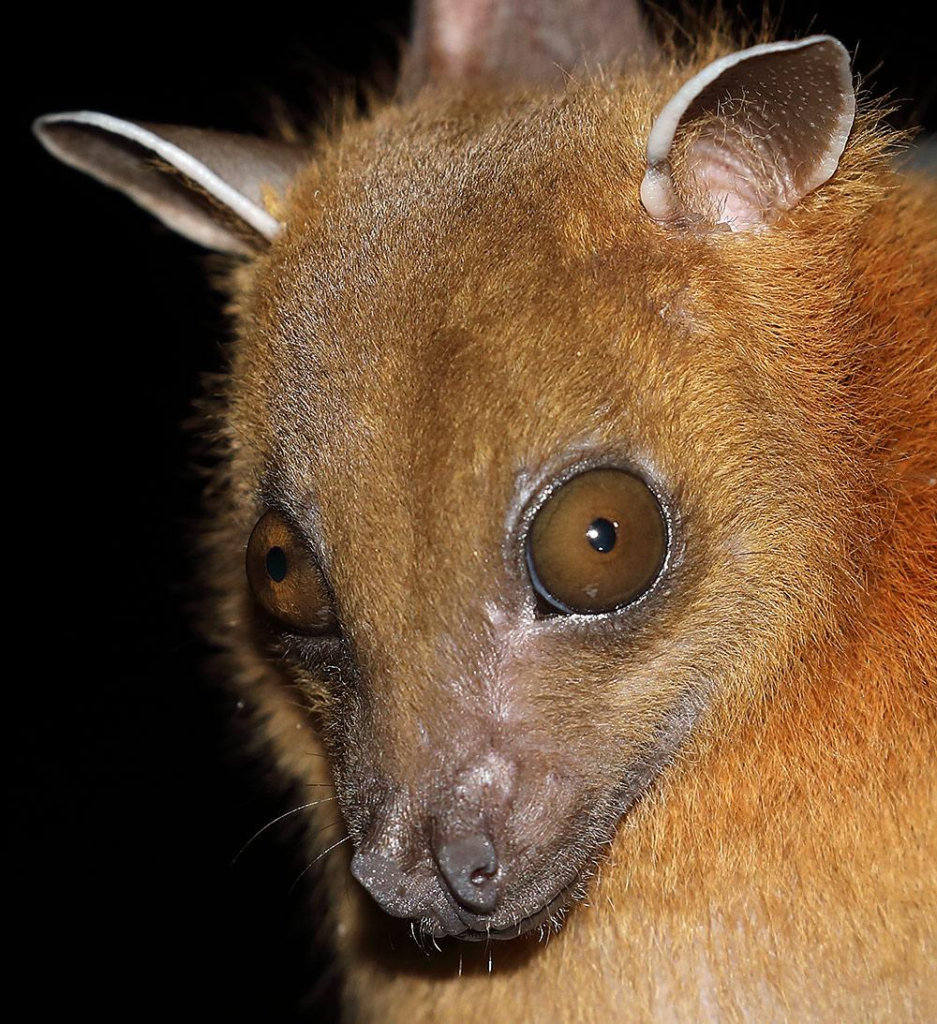
For a fruit-eating bat, the broader landscape can offer different resources: trees for shelter, fruit-bearing plants for food and vegetation along settlement margins for movement between feeding areas. These are plausible ecological opportunities, not proof that every habitat type in the Sundarbans supports a resident colony of this particular species.
The distinction matters. A species may be known from the wider region without being equally common in every forest block, village or island. Records from the wider Sundarbans and adjacent areas provide historical evidence of occurrence, while current, georeferenced observations are needed to establish local distribution more precisely.
How It Relates to Mangrove Ecology
Mangroves are specialised plants adapted to tidal inundation, saline conditions and unstable, waterlogged soils. Their ecological importance includes providing habitat, stabilising sediment and supporting food webs.
The Short-nosed Fruit Bat, however, should not automatically be described as a mangrove specialist. The species is documented across a variety of habitats, including agricultural and urban environments. Its presence in a coastal region would not, by itself, demonstrate a special adaptation to saltwater or mangrove vegetation.
A more defensible interpretation is that fruit bats may connect patches of vegetation across the wider landscape wherever appropriate food and roosting resources occur. In the Sundarbans, investigating that relationship would require identifying the plants actually used by local bats and determining whether feeding and roosting occur within mangrove forest, settlement vegetation or both.
Why This Mammal Matters
Fruit bats contribute to ecological processes that are easy to overlook because they often occur after dark. By consuming fruit, they interact directly with plants. Depending on the fruit species and how the bat handles and transports it, seeds may be carried away from the parent plant or deposited through feeding remnants and droppings.
The West Bengal biodiversity database specifically identifies the Short-nosed Fruit Bat as useful for cross-pollination and seed dispersal. Research elsewhere in India has documented its plant-feeding behaviour and potential contribution to seed dispersal. The strength of these services varies with the plants involved and should not be assumed to be identical in every landscape.
For the Sundarbans, this is a reason to study fruit bats as part of the wider network of relationships between plants and animals. It is not yet a basis for assigning this species a measured contribution to mangrove regeneration.
A Body Adapted for Fruit Feeding
The Short-nosed Fruit Bat has a compact body, a relatively broad muzzle and soft, fine fur. Its upperparts are generally brown to grey-brown, while the underside is lighter. Depending on the individual, sex and population, orange or reddish-brown coloration may be visible around the shoulders and neck.
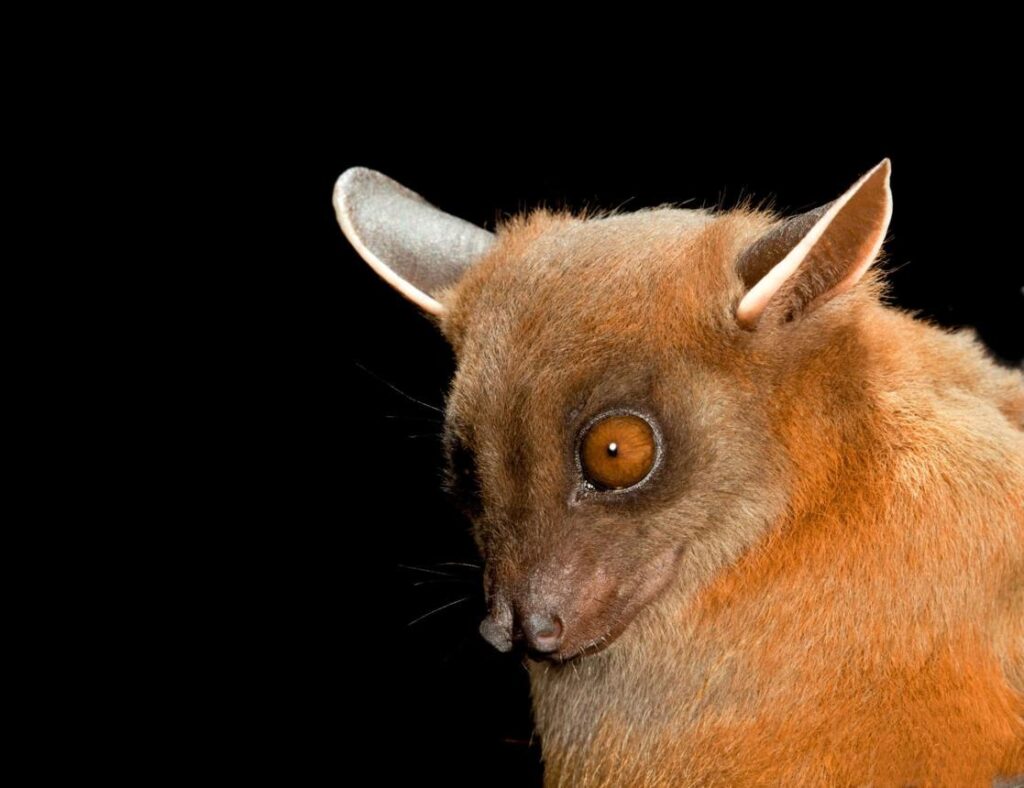
These colours are useful identification clues, but they should not be treated as a single fixed pattern. Lighting, viewing angle, age and individual variation can all affect what an observer sees.
| Body feature | Description and function |
| Muzzle | Short and broad, associated with handling fruit |
| Eyes | Relatively large and useful for visual orientation |
| Ears | Simple in structure, with pale edges described in species references |
| Fur | Fine and silky, usually brownish above and paler underneath |
| Wings | Modified forelimbs with elongated fingers supporting a flight membrane |
| Feet and claws | Help the bat cling to roosting surfaces and vegetation |
| Teeth | Used to bite, crush and process fruit and other plant material |
| Forearm | Average length approximately 70.2 mm, with reported measurements ranging from 64 to 79 mm |
The wing is not simply a flat sheet of skin. It is a flexible membrane supported by elongated finger bones, allowing the animal to manoeuvre through vegetation and adjust its movements during flight. Its anatomy reflects the demands of powered flight, landing and movement among trees.
How It Moves Through the Landscape
The Short-nosed Fruit Bat is an agile flier capable of travelling between roosting sites and feeding trees. Research on its foraging behaviour in southern India has documented flights towards fruit-bearing trees, brief hovering or circling, and direct landings on fruits or nearby branches.
Rather than remaining at every feeding tree, individuals often transport fruit to feeding roosts. There, they consume the more useful portions and discard fibrous remnants. This behaviour can leave distinctive signs beneath frequently used feeding sites.
For a bat moving through a landscape divided by rivers and tidal channels, flight offers a way to cross gaps that ground-dwelling mammals cannot easily negotiate. Nevertheless, the distances travelled by individuals in the Sundarbans, and the extent to which they cross wide estuarine channels, should be established through local research rather than assumed from general flight ability.
The Role of Roosting Trees
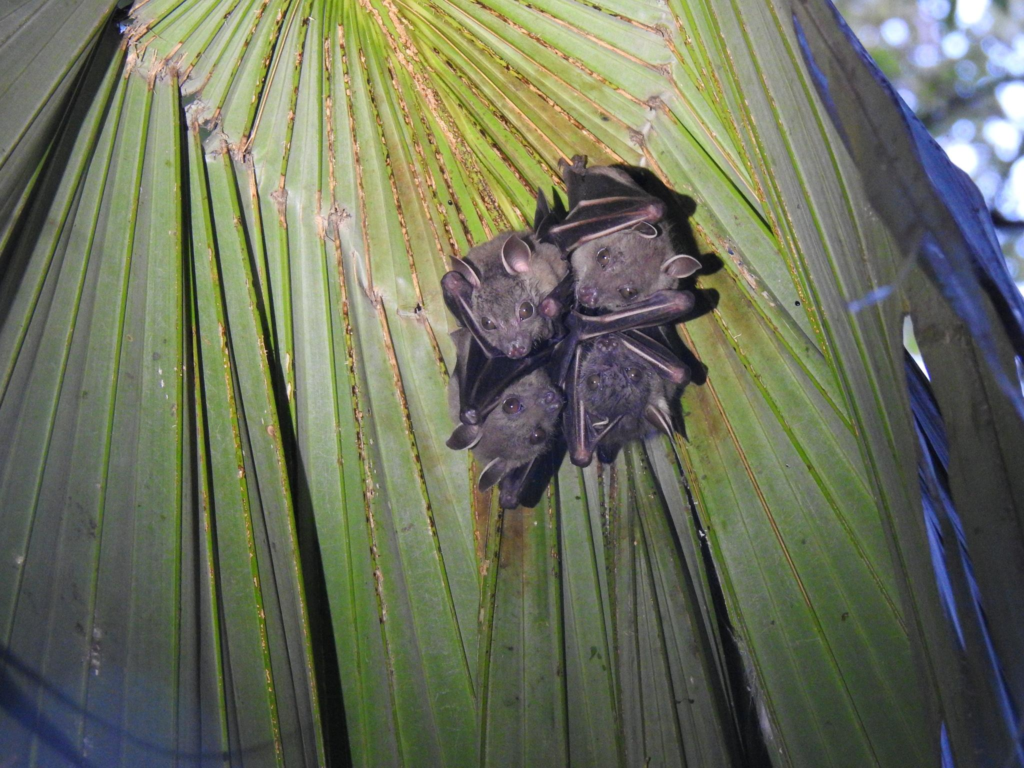
Roosts provide shelter during daylight and a starting point for nightly feeding activity. The species has been documented using palm fronds, foliage and other vegetation. It can also occupy human-modified environments where suitable shelter exists.
Some populations build modified leaf structures known as tents. By cutting or folding parts of a leaf, bats can create a more sheltered resting space. Other roosting arrangements depend on naturally suitable foliage or structures. The precise form of shelter varies with the available vegetation and local conditions.
In the Sundarbans, it would be valuable to establish which native or cultivated trees are used for daytime roosting. A record of a bat flying over a village, for example, would not reveal where it rests during the day or whether the same individual returns to the same roost.
What the Short-nosed Fruit Bat Eats
The species is primarily a plant feeder. Its diet includes ripe fruits and can also include leaves and other plant parts. Scientific observations in India have documented feeding on several kinds of fruit and foliage, demonstrating that its diet is not limited to one plant species.
| Food category | Ecological relevance |
| Ripe fruits | Provide energy and water; frequently form an important part of the diet |
| Leaves | Supply additional plant material, with feeding patterns varying through the night |
| Other plant parts | May be consumed when suitable resources are available |
| Cultivated fruits | Can be used in human-modified landscapes, bringing bats into contact with orchards and settlements |
A Night of Feeding
Studies in southern India found a temporal pattern in which fruit feeding occurred earlier in the night and leaf feeding could become more prominent later. The researchers suggested that differences in the water and carbohydrate content of these foods may help explain the pattern. This is evidence from a studied population, not a universal timetable for all bats of this species.
Fruit feeding also produces waste in the form of dropped fruit fragments, seeds and fibrous material. These remnants can help researchers identify feeding sites and investigate which plants are being used. Combined with observations and plant identification, they can provide evidence of the bat’s ecological relationships.
The Senses Behind Survival
Smell is important in locating food, particularly when fruit is ripe. Vision also plays a role in navigating the environment and approaching feeding sites. The bat’s eyes and sensory system help it move through vegetation after dark, when many fruit-bearing trees are difficult for a human observer to inspect.
Its feeding behaviour also requires coordination. The bat must approach a fruit, grip or stabilise itself, bite off suitable material and process it without losing control of its position. Small adjustments in flight and posture help it use food resources distributed across different trees.
It would be inaccurate to claim that the Short-nosed Fruit Bat never uses echolocation or that it relies on only one sense. The useful distinction is that, as an Old World fruit bat, it depends substantially on visual and olfactory cues for foraging rather than relying on the specialised echolocation strategy typical of many insectivorous bats.
Living With Heat and Humidity
See it for yourself
A private journey shaped around you — your group, your pace, your interests. Book a free consultation.
The Indian Sundarbans experiences a humid, seasonally changing climate. Its wildlife must cope with warm conditions, rainfall, variable food availability and a landscape repeatedly reshaped by tides and storms.
The Short-nosed Fruit Bat’s daytime roosting and nocturnal activity reduce its need to forage during the hottest part of the day. However, detailed physiological research would be needed to explain precisely how Sundarbans individuals respond to local heat, humidity or changing salinity.
The species is not known to possess a specialised mechanism for drinking saline water or surviving on saltwater. Such a claim would confuse its occurrence in a coastal region with a demonstrated physiological adaptation.
Its relationship with the Sundarbans is better understood through the availability of trees, fruit and shelter than through unsupported claims of special tolerance to saline conditions.
Social Behaviour and Roosting Colonies
The Short-nosed Fruit Bat may share daytime roosts with other individuals. Its social organisation is flexible rather than being limited to a single permanent colony structure.
Research on captive and free-ranging populations in southern India has described groups associated with particular roosting resources, including arrangements involving a male and several females. Researchers have also documented changes in group membership and differences in how consistently individuals use particular roosts. These findings suggest that access to shelter and social relationships can influence how colonies are organised.
Such findings should be interpreted carefully. A captive colony does not necessarily represent the full behaviour of a wild population, and social arrangements observed in southern India cannot automatically be attributed to bats in West Bengal.
In the Sundarbans, identifying a roosting colony would require more than seeing several bats hanging beneath a palm leaf. Researchers would need to document the roost, the number of individuals, repeated use over time and, where possible, the relationship between daytime shelter and nightly feeding activity.
When Is It Most Active?
The Short-nosed Fruit Bat is mainly nocturnal. It generally leaves its daytime shelter after sunset and searches for food during the night. Observations from southern India have recorded visits to fruit-bearing trees beginning around half an hour after sunset, although actual activity can vary with local conditions and food availability.
Its nightly routine links two different parts of the landscape: the place where it rests during daylight and the trees where it feeds after dark. The distance between them, the order in which feeding sites are visited and the amount of time spent at each site can affect how the bat interacts with its environment.
For the Indian Sundarbans, local observation could establish whether activity changes with seasonal fruiting, rainfall or the availability of trees near settlements. These patterns should be measured rather than inferred solely from the general behaviour of the species elsewhere.
Breeding and Raising Young
The Short-nosed Fruit Bat gives birth to live young and provides parental care. Species accounts report that females generally produce a single young per birth, while some populations have been recorded breeding twice a year. Timing varies geographically, so a single breeding calendar should not be applied to the entire species.
| Reproductive feature | What the available evidence indicates |
| Reproduction | Live birth |
| Number of young | Usually one young per birth in the cited species accounts |
| Breeding frequency | Twice yearly in some studied populations |
| Parental care | Young depend on the mother during early development |
| Exact Sundarbans breeding season | Not established by the sources reviewed |
| Local colony productivity | No verified site-specific estimate available |
A young bat’s early survival depends on suitable shelter, maternal care and access to resources as it develops. Disturbance at a roost may therefore affect more than the adult animals immediately visible to an observer.
The available evidence does not justify assigning exact gestation periods, birth months or juvenile independence dates to a Sundarbans population without region-specific research.
Feeding Sites and the Movement of Seeds
Fruit feeding creates an important connection between the bat and the plants around it. Some fruits are carried away from the tree before being consumed, while seeds may be discarded with feeding remnants or passed through the digestive system.
Research in Kerala has examined the seed-dispersal potential of Cynopterus sphinx, documenting seeds and fruit remains associated with feeding and roosting sites. The study supports the role of this species in moving plant material, although the outcome depends on the plant species and the way the bat processes its food.
The ecological benefit is not simply that a seed moves. Successful dispersal also depends on whether the seed remains viable, reaches a suitable site and germinates under appropriate conditions. Not every seed deposited by a fruit bat will grow into a plant.
In a coastal landscape, these questions are particularly relevant because vegetation grows under changing conditions of water availability, soil and salinity. Yet it would be premature to claim that the Short-nosed Fruit Bat is a major mangrove-restoration agent in the Indian Sundarbans. That conclusion would require direct evidence identifying the seeds it disperses there and the contribution those seeds make to plant recruitment.
Relationships With Other Wildlife
The Short-nosed Fruit Bat participates in a wider ecological network involving fruit-bearing plants, other fruit-eating animals and organisms that use the same vegetation.
Several species may visit a single fruiting tree, but their feeding strategies differ. Some consume whole fruits, others take only particular parts, and still others feed on leaves, flowers or insects. These differences can reduce or increase competition depending on the resources available.
Bats may also leave fruit remnants that become available to other organisms. However, the importance of this process varies by site and cannot be assumed to have the same magnitude throughout the Sundarbans.
Predators may capture bats, as occurs in many ecosystems, but a complete account of the local predator–prey relationship would require reliable records of which predators actually take this species in the region. Naming a particular Sundarbans predator as a regular hunter without that evidence would be speculative.
Fruit Bats and People
The Short-nosed Fruit Bat can occur in landscapes used by people. Fruit trees around homes, cultivated areas and gardens may provide food, while palms and other vegetation can offer roosting opportunities.
These overlaps can produce different responses. Some people may appreciate bats for their ecological role; others may be concerned about fruit damage, noise or droppings beneath roosts. Neither response should be treated as universal across rural communities.
Research elsewhere in India has documented the species feeding on cultivated fruits and using food opportunities created indirectly by human activity. Such observations demonstrate its ability to exploit human-modified environments, but they do not establish the frequency or economic importance of fruit damage in Sundarbans settlements.
A balanced approach to coexistence begins by identifying the actual issue. If bats use a fruit tree, for example, observation can help establish which species is present, what it eats and whether the damage is significant. Measures can then be tailored to the situation instead of treating all bats as pests.
Why Accurate Bat Identification Matters
Fruit bats are sometimes grouped together simply because they feed on plants. This can obscure differences in size, appearance, roosting habits and ecological relationships.
For the Short-nosed Fruit Bat, identification should consider the muzzle, fur pattern, body proportions and other diagnostic features. A distant silhouette may not be enough to distinguish it reliably from other bats.
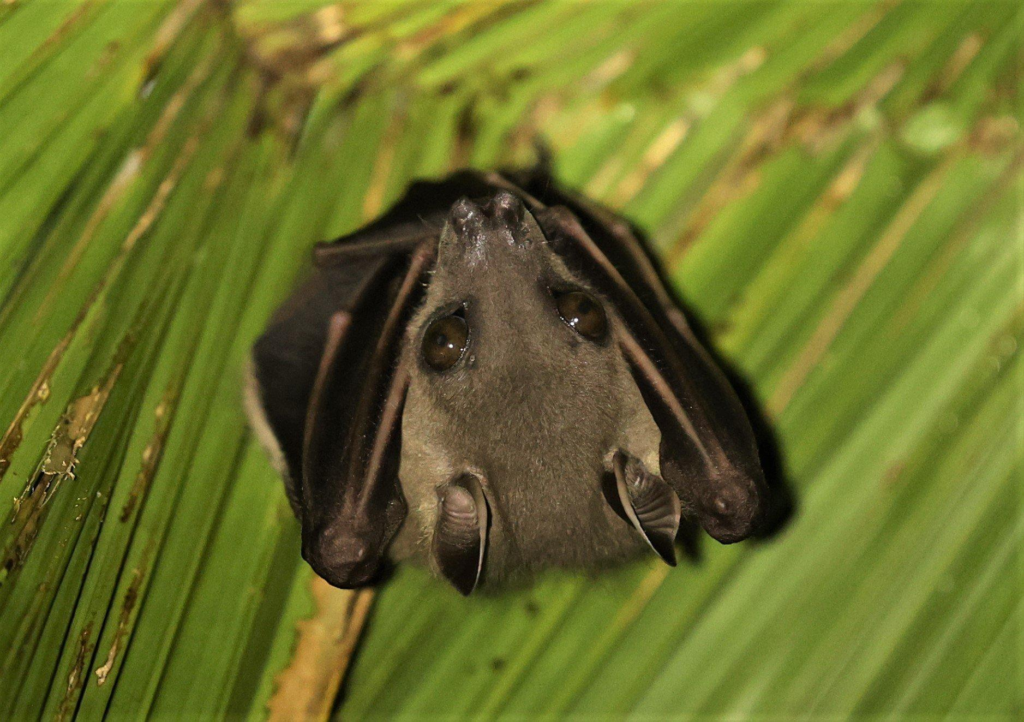
Accurate identification also improves conservation records. A photograph with a clear date, location and visible diagnostic features is more useful than an unverified statement that a fruit bat was seen somewhere in the Sundarbans.
For researchers and naturalists, these details turn an incidental sighting into information that can help build a more reliable understanding of the region’s mammal diversity.
Conservation Status and What It Means
The Short-nosed Fruit Bat is assessed as Least Concern in the cited IUCN Red List assessment. The West Bengal Biodiversity Information System also lists the species as Least Concern.
Least Concern means that the species does not currently meet the IUCN criteria for a threatened category at the assessed scale. It does not mean that every local population is secure, that all roosts are undisturbed or that the species faces no ecological pressures.
A widespread mammal can remain common overall while particular colonies are affected by habitat changes or disturbance. Local information is therefore necessary to understand how the species is faring in the Sundarbans.
Threats to Roosts and Feeding Habitat
The species uses a range of natural and human-modified habitats, but its reliance on vegetation means that changes to trees and roosting sites can affect its opportunities for shelter and feeding.
| Potential pressure | Possible effect on the Short-nosed Fruit Bat | Evidence needed in the Sundarbans |
| Loss of suitable trees | Reduces potential roosting and feeding sites | Surveys of roost trees and vegetation change |
| Disturbance at daytime roosts | May cause bats to abandon or shift roosts | Repeated monitoring before and after disturbance |
| Decline in fruit availability | Changes food access and nightly foraging patterns | Seasonal records of food plants and bat activity |
| Artificial lighting | May alter foraging behaviour in some settings | Local observations comparing illuminated and darker feeding sites |
| Human–wildlife conflict | May lead to intentional disturbance or removal | Community interviews and documented incidents |
| Extreme weather | May damage vegetation and disrupt shelter or food supply | Post-cyclone and seasonal habitat assessments |
Climate Change, Cyclones and a Changing Delta
The Sundarbans faces broader environmental pressures associated with sea-level rise, coastal erosion, cyclones and changes in freshwater and salinity regimes. These processes influence the landscape in which wildlife lives.
For the Short-nosed Fruit Bat, the likely consequences would depend on which trees it uses, where those trees grow and how food resources change over time. The loss of a suitable roost tree near a settlement may have a different effect from the erosion of an island or the loss of vegetation within a forest block.
It is important to distinguish these general ecological pathways from demonstrated impacts on this particular species. The sources reviewed do not establish a quantified effect of sea-level rise, cyclone frequency or changing salinity on Short-nosed Fruit Bat populations in the Indian Sundarbans.
A useful conservation response would be to monitor the bat alongside the vegetation and environmental conditions on which it depends. This would help determine whether local changes are affecting roost availability, feeding opportunities or population persistence.
How Researchers Can Monitor the Species
Fruit bats can be studied using several complementary methods. The appropriate approach depends on whether the objective is to establish presence, identify roosts, understand feeding behaviour or estimate population trends.
| Monitoring method | What it can establish | Important limitation |
| Direct observation | Visible activity, flight direction and feeding behaviour | Night-time observations may miss individuals or misidentify species |
| Photography | Diagnostic features when images are sufficiently clear | Distant or poorly lit images may be inconclusive |
| Roost surveys | Roost location, habitat and approximate occupancy | A single visit cannot establish long-term use |
| Feeding-remnant surveys | Fruit fragments, seeds and possible feeding sites | Remnants may be difficult to identify to species without additional evidence |
| Acoustic monitoring | Activity of bats whose calls can be recorded and identified | Acoustic records alone may not reliably distinguish this fruit bat from other species |
| Repeated population surveys | Changes in counts or occupancy over time | Results depend on consistent methods and detection probability |
| Community reporting | Additional records from villages and cultivated areas | Reports need verification and reliable location data |
Where Can the Short-nosed Fruit Bat Be Observed in the Sundarbans?
Historical regional literature includes the Short-nosed Fruit Bat in lists of mammals recorded from the Sundarbans and adjacent areas. The species is also recorded widely across West Bengal. Together, these sources support treating it as part of the region’s broader mammal fauna.
However, the sources reviewed do not establish a current, verified sighting hotspot for this species at Sajnekhali, Sudhanyakhali, Dobanki, Netidhopani, Burirdabri, Bonnie Camp or any other named Sundarbans wildlife site. These places should not be promoted as confirmed Short-nosed Fruit Bat observation locations without additional evidence.
Habitat Worth Investigating
| Habitat type | Why it may be relevant | Status of evidence |
| Palm-bearing village landscapes | Palms are recognised roosting resources for the species | General species evidence; local occupancy unverified |
| Fruit-bearing trees near settlements | May provide food after sunset | Ecologically plausible; local feeding records needed |
| Vegetated forest edges | Could offer movement routes and plant resources | Suitable habitat hypothesis, not a confirmed hotspot |
| Mixed vegetation around human-modified landscapes | The species uses rural and urban habitats elsewhere | Regional applicability needs field verification |
The Important Truth About Wildlife Sightings
Wildlife observation is unpredictable. Even where a species has been recorded, an observer may not see it during a particular visit.
A nocturnal fruit bat may remain concealed in foliage during daylight and leave its roost after sunset. Its movements may also change with the availability of fruit, disturbance and weather. Absence during one observation does not establish that the species is absent from the area.
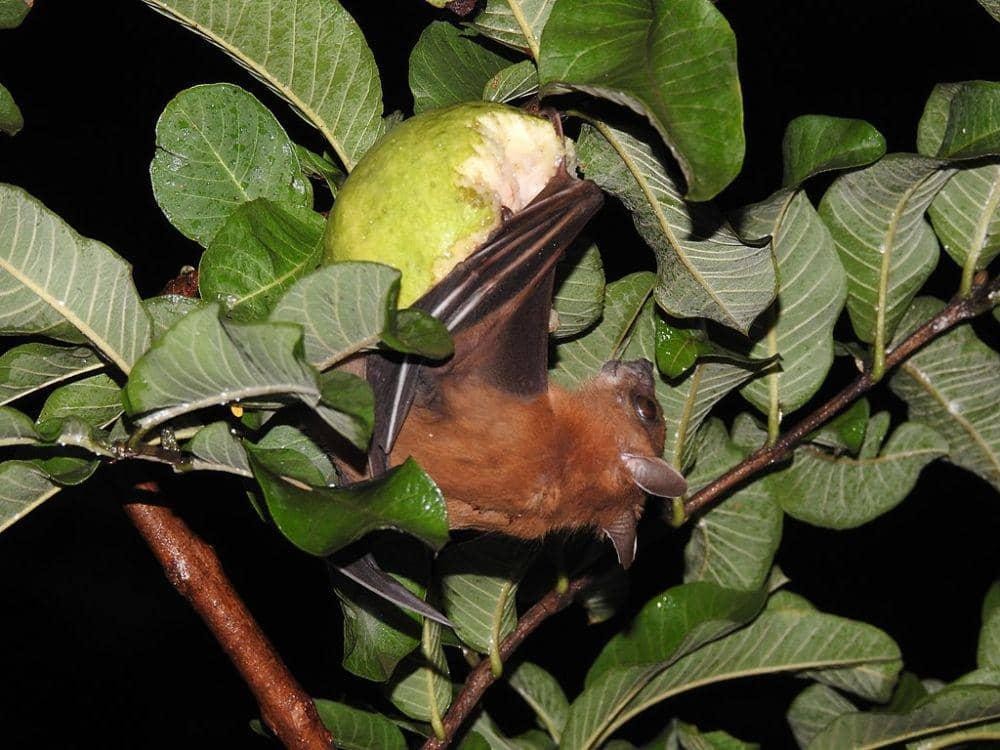
For responsible wildlife documentation, every sighting should be recorded with its date, location, observation method and level of identification confidence. Sensitive roosts should not be disturbed to obtain a closer photograph.
The goal is not simply to find the animal. It is to understand the conditions that allow it to live there.
What Makes the Sundarbans Short-nosed Fruit Bat Unique?
The Short-nosed Fruit Bat is not known to be a Sundarbans endemic or a distinct mangrove-adapted subspecies. Its significance lies in its place within the wider ecological landscape of West Bengal and the opportunity it offers to study the connections between fruit-eating mammals and vegetation.
Four aspects deserve particular attention.
| Distinctive aspect | Significance for the Sundarbans |
| A mammal of the wider delta landscape | Historical regional literature includes Cynopterus sphinx among the mammals recorded in the Sundarbans and adjacent areas. |
| Potential links between vegetation patches | Its fruit-feeding and movement behaviour may connect trees in settlements and other vegetated habitats. The local scale of this contribution remains unmeasured. |
| A less conspicuous side of wildlife diversity | Unlike large mammals readily recognised by visitors, small nocturnal mammals require different observation methods and greater attention to detail. |
| An opportunity for ecological research | Documenting its roosts, food plants and seasonal activity could improve understanding of mammal–plant relationships in the delta. |
The most important distinction is between what is known about the species generally and what has been established about its life in the Sundarbans specifically. General research explains how the bat feeds, roosts and reproduces. Local fieldwork is needed to reveal which plants it uses in this tidal landscape, how it moves between habitat patches and whether its feeding contributes to the regeneration of particular native plants.
That knowledge would make the species more than a name on a regional mammal checklist. It would show how an apparently familiar fruit bat participates in the living ecology of the delta.
Myths and Facts About the Short-nosed Fruit Bat
| Myth | Fact |
| All bats are blood-feeding animals. | The Short-nosed Fruit Bat feeds primarily on plant material, including fruits and leaves. |
| Fruit bats are active only in deep forests. | This species occurs in rural and urban landscapes as well as forests, wherever suitable resources are available. |
| Every fruit bat seen in the Sundarbans is an Indian Flying Fox. | Several bat species occur in the wider region, and accurate identification requires attention to diagnostic features. |
| A Least Concern status means there is nothing to conserve. | Local roosts and feeding habitats may still be vulnerable to disturbance and environmental change. |
| Finding a bat in one location proves that it is common throughout the Sundarbans. | A single record establishes presence at that time and place, not abundance across the region. |
FAQs
What is the scientific name of the Short-nosed Fruit Bat?
Its scientific name is Cynopterus sphinx. It belongs to the family Pteropodidae, the Old World fruit bats.
Is the Short-nosed Fruit Bat found in the Sundarbans?
Historical regional mammal literature lists the species in the Sundarbans and adjacent areas. West Bengal’s biodiversity database also records it throughout the state. Current occupancy at individual Sundarbans locations needs verification.
What is the Bengali name of the Short-nosed Fruit Bat?
The West Bengal Biodiversity Information System records the Bengali name as Kala Badur.
What does the Short-nosed Fruit Bat eat?
It feeds primarily on fruits and can also consume leaves and other plant material. Its precise diet depends on the plants and food resources available locally.
Is the Short-nosed Fruit Bat endangered?
The cited IUCN assessment classifies the species as Least Concern. This global assessment does not guarantee that every local population or roost is free from threats.
When does the Short-nosed Fruit Bat come out?
It is mainly nocturnal and generally becomes active after sunset. The timing of its feeding activity can vary with food availability and local conditions.
Does the Short-nosed Fruit Bat help plants grow?
It can contribute to seed dispersal by carrying or consuming fruit and depositing seeds or fruit remnants away from the parent plant. The contribution of this species to plant regeneration in the Sundarbans has not been quantified.
Where can I see the Short-nosed Fruit Bat in the Sundarbans?
No current, verified site-specific hotspot was established in the sources reviewed. Suitable habitat may warrant investigation, but sightings should not be guaranteed.
How is the Short-nosed Fruit Bat different from the Indian Flying Fox?
The two are different species of fruit bat. The Short-nosed Fruit Bat is smaller and has a distinctive short, broad muzzle, whereas the Indian Flying Fox (Pteropus giganteus) is substantially larger.
Does the Short-nosed Fruit Bat live only in mangrove forests?
No. It uses a range of habitats, including forests, palms, agricultural areas and human-modified landscapes. Its occurrence in the Sundarbans does not establish that it is specialised for mangrove habitats.
The Wild Orbit Perspective
The Sundarbans is often understood through its most recognisable wildlife: the Royal Bengal Tiger, estuarine crocodiles, spotted deer and the dolphins that move through its tidal rivers. Yet the ecology of the delta is not defined by its largest animals alone.
The Short-nosed Fruit Bat represents another scale of life. Its world is made up of fruit-bearing trees, sheltered roosts, darkened feeding grounds and the routes between them. Its presence connects the familiar vegetation of human settlements with the broader natural history of the region.
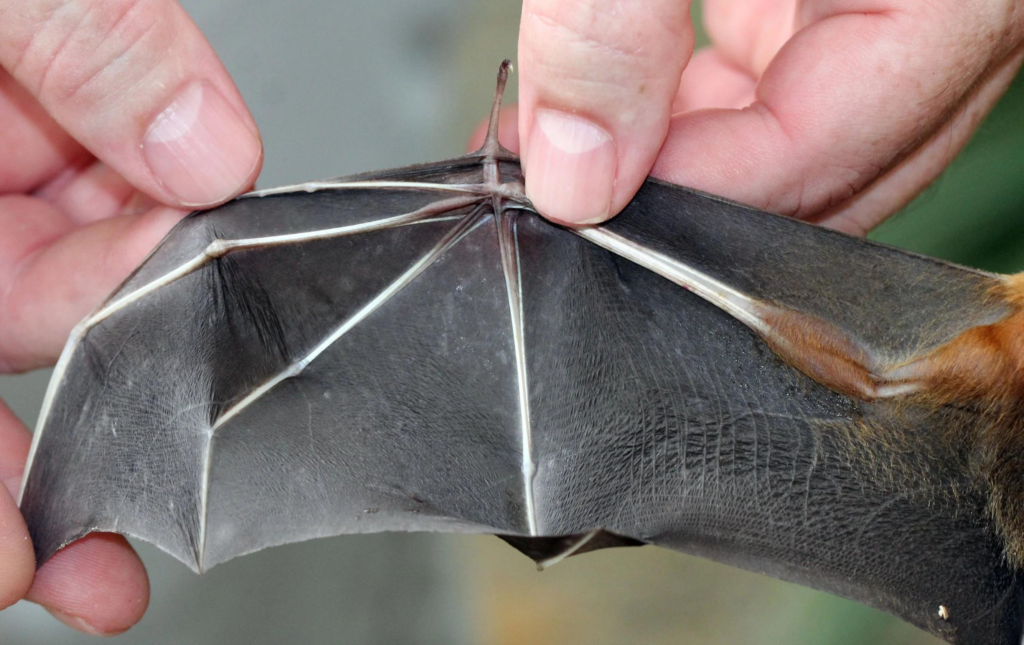
The scientific evidence for this species is substantial at a wider geographical scale, while the details of its local distribution and ecological role in the Indian Sundarbans still deserve careful documentation. That distinction is important. Conservation becomes stronger when observation is separated from assumption and when regional records are supported by repeatable field evidence.
For The Wild Orbit, exploring this mammal means looking beyond the obvious and recognising the ecological relationships that remain largely unseen after sunset.
The delta is not only a landscape shaped by tides. It is a living network of plants and animals, and even a small fruit bat can help us ask bigger questions about how that network survives.
Plan your private Sundarban expedition
A private journey shaped around you — your group, your pace, your interests. Book a free consultation.