 Field guide
The tide turns, fishing boats move through the narrow channels, and above the shifting water a distinctive raptor circles effortlessly. Its chestnut-coloured wings catch the light, while its white head and breast stand out against the green mangrove fringe.
This is the Brahminy Kite (Haliastur indus), one of the most recognisable birds of prey associated with tropical Asian wetlands and coastlines.
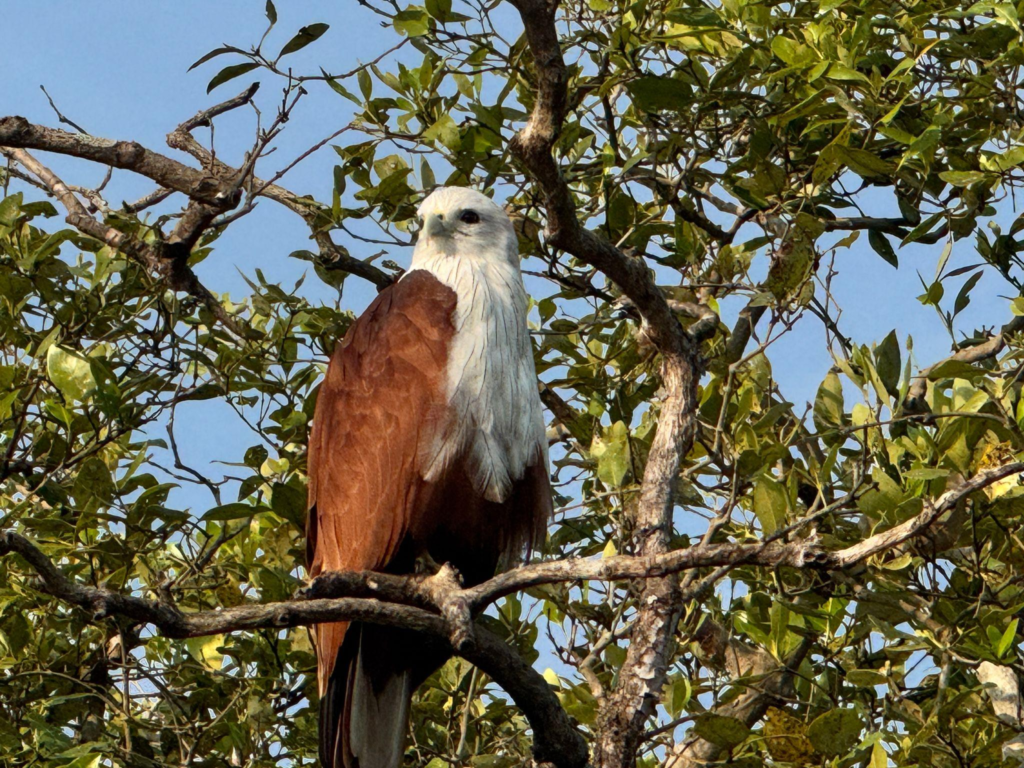
Known in Bengali as Shankhachil (শঙ্খচিল), the Brahminy Kite is particularly familiar around rivers, estuaries, fishing settlements and coastal wetlands. In the Indian Sundarbans of West Bengal, its ecological relationship with water is especially relevant. The bird does not depend exclusively on the dense mangrove forest. Instead, it makes use of the wider tidal landscape, where open waterways, exposed mudflats, riverbanks and human activities create opportunities for feeding.
Unlike specialist hunters that depend on a particular prey species, the Brahminy Kite is an opportunistic feeder. It can hunt live prey, collect food from the water’s surface and scavenge when opportunities arise.
Its presence is a reminder that the Sundarbans is not simply a forest ecosystem. It is an interconnected landscape of rivers, mudflats, settlements, wetlands and mangroves.
Brahminy Kite at a Glance
| Field | Information |
| Common Name | Brahminy Kite |
| Bengali Name | Shankhachil (শঙ্খচিল) |
| Scientific Name | Haliastur indus |
| Order | Accipitriformes |
| Family | Accipitridae |
| Genus | Haliastur |
| Global Conservation Status | Least Concern (IUCN) |
| Indian Legal Protection | Schedule I, Wildlife (Protection) Act |
| Indian Sundarbans Occurrence | Documented in regional bird checklists and historical site records |
| Seasonal Status | Resident |
| Habitat | Estuaries, rivers, mangrove edges, coastal wetlands and fishing areas |
| Diet | Fish, crabs, insects, amphibians, reptiles and carrion |
| Approximate Body Length | 45–51 cm |
| Ecological Role | Predator and scavenger |
Scientific Classification and Distribution
The Brahminy Kite belongs to the family Accipitridae, which includes eagles, hawks, harriers and other kites. Its scientific name, Haliastur indus, was established by Pieter Boddaert in 1783.
The species occurs across the Indian subcontinent and much of tropical Southeast Asia, extending through parts of the Indonesian archipelago and into Australia. It is strongly associated with coastal environments and inland wetlands.
In India, its distribution extends across numerous coastal and inland river systems. The Indian Sundarbans form part of the broader habitat landscape in which this species occurs.
Is the Brahminy Kite Found in the Indian Sundarbans?
Yes. The Brahminy Kite is included in the Avibase checklist for the Sunderban Biosphere Reserve. More specifically, an older regional bird list titled List of Birds Sighted at Sajnekhali and Sudhanyakhali also records Haliastur indus under its common name.
These records establish regional occurrence, although they should not be interpreted as evidence of a quantified population or guaranteed sightings at either location today.
The distinction matters. A species appearing in a regional checklist confirms its inclusion in the documented avifauna, but does not independently establish its present abundance, nesting distribution or frequency of occurrence.
Habitat and Ecological Relationship With the Sundarbans
The Brahminy Kite is primarily associated with water. It is comfortable around freshwater rivers, brackish estuaries, coastal wetlands, mangrove margins and fishing settlements.
Within the Sundarbans, the landscape provides several potentially suitable feeding environments:
- Open water provides opportunities to search for fish and other food.
- Exposed banks and shallow channels can offer access to stranded or accessible prey.
- Falling tides expose intertidal surfaces where aquatic organisms become more accessible.
- Trees and vegetation provide potential perching and roosting sites.
- Discarded fish remains and other food opportunities can attract opportunistic scavengers.
The species’ presence around these habitats reflects its broad ecological flexibility. However, suitable habitat should not automatically be treated as proof of a confirmed sighting at every location.
How to Identify the Brahminy Kite
The adult Brahminy Kite is among the easier raptors to identify once its distinctive plumage is recognised.
Its appearance is defined by a striking contrast between two dominant colours: white and chestnut.
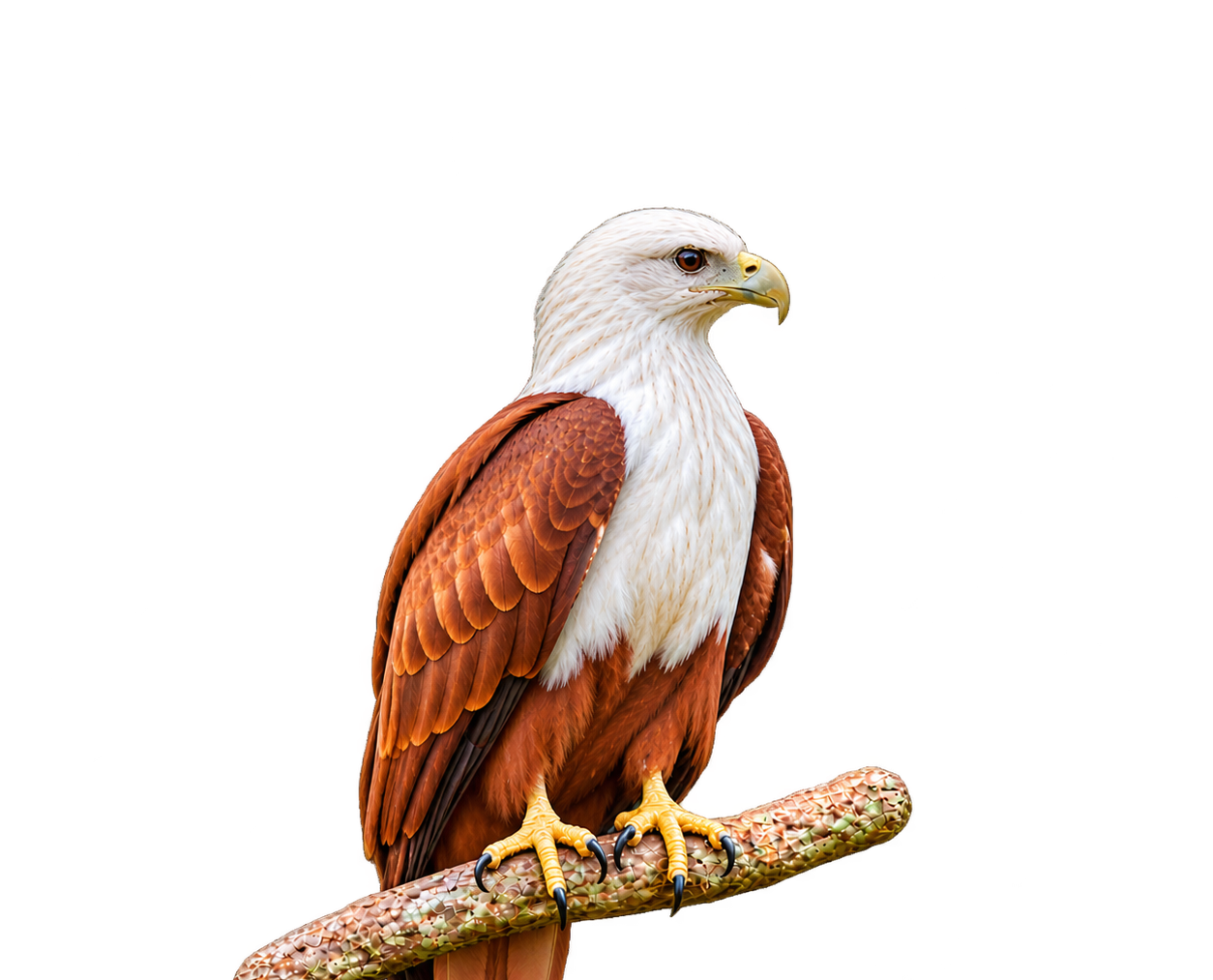
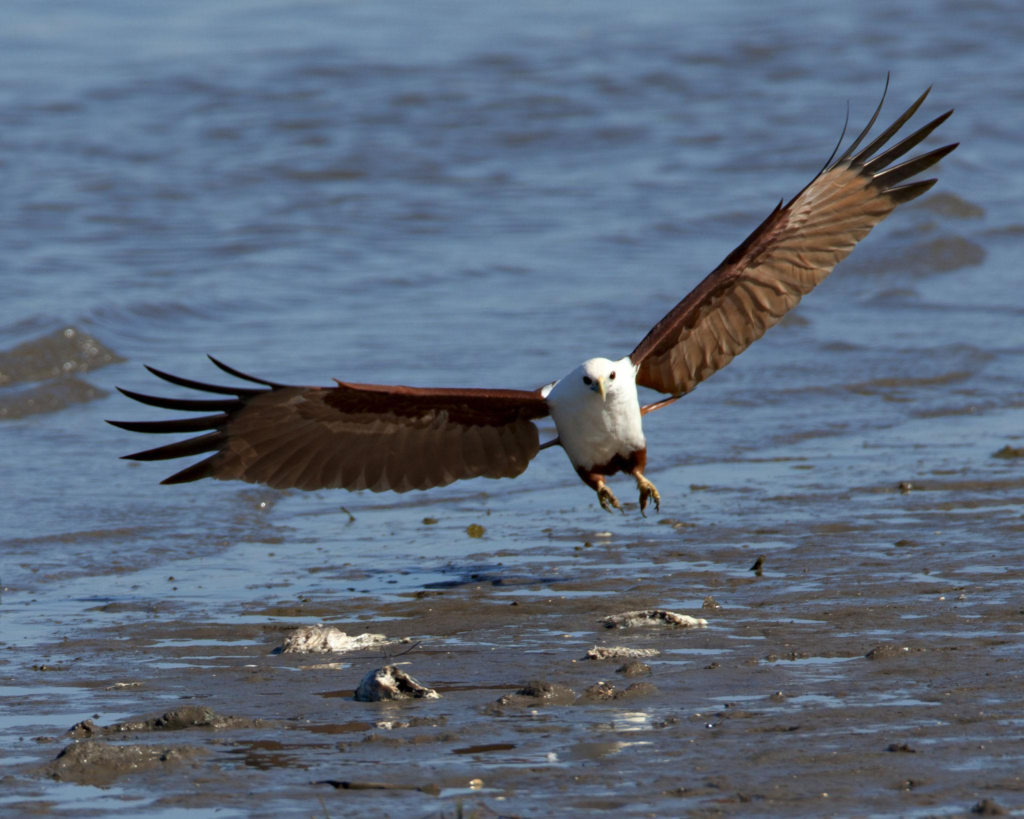
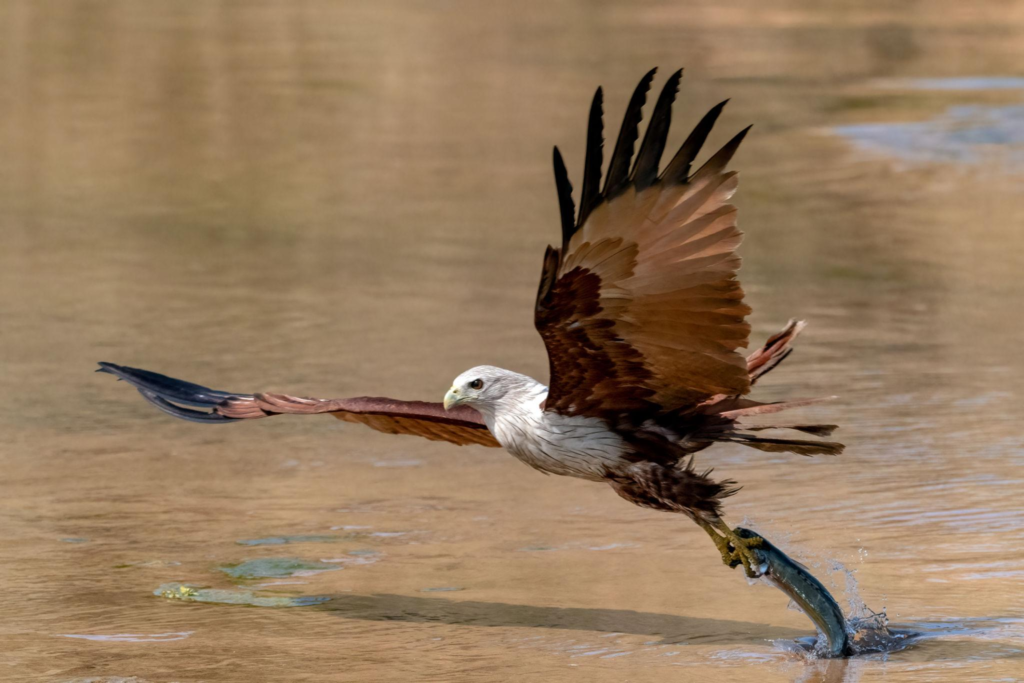
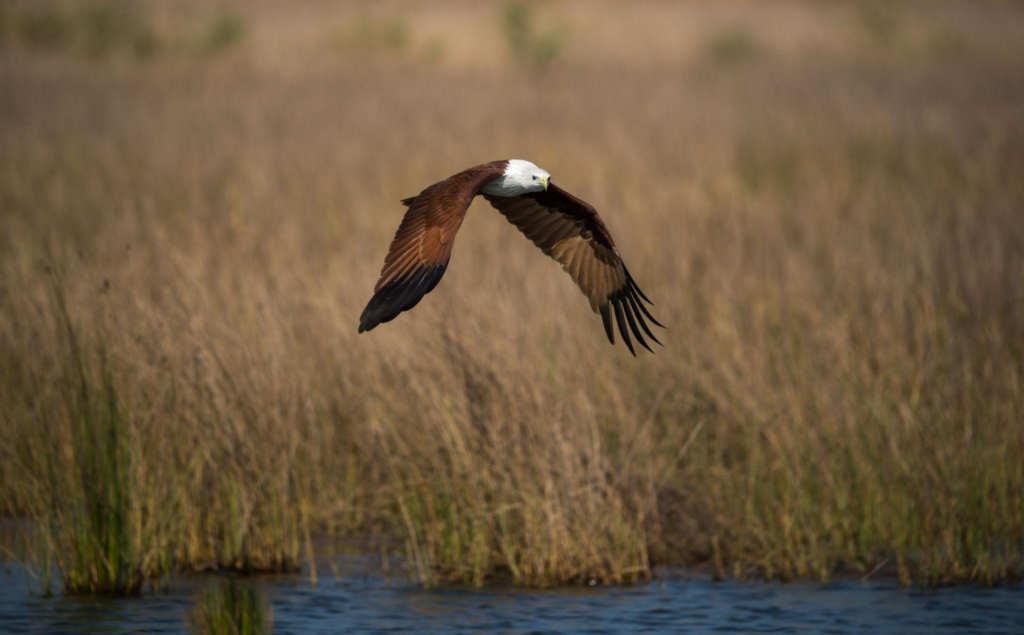
An adult has a white head, neck and breast, while the back, wings, belly and tail are predominantly rich reddish-chestnut. The outer flight feathers have darker, almost black tips, which become particularly noticeable when the bird is soaring overhead.
Its medium-sized body, broad wings and relatively short, rounded tail give it a distinctive silhouette.
The sexes are similar in appearance, although females are generally slightly larger than males.
Plumage and Distinctive Field Marks
The most important identification features are:
Adult plumage: White head and breast contrasting with chestnut-brown body and wings.
Wing tips: Dark outer flight feathers, particularly visible during flight.
Tail: Short and rounded rather than deeply forked.
Beak: Strongly hooked, with a pale yellowish to greyish appearance.
Eyes: Dark, providing a noticeable contrast against the pale head.
Legs and feet: Yellowish legs with curved talons suited to grasping food.
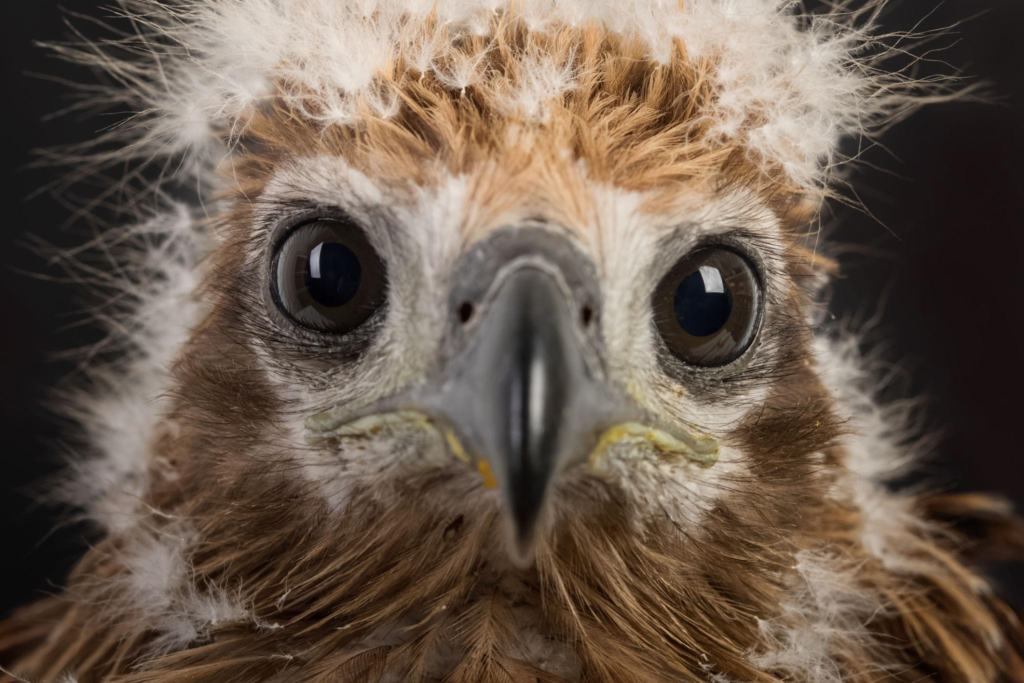
Juveniles look considerably different. Rather than displaying the unmistakable white-and-chestnut combination, young birds are predominantly brown, with streaking over the head, mantle and underparts. Pale patches on the underwings are useful identification features.
Juvenile Brahminy Kites can be confused with Black Kites (Milvus migrans). The Brahminy’s relatively shorter, rounded tail is particularly useful when distinguishing the two. Black Kites have a more distinctly forked tail.
Flight and Movement Above the Tidal Channels
The Brahminy Kite is an accomplished aerial bird.
It frequently uses rising air currents to circle above waterways, fishing grounds and open wetlands. Its wings are broad, and during soaring flight they are generally held with a slight angle at the wrist.
Unlike birds that depend on rapid pursuit, the Brahminy Kite often relies on patience and observation. It scans the landscape from above, searching for food opportunities before descending.
It can also fly low over the water, adjusting its direction and altitude as it approaches a potential food item.
Its flight is not always a hunting display. Sometimes the bird is simply travelling between feeding areas, perches or roosting sites.
What Does the Brahminy Kite Eat?
The Brahminy Kite is an opportunistic predator and scavenger. Its diet changes according to food availability and habitat.
Its documented food sources include:
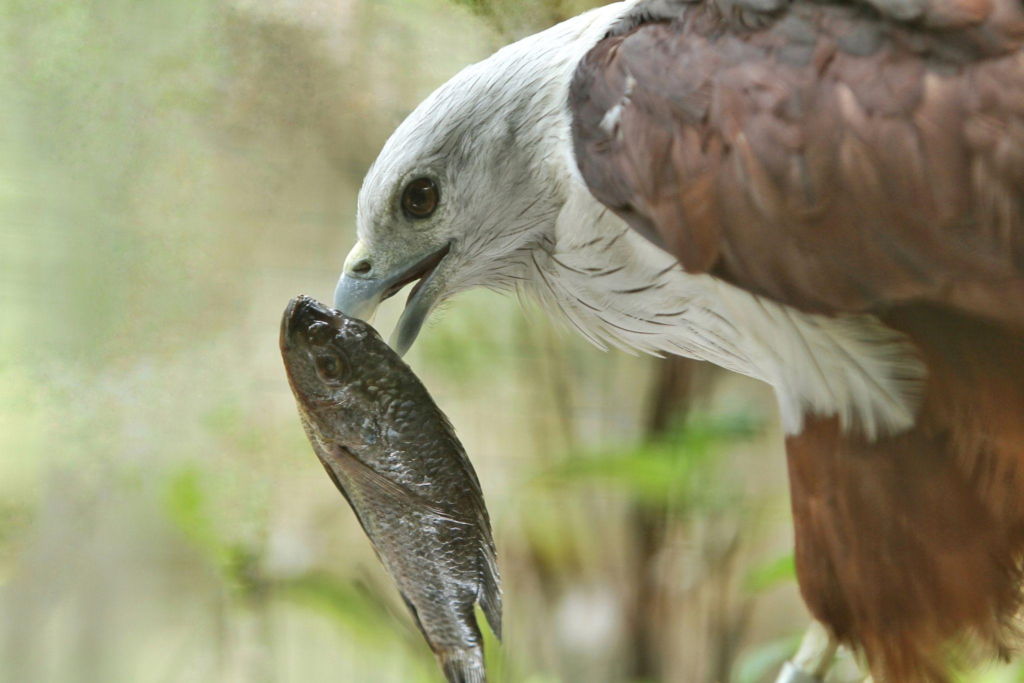
- Fish, both live and dead.
- Crabs and other crustaceans.
- Frogs and other amphibians.
- Small reptiles.
- Insects.
- Small birds and mammals.
- Carrion and discarded animal remains.
Fish and crustaceans are particularly relevant to its association with coastal and wetland environments.
The bird may snatch food directly from the water’s surface, catch accessible live prey or feed on dead fish. It may also take advantage of food discarded around fishing activities.
This flexible feeding strategy allows it to exploit different food sources rather than depending on a single prey population.
A Predator That Also Scavenges
See it for yourself
A private journey shaped around you — your group, your pace, your interests. Book a free consultation.
One of the interesting aspects of Brahminy Kite ecology is that it occupies more than one feeding role.
When it captures live prey, it acts as a predator. When it consumes dead fish or animal remains, it acts as a scavenger.
These two behaviours are not contradictory. They are part of an opportunistic feeding strategy.
In a landscape like the Sundarbans, where tides constantly alter the accessibility of aquatic habitats, the ability to exploit different food sources can be particularly useful.
However, the actual contribution of Brahminy Kites to removing carrion or regulating prey populations within the Indian Sundarbans has not been quantified by the regional evidence consulted here.
Social Behaviour and Territoriality
Brahminy Kites are frequently encountered alone or in pairs, although multiple individuals may gather where food is abundant.
Fishing grounds, harbours and other locations with concentrated food opportunities can attract more than one bird.
They are predominantly diurnal, meaning they are active during daylight hours. Their daily activities include searching for food, soaring, perching, maintaining their plumage and returning to roosting areas.
Pairs may maintain breeding territories and repeatedly use familiar nesting areas. However, their social behaviour can vary according to food availability, season and local habitat conditions.
Calls and Communication
The Brahminy Kite is not known for a complex musical song.
Its vocalisation is generally described as a drawn-out, nasal, slightly wavering or mewing whistle. It is often represented as a kyerrh or kee-yew sound.
The call may be heard during interactions between individuals, particularly around breeding territories.
For birdwatchers, recognising this distinctive vocalisation can help identify a bird even when it is flying at a considerable distance.
Breeding and Nesting Behaviour
Across South Asia, the Brahminy Kite generally breeds during the cooler part of the year, with the commonly documented breeding period extending approximately from December to April. The exact timing may vary geographically.
The species generally constructs a stick nest in a tree, often near water. Mangrove trees are among the habitats used for nesting in parts of its wider range.
The nest is usually a platform of branches and twigs, with softer vegetation and other available materials used as lining.
A typical clutch contains one or two eggs, although clutch size can vary between populations and sources.
Both parents participate in parental care, including incubation and feeding the young.
An important regional distinction: The general South Asian breeding season and the species’ ability to nest in trees near water do not establish that a particular nesting site or breeding colony exists in the Indian Sundarbans. The regional sources consulted establish occurrence, not a verified local breeding record.
Relationship With Fishing Communities
The Brahminy Kite has a natural association with fishing landscapes.
Fishing settlements, boat landing areas and coastal waterways can create opportunities for this opportunistic feeder. Discarded fish remains and accessible food may attract individuals searching for an easy meal.
This relationship is particularly interesting in the Sundarbans, where human livelihoods and wetland ecology are closely connected.
However, the presence of a kite around fishing activity should not be interpreted as dependence on human food waste. The species has a much wider natural feeding range and can hunt independently.
The relationship also highlights the importance of responsible waste management. Unmanaged food waste can create opportunities for scavengers while potentially exposing wildlife to contaminated food, plastics and other hazards.
The Importance of Coexistence
The Brahminy Kite is a useful reminder that wildlife conservation is not restricted to protected forest interiors.
Birds use the wider landscape, including riverbanks, fishing settlements and other human-influenced environments.
Maintaining healthy waterways, protecting trees and reducing harmful pollution are important parts of supporting the broader wetland ecosystem.
For the Sundarbans, conservation must consider both the mangrove forest and the connected waterways that sustain its wildlife and communities.
Conservation Status of the Brahminy Kite
The Brahminy Kite is classified as Least Concern (LC) on the IUCN Red List. This means that the species does not currently meet the criteria for a globally threatened category.
However, Least Concern should not be interpreted as an assurance that every regional population is secure.
The State of India’s Birds assessment provides an additional perspective. Its 2026 national assessment classifies the species as a resident bird with a stable national trend. The 2023 West Bengal assessment, however, reported a rapid long-term decline, estimating a trend of approximately 89.55% decline, while its current annual trend was inconclusive.
These are different geographic assessments and should not be confused with a population estimate for the Indian Sundarbans.
The West Bengal finding deserves attention, particularly because a species can remain widespread nationally while experiencing substantial regional changes.
Conservation Challenges
Several environmental pressures deserve consideration in the conservation of Brahminy Kites and their wetland habitats.
Wetland degradation: Changes in wetland condition can affect the availability of fish, crabs and other food resources.
Pollution: Plastic waste, contaminated food and pollutants entering waterways can create indirect risks for birds that feed around aquatic environments.
Loss of nesting and perching trees: The removal of mature trees near rivers and wetlands can reduce suitable nesting and resting opportunities.
Disturbance: Repeated disturbance around nesting and roosting sites can interfere with normal behaviour, particularly during breeding.
Climate change: Sea-level rise, changing salinity, coastal erosion and increasingly intense cyclones are important wider pressures on the Sundarbans landscape. Their specific effects on local Brahminy Kite populations, however, require further research.
Protecting the wider estuarine ecosystem is therefore an important part of maintaining suitable habitat for this raptor.
Where Can the Brahminy Kite Be Observed in the Indian Sundarbans?
The Brahminy Kite is documented in the regional avifauna of the Sunderban Biosphere Reserve.
Historical records specifically include Sajnekhali and Sudhanyakhali. These locations provide a useful starting point for understanding its documented regional occurrence.
The following distinction is important for responsible wildlife observation:
| Location | Evidence and interpretation |
| Sajnekhali | Included in an older list of birds sighted at the site |
| Sudhanyakhali | Included in the same historical bird list |
| Wider Sunderban Biosphere Reserve | Brahminy Kite appears in the regional Avibase checklist |
These records do not establish current sighting frequency or guarantee encounters at any of these locations.
For birdwatchers, open waterways, riverbanks, fishing areas and mangrove edges are sensible habitats to scan, based on the species’ known ecology.
When Is the Brahminy Kite Present?
The Brahminy Kite is considered a resident species in India rather than a regular long-distance winter migrant.
The State of India’s Birds 2026 assessment also identifies it as resident nationally.
It may therefore be encountered throughout the year in suitable habitats, although individual movements and local availability can vary.
Its presence should not be confused with that of migratory raptors that visit the Sundarbans during particular seasons.
The species’ breeding season in South Asia is generally reported between December and April. This is a broad regional pattern, not a verified schedule for every population in the Indian Sundarbans.
The Important Truth About Bird Observation
Wildlife observation is never entirely predictable.
A bird may be present in a particular landscape without appearing during a particular boat journey or birdwatching session.
Several factors influence whether it can be observed:
- Tidal conditions and water levels.
- Weather and visibility.
- Time of day.
- Availability of food.
- Feeding and resting behaviour.
- Disturbance and human activity.
- The amount of time spent observing suitable habitat.
A suitable habitat is not proof of a confirmed sighting. Similarly, failure to observe a species during a particular visit does not establish its absence.
For responsible birdwatching, maintaining distance, avoiding disturbance and allowing wildlife to behave naturally should always take priority over obtaining a photograph.
What Makes the Sundarbans Brahminy Kite Unique?
The Brahminy Kite is not an endemic species of the Sundarbans. It occurs across a much wider geographical range, from the Indian subcontinent to Southeast Asia and Australia.
Its significance here lies in its relationship with the tidal landscape.
The Sundarbans is a dynamic estuarine environment. Water levels rise and fall, mudflats appear and disappear, and the availability of aquatic food changes with the tides.
For a flexible predator and scavenger such as the Brahminy Kite, this constantly changing environment offers a variety of feeding opportunities.
Its relationship with the landscape is not restricted to mangrove trees. It extends across open rivers, fishing grounds, muddy banks and the human-influenced edges of the estuary.
Another important distinction is its coexistence with fishing communities. The same waterways that sustain local livelihoods also support the fish and other organisms that form part of the kite’s diet.
This makes the Brahminy Kite an interesting representative of the ecological connections between wildlife, wetlands and human activity.
What remains insufficiently documented is how frequently it uses individual forest blocks, how its local population changes over time and whether particular areas support regular breeding.
Understanding these questions would require systematic regional surveys rather than isolated sightings.
Myths and Facts About the Brahminy Kite
| Common misconception | The scientific explanation |
| It is exclusively a fish-eating bird | It also consumes crabs, insects, amphibians, reptiles and other food |
| It is a migratory winter visitor everywhere | It is generally resident in India, although local movements occur |
| It only lives inside mangrove forests | It uses a much wider range of coastal and inland wetland habitats |
| It is an eagle | It is a kite belonging to the family Accipitridae |
| Its brown juveniles are Black Kites | Juvenile Brahminy Kites can be distinguished using features such as their shorter, rounded tails and underwing markings |
FAQs
1. Is the Brahminy Kite found in the Sundarbans?
Yes. The Brahminy Kite is included in the Sunderban Biosphere Reserve bird checklist, with historical records specifically mentioning Sajnekhali and Sudhanyakhali in West Bengal.
2. What is the scientific name of the Brahminy Kite?
Its scientific name is Haliastur indus. It belongs to the family Accipitridae and the order Accipitriformes.
3. What is the Bengali name of the Brahminy Kite?
It is commonly known as Shankhachil (শঙ্খচিল) in Bengali.
4. Is the Brahminy Kite a resident or migratory bird?
It is generally a resident species in India. Some local movements may occur, but it is not considered a regular long-distance winter migrant in the Indian Sundarbans.
5. What does the Brahminy Kite eat?
Its diet includes fish, crabs, insects, frogs, reptiles, small animals and carrion. It is both a predator and an opportunistic scavenger.
6. How can you identify a Brahminy Kite?
An adult has a distinctive white head and breast, chestnut-brown body and wings, dark wingtips and a relatively short, rounded tail.
7. Is the Brahminy Kite found throughout the year in the Sundarbans?
It is considered resident in India, suggesting year-round regional occurrence in suitable habitats. However, individual sightings depend on environmental conditions and local movements.
8. Does the Brahminy Kite build nests in mangrove trees?
The species is known to nest in trees, including mangroves in parts of its wider range. However, verified nesting locations within the Indian Sundarbans are not established by the regional records consulted here.
9. What is the conservation status of the Brahminy Kite?
It is classified as Least Concern globally by the IUCN. It is also listed under Schedule I of India’s Wildlife (Protection) Act. Regional population trends still deserve attention.
10. Where can birdwatchers look for the Brahminy Kite in the Sundarbans?
Historical records mention Sajnekhali and Sudhanyakhali. Open waterways, fishing areas, riverbanks and mangrove edges are also suitable habitats to scan, although sightings cannot be guaranteed.
The Wild Orbit Perspective
Above the tidal rivers of the Sundarbans, the Brahminy Kite represents something fundamental about the natural world: survival is often shaped by flexibility.
It does not depend on a single feeding technique or a single type of habitat. It can hunt, scavenge, soar above open waterways and use the edges of human settlements as part of its wider ecological landscape.
Its white head and chestnut wings make it one of the most recognisable raptors of tropical wetlands, but its importance extends beyond its appearance.
The bird connects the mangrove landscape with the estuarine food web, the fishing communities and the constantly changing waterways.
For those exploring the Indian Sundarbans, observing a Brahminy Kite is an opportunity to appreciate the wildlife that exists beyond the celebrated image of the Royal Bengal Tiger.
The Sundarbans is sustained by countless ecological relationships, many of which unfold quietly above the water, along muddy banks and among the mangrove edges.
And sometimes, all it takes to recognise the complexity of this landscape is to look up.
Plan your private Sundarban expedition
A private journey shaped around you — your group, your pace, your interests. Book a free consultation.